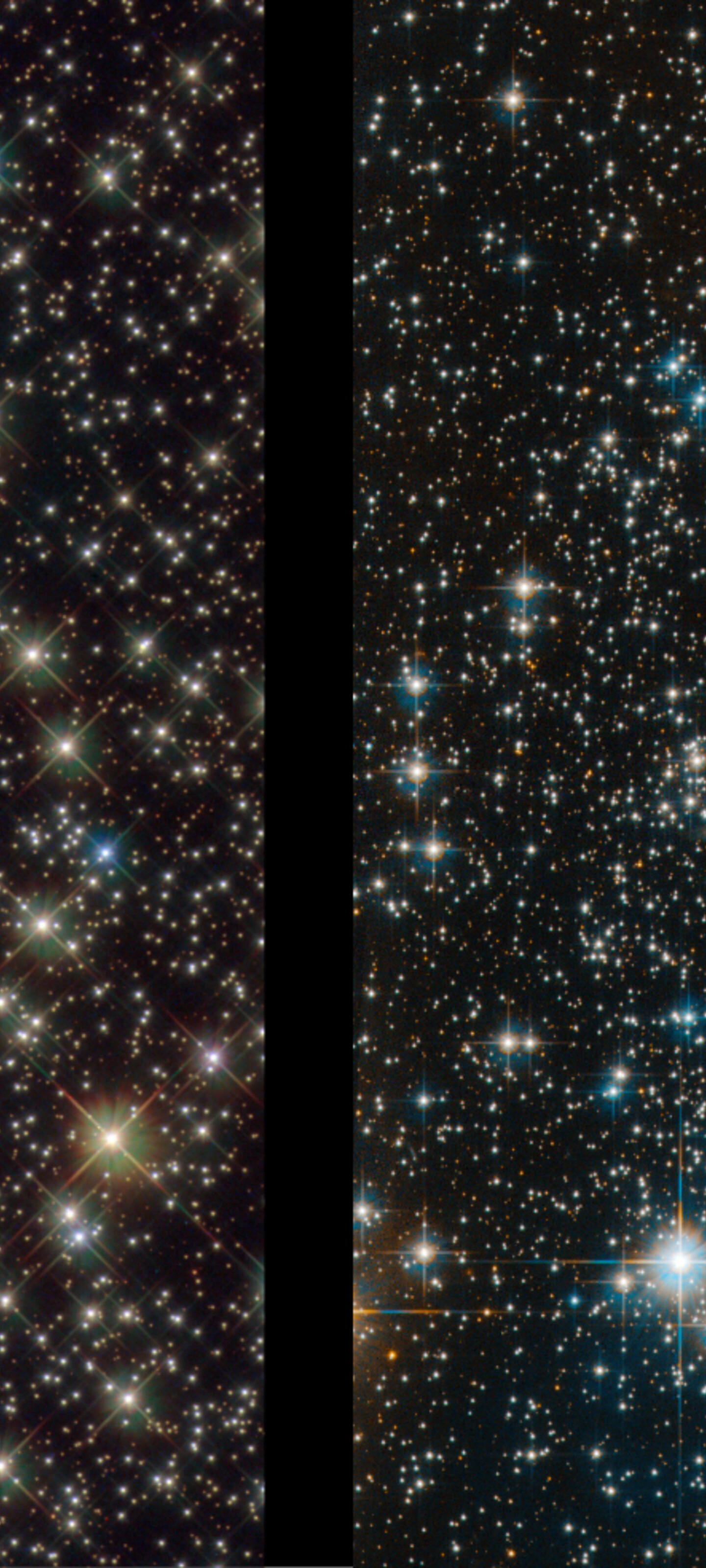
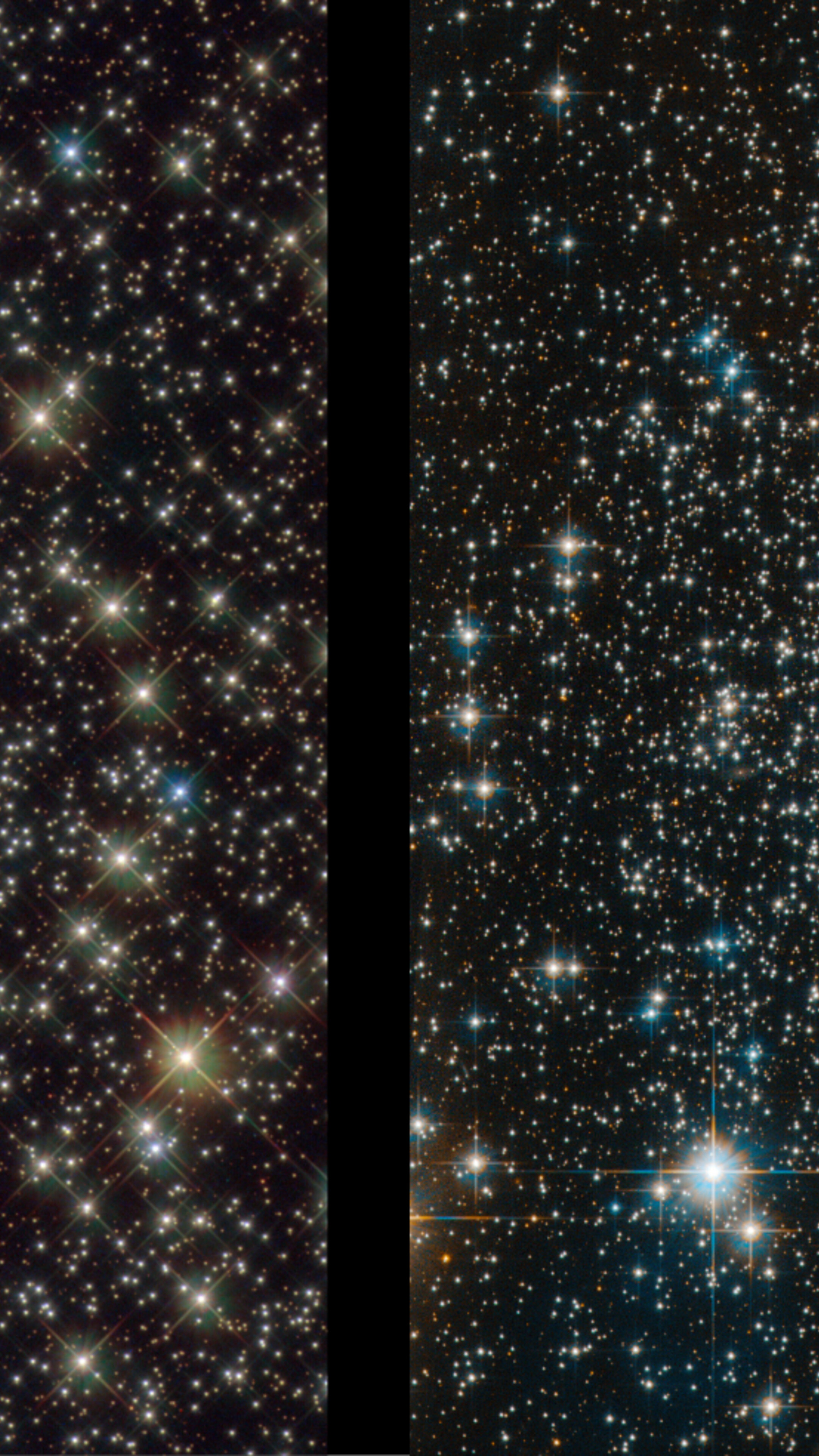
Globular cluster targets that revealed “forever young” stars
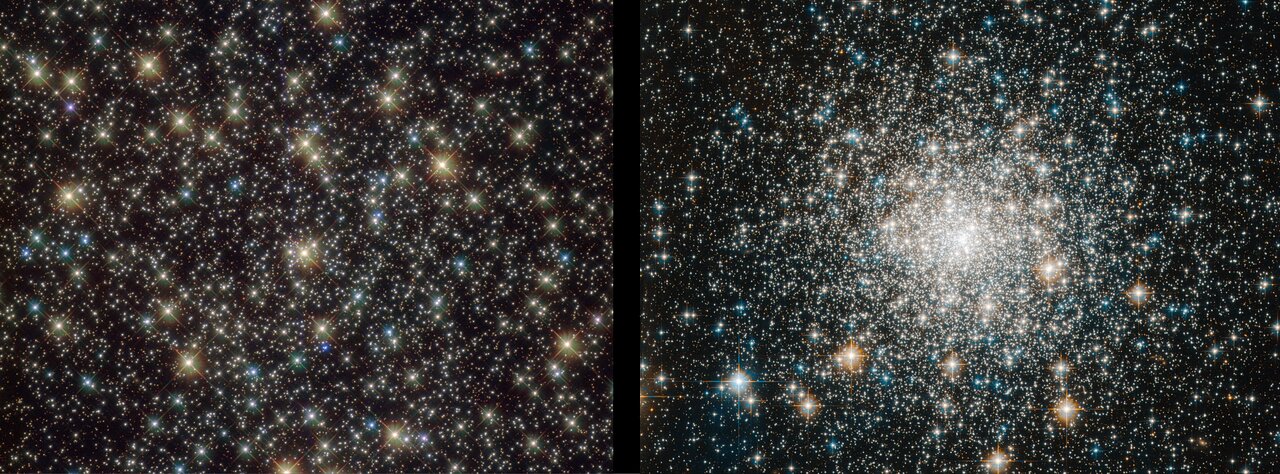
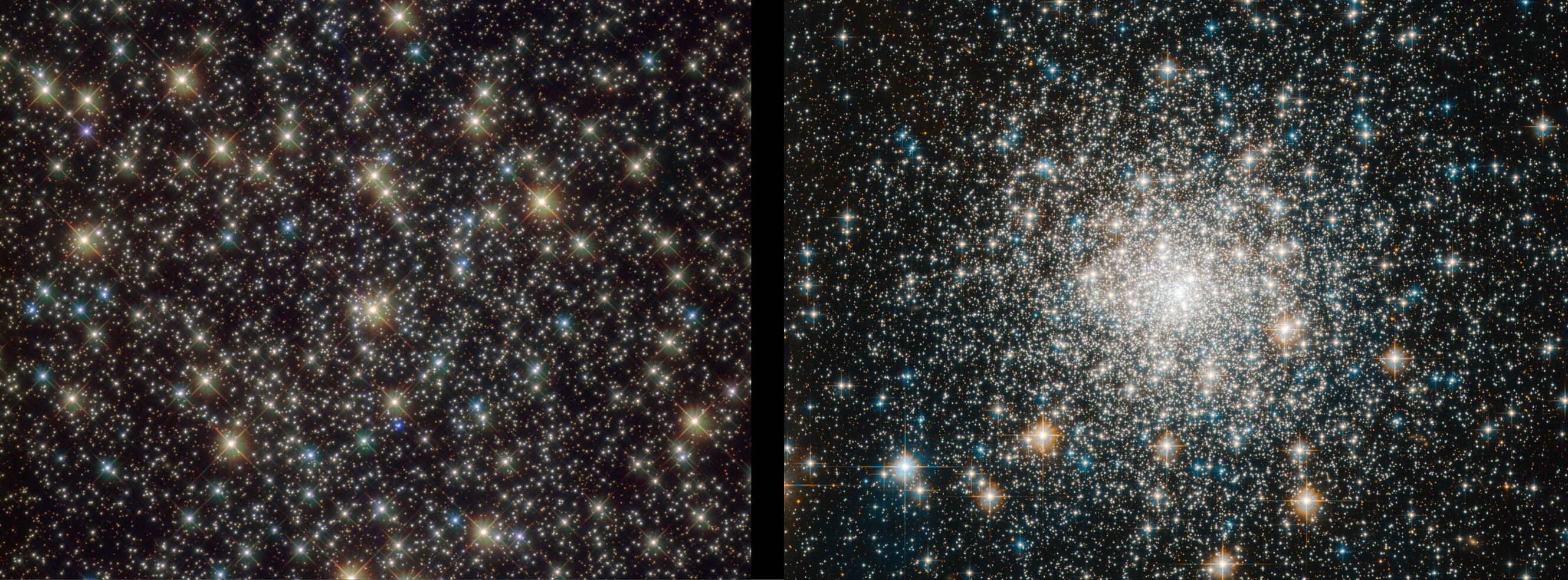
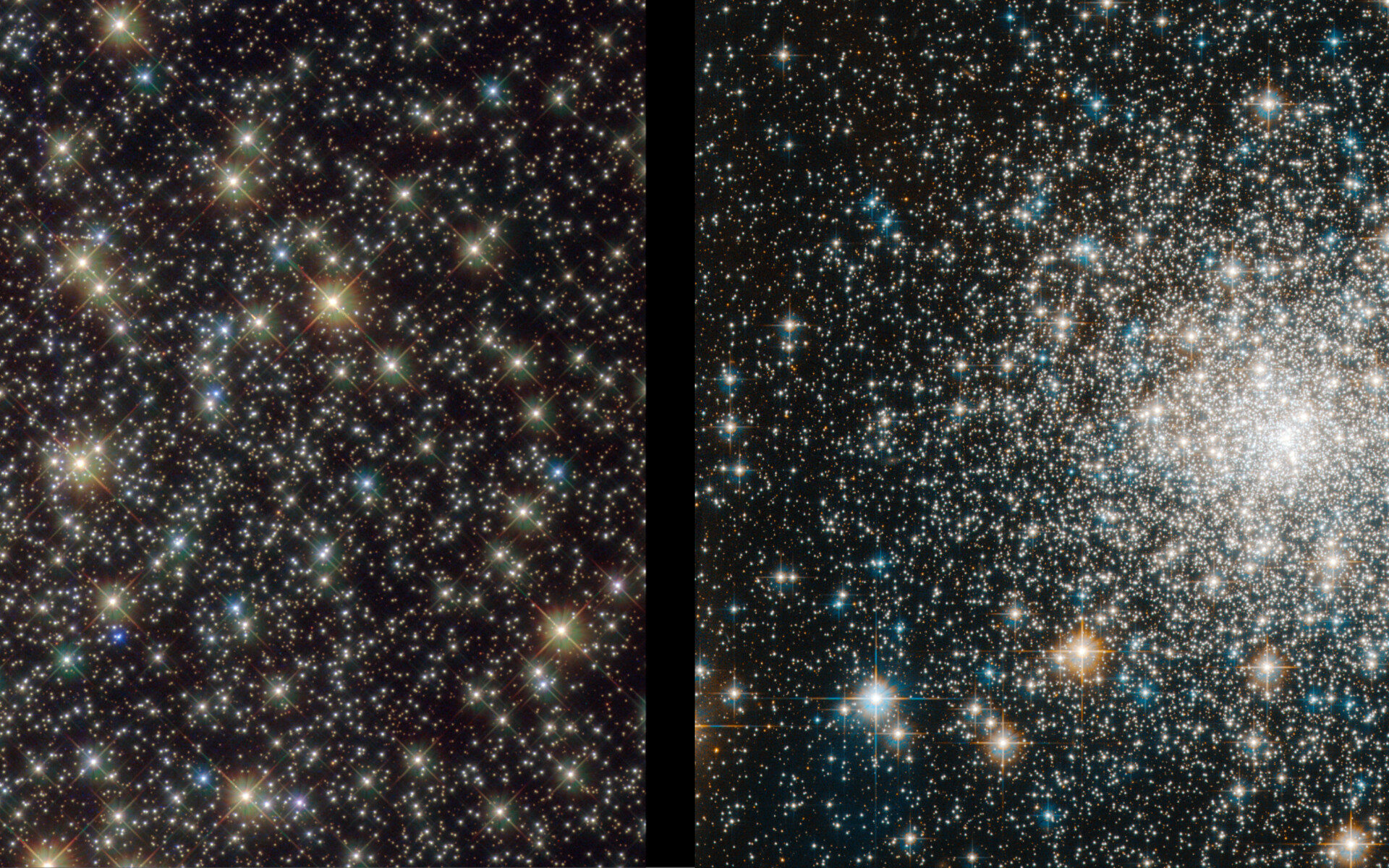
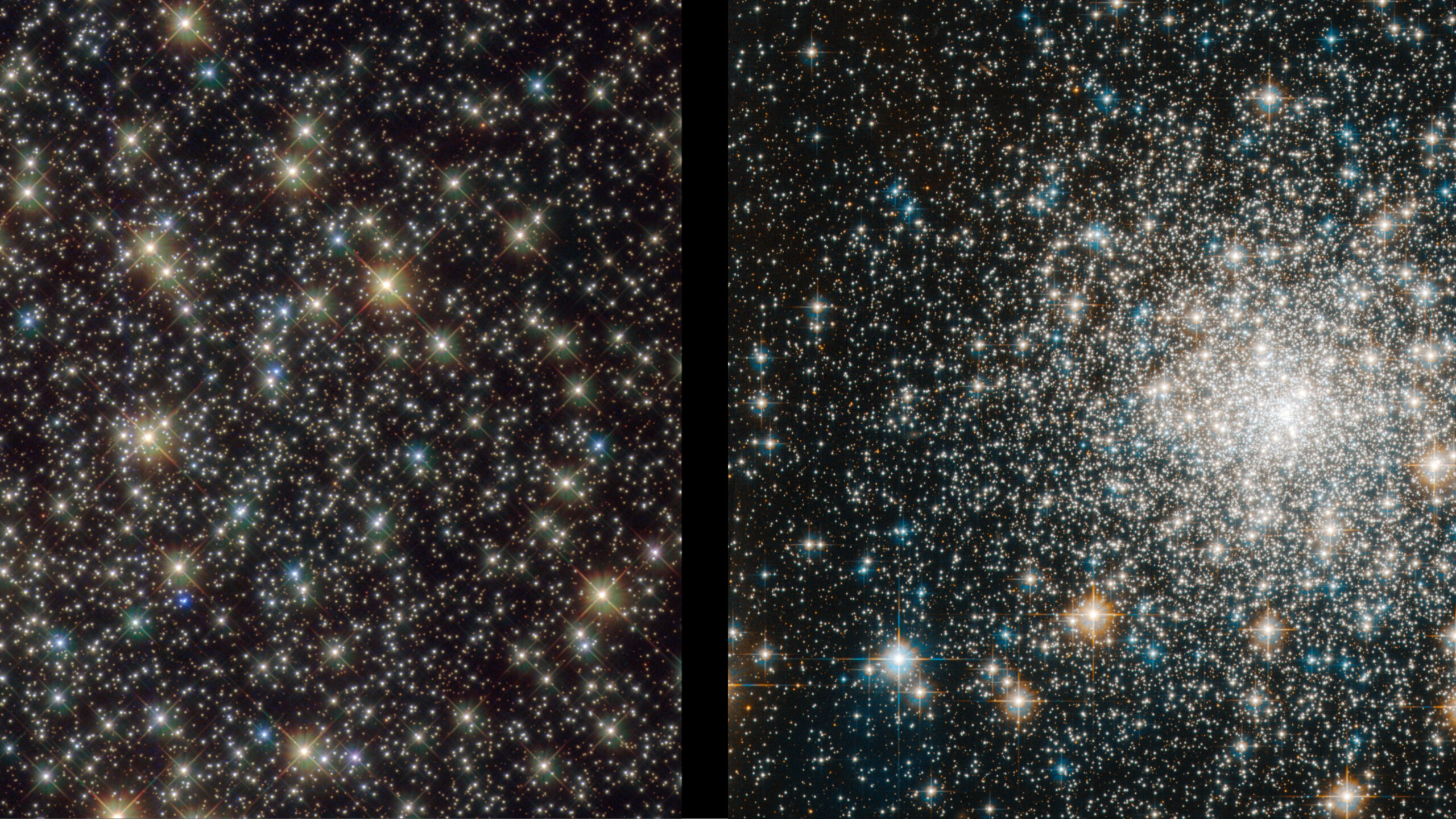
This image features two globular clusters from a recent Hubble study that provides some of the clearest evidence yet that blue stragglers owe their youthful appearance not to collisions, but to life in close stellar partnerships, and to the environments that allow those partnerships to survive.
The international research team analysed ultraviolet Hubble observations of 48 globular clusters in the Milky Way, assembling the largest and most complete catalogue of blue straggler stars ever produced. The sample includes more than 3,000 of these enigmatic objects observed in clusters spanning the entire range of stellar densities, allowing astronomers to search for long-suspected links between blue stragglers and their surroundings.
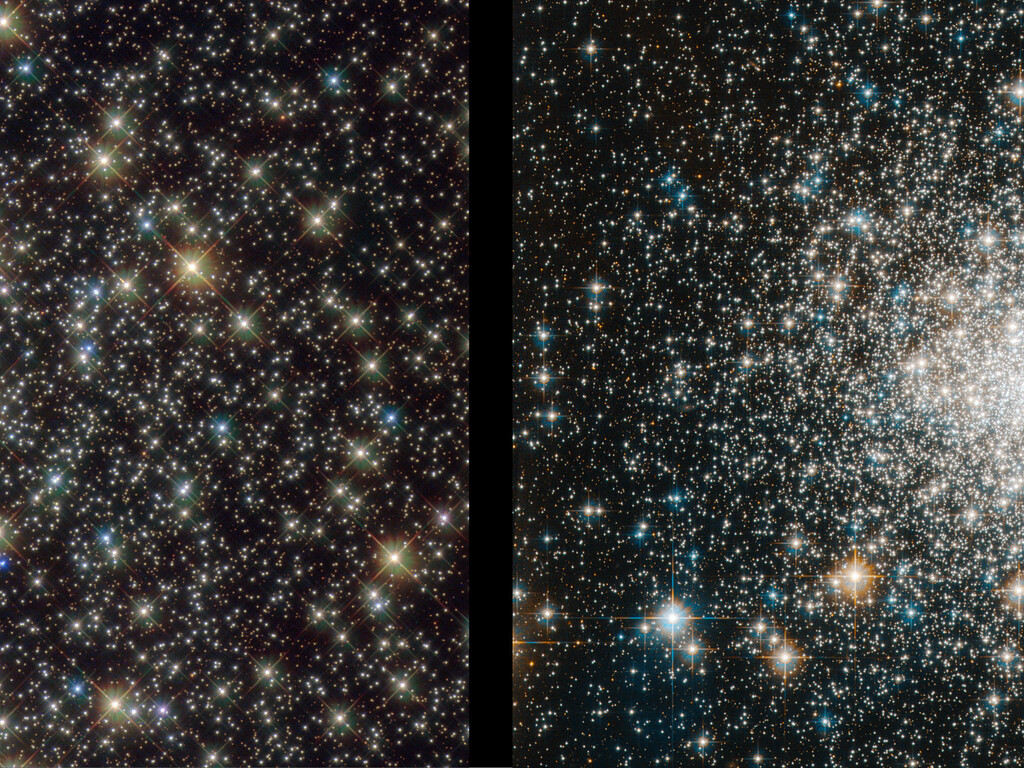
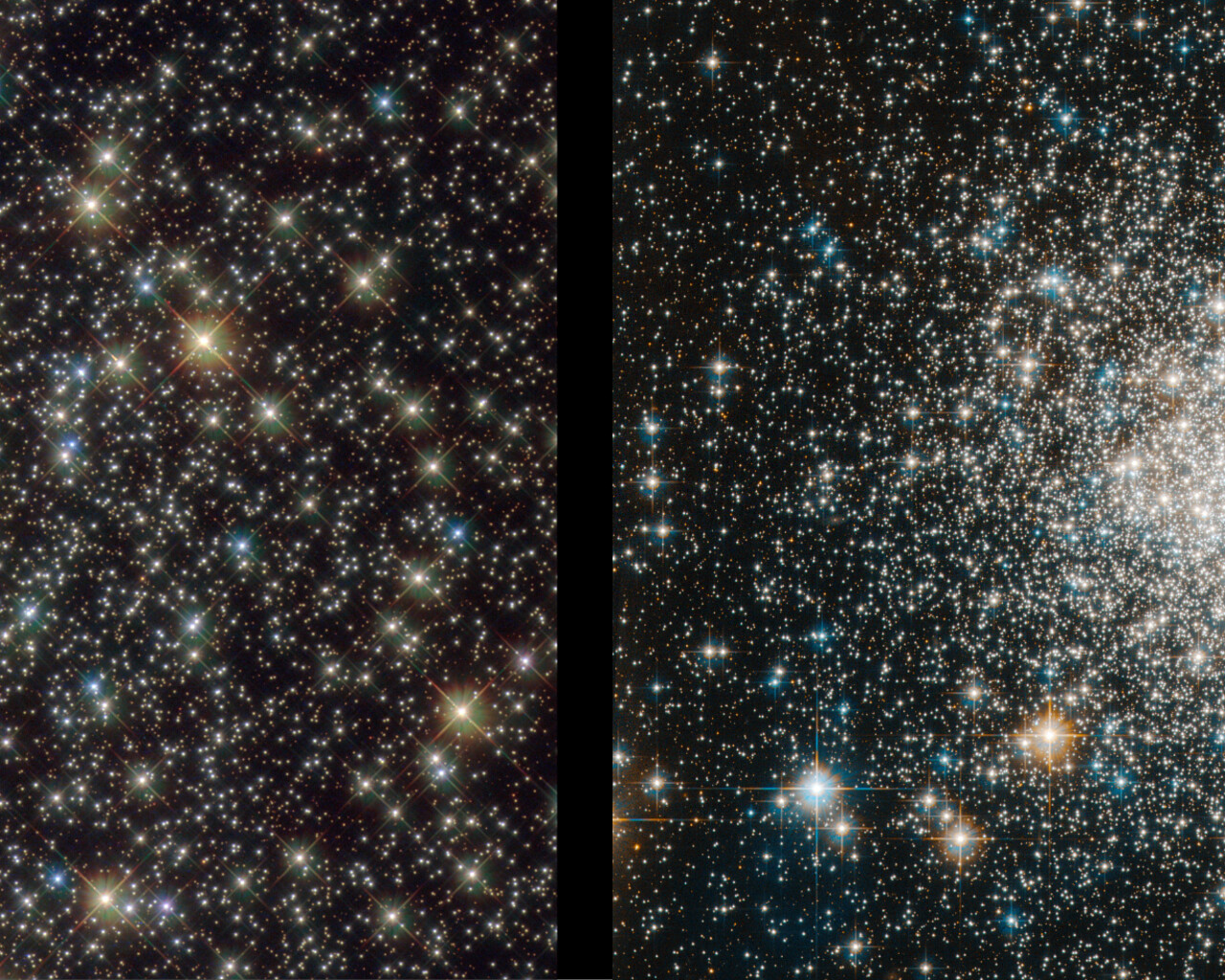
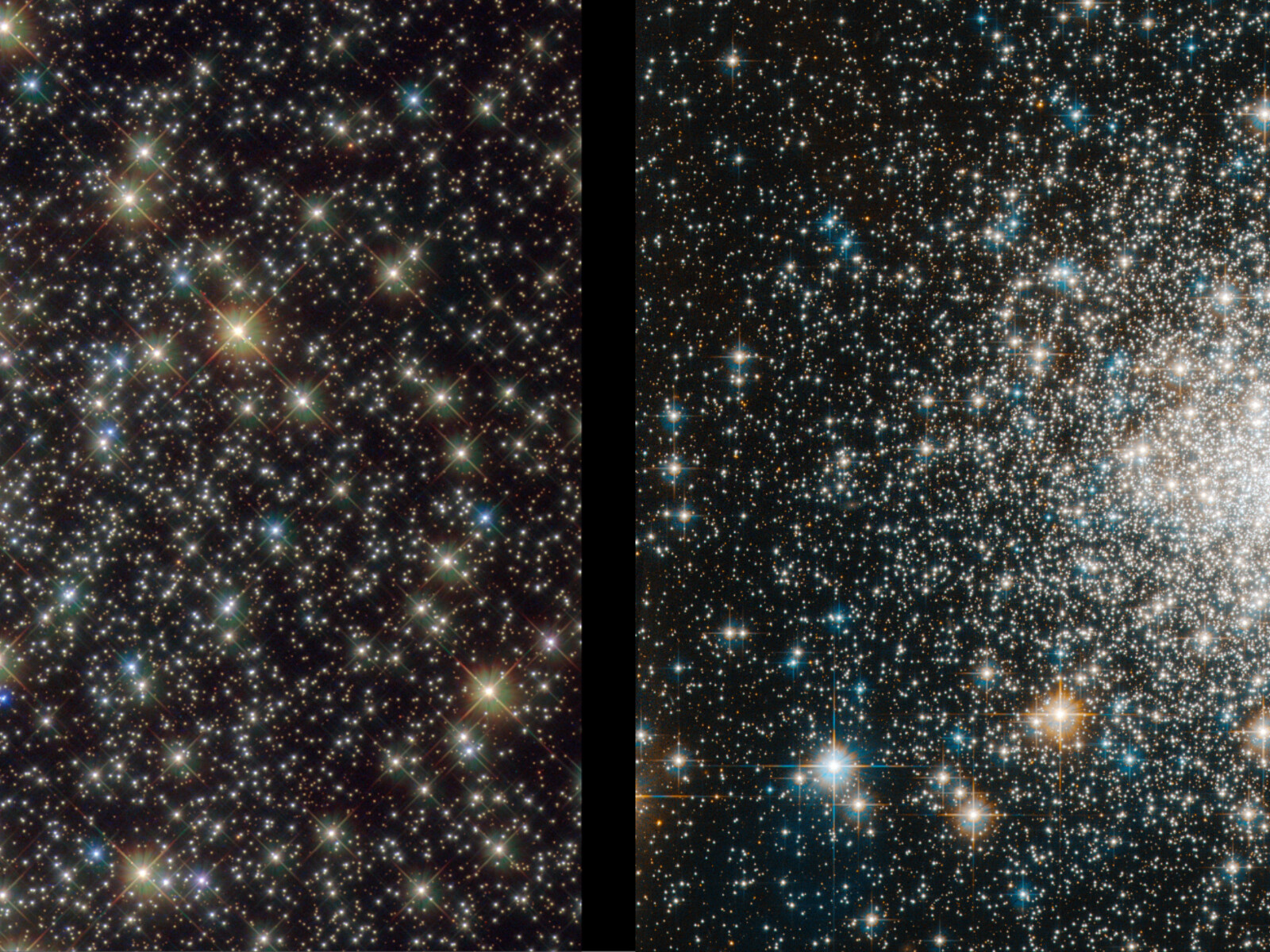
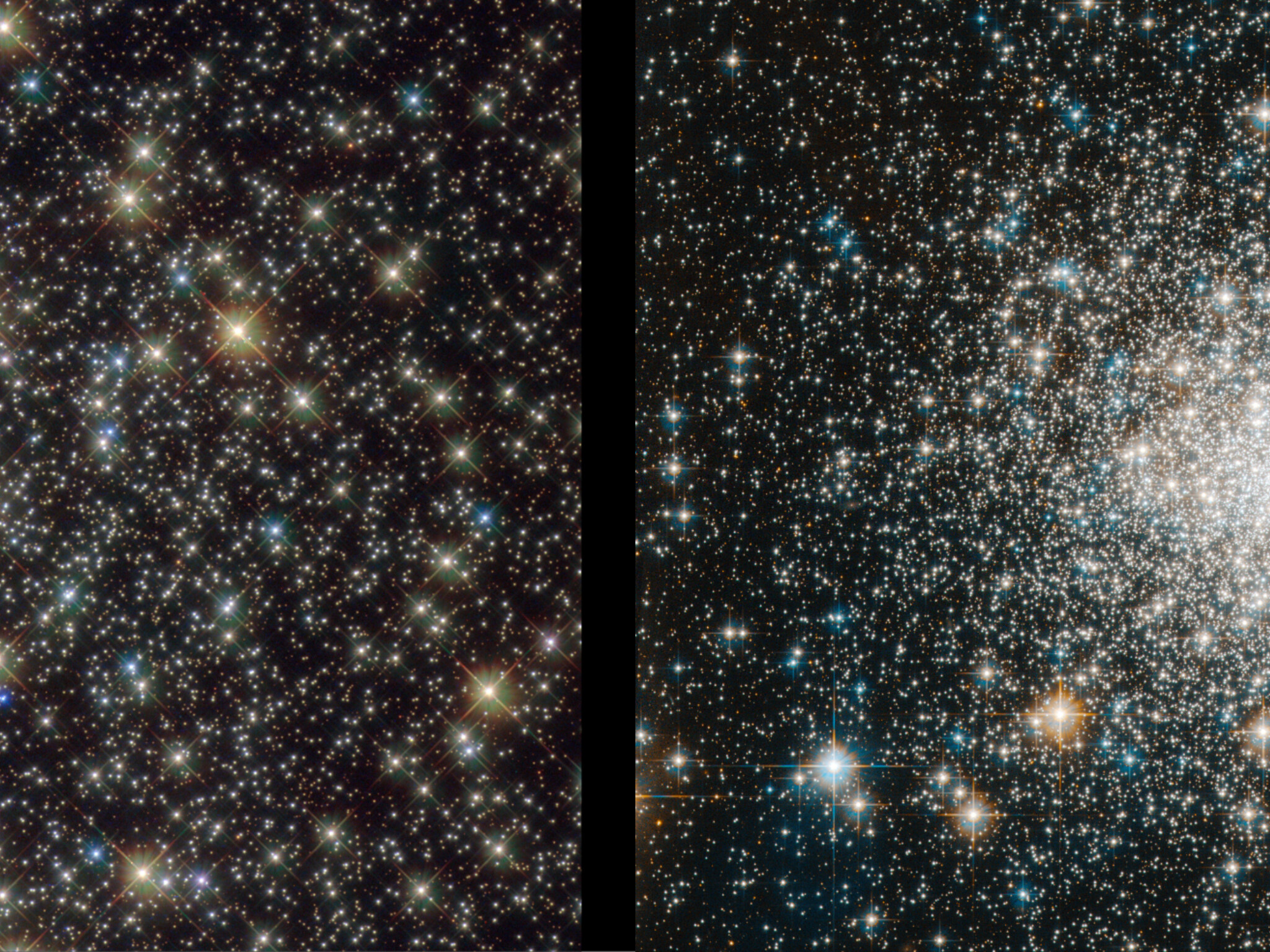
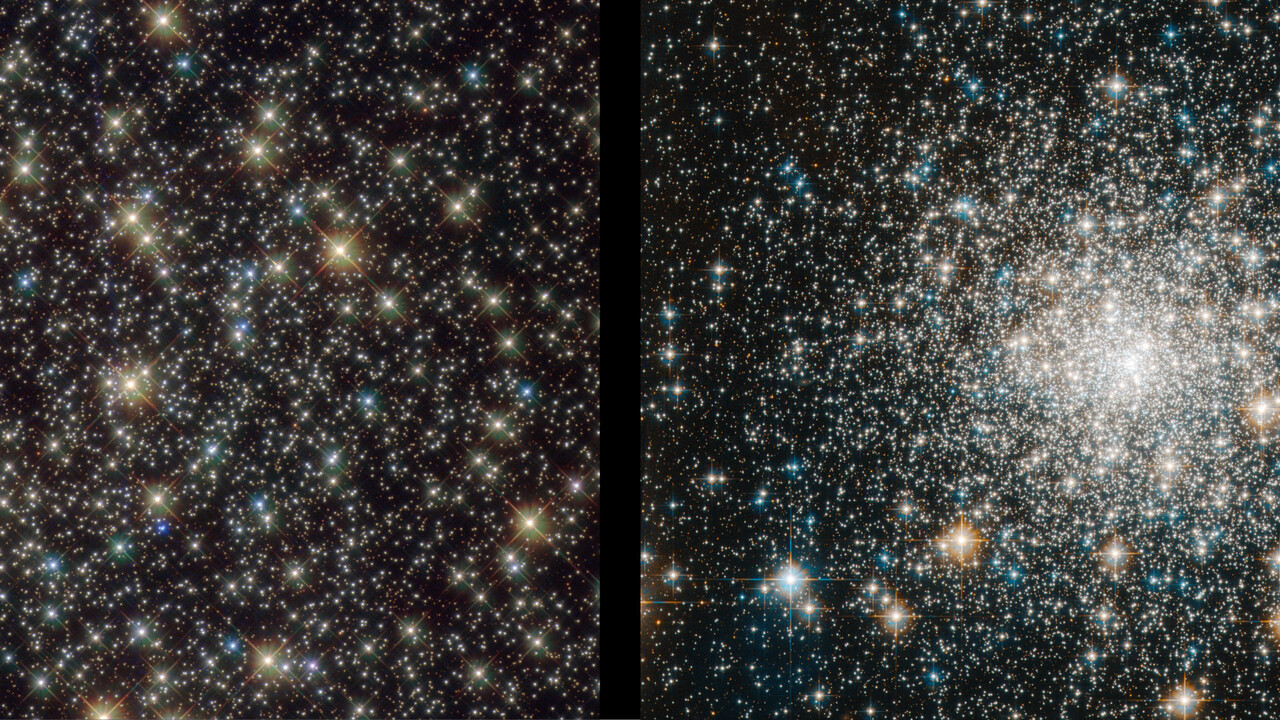
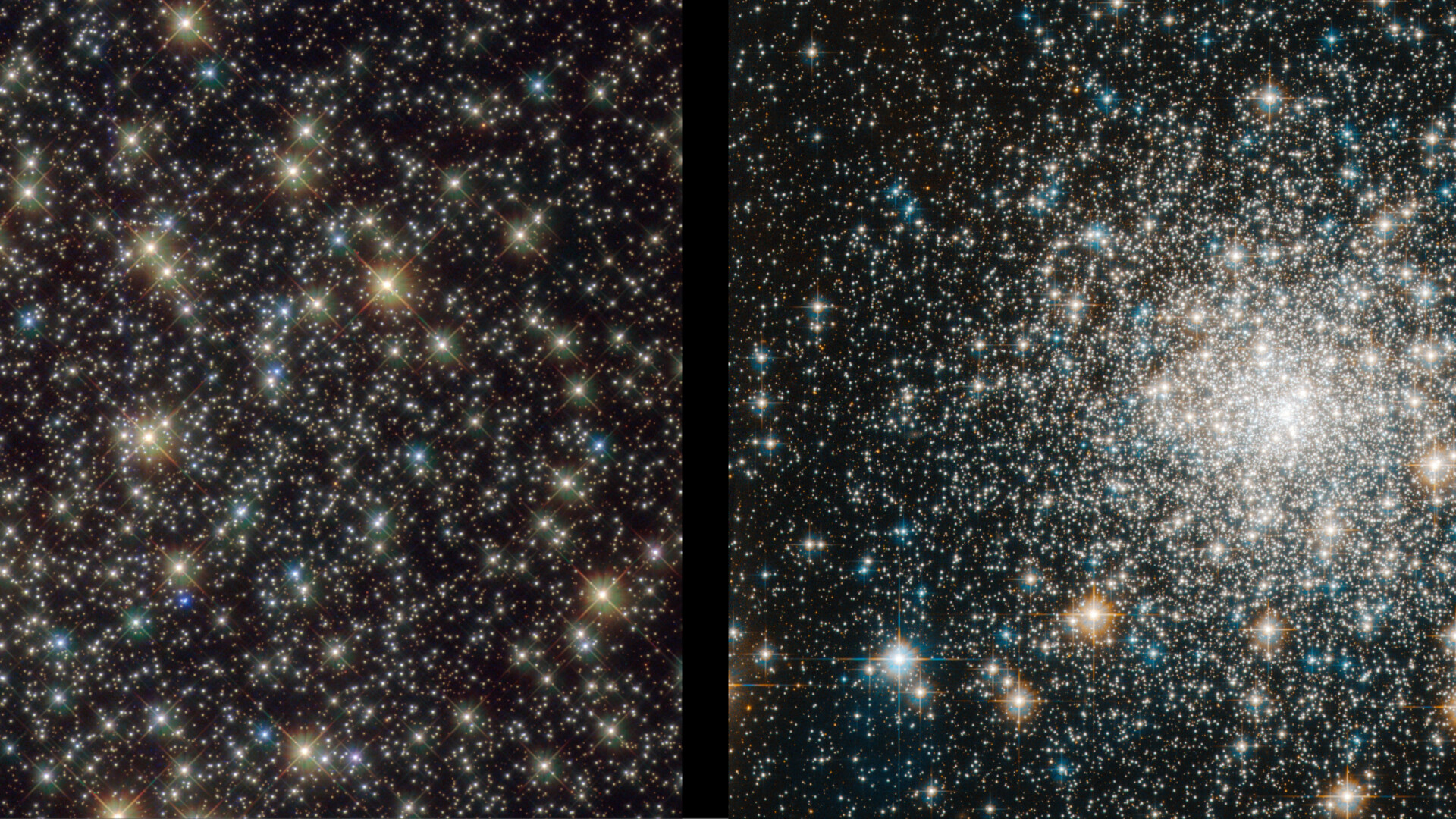
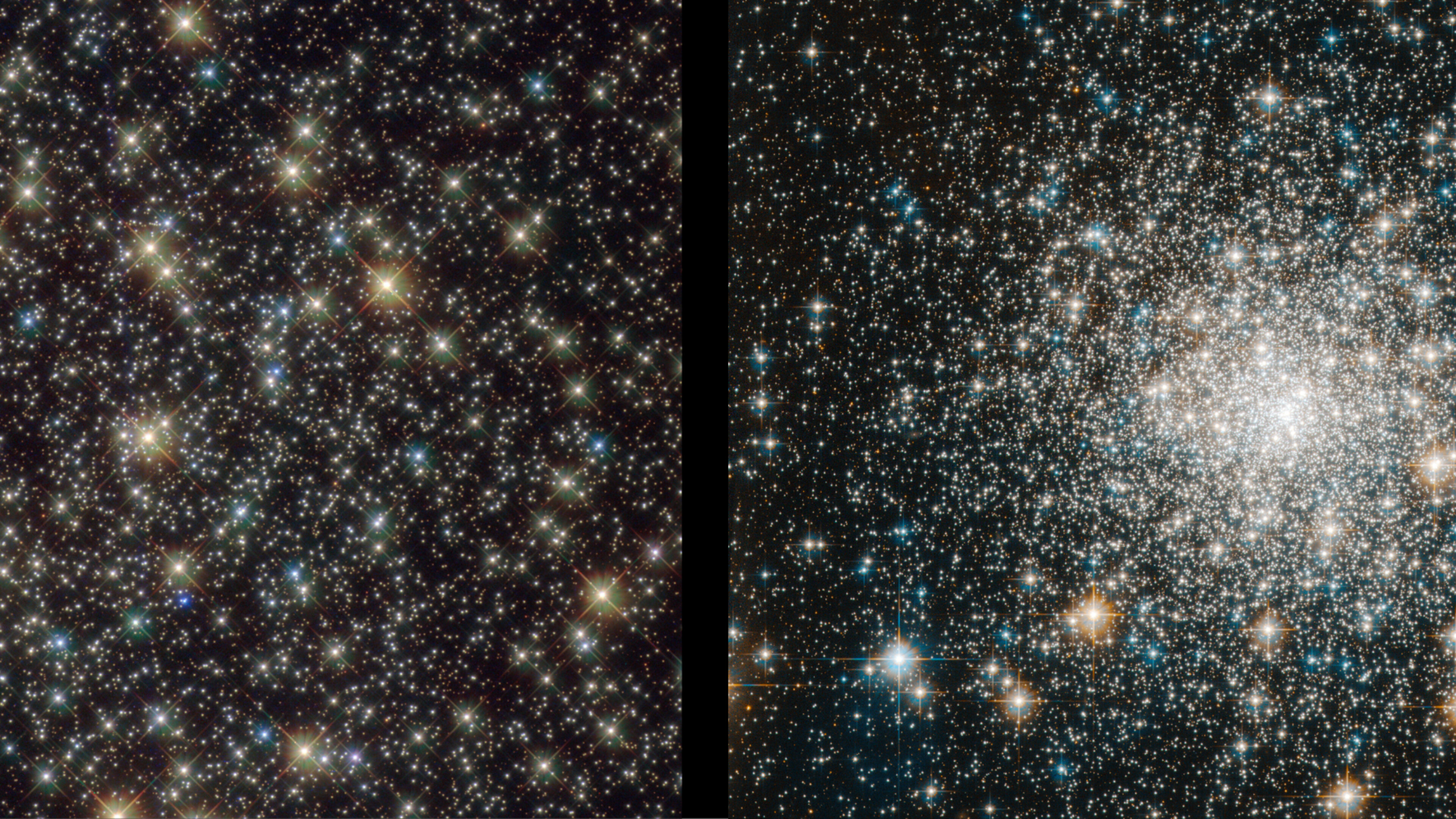
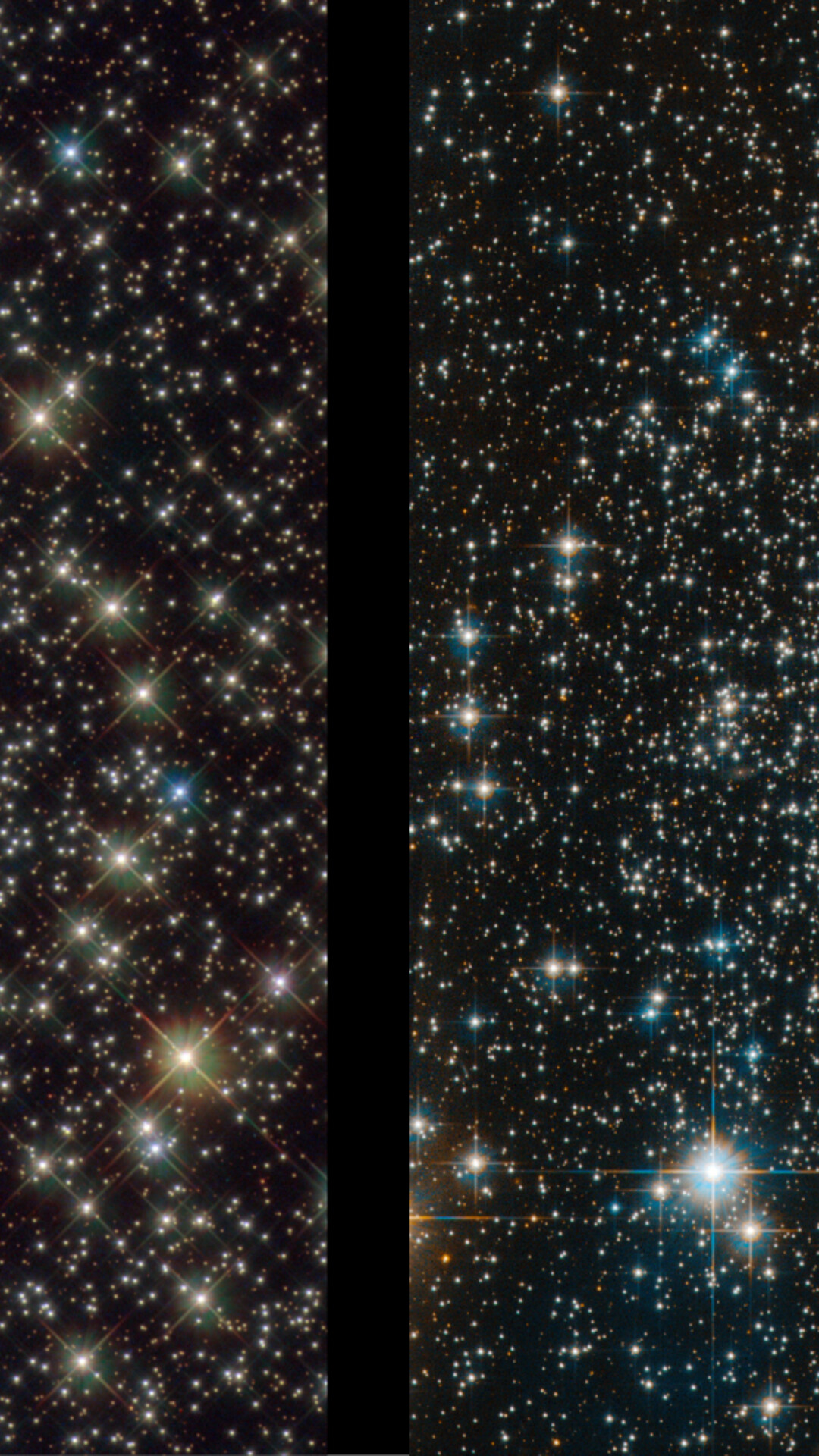
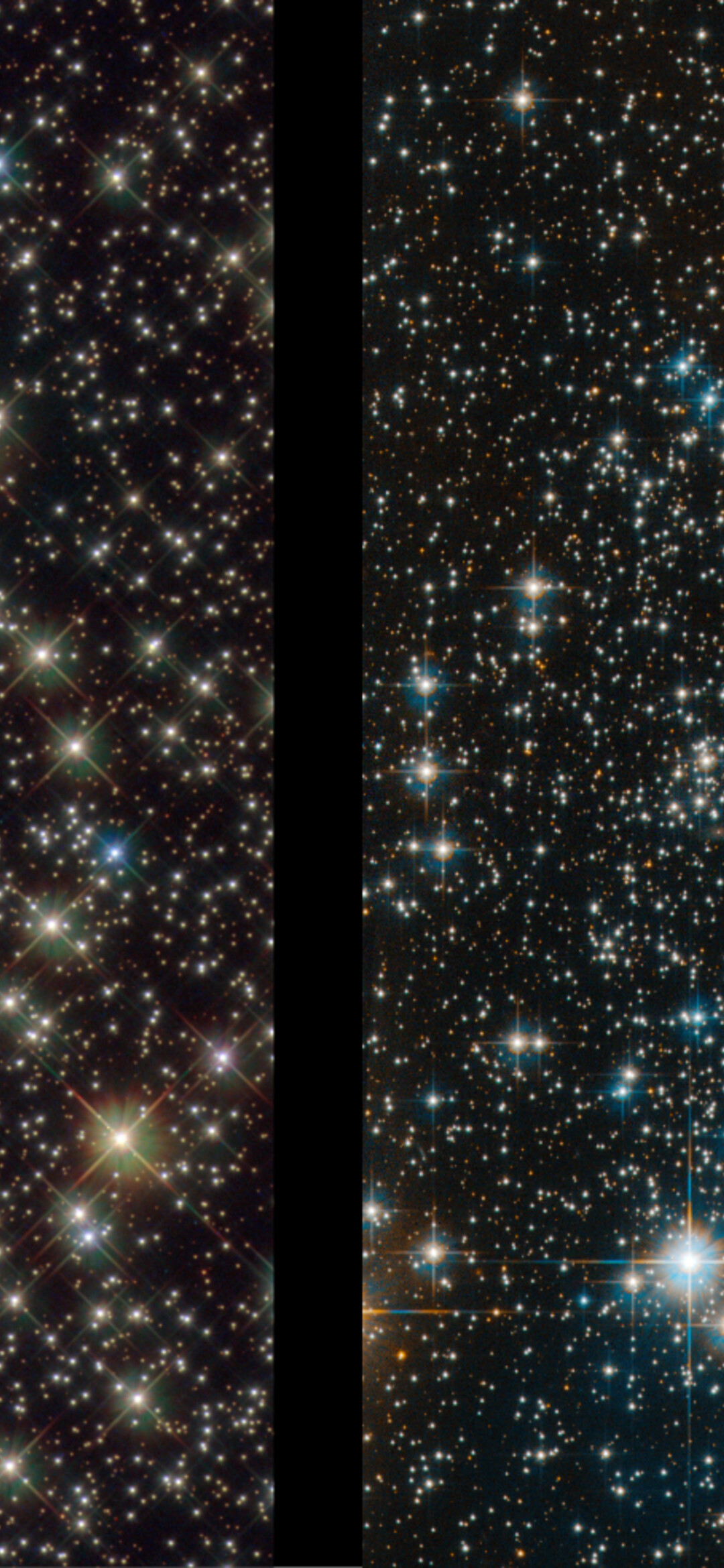
The above image features NGC 3201 (left), one of the looser clusters in the dataset, and Messier 70, which is the study’s densest cluster.
[Image description: A side-by-side visual of two globular clusters: NGC 3201 (left) and Messier 70 (right). The star cluster on the right is visibly compact in shape, as the stars near the centre of the object appear very close together. Contrastingly, the star cluster on the left is less compact, as the stars are more spread apart from one another in the field.]
Credit:ESA/Hubble & NASA
About the Image
| Id: | heic2602a |
|---|---|
| Type: | Collage |
| Release date: | 21 January 2026, 11:00 |
| Related releases: | heic2602 |
| Size: | 2658 x 984 px |
About the Object
| Category: | Star Clusters |
|---|