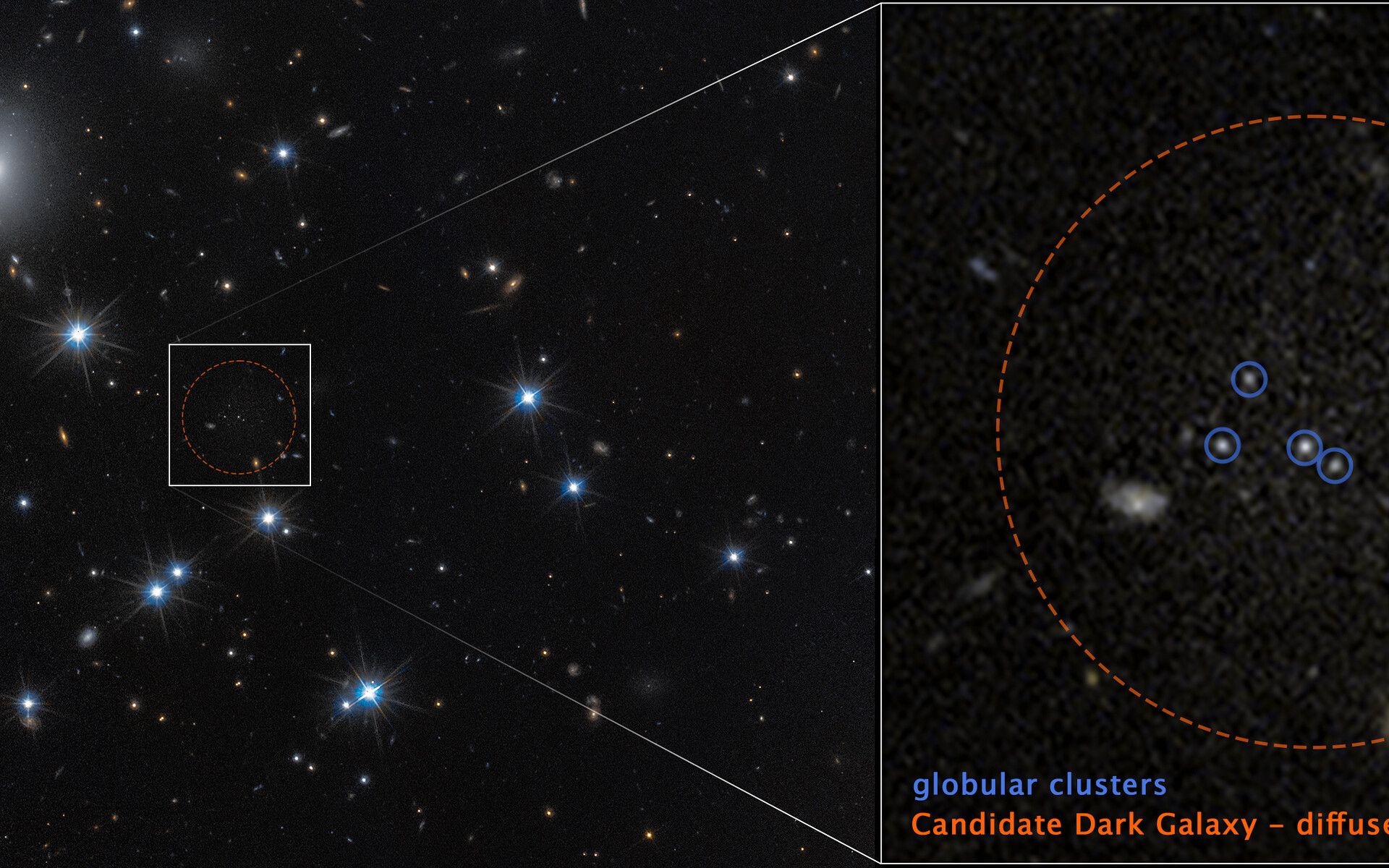
Dark galaxy CDG-2 near Perseus Cluster (annotated)
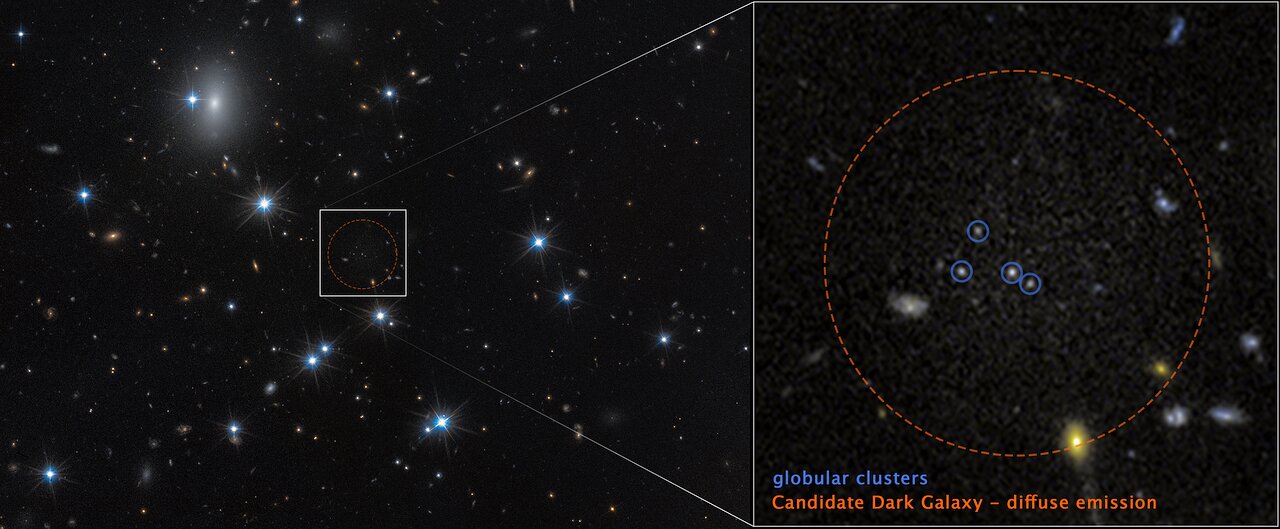
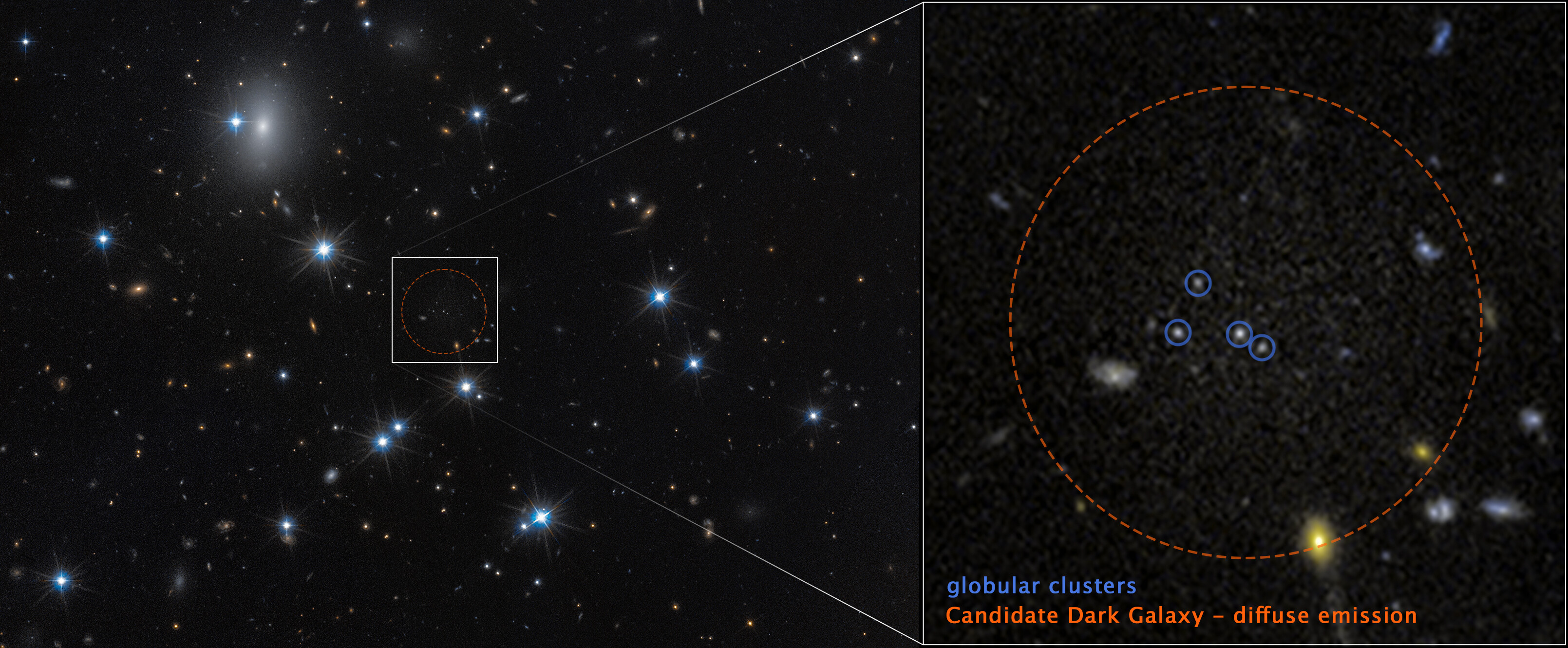
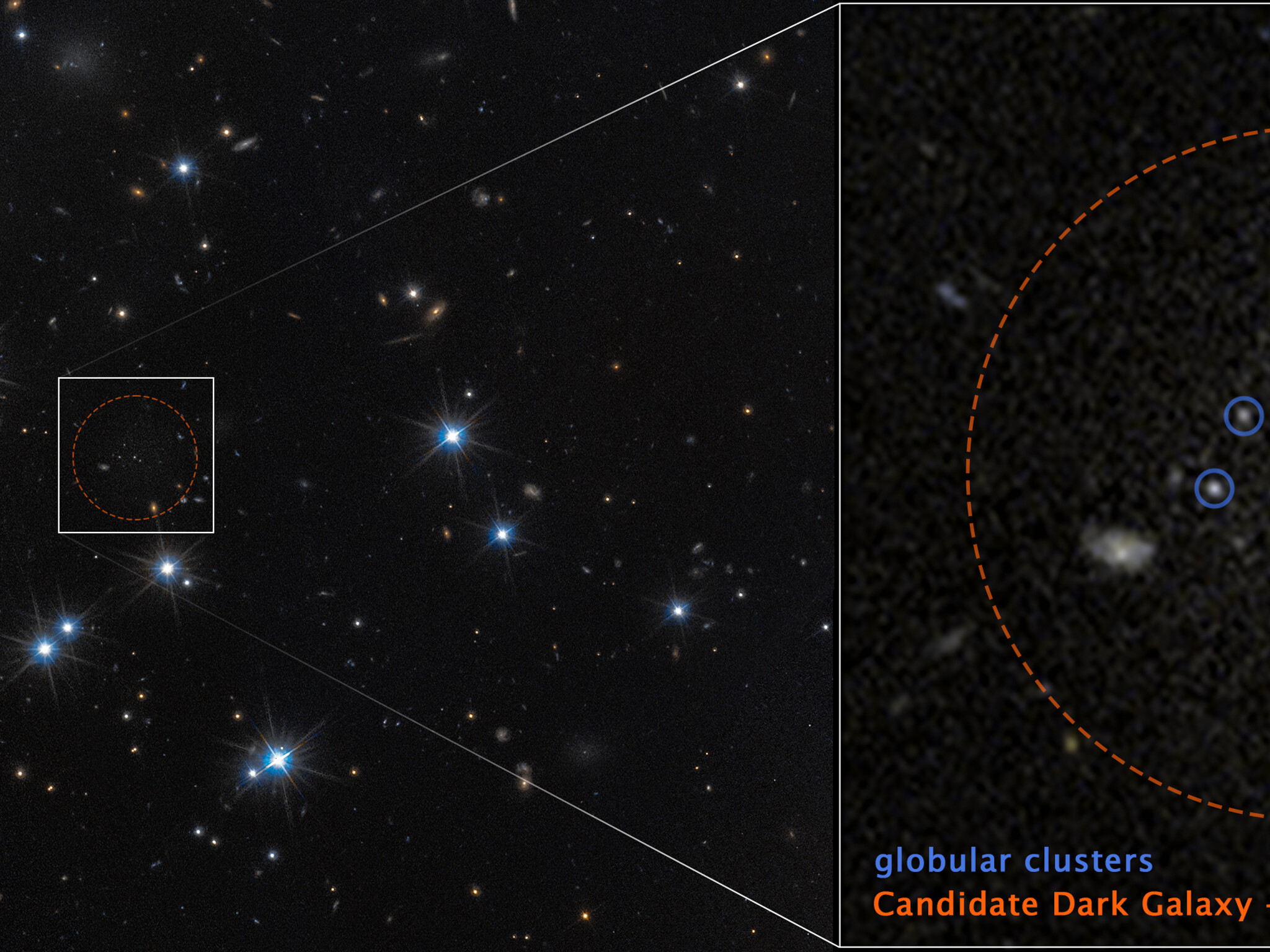
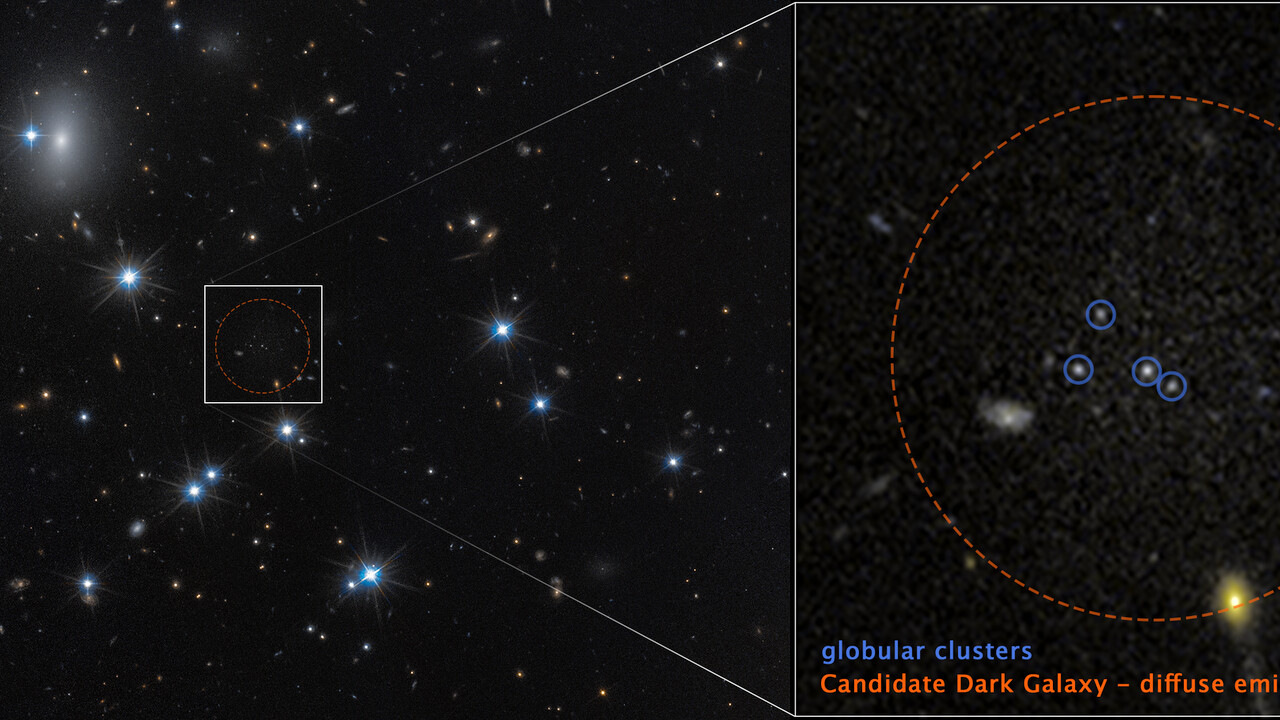
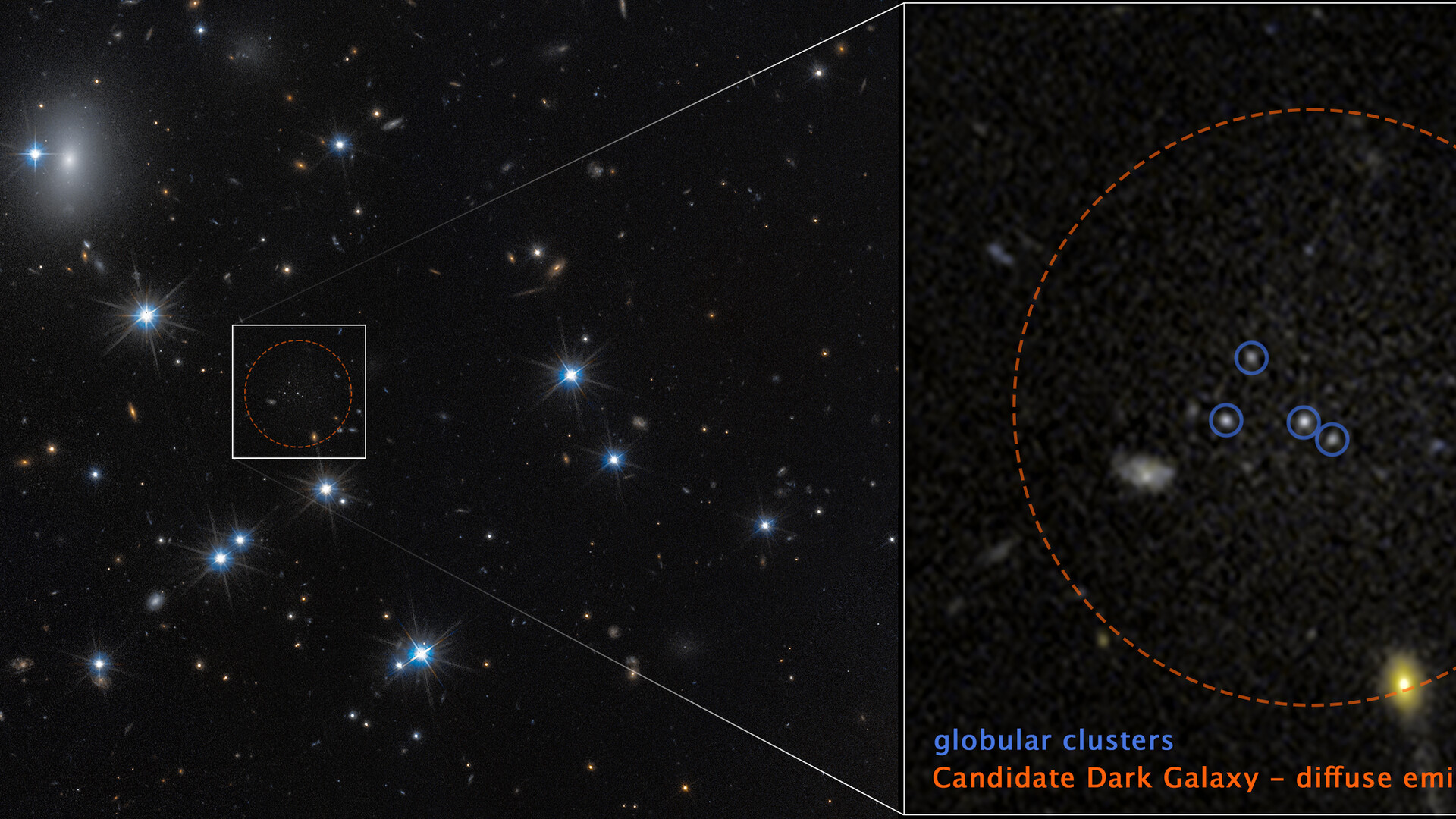
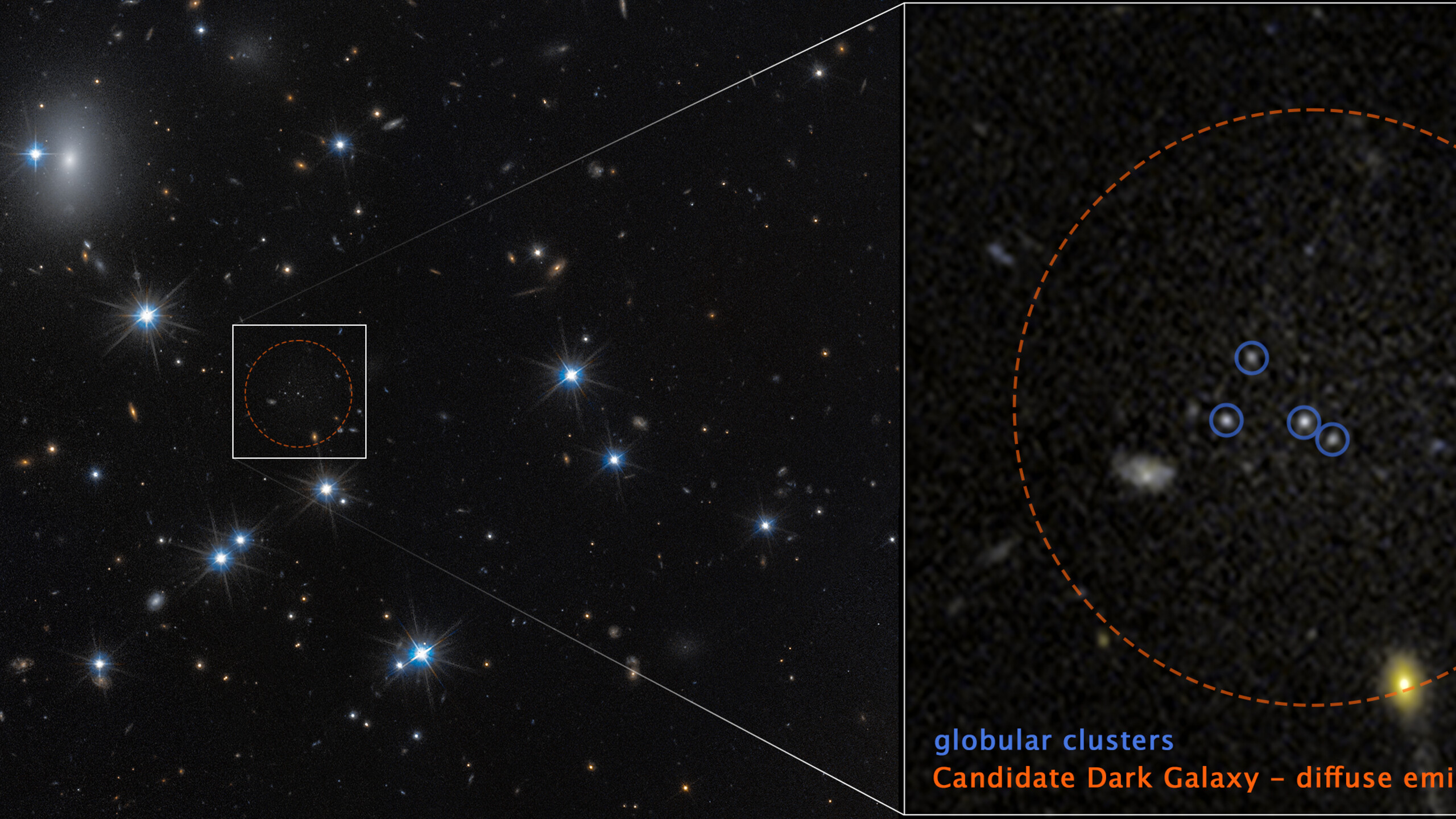
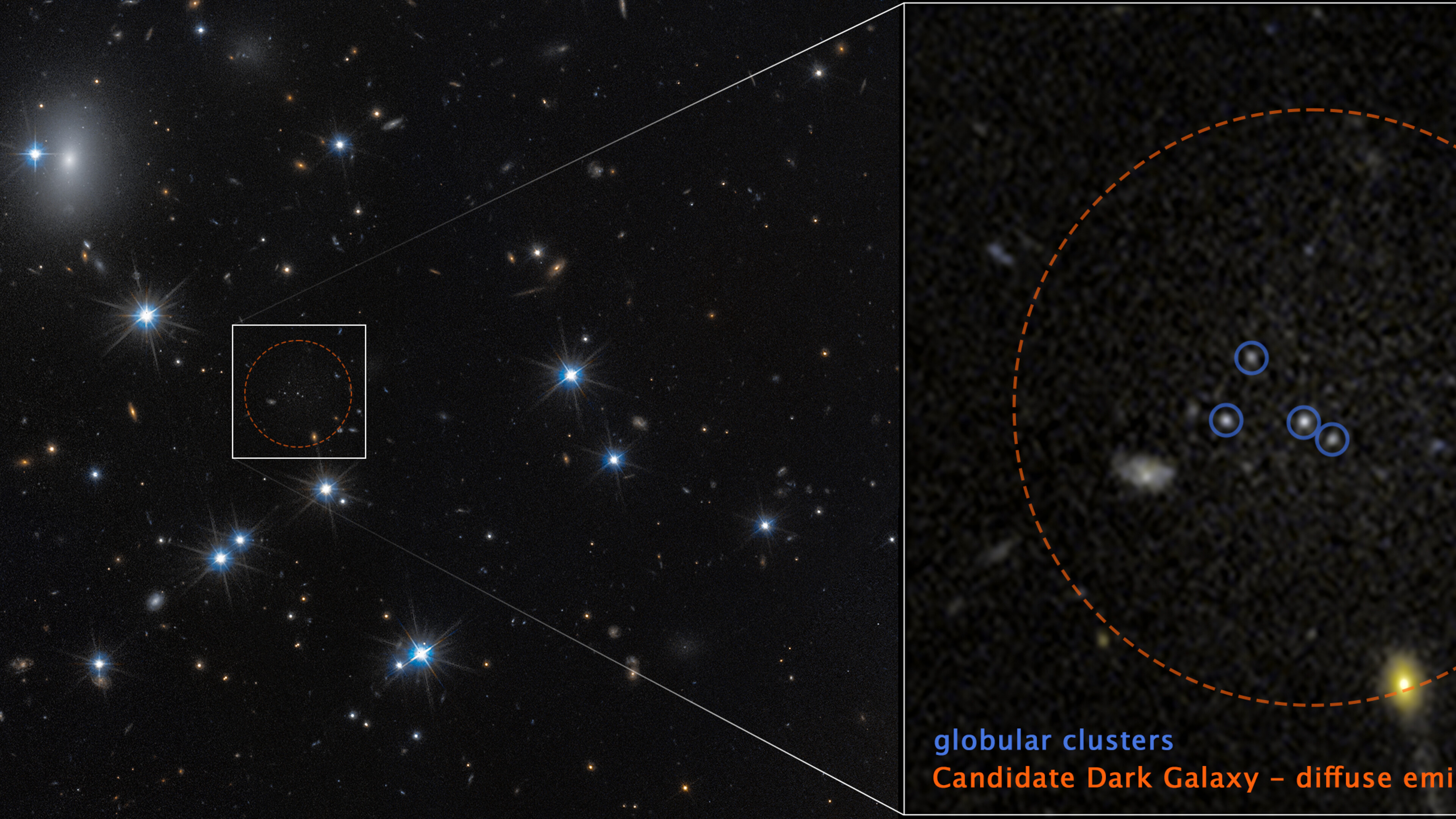
The low-surface-brightness galaxy CDG-2, shown in this image from the NASA/ESA Hubble Space Telescope, is dominated by dark matter and contains only a sparse scattering of stars. This galaxy is nearly invisible, but by using advanced statistical techniques, scientists identified it by searching for tight groupings of stars called globular clusters. At left, the white box marks the area that was examined. At right is a magnified view of that area. The circle marked with a dashed red boundary indicates the location of the dark-matter dominated galaxy. Within the dashed circle are four globular clusters outlined by small, blue circles. Several background galaxies also appear within the red circle, but these are not related to the galaxy CDG-2.
[Image description: At left, a field of space with a dozen white foreground stars and a number of small, yellow background galaxies. An unremarkable area at centre is outlined with a dashed circle surrounded by a white box. Lines extend from the box to a pullout at right containing faint, grainy white light surrounded by a circle labeled “Candidate dark galaxy – diffuse emission.” Four white dots are circled in blue and labeled globular clusters.]
The Hubble observations include those from programme 15235 (W. Harris).
Credit:NASA, ESA, D. Li (Utoronto), Image Processing: J. DePasquale (STScI)