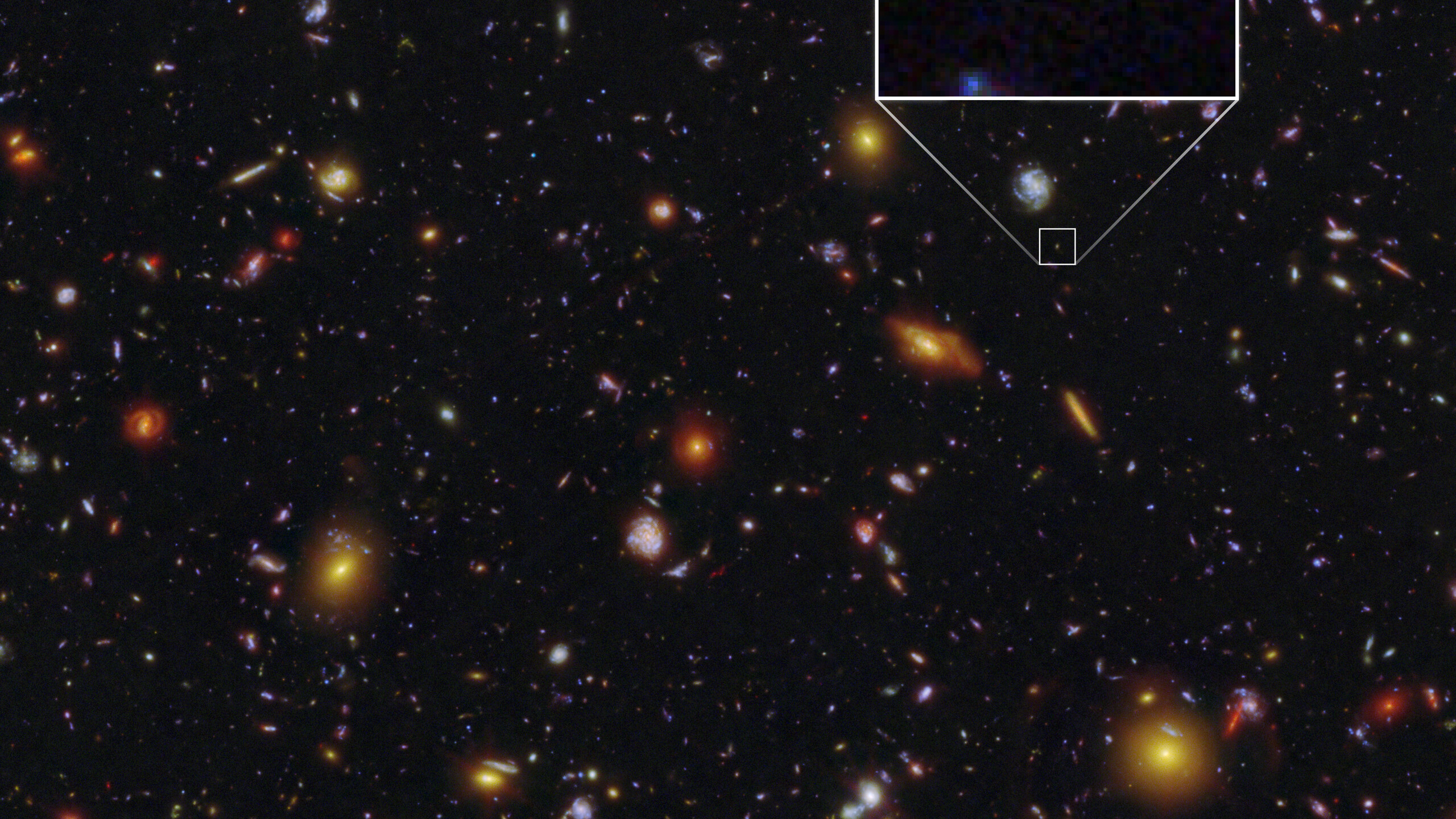
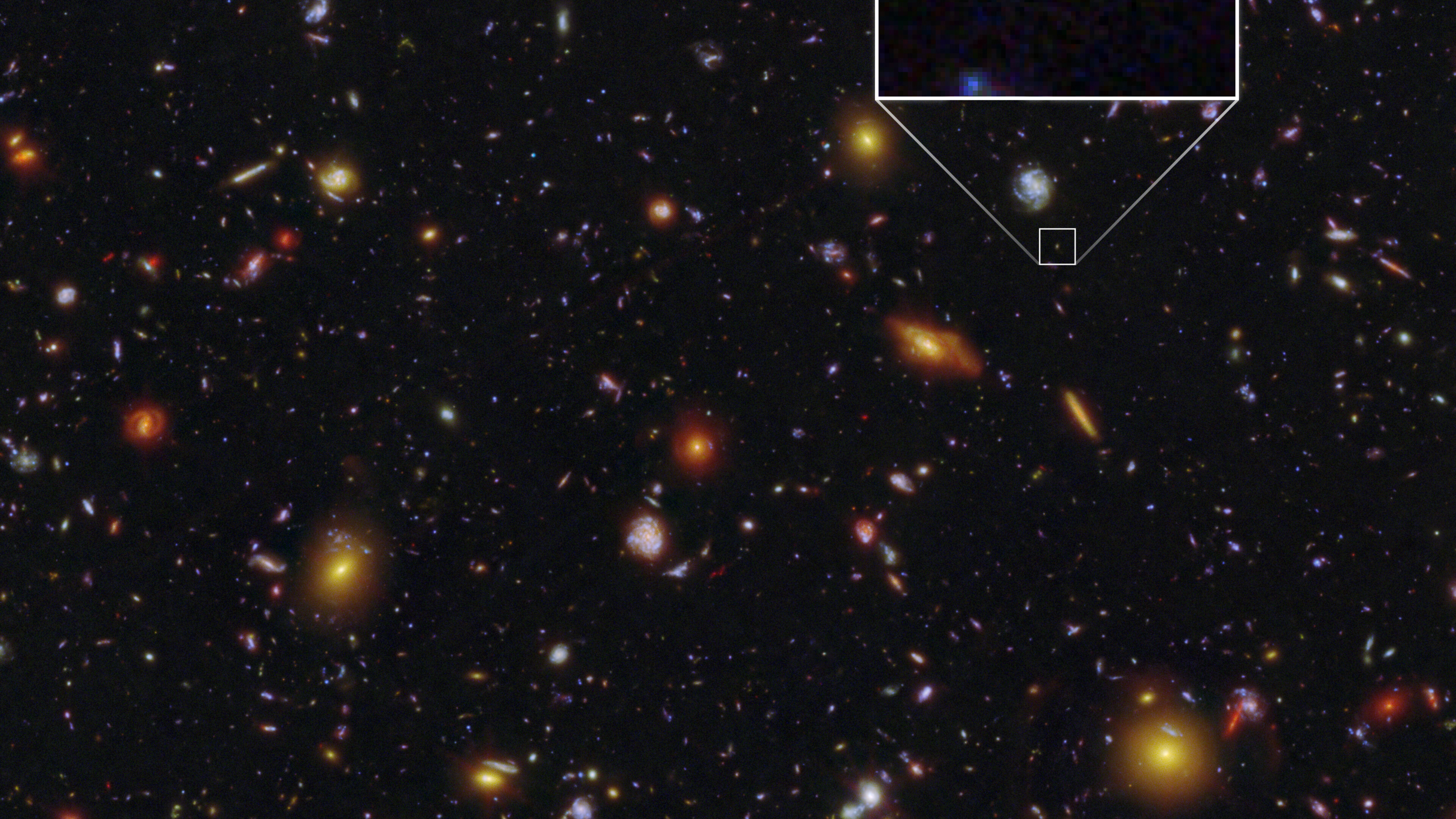
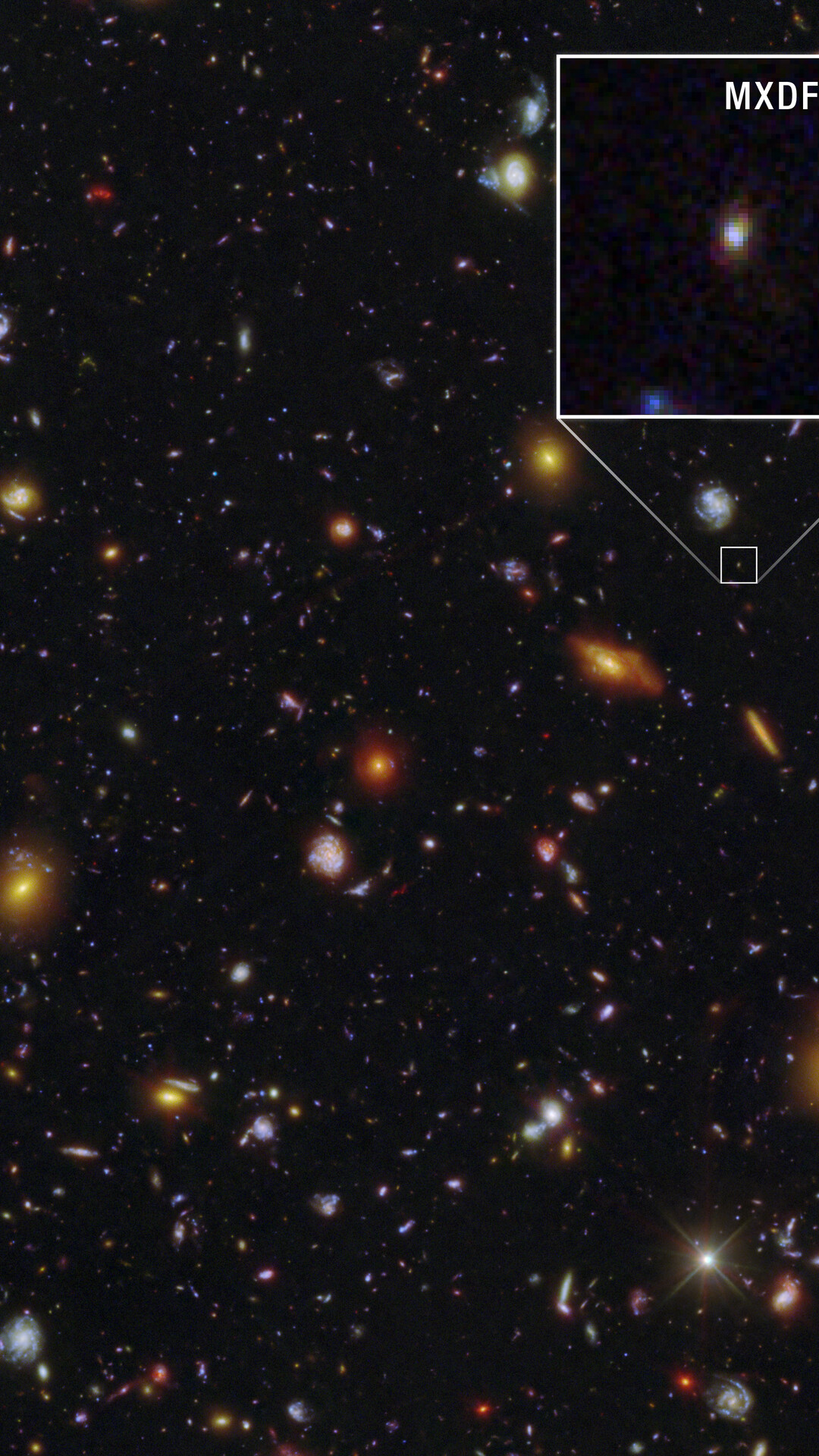
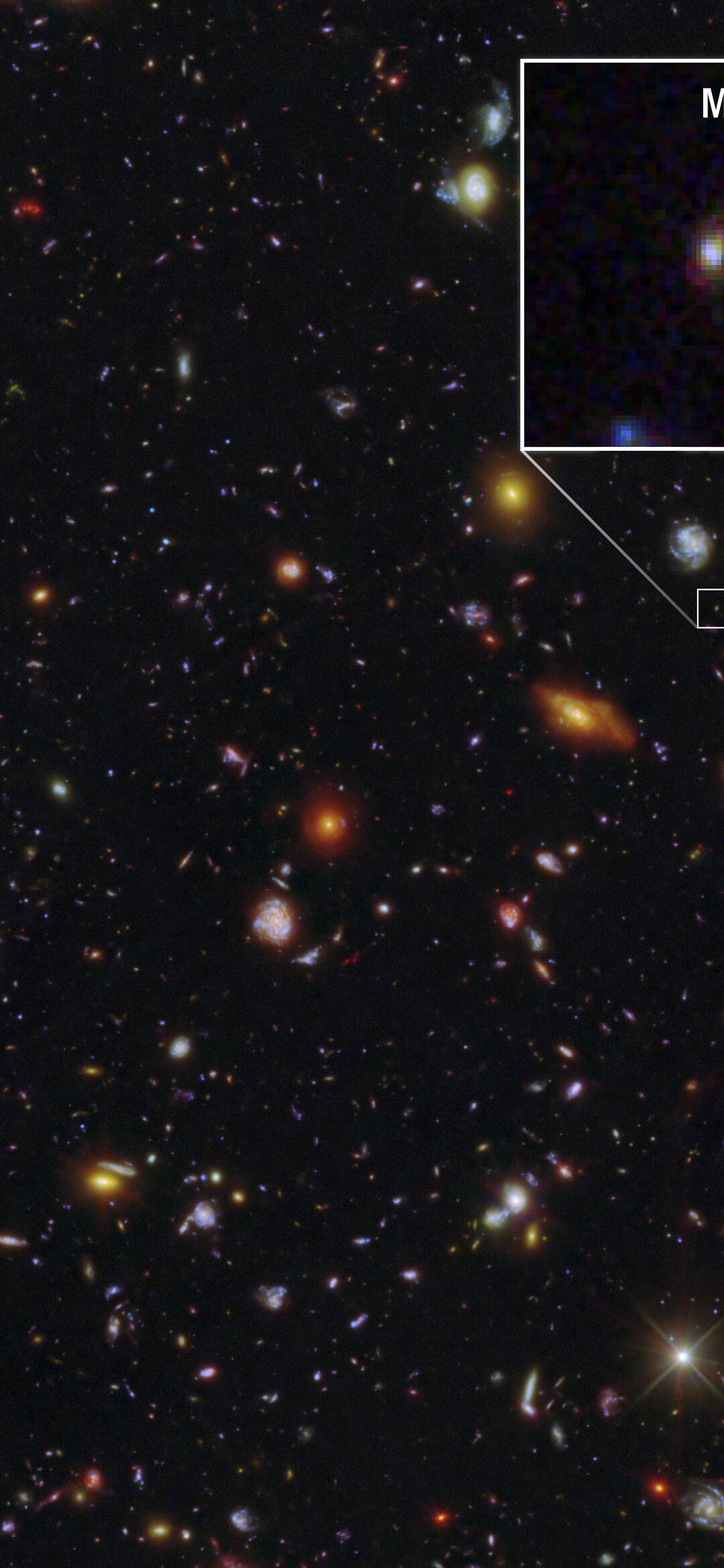
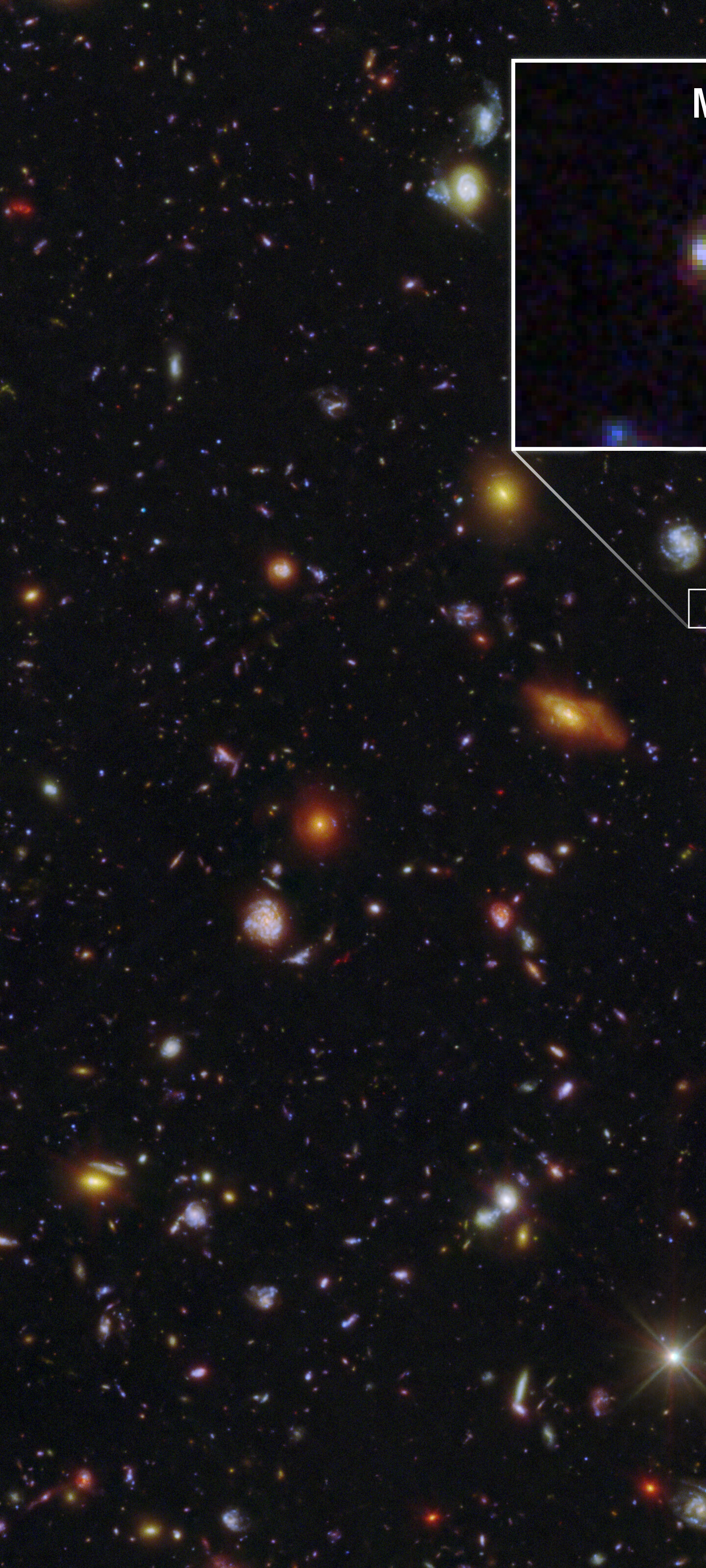
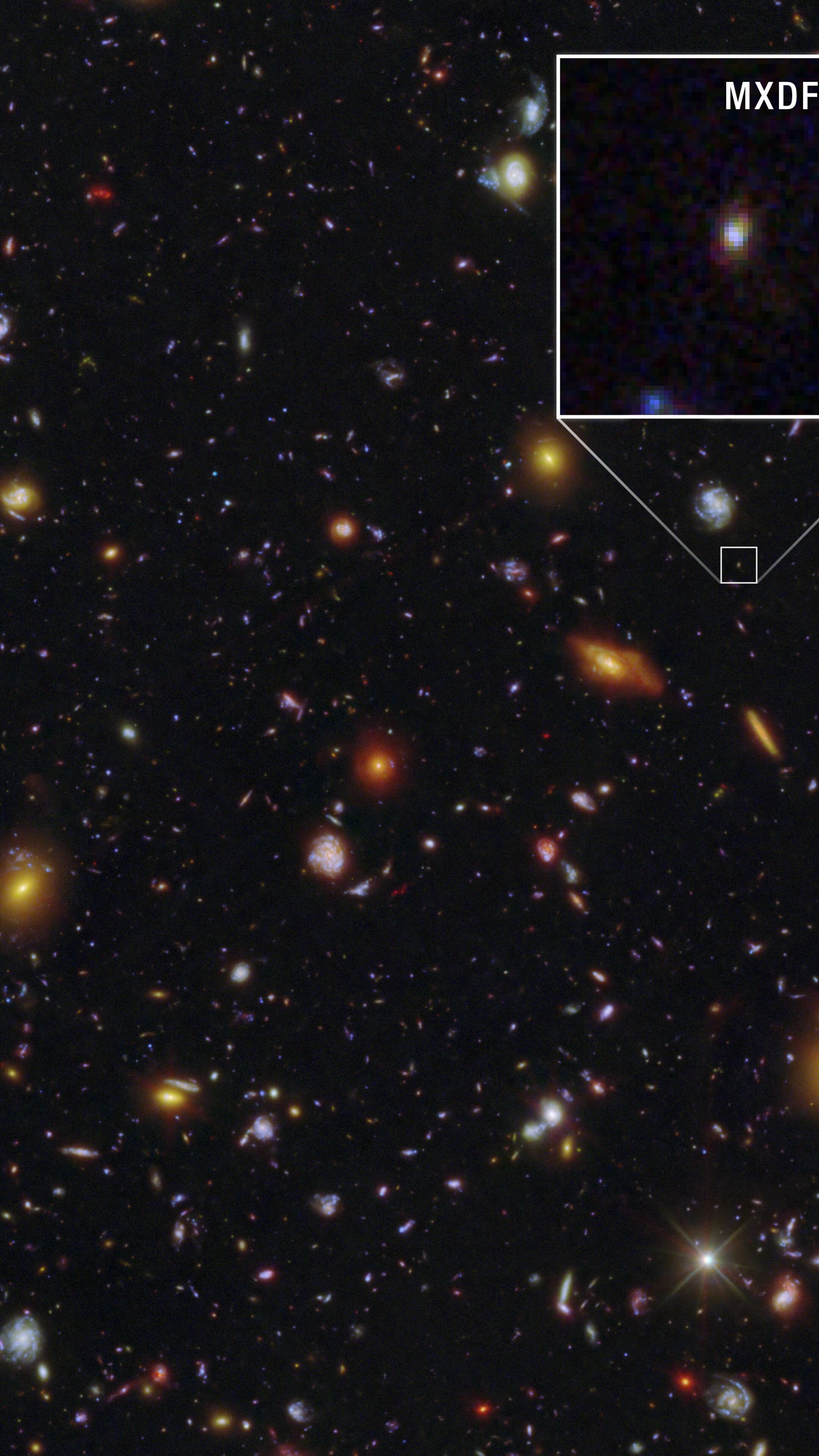
Galactic pioneer MXDFz4.4 (annotated Hubble and Webb image)
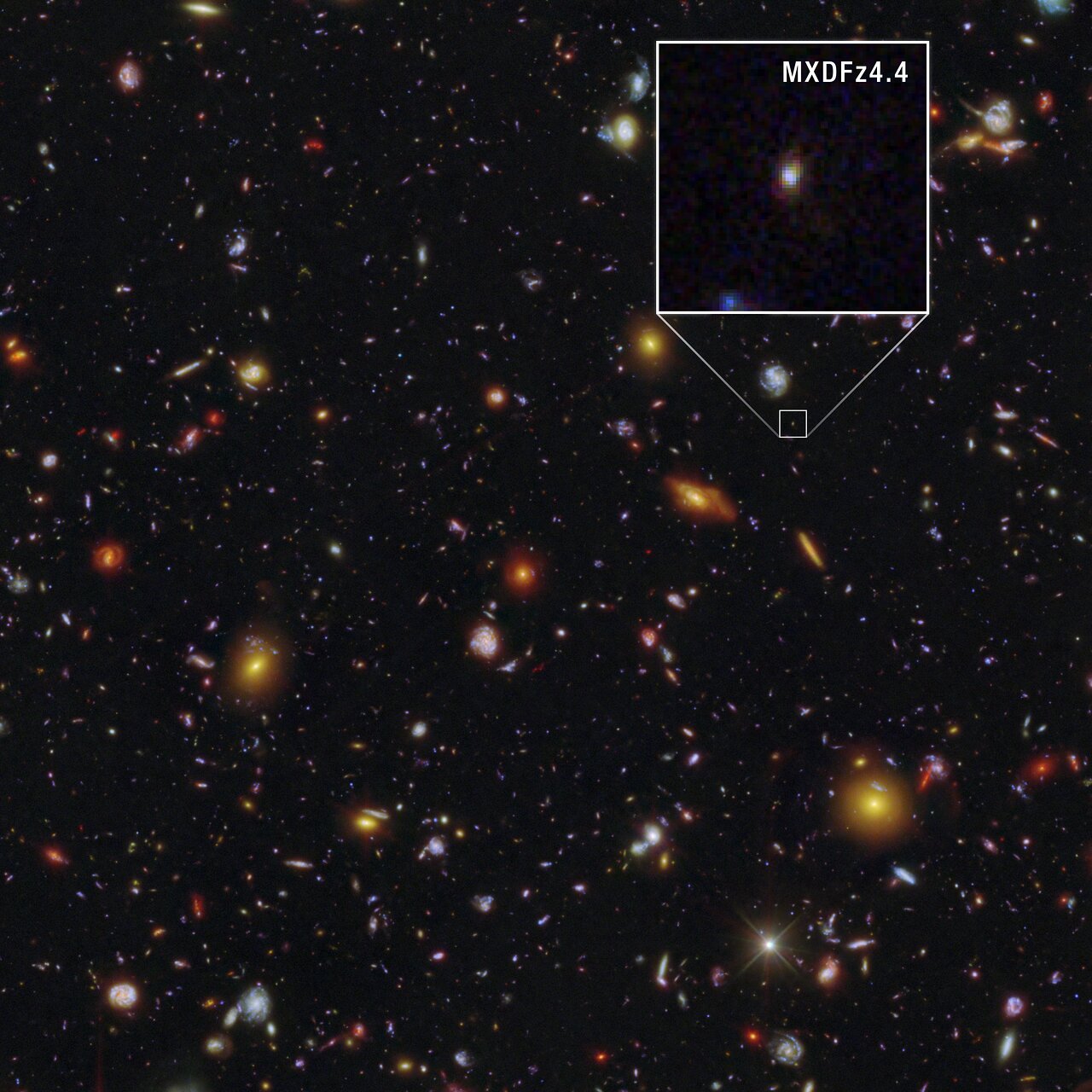
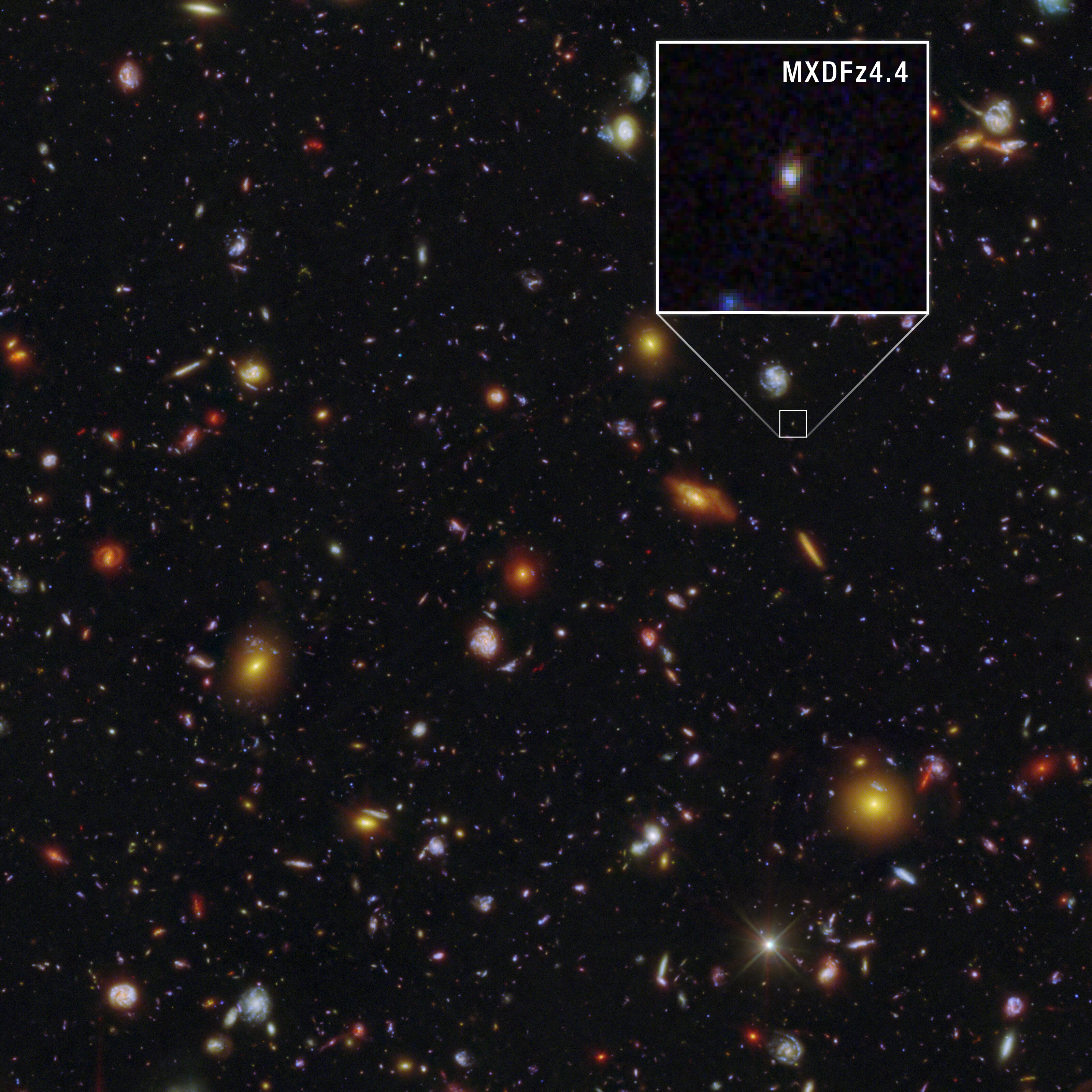
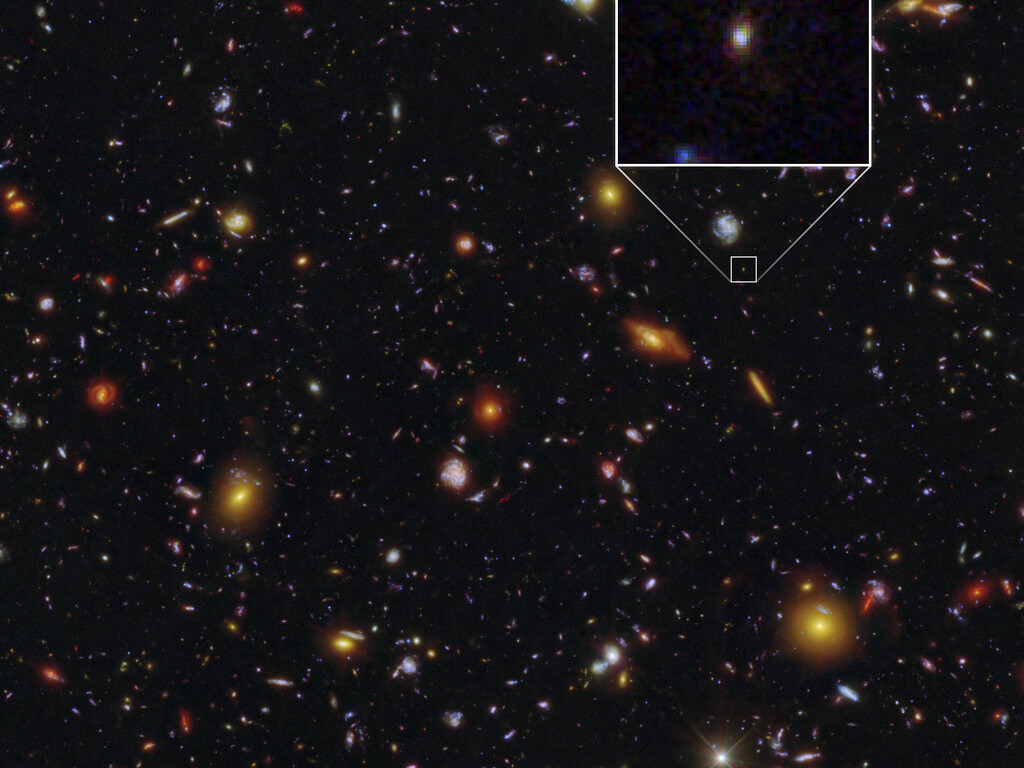
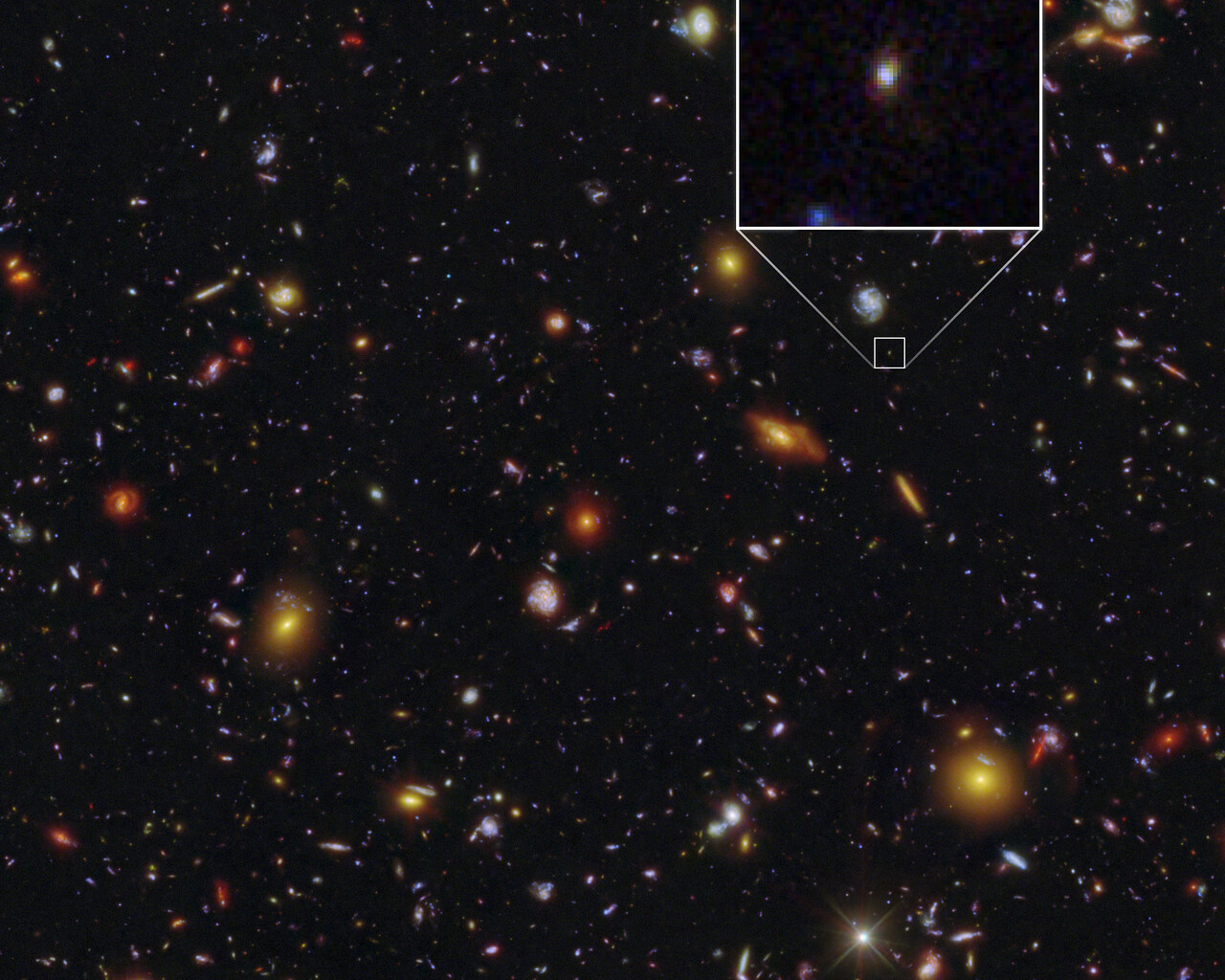
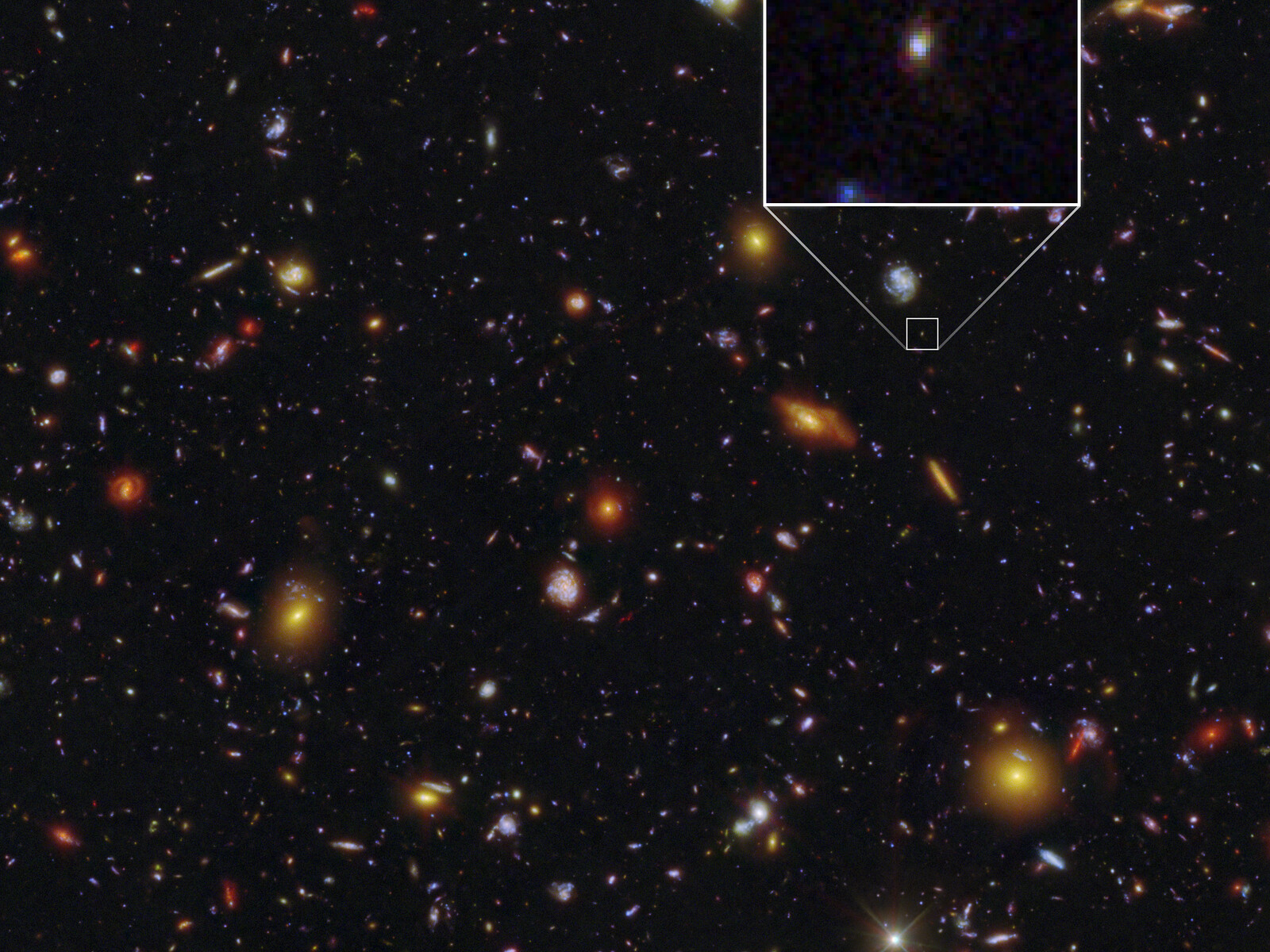
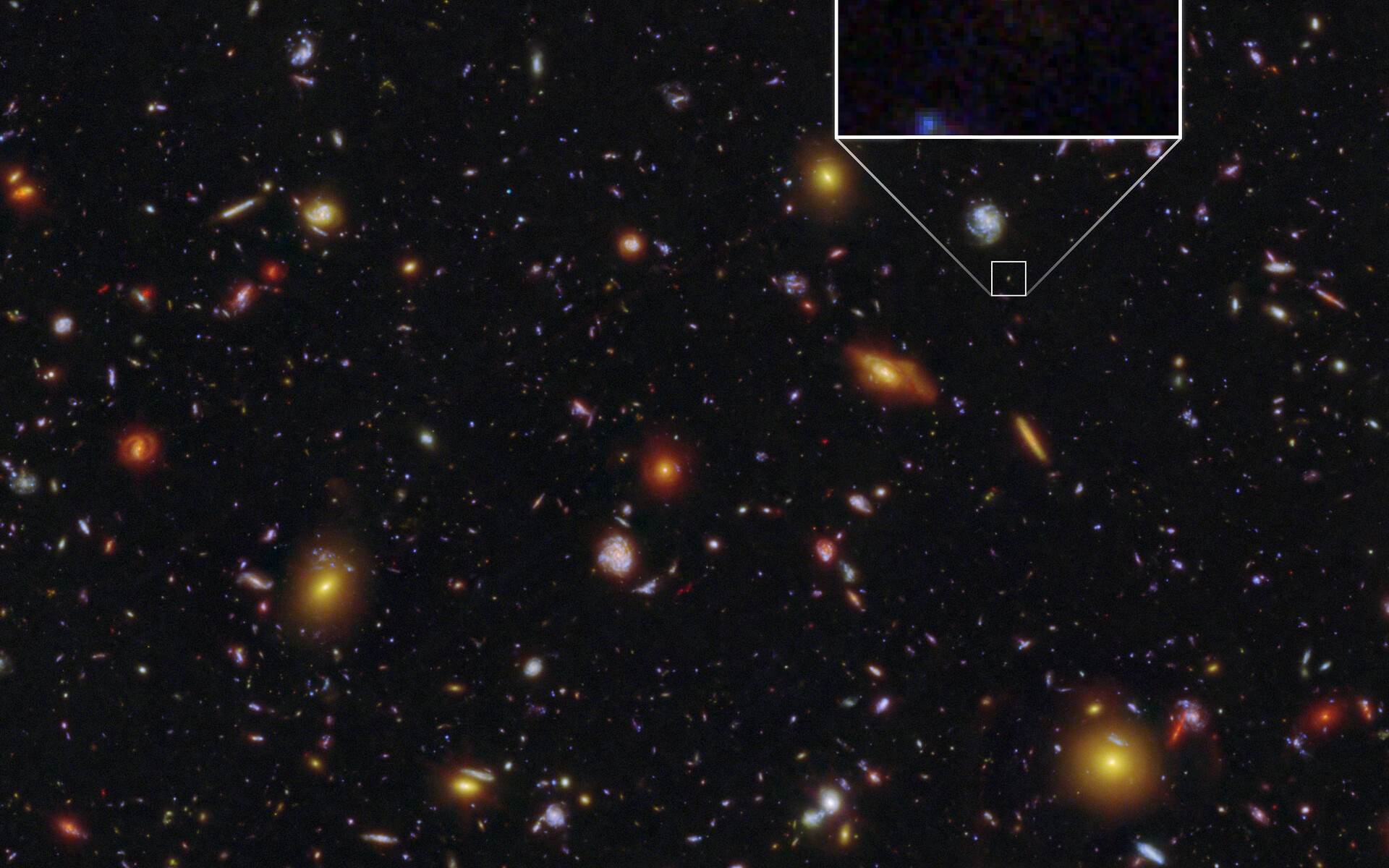
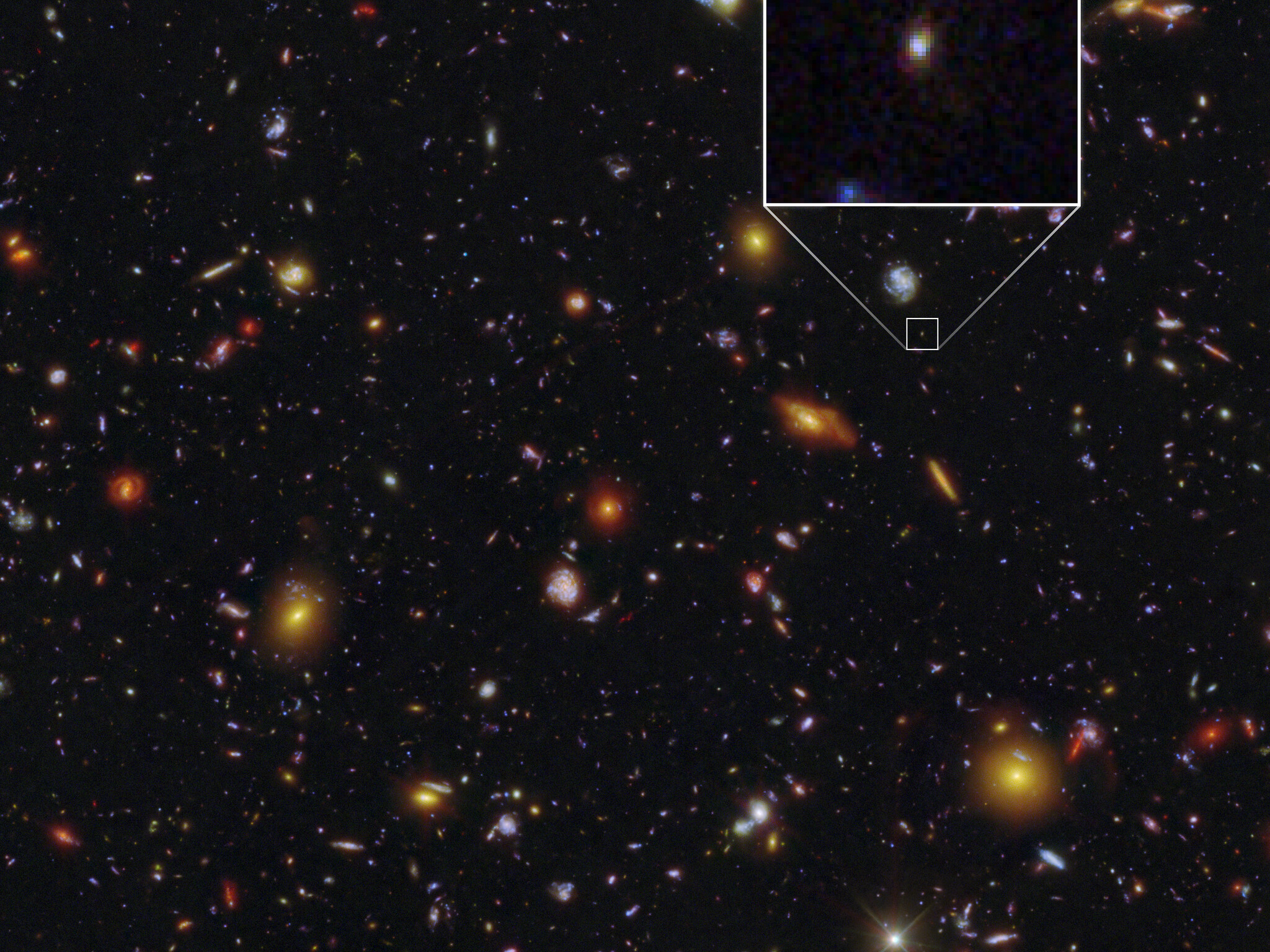
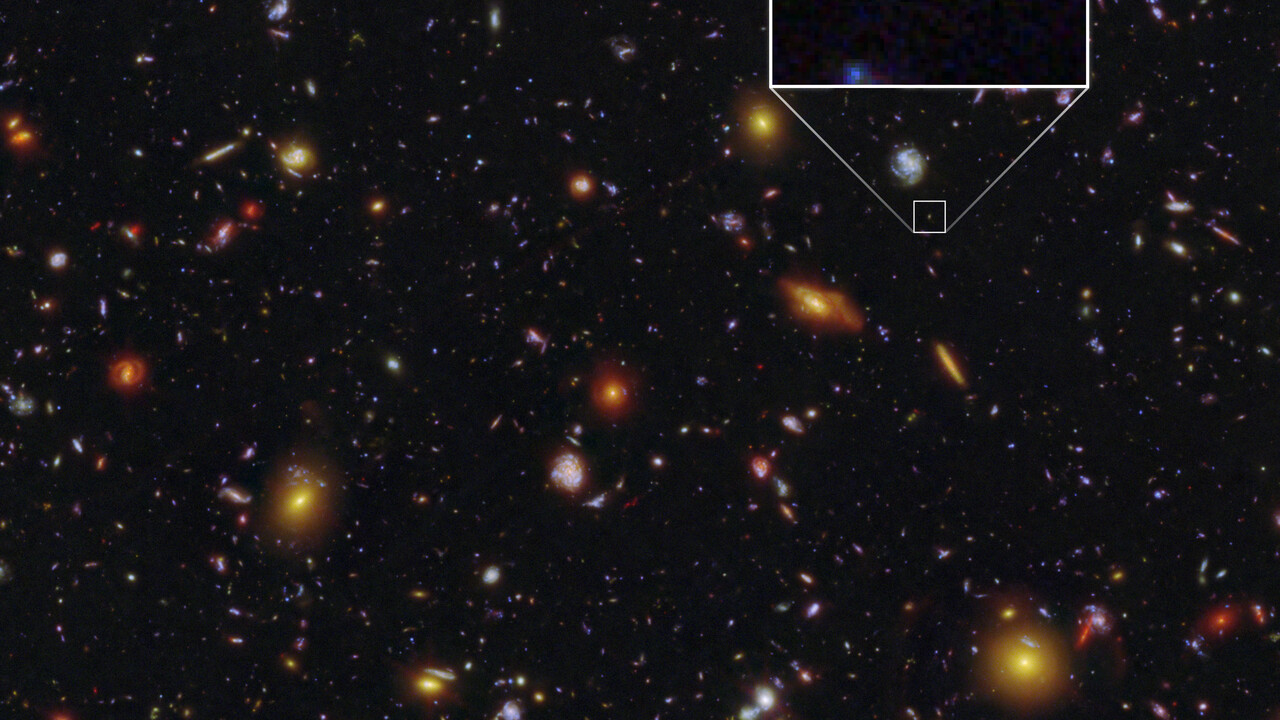
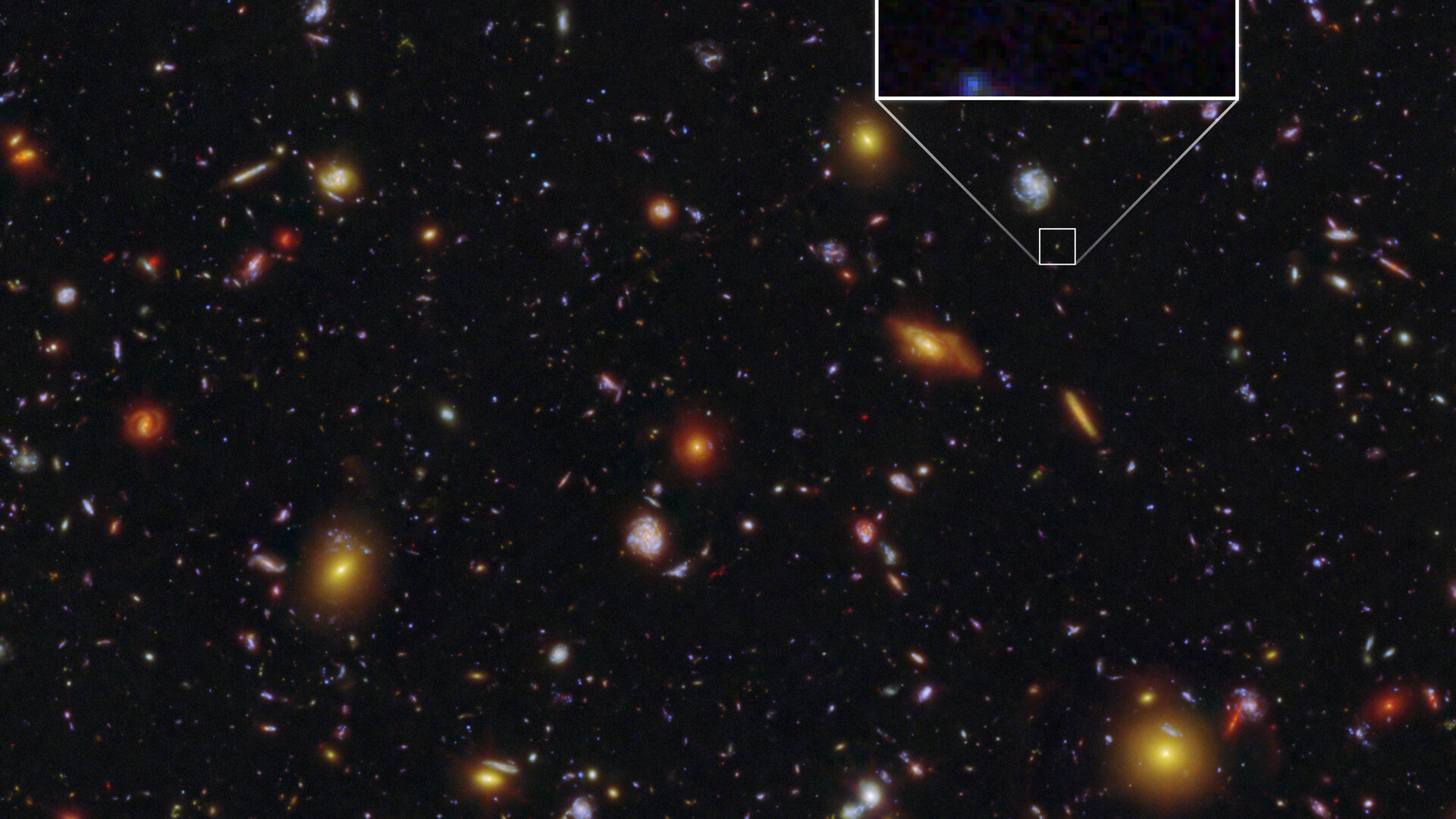
This shows the galaxy MXDFz4.4, enlarged at right, in the Hubble Ultra Deep Field (HUDF), captured by both the NASA/ESA Hubble Space Telescope’s Advanced Camera for Surveys (ACS) and the NASA/ESA/CSA James Webb Space Telescope’s NIRCam (Near-Infrared Camera).
Oddball galaxy MXDFz4.4 existed only 1.4 billion years after the Big Bang, when the Universe was still a “swirl” of opaque and clear gas as the Era of Reionisation was ending.
Detailed visible-light images from the NASA/ESA Hubble Space Telescope revealed that several bursts of younger stars cleared the space in and around the galaxy. The team sifted through extensive Hubble observations that produced deep exposures of the field where this galaxy is located.
The colour assignments in the image emphasise the specific wavelengths of light Hubble observed where ionising photons from MXDFz4.4 were detected, which transformed the gas around them from opaque to clear.
Researchers have long sought evidence to explain how the Universe transitioned from foggy to transparent — and Hubble has provided the first example this close to the era of reionisation of how that might have happened within an individual galaxy.
[Image description: Thousands of galaxies appear across the black background of space. The galaxies range in size, from big blobs and larger face-on spirals to short lines and tiny dots. The galaxies appear in a variety of colours, including orange, white, pink, and blue. One prominent foreground star appears toward the lower right with several diffraction spikes. A white square highlights one tiny pinpoint of blue light in the top third, which is blown up in a box above it and labeled MXDFz4.4. The galaxy has a light blue core with some yellow and red blotches around its edges.]
NASA, ESA, STScI, I. Goovaerts, M. Rafelski, A. Koekemoer (STScI). Image Processing: A. Pagan (STScI)