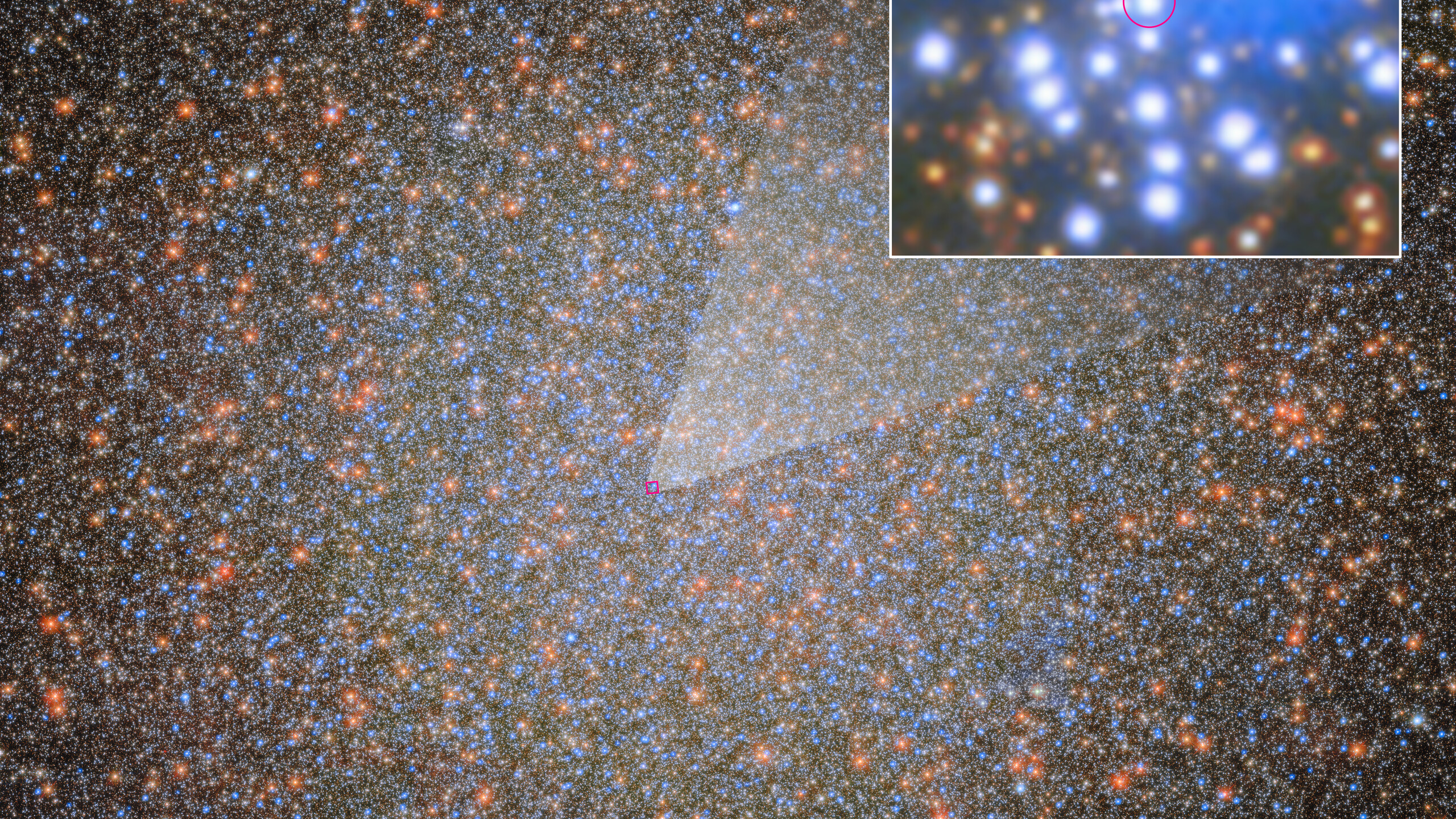
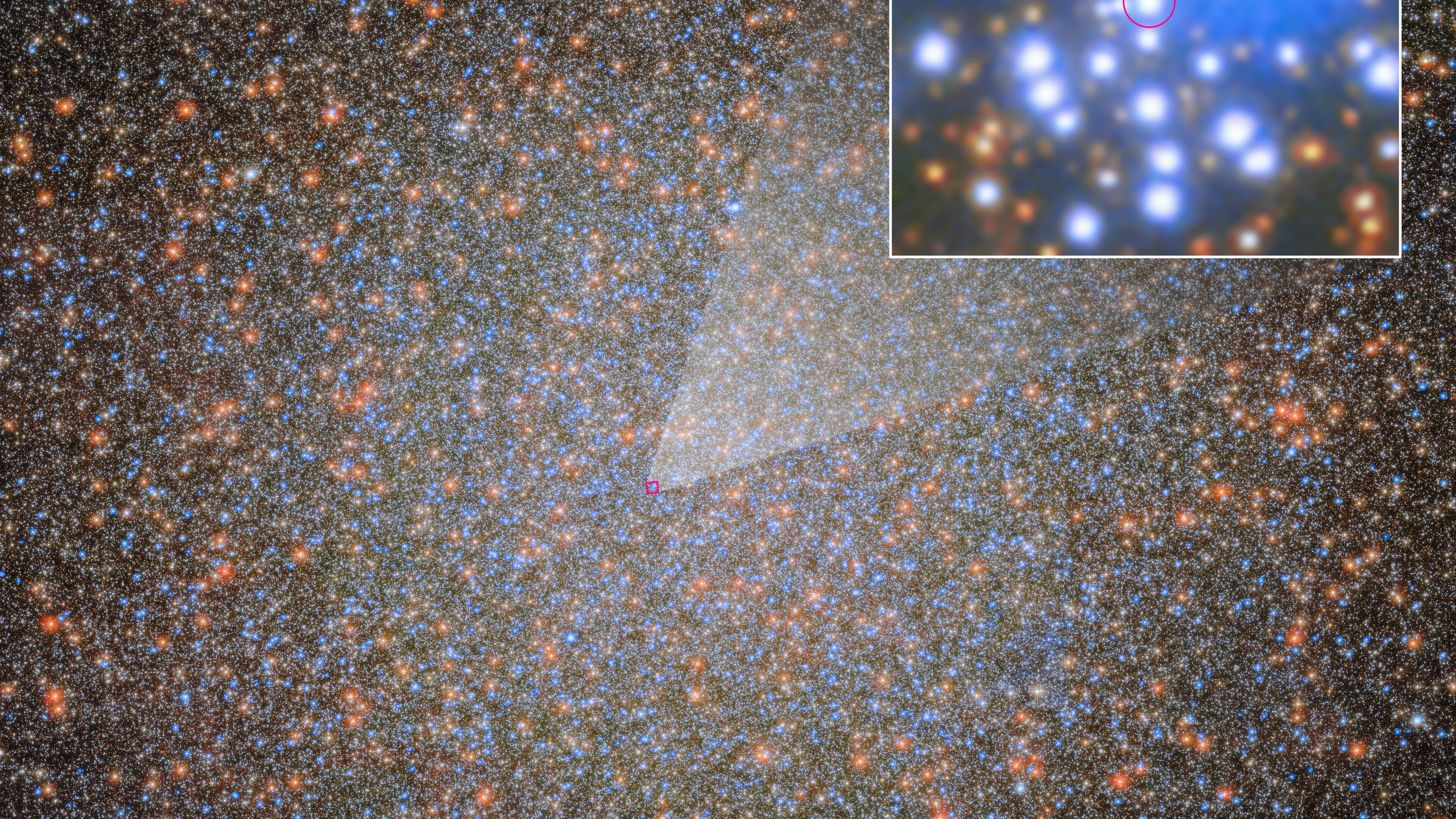
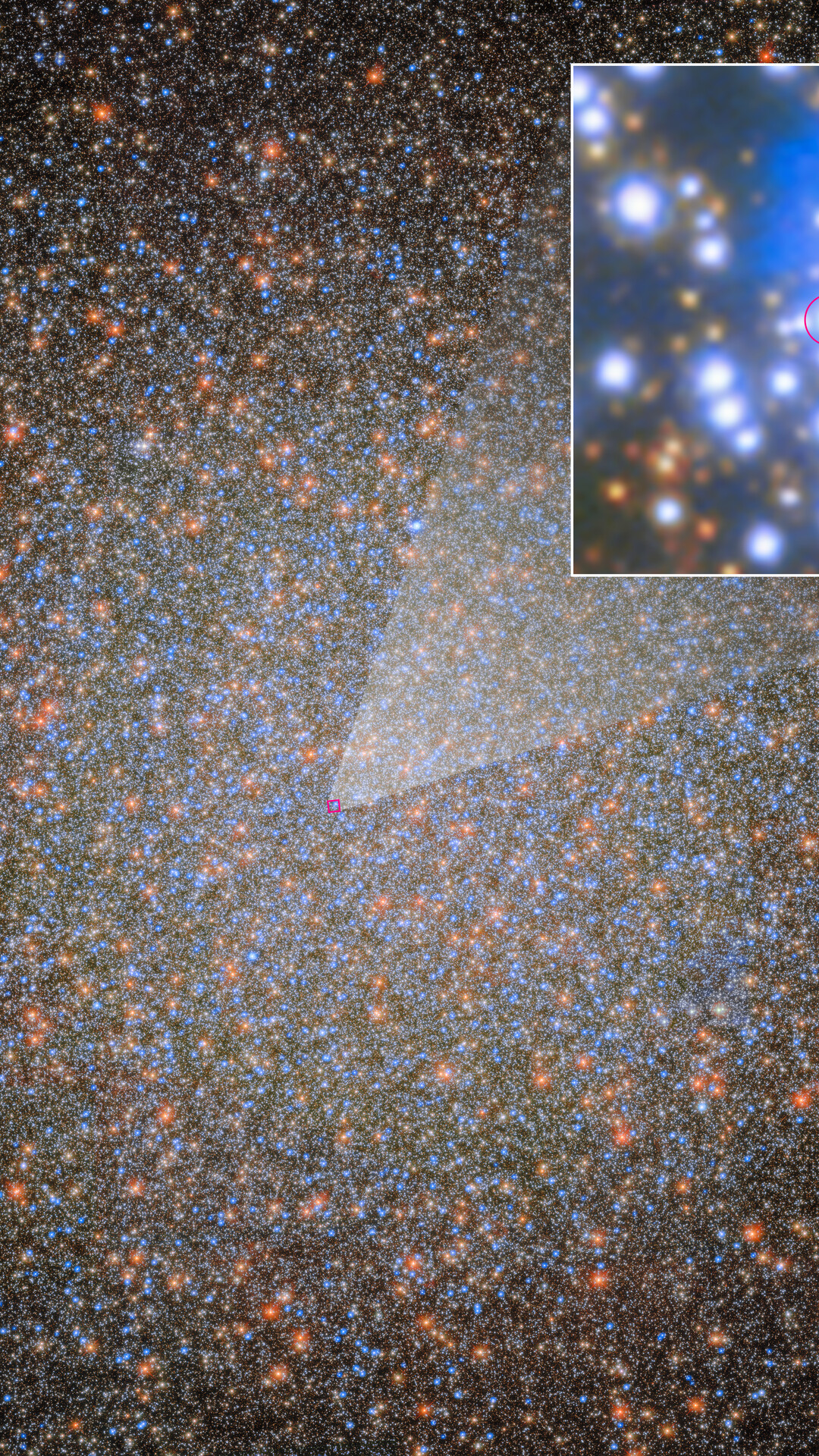
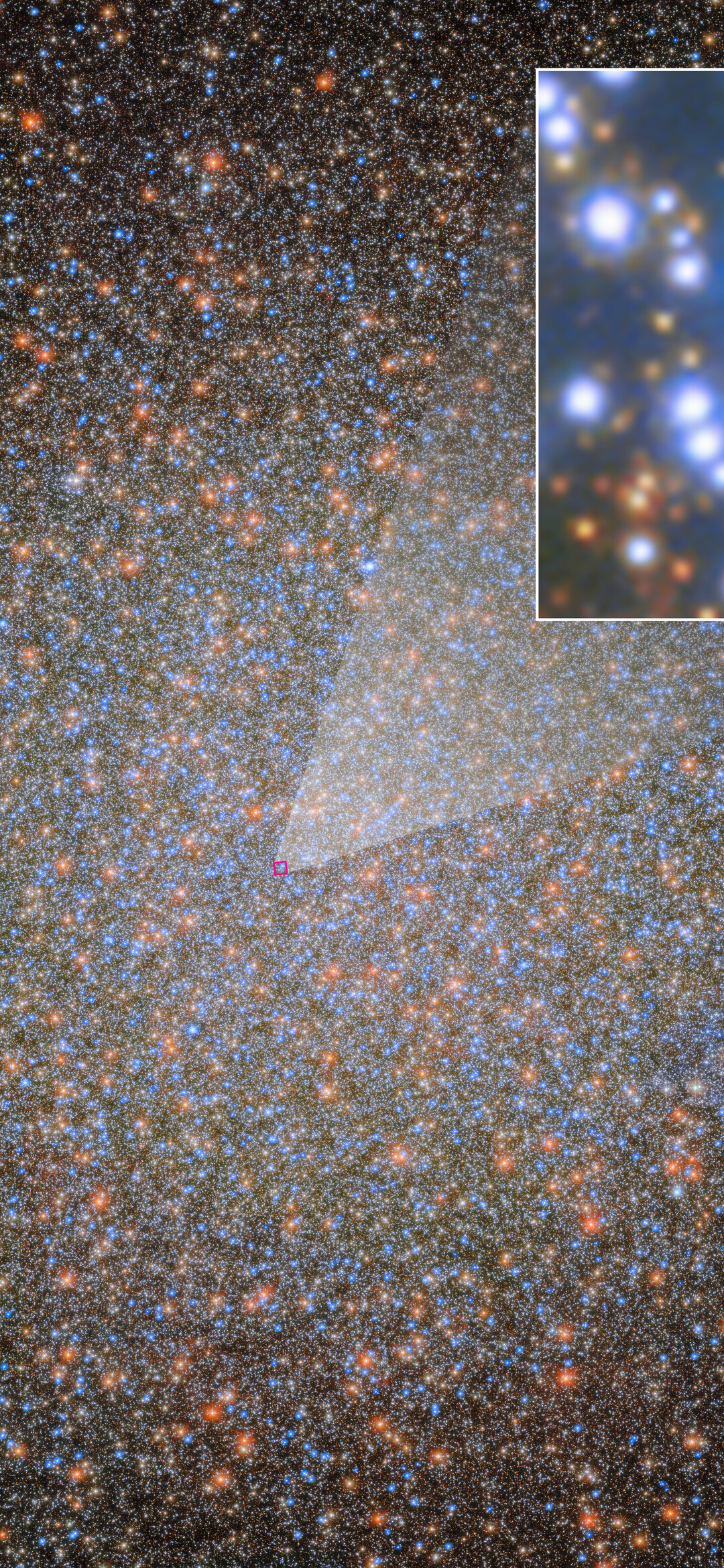
Omega Centauri context image
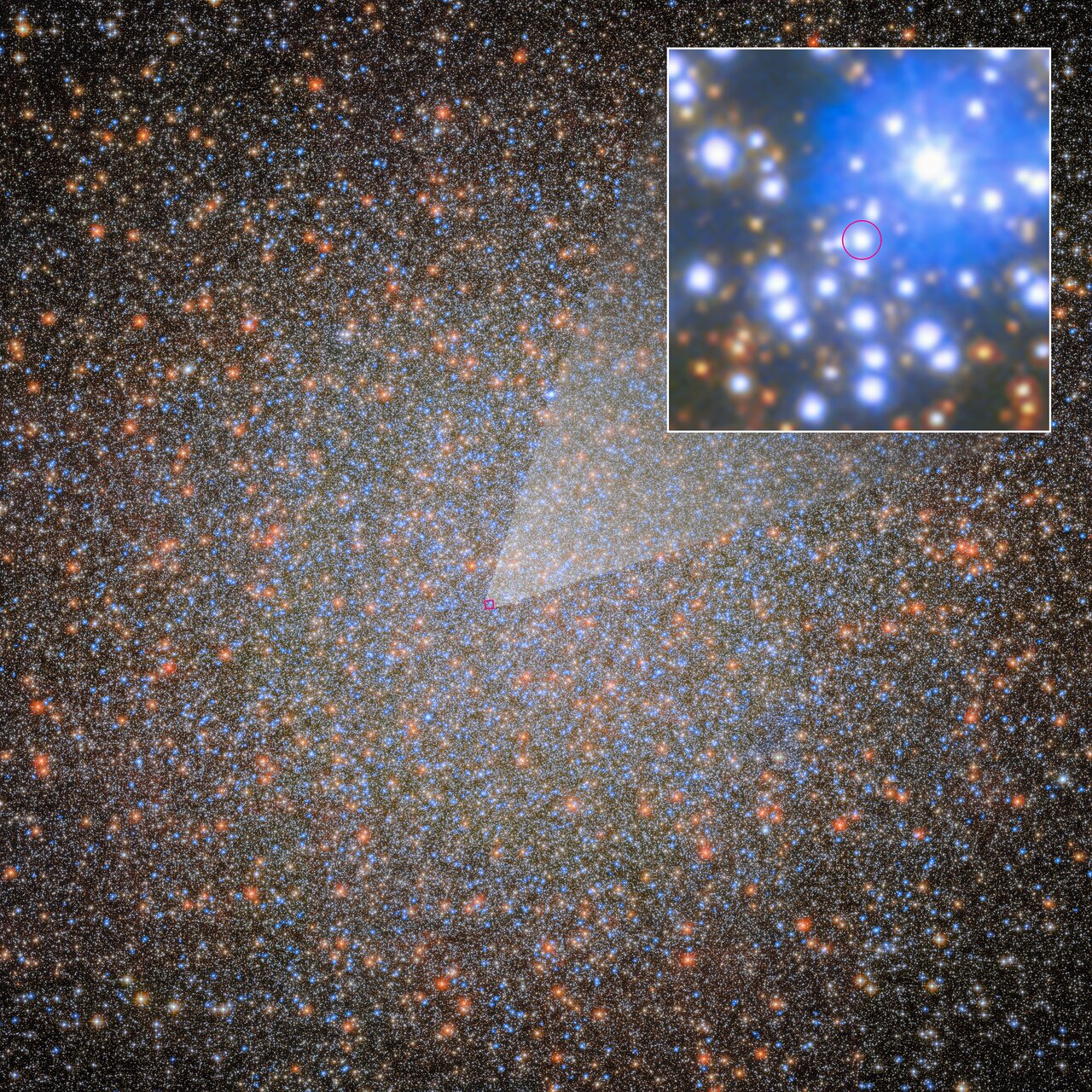
Although models suggest globular star cluster Omega Centauri should contain approximately 10,000 stellar-mass black holes, observational evidence of their existence has remained scarce.
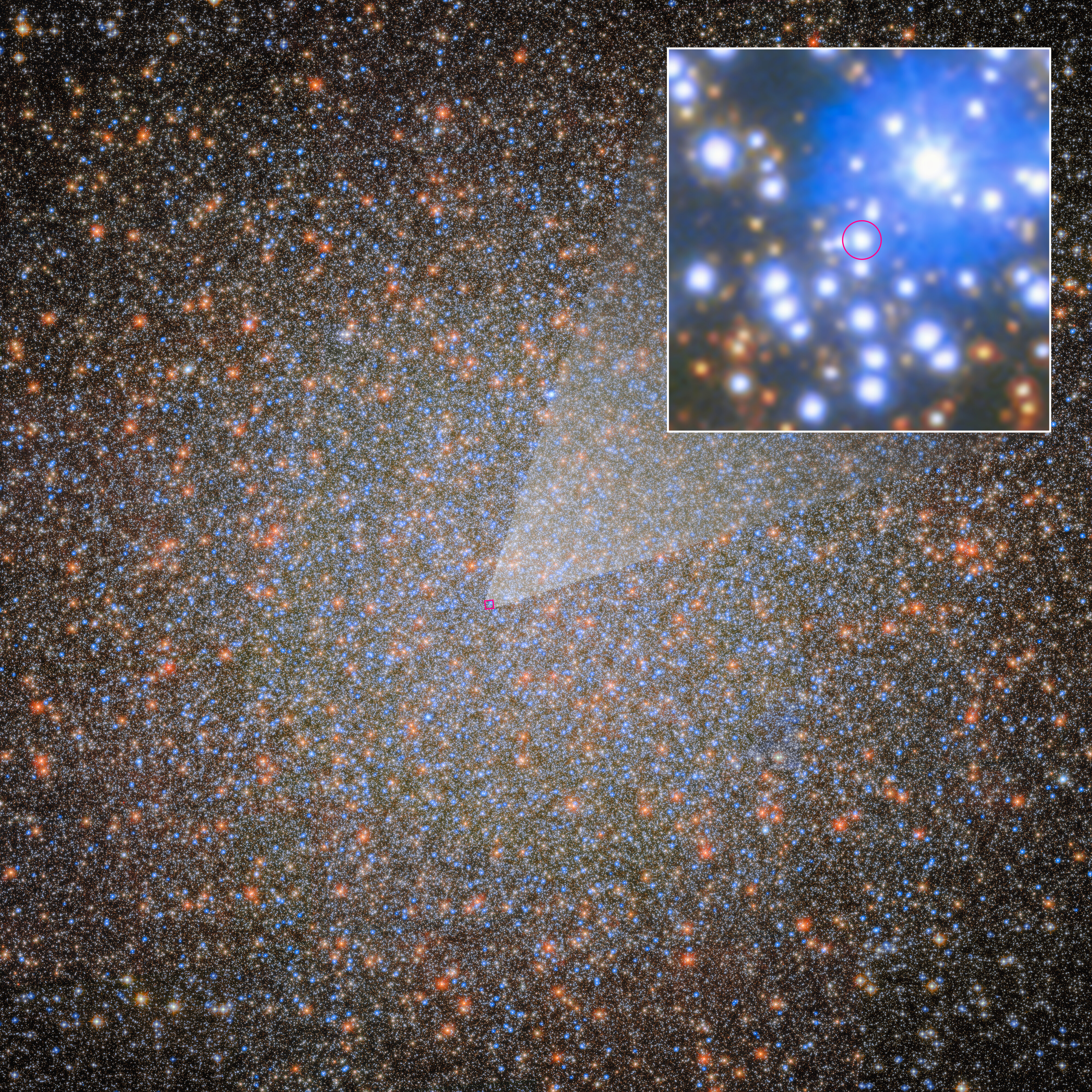
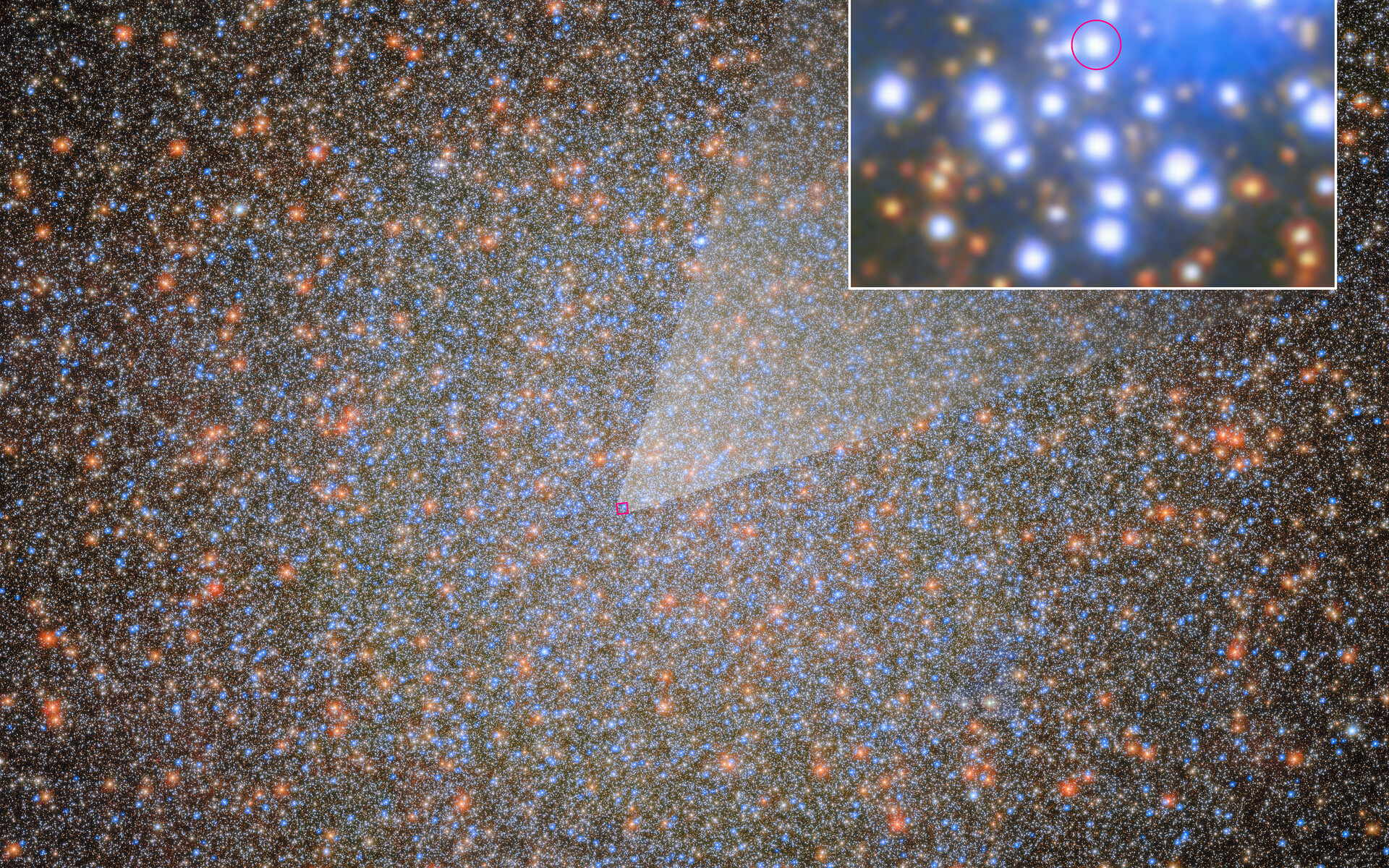
A team of astronomers recently tracked the position of stars on the sky over more than 20 years using a robust multi-mission dataset of archival data from the NASA/ESA Hubble Space Telescope as well as recent data from the NASA/ESA/CSA James Webb Space Telescope. Based on their analysis, the science team detected a visible main sequence star orbiting a stellar-mass black hole. Called oMEGACat BH-2, this is the first stellar-mass black hole ever found in Omega Centauri.
Its discovery sparks many questions surrounding the physics and formation of stellar-mass black holes within globular star clusters, and strengthens the need for follow-up studies of Omega Centauri and investigations into similar environments.
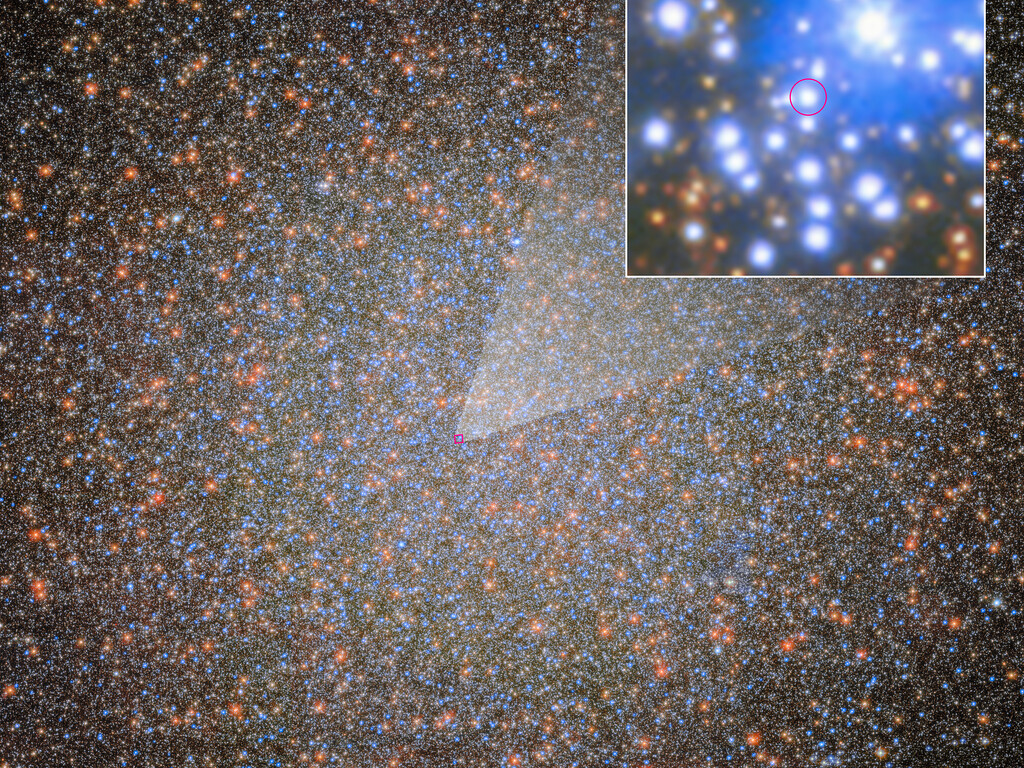
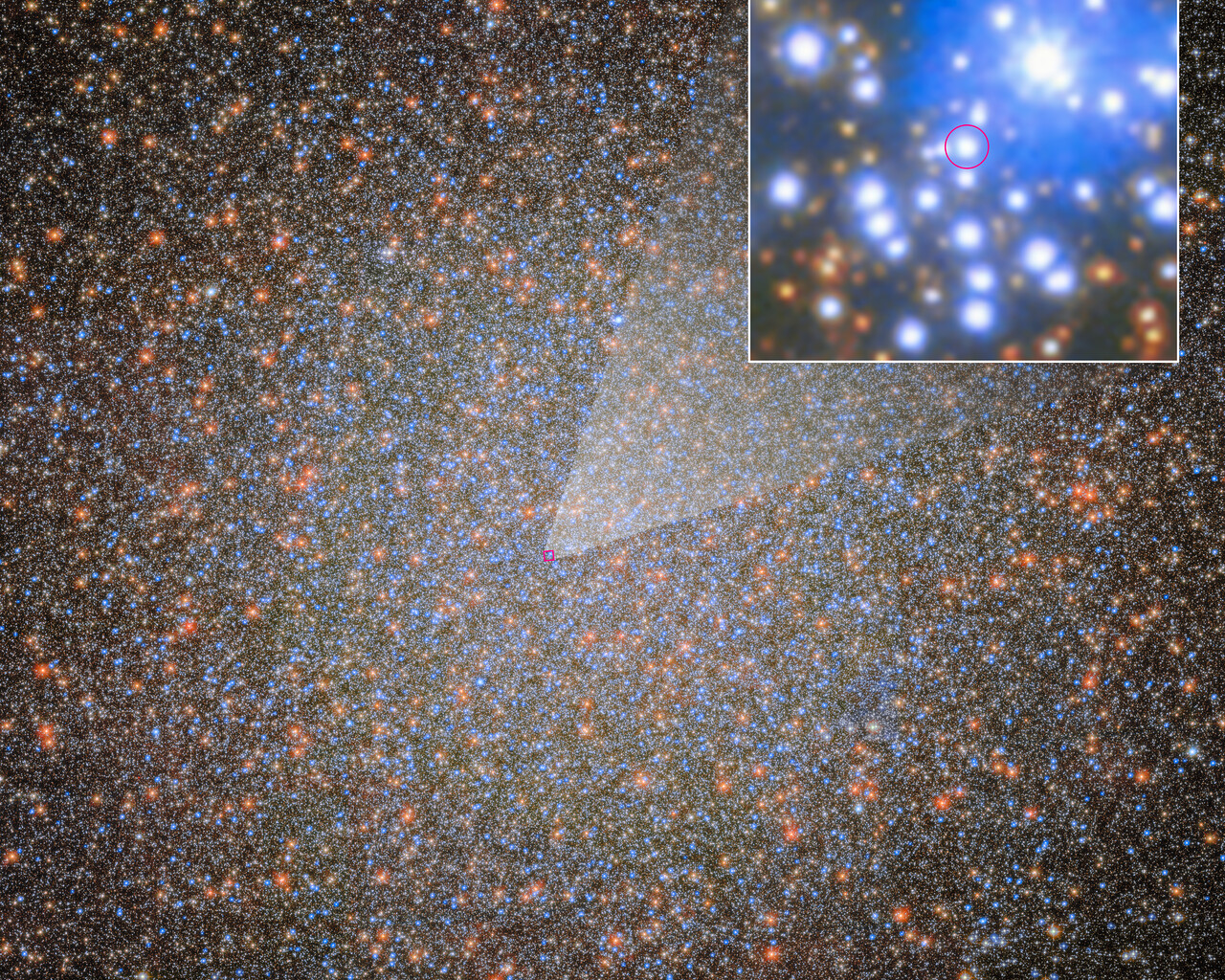
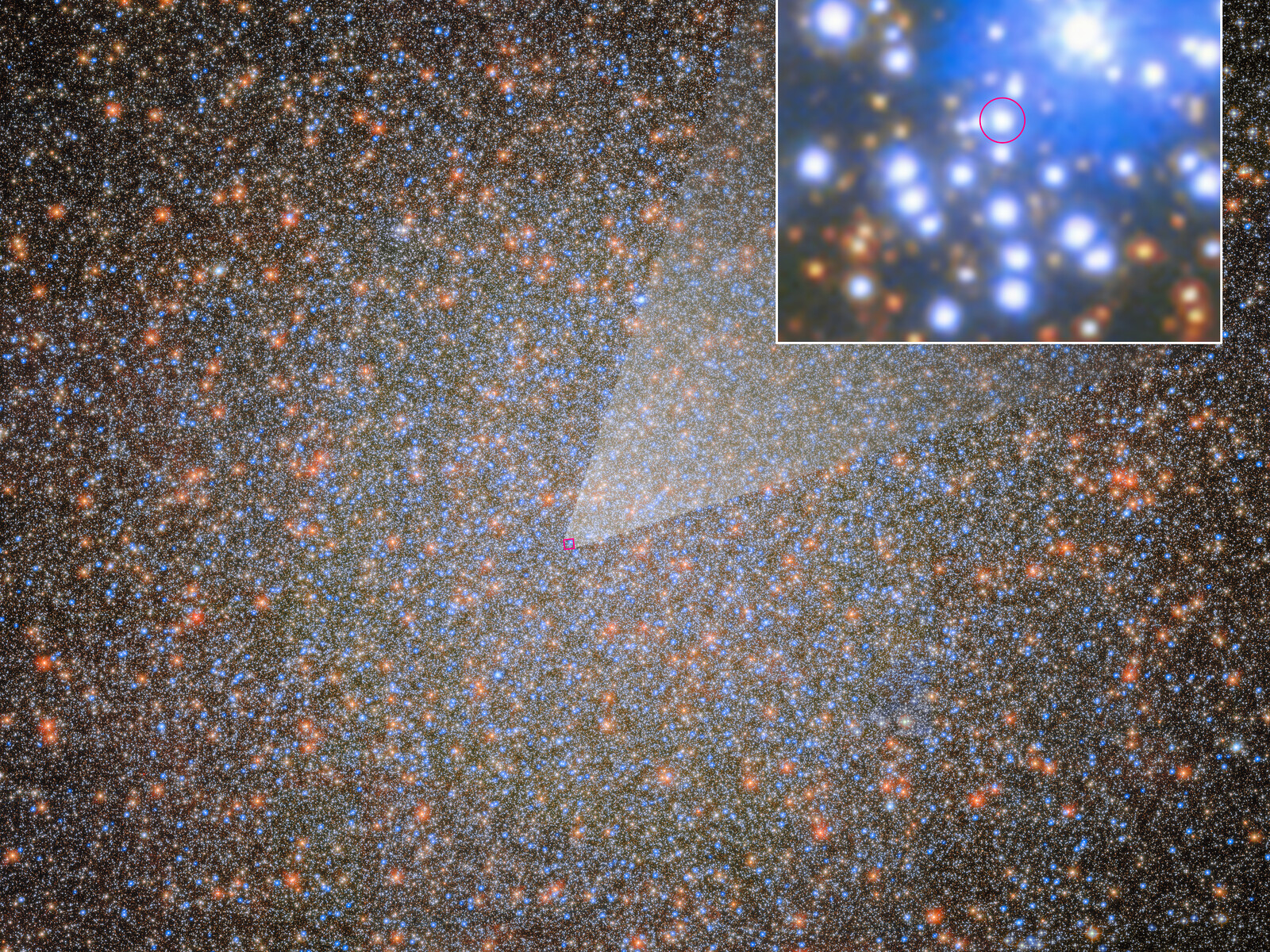
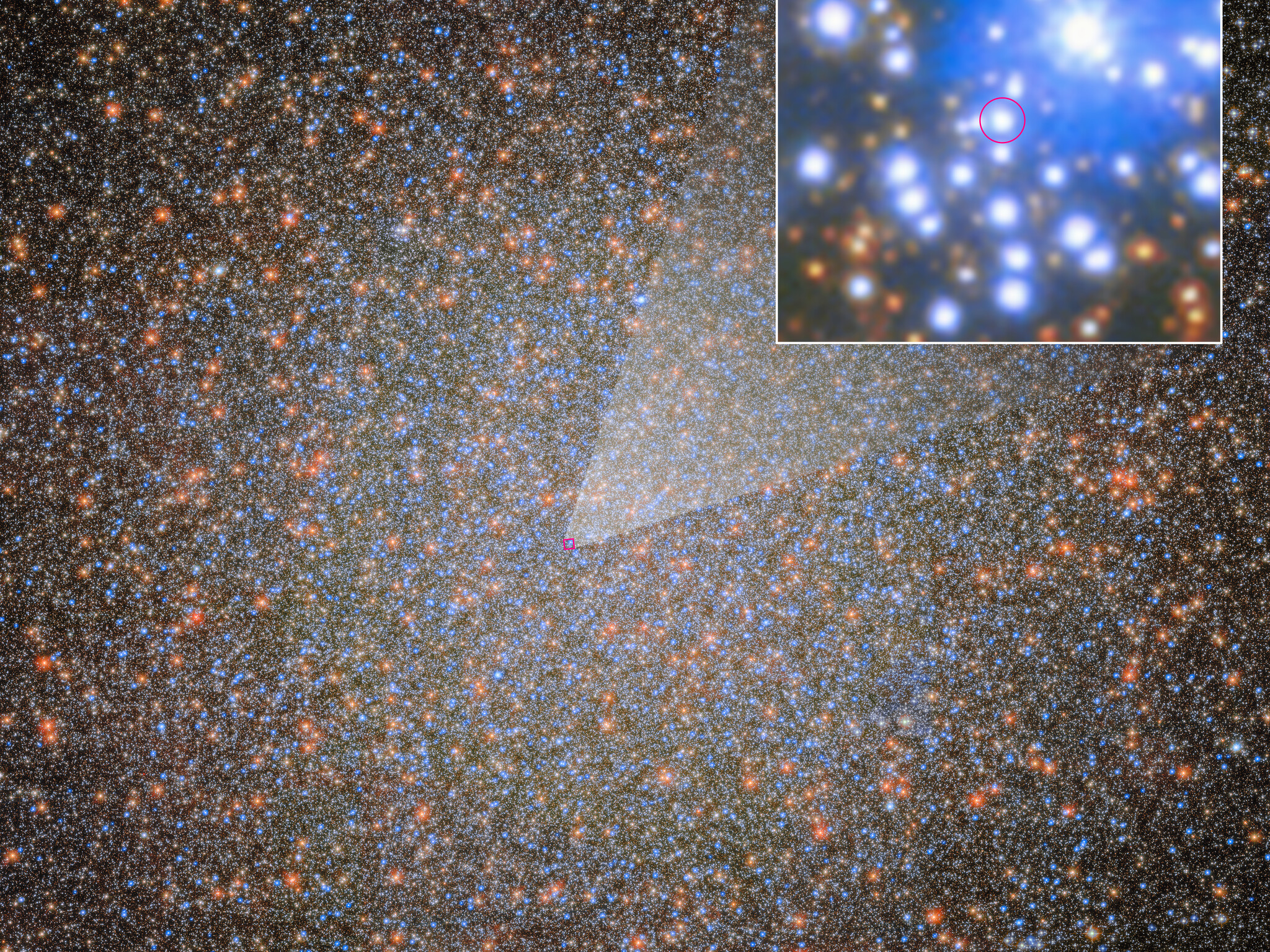
[Image description: Hubble image of globular star cluster Omega Centauri, which looks like a highly dense field of stars. Some appear a bit larger and brighter than others, with the majority of stars appearing blue, orange, and yellow. They are scattered mostly uniformly, like grains of sand. Toward the centre they gradually become closer, creating a more luminous area at the globular star cluster’s core. A small red square frame is near the centre. It connects to a square pullout in the top right corner, which shows the outlined area in greater detail. Among the blue- and orange-colored stars is a small blue-white dot that is highlighted by a small red circle.]
ESA/Hubble & NASA, M. Häberle (MPIA)
About the Image
| Id: | heic2610a |
|---|---|
| Type: | Collage |
| Release date: | 13 July 2026, 16:00 |
| Related releases: | heic2610 |
| Size: | 13719 x 13719 px |
About the Object
| Category: | Star Clusters |
|---|