Baby Boom in Galaxy NGC 3310

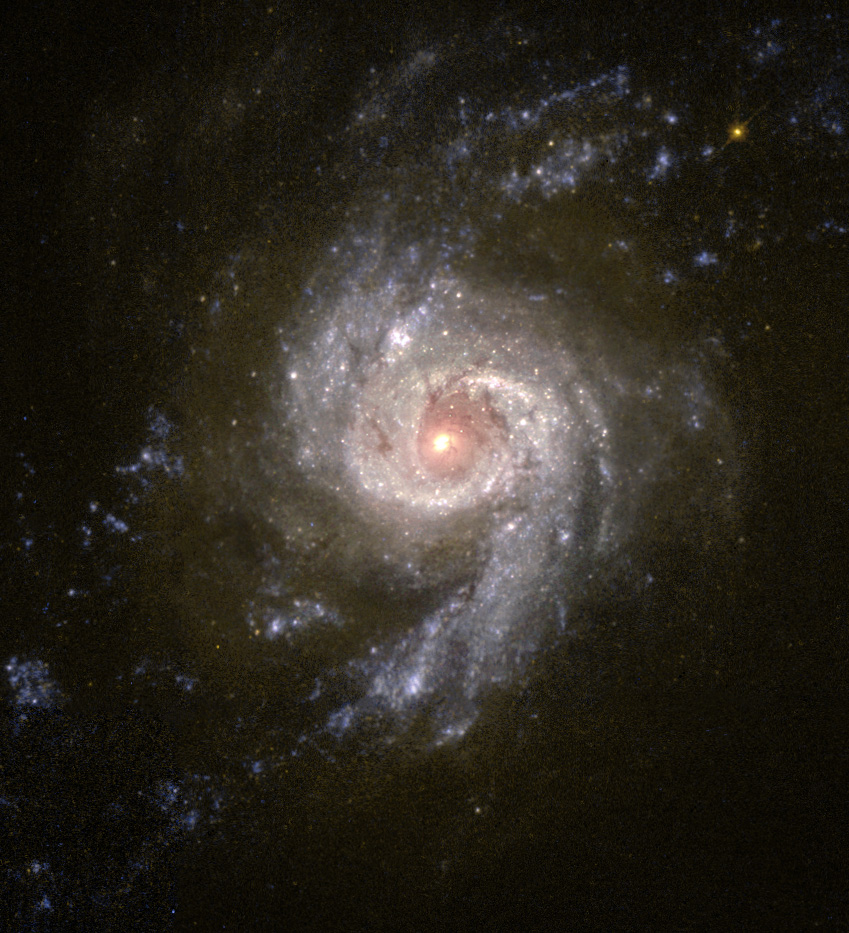
Most galaxies form new stars at a fairly slow rate, but members of a rare class known as 'starburst' galaxies blaze with extremely active star formation. The galaxy NGC 3310 is one such starburst galaxy that is forming clusters of new stars at a prodigious rate. Scientists using the NASA/ESA Hubble Space Telescope are perfecting a technique to determine the history of starburst activity in NGC 3310 by studying the colours of its star clusters.
Credit:About the Image
About the Object
| Name: | IRAS 10356+5345, NGC 3310 |
|---|---|
| Type: | Local Universe : Galaxy : Activity : Starburst |
| Distance: | 55 million light years |
| Constellation: | Ursa Major |
| Category: | Galaxies |

Classic Wallpapers



Coordinates
| Position (RA): | 10 38 45.74 |
|---|---|
| Position (Dec): | 53° 30' 15.06" |
| Field of view: | 1.41 x 1.55 arcminutes |
| Orientation: | North is 150.5° left of vertical |
View in ESASky:
View in WorldWide Telescope:

Colours & filters
| Band | Wavelength | Telescope |
|---|---|---|
| Ultraviolet U | 330 nm |
Hubble Space Telescope
WFPC2 |
| Ultraviolet U | 336 nm |
Hubble Space Telescope
WFPC2 |
| Optical B | 439 nm |
Hubble Space Telescope
WFPC2 |
| Infrared I | 814 nm |
Hubble Space Telescope
WFPC2 |