Baby Burp in Galaxy's Core (Galaxy View)
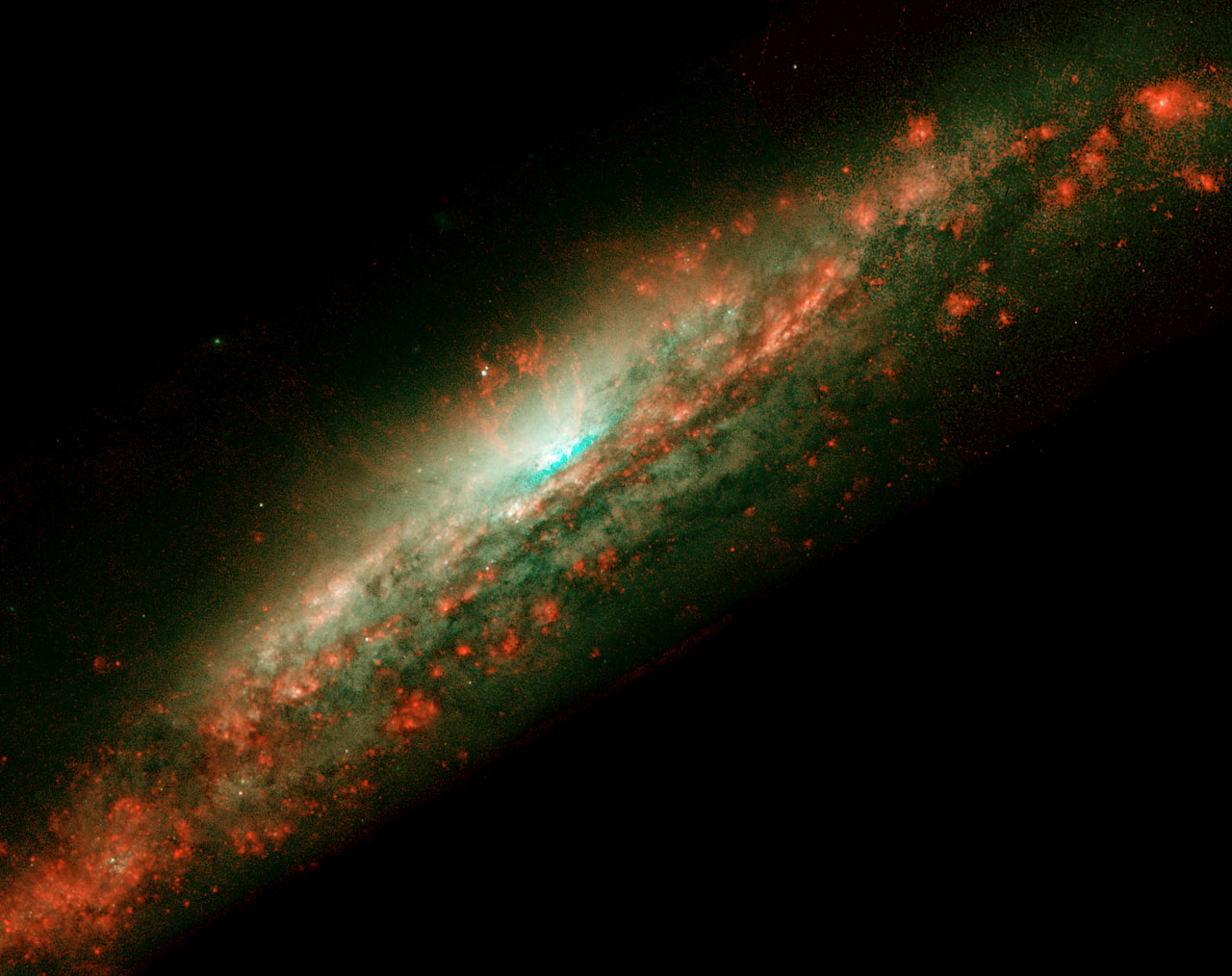
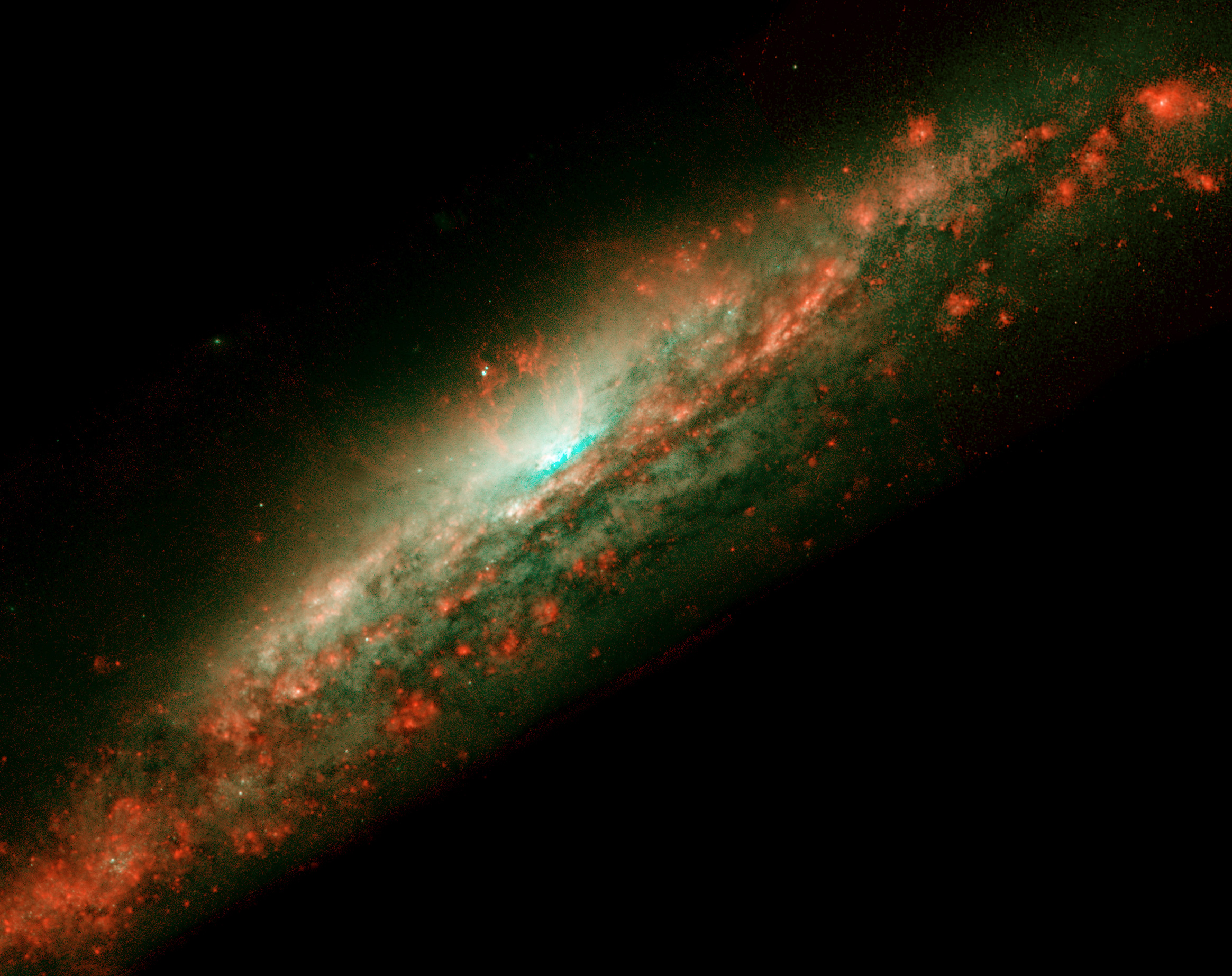
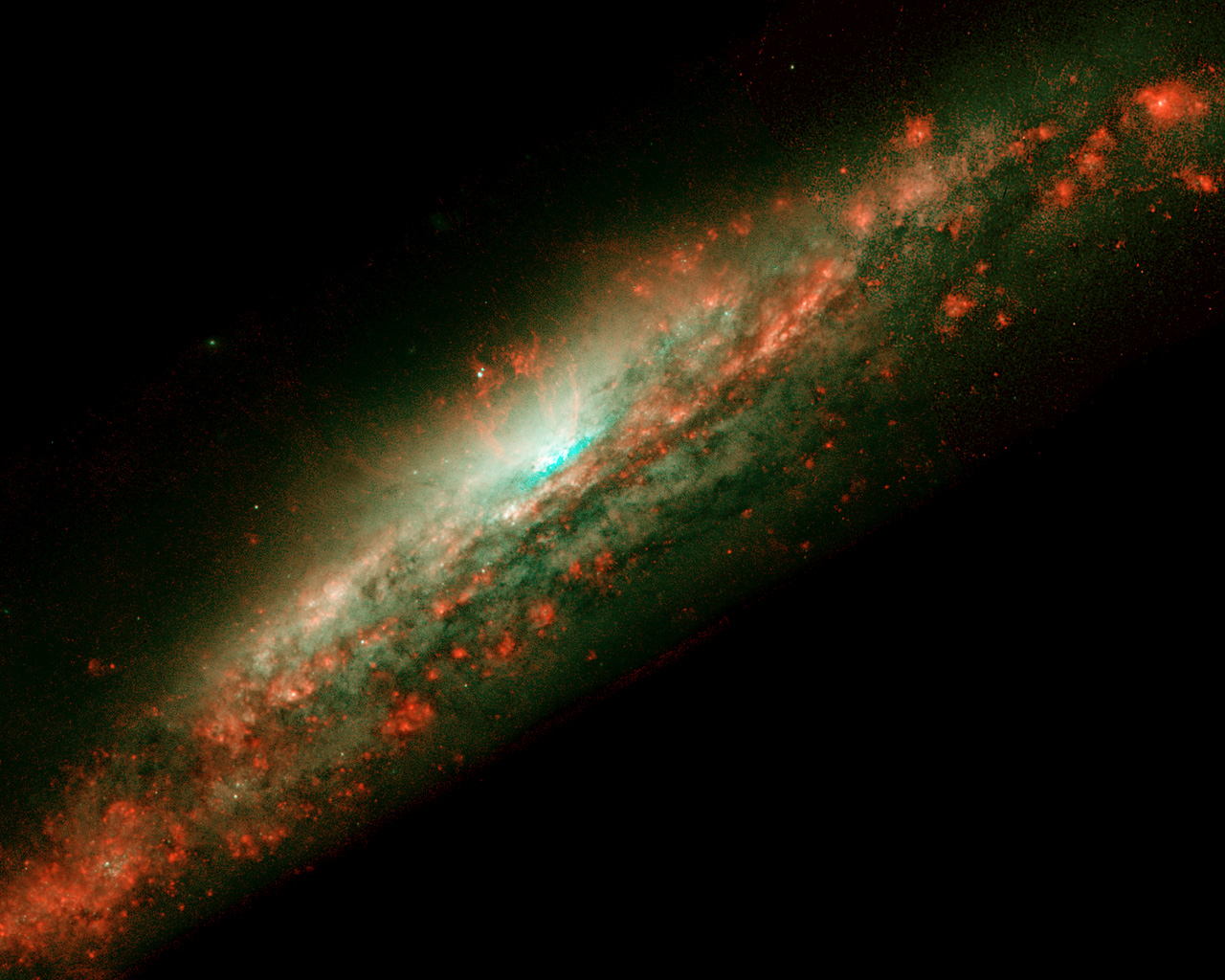
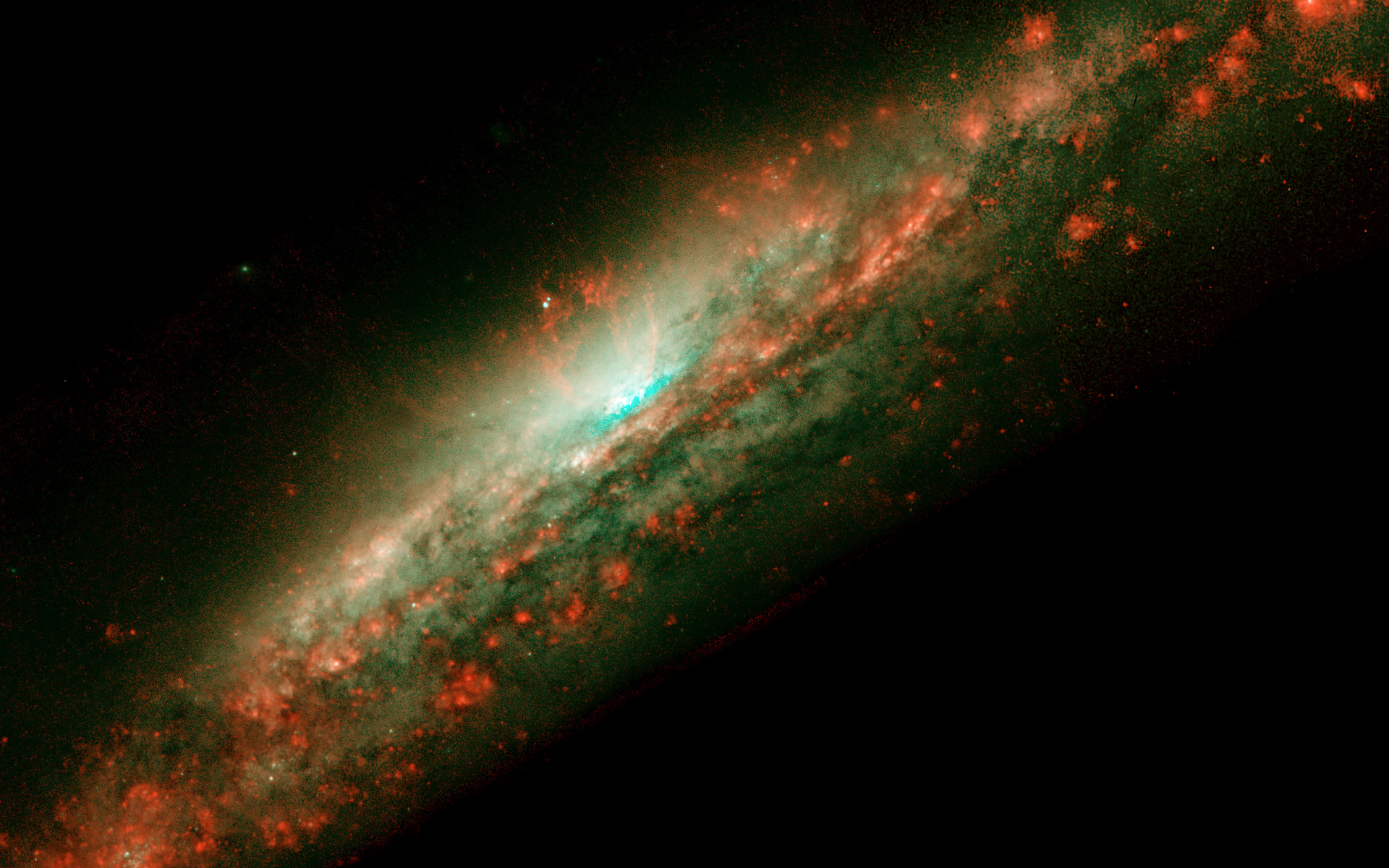
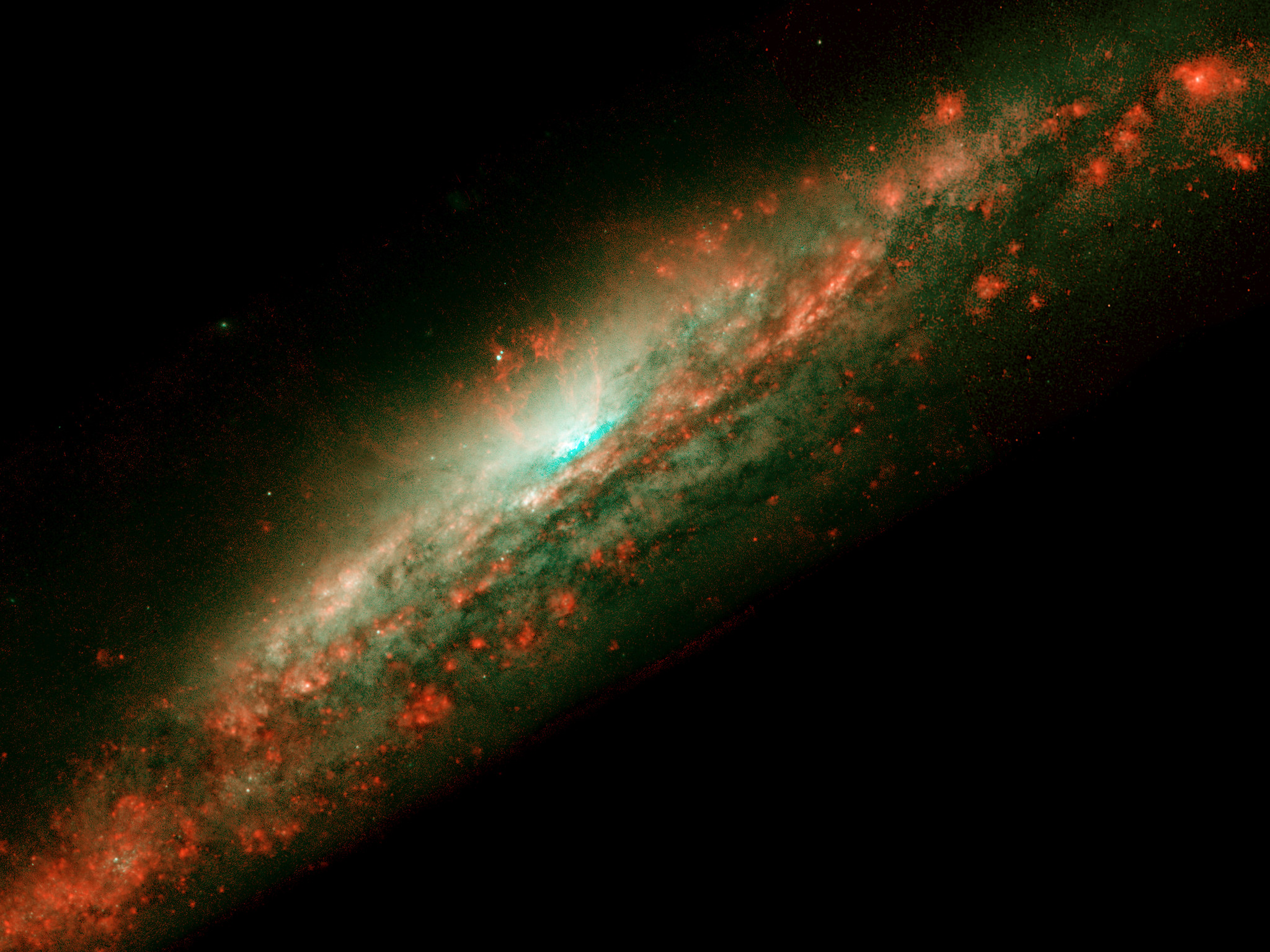
These NASA/ESA Hubble Space Telescope snapshots reveal dramatic activities within the core of the galaxy NGC 3079, where a lumpy bubble of hot gas is rising from a cauldron of glowing matter. The picture at left shows the bubble in the center of the galaxy's disk. The structure is more than 3, 000 light-years wide and rises 3, 500 light-years above the galaxy's disk. The smaller photo at right is a close-up view of the bubble. Astronomers suspect that the bubble is being blown by 'winds' (high-speed streams of particles) released during a burst of star formation. Gaseous filaments at the top of the bubble are whirling around in a vortex and are being expelled into space. Eventually, this gas will rain down upon the galaxy's disk where it may collide with gas clouds, compress them, and form a new generation of stars. The two white dots just above the bubble are probably stars in the galaxy.
About the Image
About the Object
| Name: | IRAS 0958+559P15, NGC 3079 |
|---|---|
| Type: | Local Universe : Galaxy : Type : Spiral Local Universe : Galaxy : Type : Barred |
| Distance: | 65 million light years |
| Constellation: | Ursa Major |
| Category: | Galaxies |

Classic Wallpapers



Coordinates
| Position (RA): | 10 1 56.99 |
|---|---|
| Position (Dec): | 55° 40' 49.77" |
| Field of view: | 2.73 x 2.16 arcminutes |
| Orientation: | North is 42.5° right of vertical |


Colours & filters
| Band | Wavelength | Telescope |
|---|---|---|
| Optical NII | 658 nm |
Hubble Space Telescope
WFPC2 |
| Infrared I | 814 nm |
Hubble Space Telescope
WFPC2 |