Fireworks in the Sky

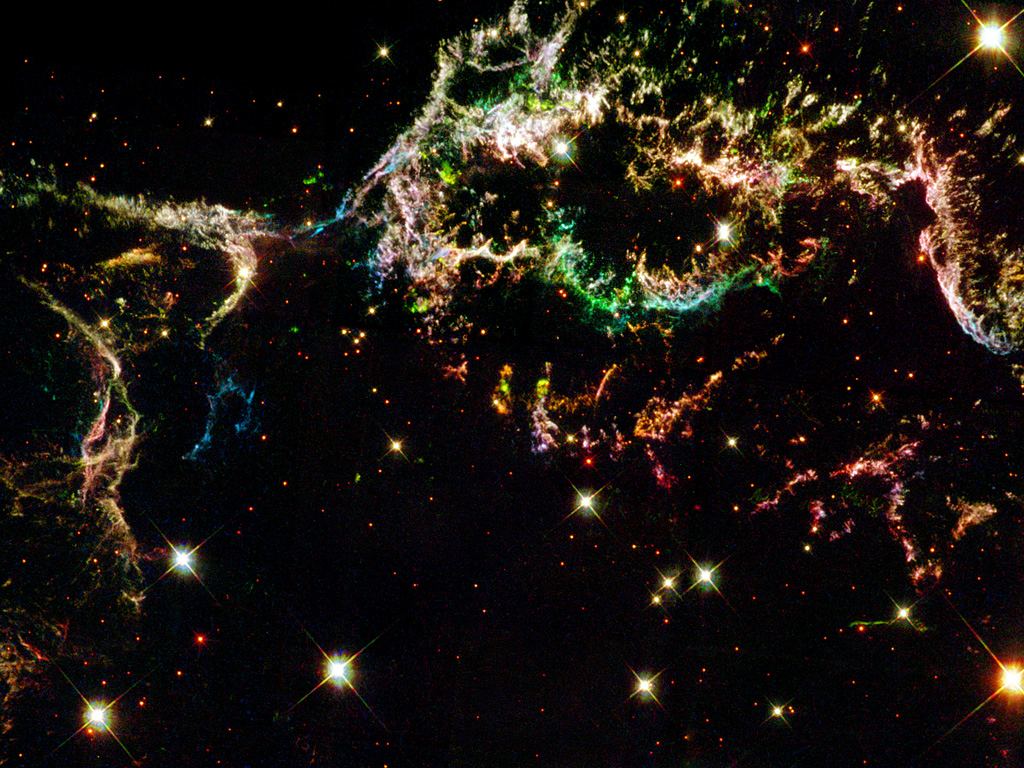
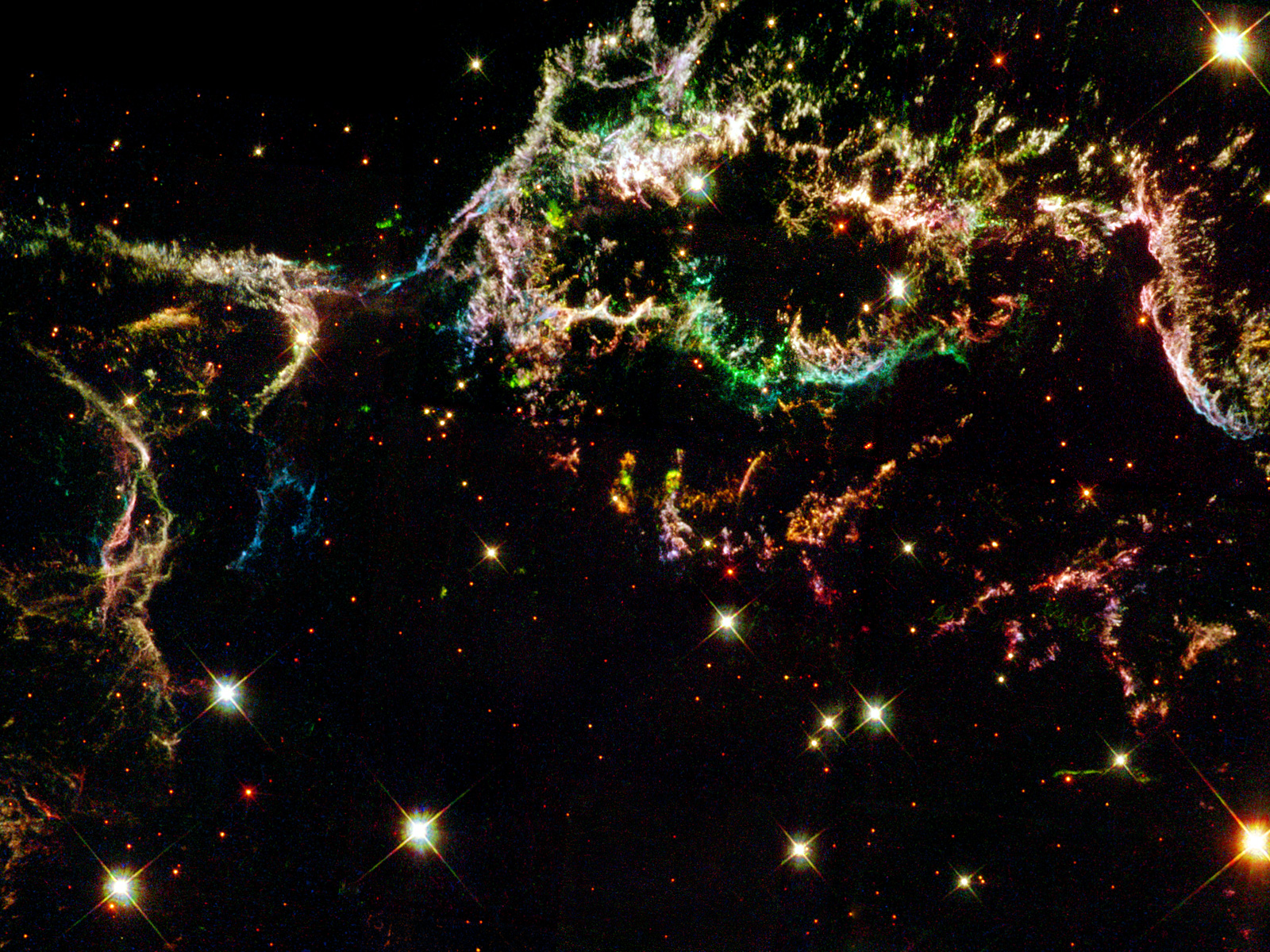
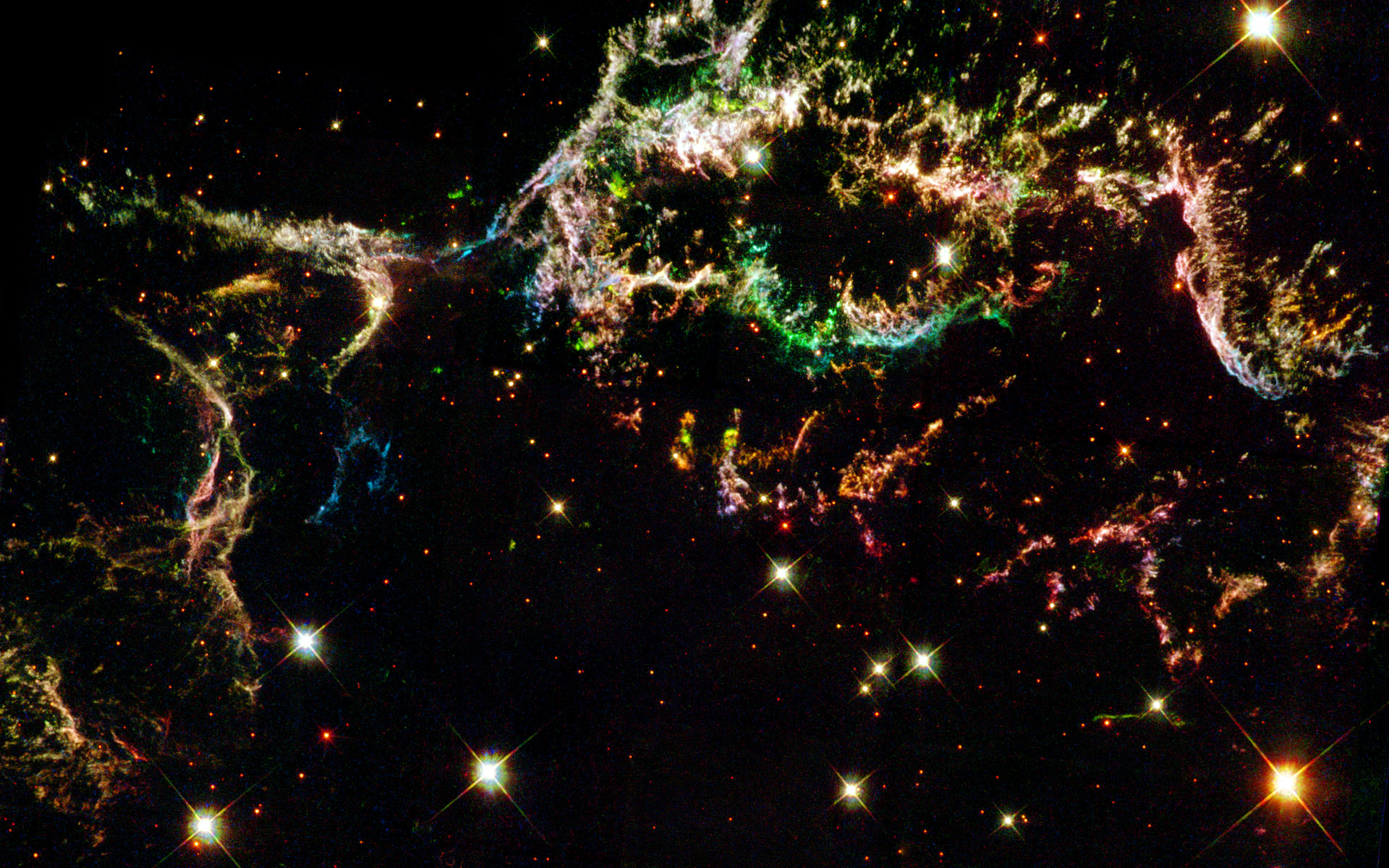
Glowing gaseous streamers of red, white, and blue - as well as green and pink - illuminate the heavens like Fourth of July fireworks. The colorful streamers that float across the sky in this photo taken by the NASA/ESA Hubble Space Telescope were created by the universe's biggest firecracker, the titanic supernova explosion of a massive star.
The light from the exploding star reached Earth 320 years ago. The dead star's shredded remains are called Cassiopeia A, or 'Cas A' for short. Cas A is the youngest known supernova remnant in our Milky Way Galaxy and resides 10, 000 light-years away in the constellation Cassiopeia, so the star actually blew up 10, 000 years before the light reached Earth in the late 1600s.
About the Image
About the Object
| Name: | Cassiopeia A, SNR 111.7-02.1 |
|---|---|
| Type: | Milky Way : Nebula : Type : Supernova Remnant |
| Distance: | 11000 light years |
| Constellation: | Cassiopeia |
| Category: | Nebulae |

Classic Wallpapers




Coordinates
| Position (RA): | 23 23 28.67 |
|---|---|
| Position (Dec): | 58° 49' 40.81" |
| Field of view: | 3.70 x 2.41 arcminutes |
| Orientation: | North is 5.5° right of vertical |
View in ESASky:
View in WorldWide Telescope:

Colours & filters
| Band | Wavelength | Telescope |
|---|---|---|
| Ultraviolet B | 450 nm |
Hubble Space Telescope
WFPC2 |
| Optical R | 675 nm |
Hubble Space Telescope
WFPC2 |
| Infrared Z | 850 nm |
Hubble Space Telescope
WFPC2 |