Close-up of M27, the Dumbbell Nebula
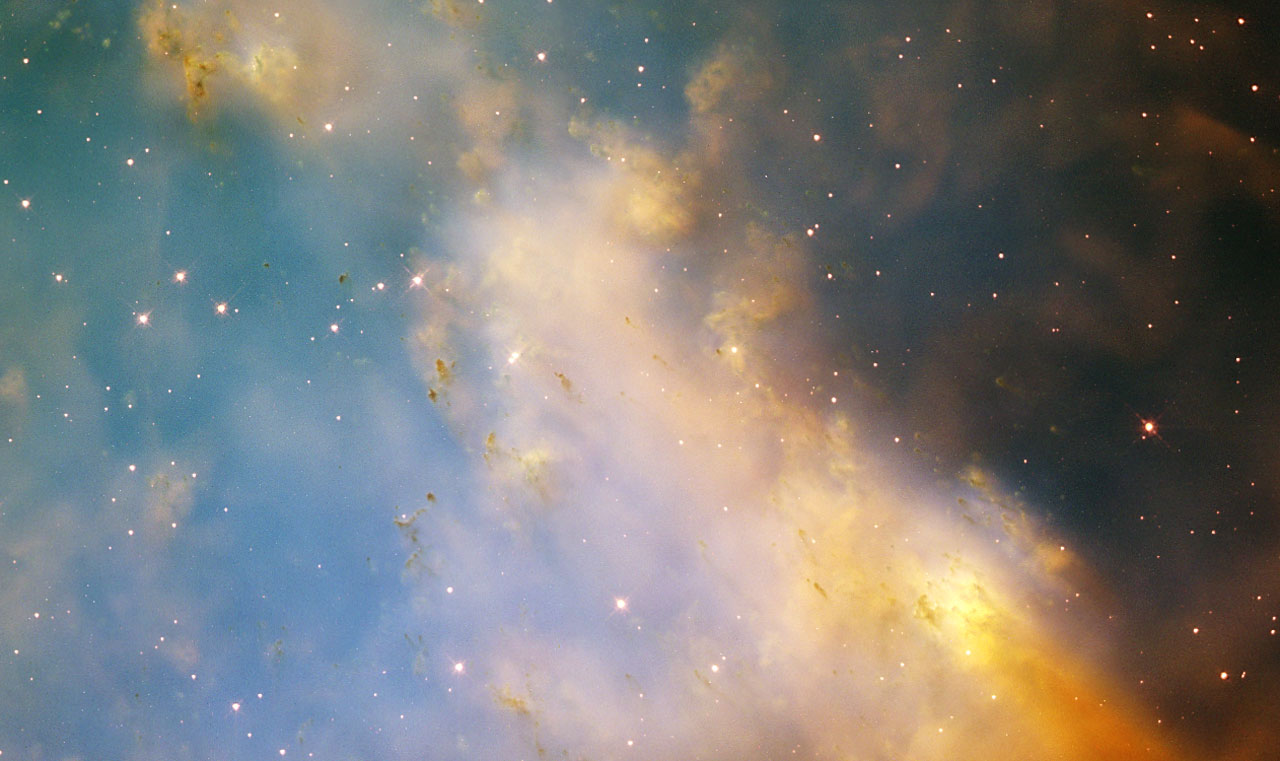
An aging star's last hurrah is creating a flurry of glowing knots of gas that appear to be streaking through space in this close-up image of the Dumbbell Nebula, taken with NASA/ESA Hubble Space Telescope.
The Dumbbell, a nearby planetary nebula residing more than 1,200 light-years away, is the result of an old star that has shed its outer layers in a glowing display of colour. The nebula, also known as Messier 27 (M27), was the first planetary nebula ever discovered. French astronomer Charles Messier spotted it in 1764.
About the Image
About the Object
| Name: | Dumbbell Nebula, Messier 27 |
|---|---|
| Type: | Milky Way : Nebula : Type : Planetary |
| Distance: | 1200 light years |
| Constellation: | Vulpecula |
| Category: | Nebulae |

Classic Wallpapers




Coordinates
| Position (RA): | 19 59 32.20 |
|---|---|
| Position (Dec): | 22° 42' 43.13" |
| Field of view: | 2.09 x 1.24 arcminutes |
| Orientation: | North is 14.1° right of vertical |
View in ESASky:

View in WorldWide Telescope:

Colours & filters
| Band | Wavelength | Telescope |
|---|---|---|
| Optical Oiii | 502 nm |
Hubble Space Telescope
WFPC2 |
| Optical V | 547 nm |
Hubble Space Telescope
WFPC2 |
| Optical H-alpha | 656 nm |
Hubble Space Telescope
WFPC2 |
| Optical Nii | 658 nm |
Hubble Space Telescope
WFPC2 |
| Optical Sii | 673 nm |
Hubble Space Telescope
WFPC2 |