Circumstellar disc IRAS 23077+6707
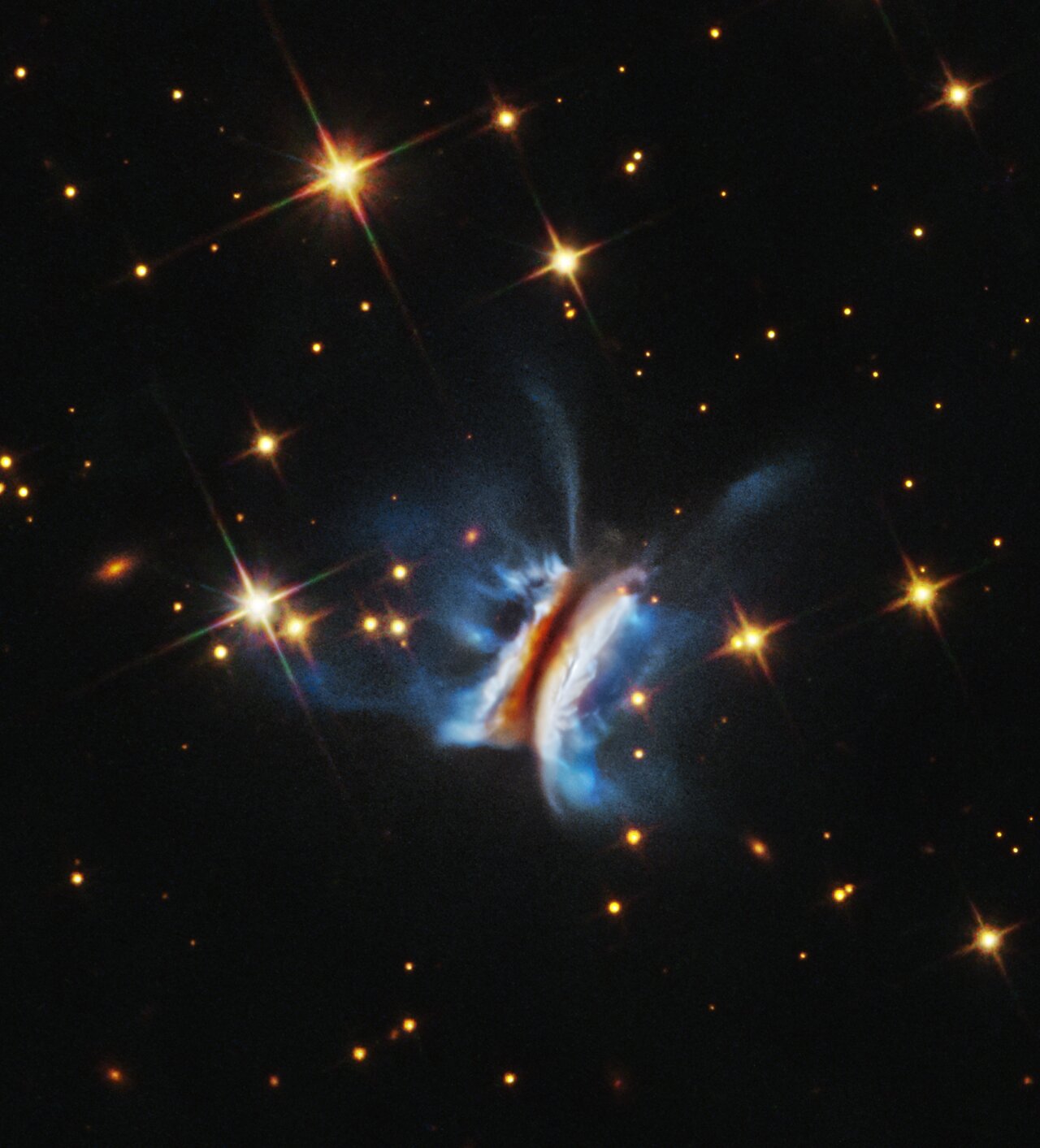
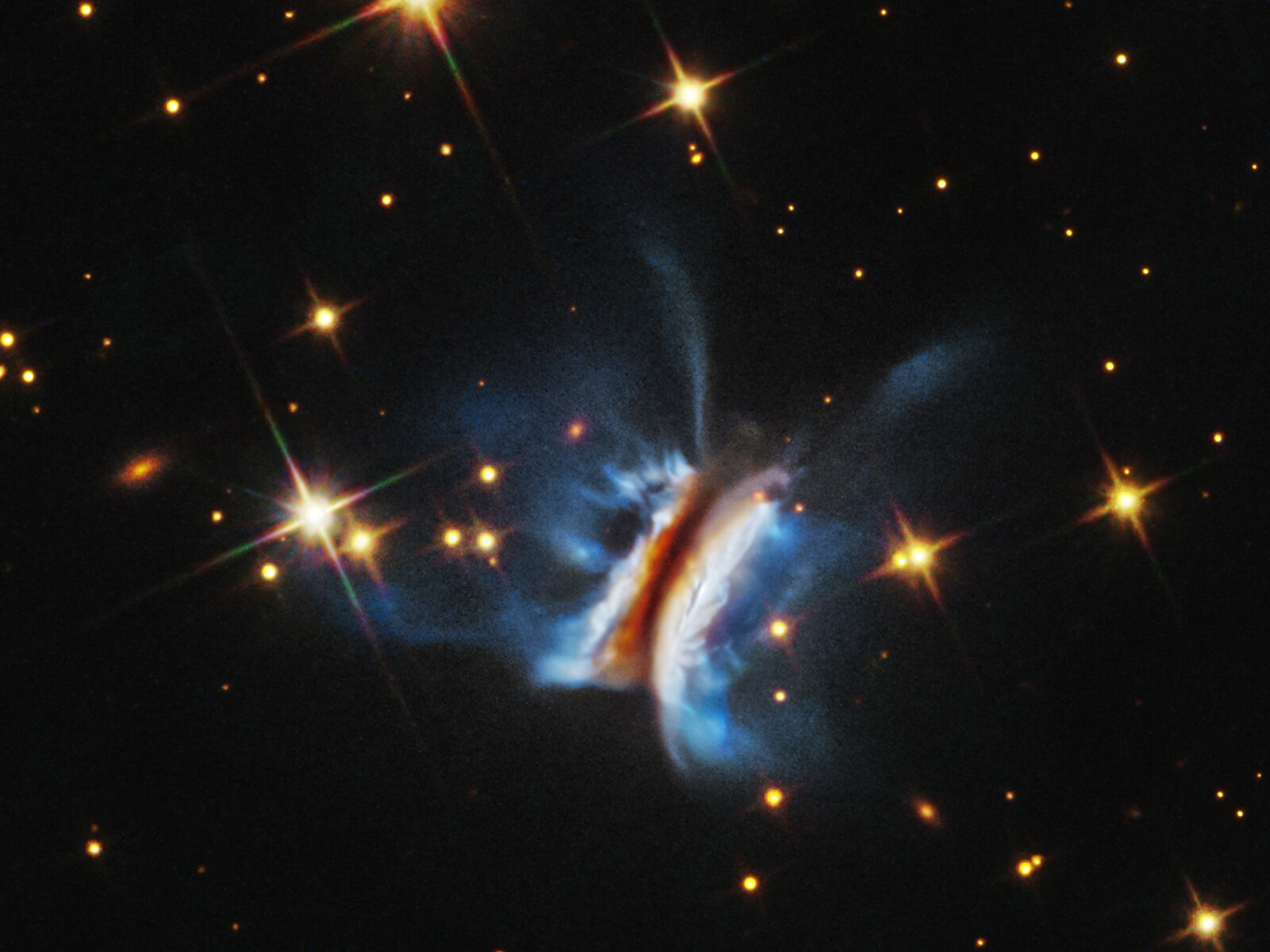
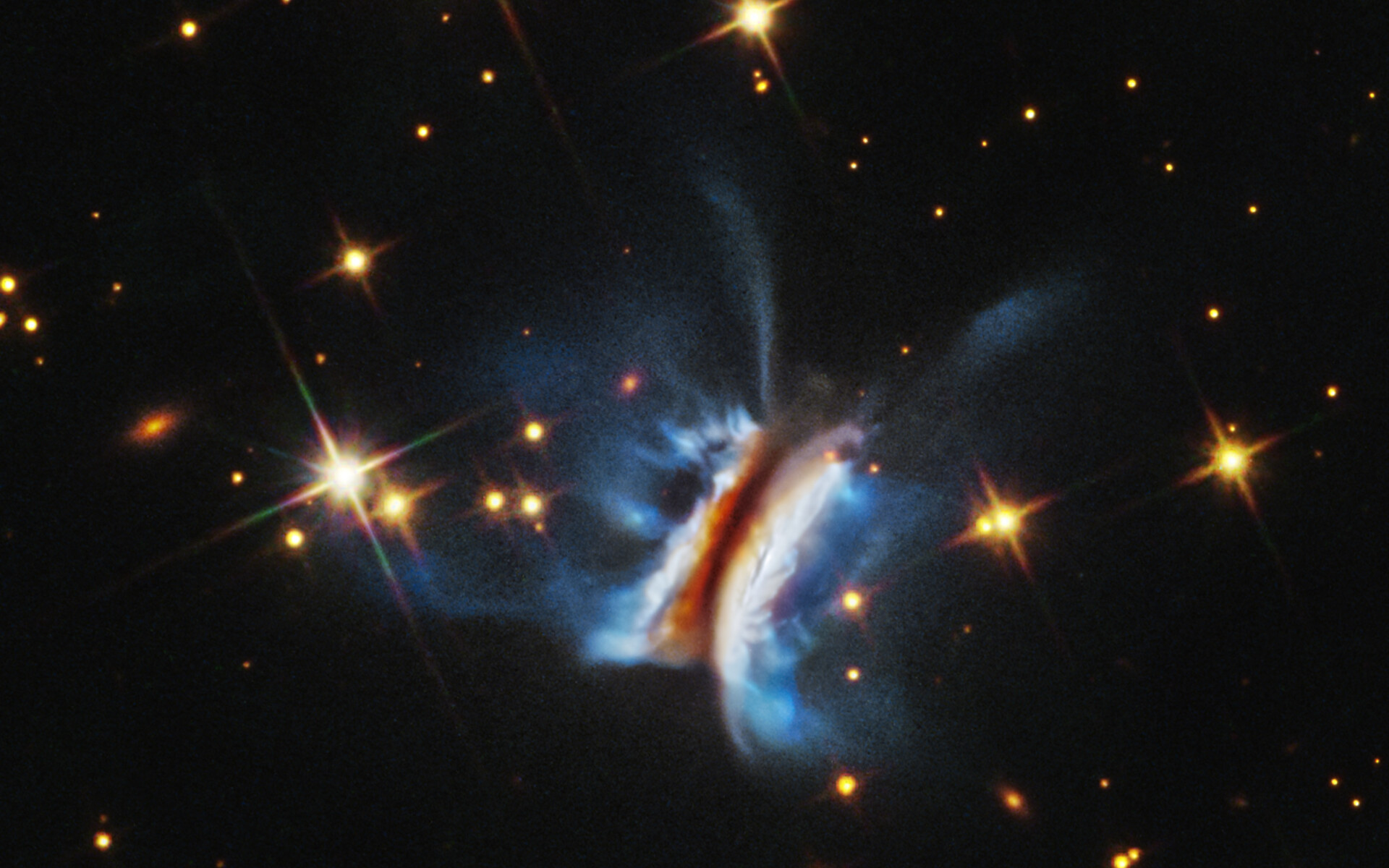
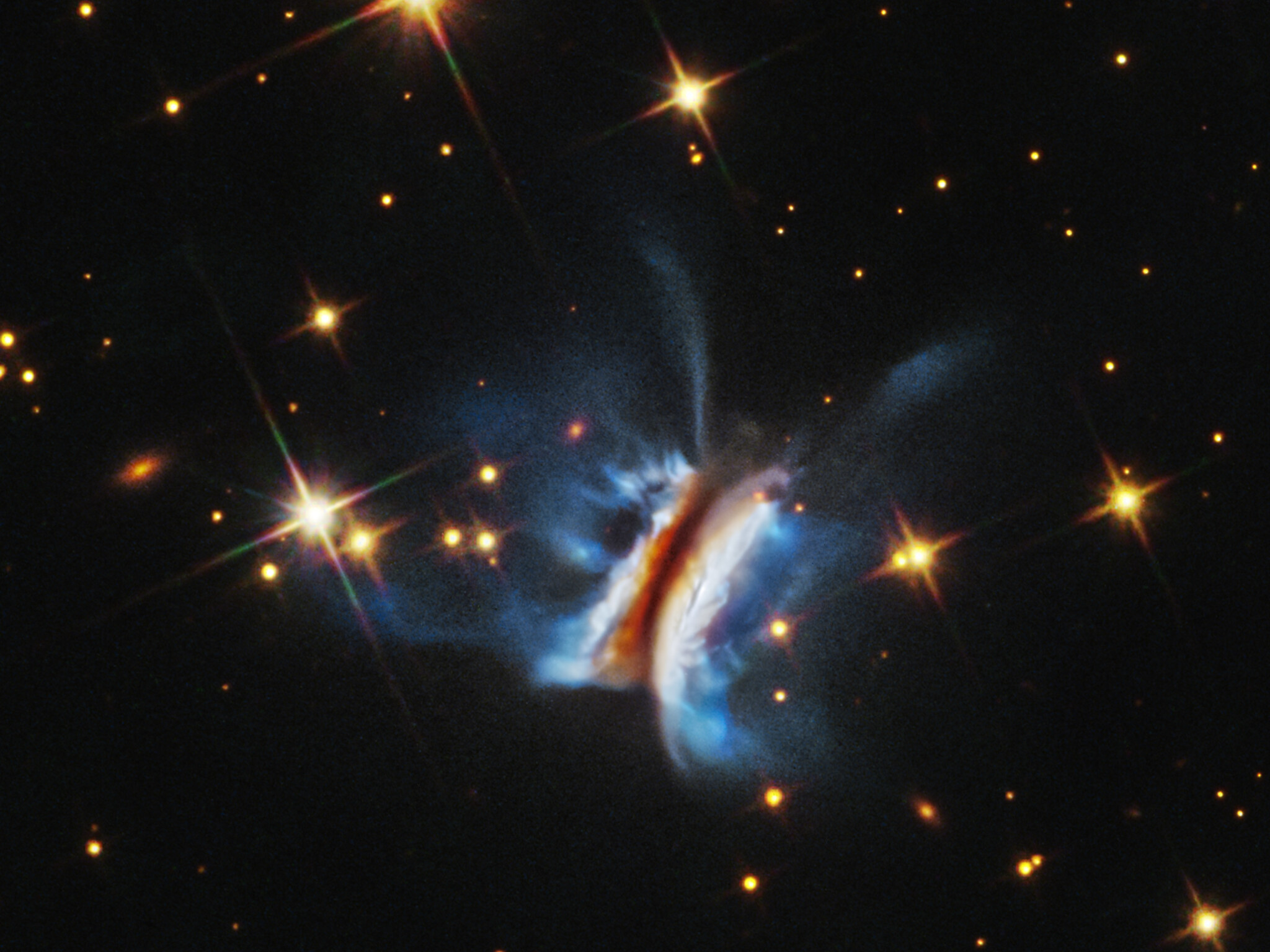
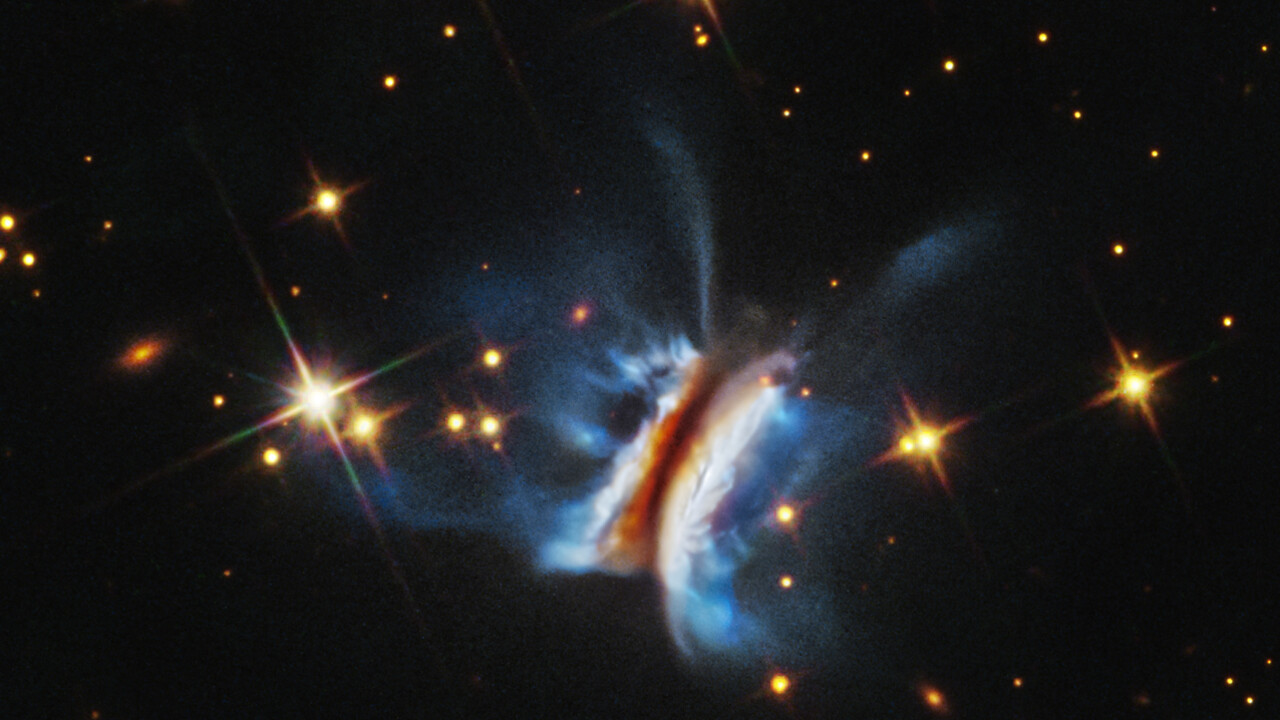
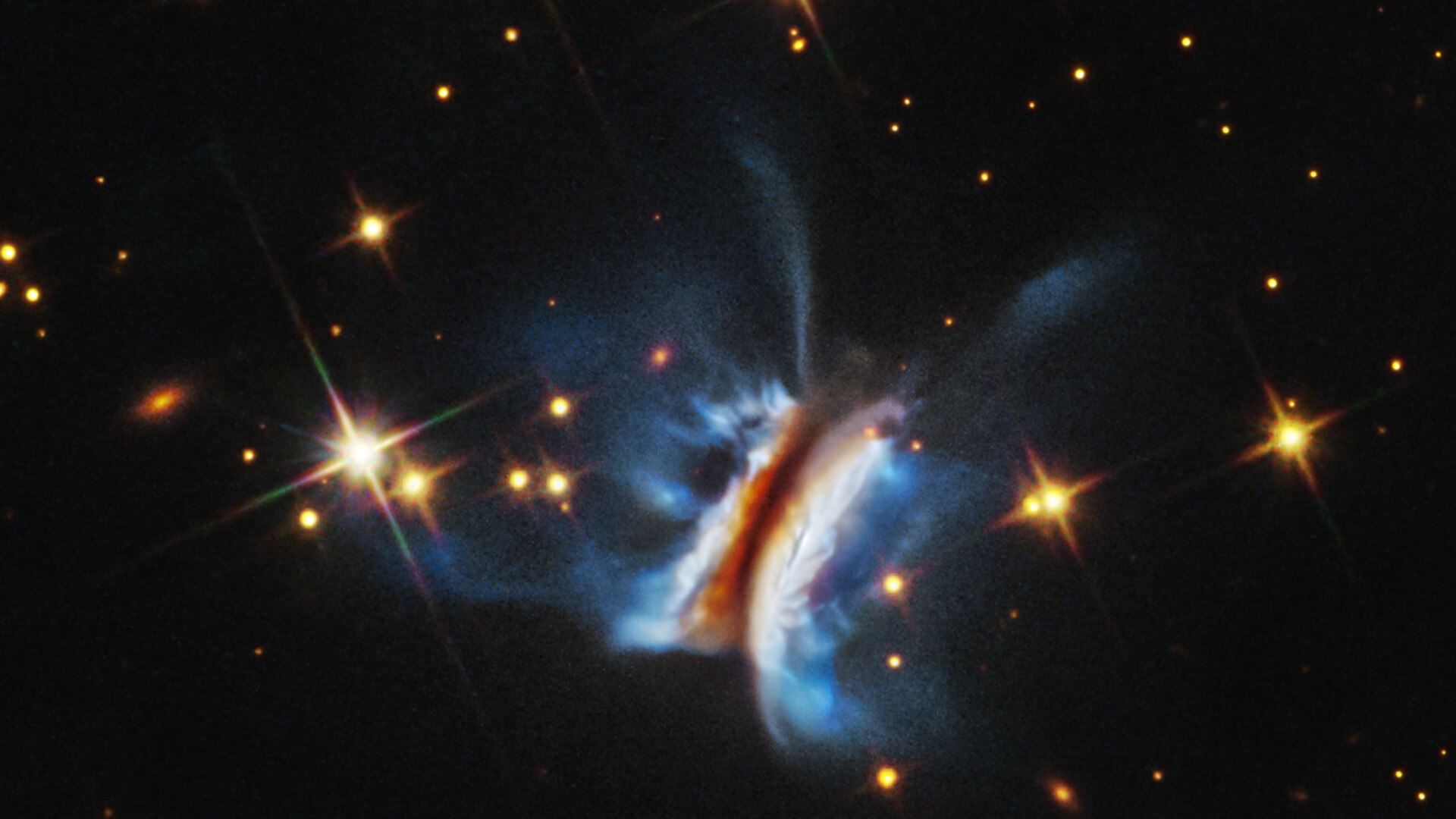
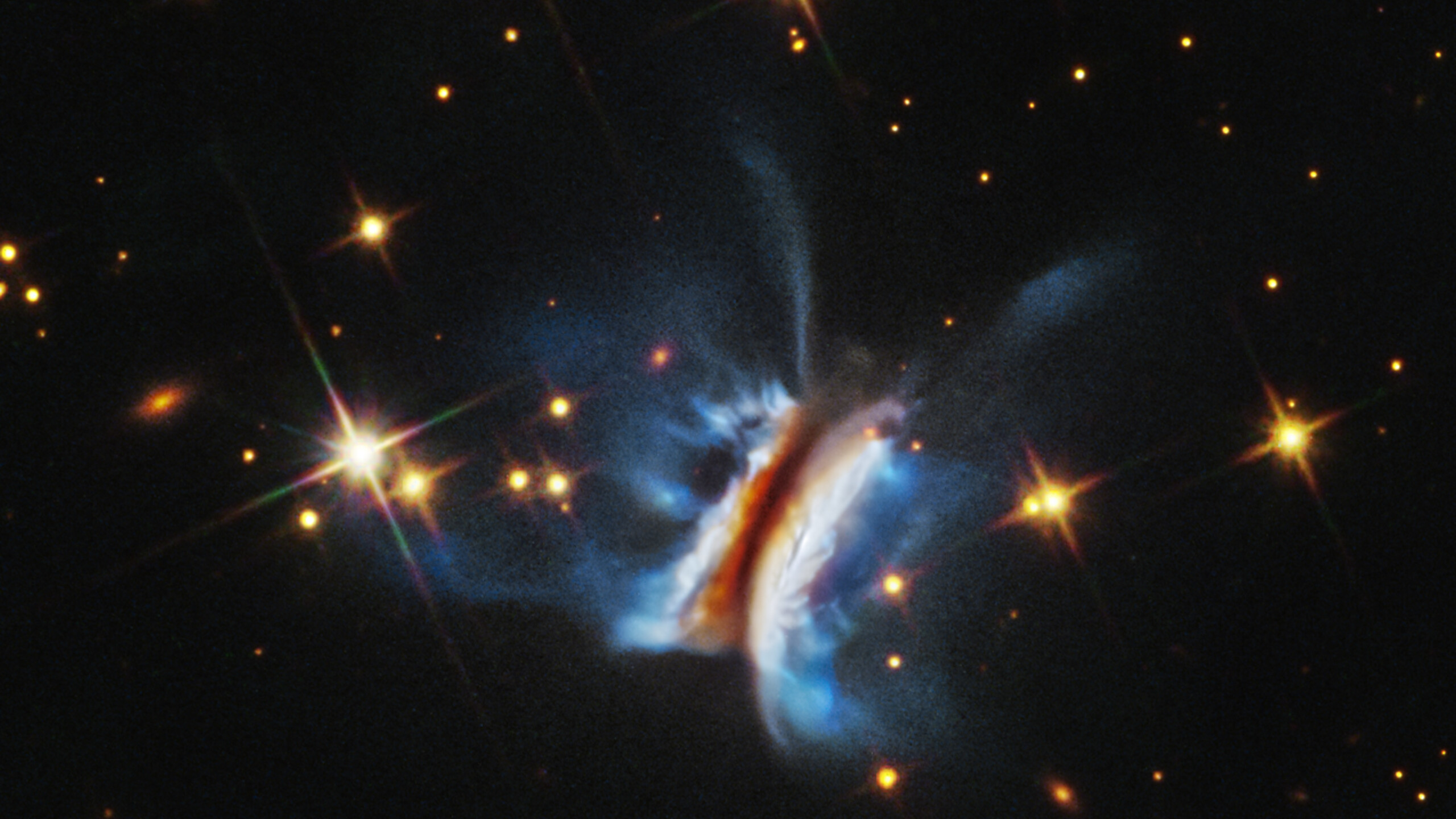
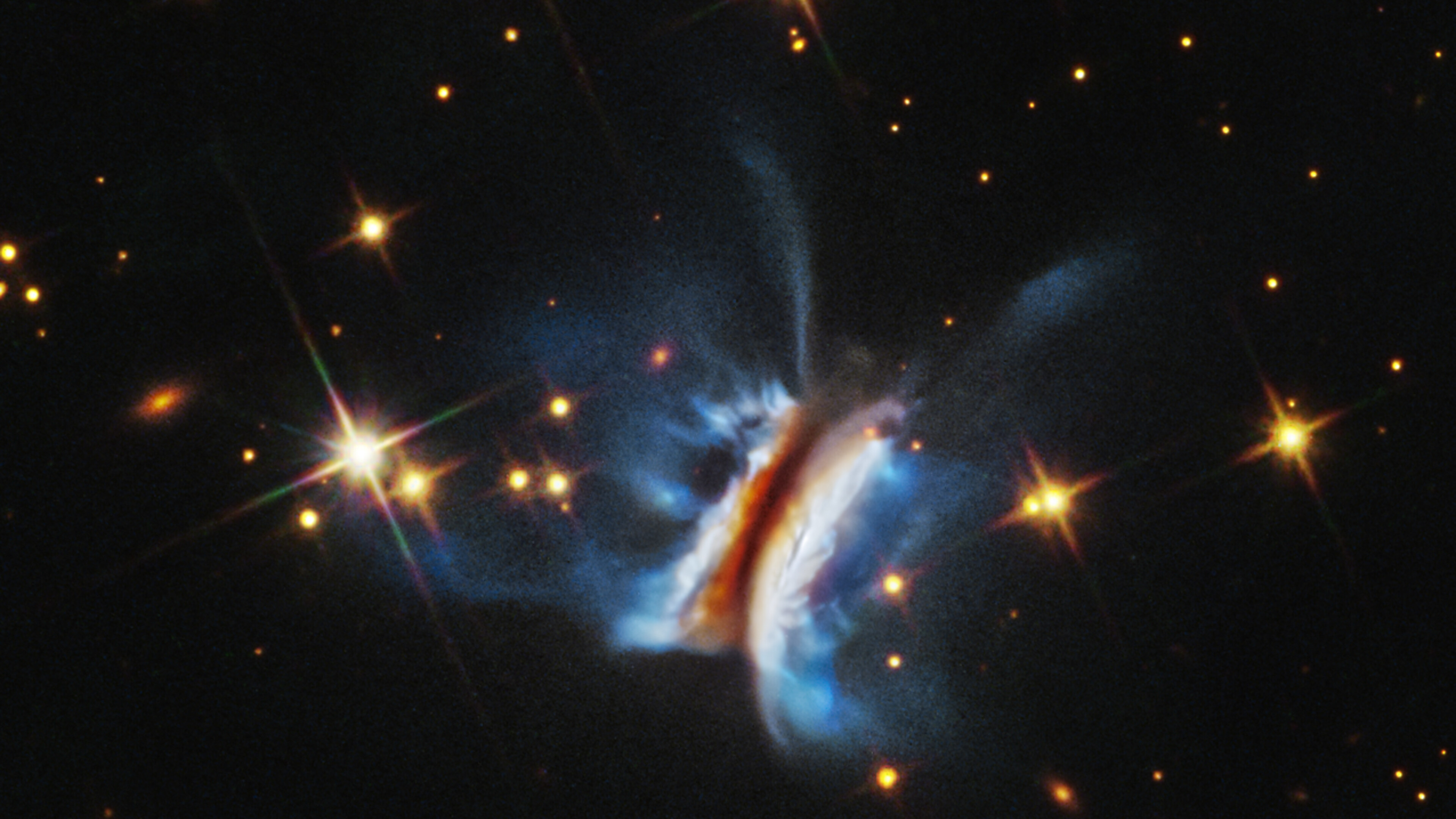
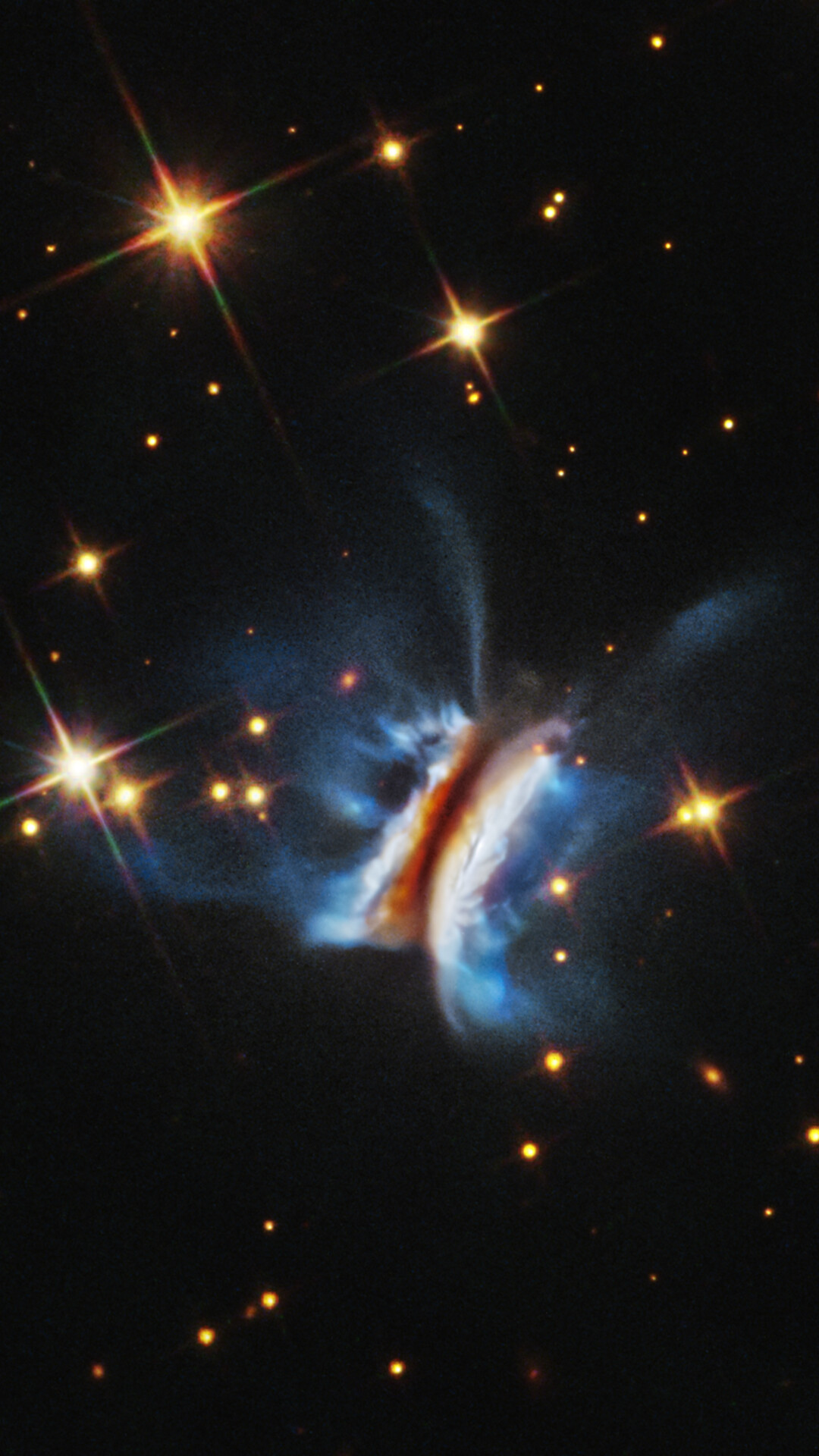
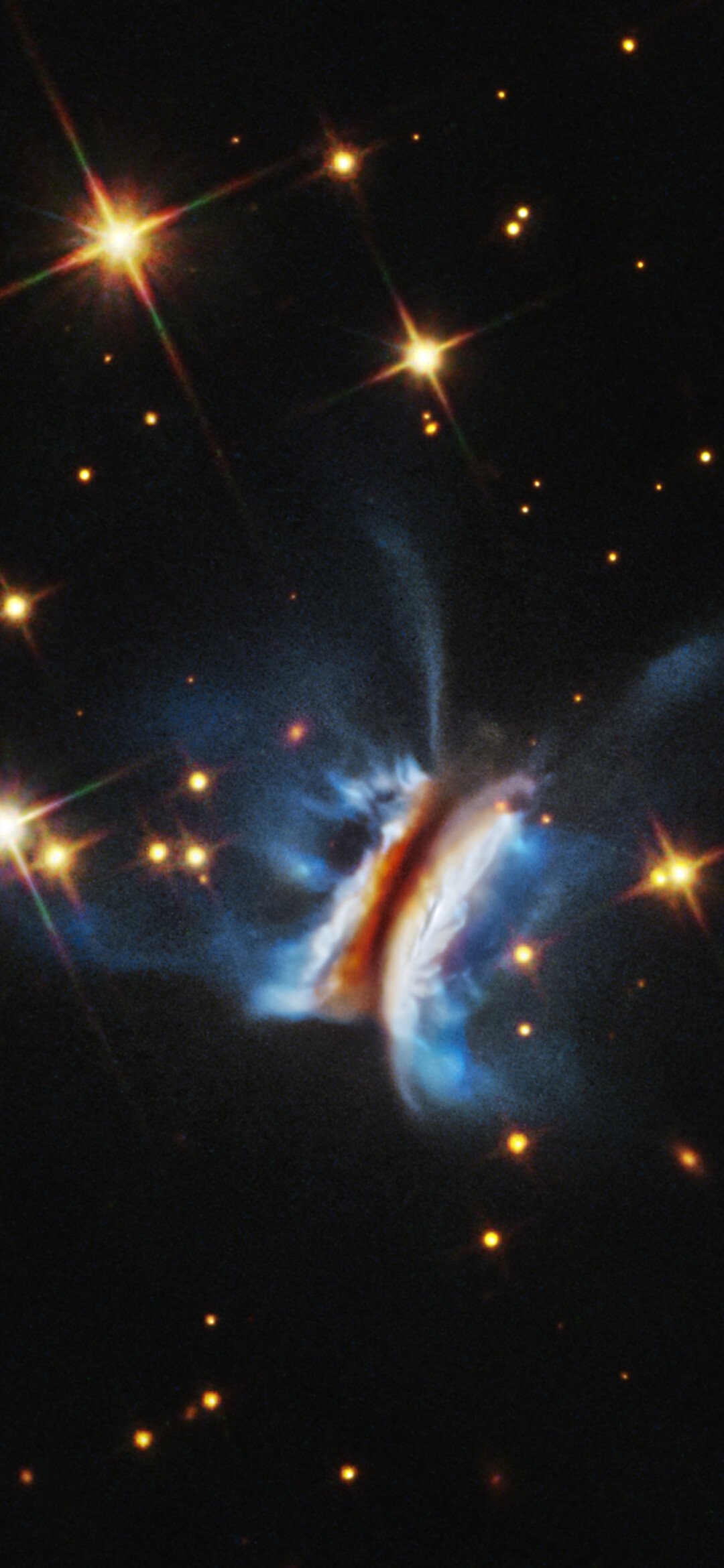
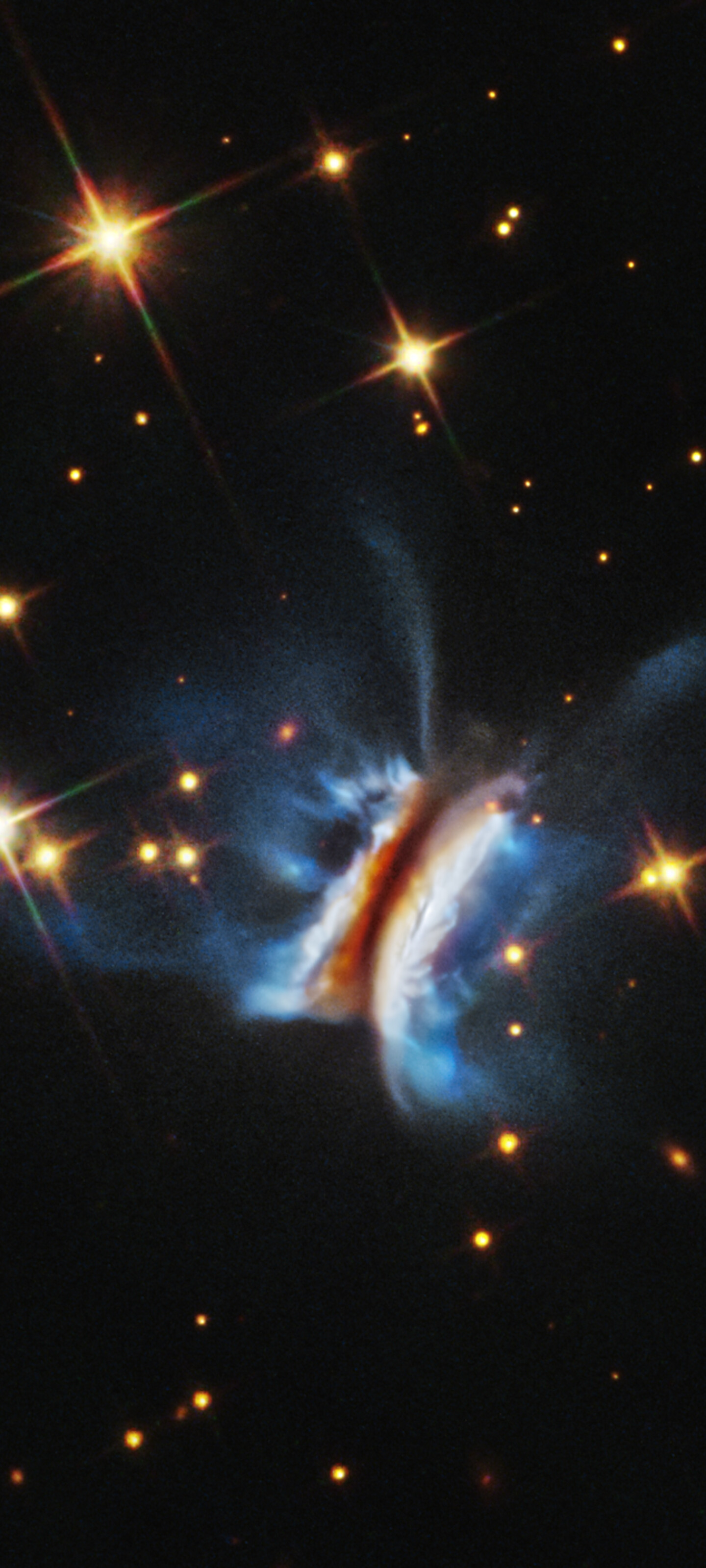
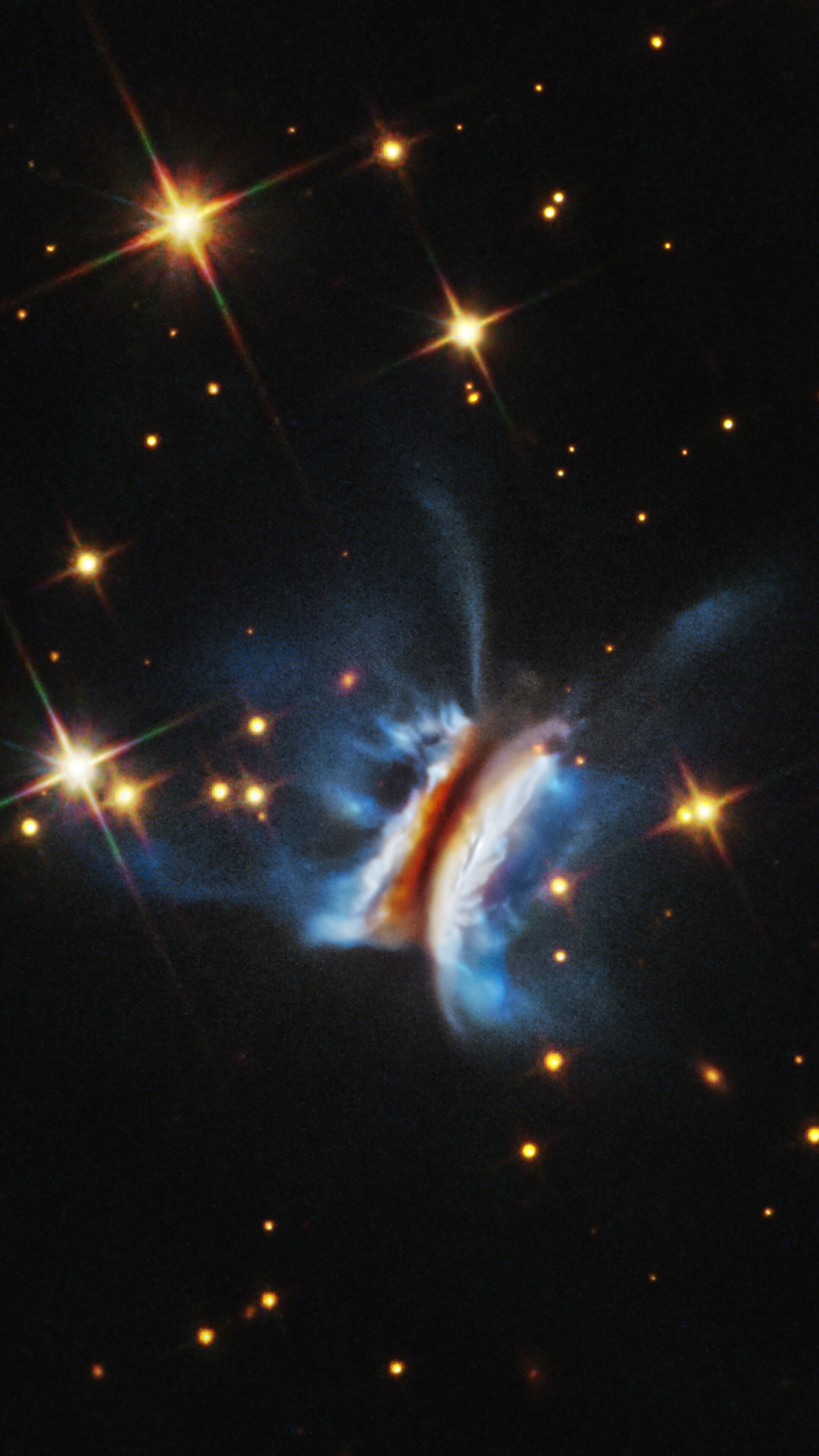
This NASA/ESA Hubble Space Telescope image shows the largest planet-forming disc ever observed around a young star. It spans nearly 640 billion kilometers, roughly 40 times the diameter of our Solar System. Tilted nearly edge-on as seen from Earth, the dark, dusty disk resembles a hamburger. Hubble reveals it to be unusually chaotic, with bright wisps of material extending far above and below the disk—more than seen in any similar circumstellar disk. Cataloged as IRAS 23077+6707, the system is located approximately 1,000 light-years from Earth. The discovery marks a new milestone for Hubble and offers fresh insight into planet formation in extreme environments across the galaxy.
[Image description: Near the center is an object that resembles an edge-on view of a hamburger. There is a diagonal dark strip (the meat patty) of dust, running from 1 o’clock to 7 o’clock, that obscures a central star. Curving away from either side of the dark strip are glowing white clouds (the buns) where dust is reflecting starlight. Bright blue finger-like wisps of material extend far above and below the dark center plane. A few dozen stars, some with four diffraction spikes, are scattered on the black background of space.]
Credit:NASA, ESA, STScI, K. Monsch (CfA). Image processing: J. DePasquale (STScI).
About the Image
| Id: | opo2606 |
|---|---|
| Type: | Observation |
| Release date: | 23 December 2025, 15:00 |
| Size: | 1276 x 1409 px |
About the Object
| Distance: | 1000 light years |
|---|---|
| Constellation: | Cepheus |
| Category: | Galaxies |


Classic Wallpapers

Desktop Wallpapers
Mobile Wallpapers

Coordinates
| Position (RA): | 23 9 43.98 |
|---|---|
| Position (Dec): | 67° 23' 43.85" |
| Field of view: | 0.84 x 0.93 arcminutes |
| Orientation: | North is 0.2° left of vertical |


Colours & filters
| Band | Wavelength | Telescope |
|---|---|---|
| Optical B | 438 nm |
Hubble Space Telescope
WFC3 |
| Optical V | 606 nm |
Hubble Space Telescope
WFC3 |
| Optical I | 814 nm |
Hubble Space Telescope
WFC3 |
| Infrared Y | 1.05 μm |
Hubble Space Telescope
WFC3 |
| Infrared J | 1.25 μm |
Hubble Space Telescope
WFC3 |
| Infrared H | 1.6 μm |
Hubble Space Telescope
WFC3 |