Starbirth
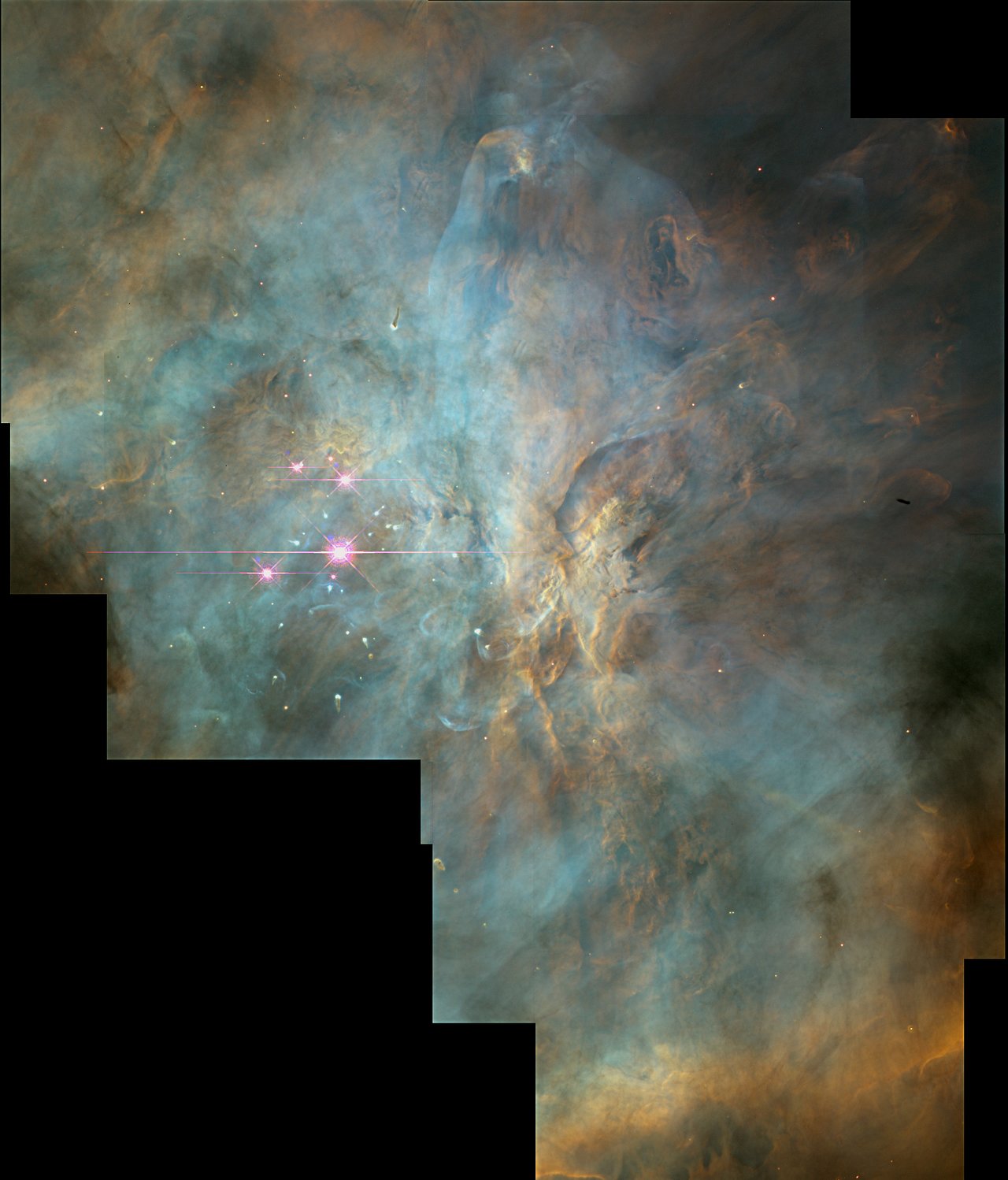
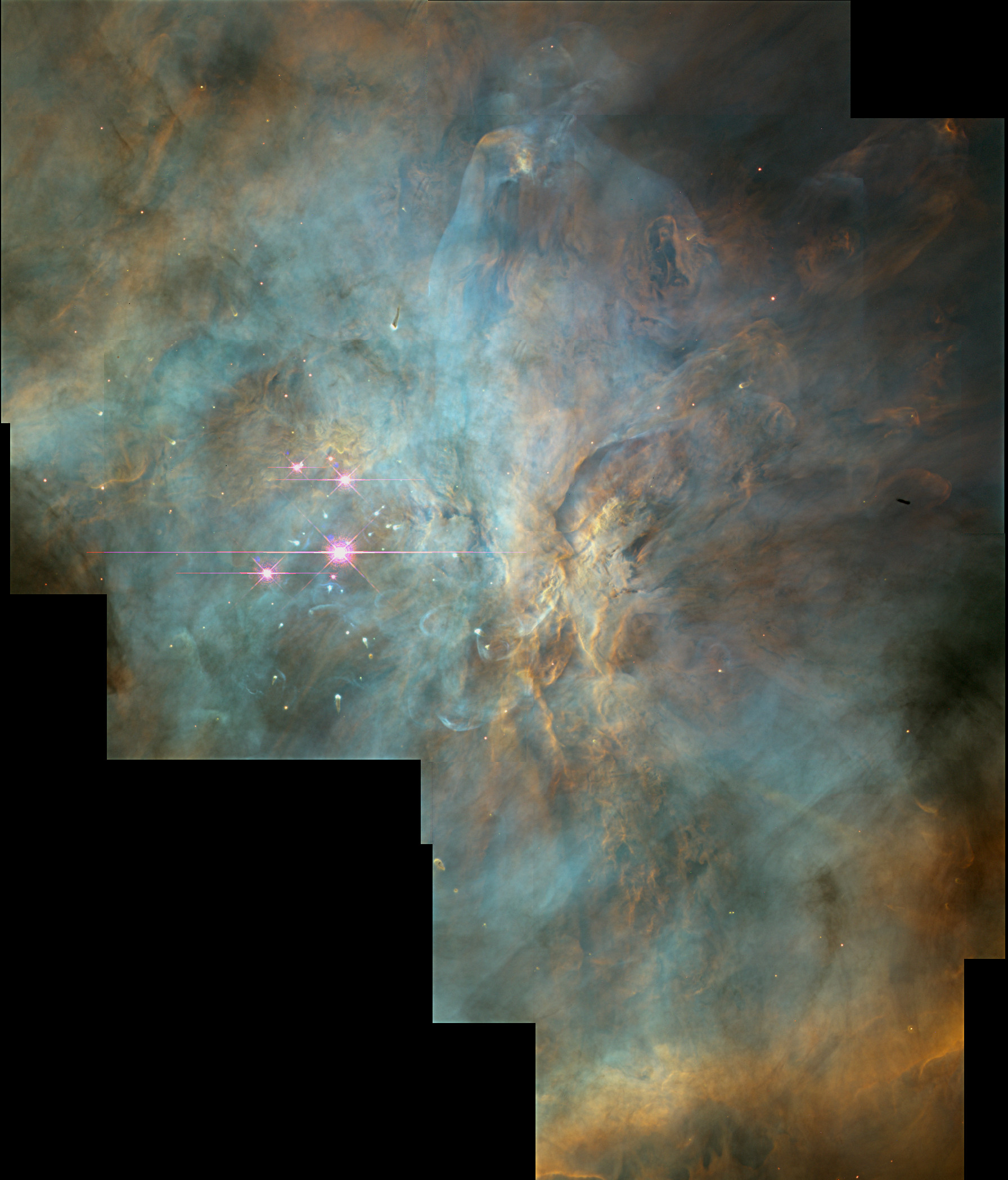
This mosaic shows the center of the Orion Nebula. Many of the nebula's details can't be captured in a single picture - any more than one snapshot of the Grand Canyon yields clues to its formation and history. Like the Grand Canyon, the Orion nebula has a dramatic surface topography — of glowing gasses instead of rock — with peaks, valleys and walls. They are illuminated and heated by a torrent of energetic ultraviolet light from its four hottest and most massive stars, called the Trapezium, which lie near the center of the image.
NASA, C.R. O'Dell and S.K. Wong (Rice University)
About the Image
NASA press release
| Id: | opo9545m |
|---|---|
| Type: | Observation |
| Release date: | 20 November 1995, 06:00 |
| Size: | 1792 x 2097 px |
About the Object
| Name: | Messier 42, NGC 1976, Orion Nebula |
|---|---|
| Type: | Milky Way : Star : Circumstellar Material : Disk : Protoplanetary Milky Way : Nebula : Type : Star Formation |
| Distance: | 1400 light years |
| Constellation: | Orion |
| Category: | Nebulae |

Coordinates
| Position (RA): | 5 35 15.39 |
|---|---|
| Position (Dec): | -5° 23' 47.86" |
| Field of view: | 2.96 x 3.46 arcminutes |
| Orientation: | North is 44.3° left of vertical |
View in ESASky:
View in WorldWide Telescope:

Colours & filters
| Band | Wavelength | Telescope |
|---|---|---|
| Optical OIII | 502 nm |
Hubble Space Telescope
WFPC2 |
| Optical H-alpha | 656 nm |
Hubble Space Telescope
WFPC2 |
| Optical NII | 658 nm |
Hubble Space Telescope
WFPC2 |