Looking at the Cat’s Eye Nebula with Hubble
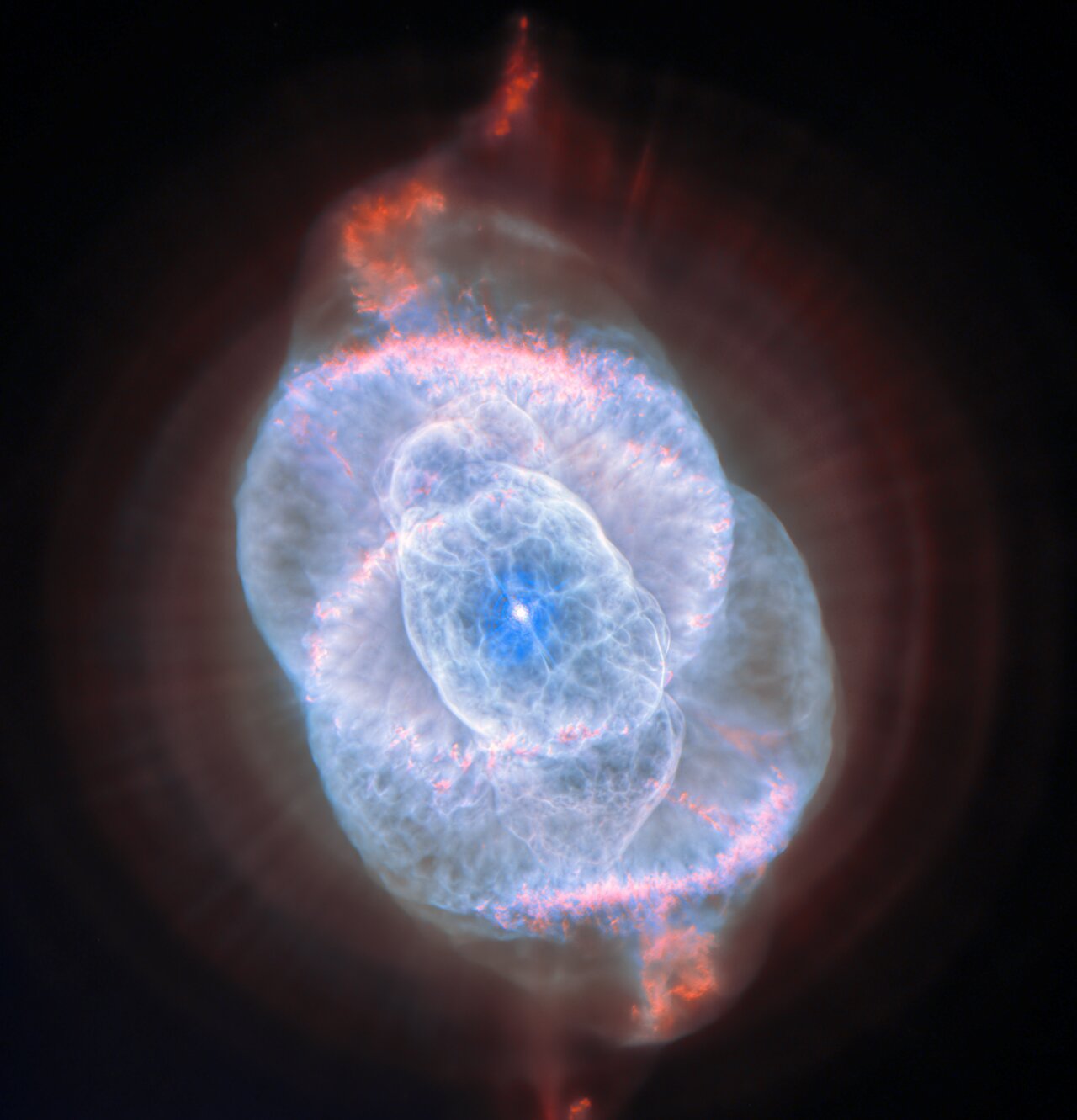
For this month’s ESA/Hubble Picture of the Month, we turn our gaze to one of the most visually intricate remnants of a dying star: the Cat’s Eye Nebula, also known as NGC 6543. This extraordinary planetary nebula has captivated astronomers for decades with its elaborate and multilayered structure. Observations with ESA’s Gaia mission place the nebula at a distance of 4 400 light years away.
Planetary nebulae, so-called because of their round shape when viewed through early telescopes, are in fact expanding gas thrown off by stars in their final stages of evolution. It was the Cat’s Eye Nebula itself where this fact was first discovered in 1864 — examining the spectrum of its light reveals the emission from individual molecules that’s characteristic of a gas, distinguishing planetary nebulae from stars and galaxies.
The NASA/ESA Hubble Space Telescope also revolutionised our understanding of planetary nebulae; its detailed images showed that the simple, circular appearance of a planetary nebula seen from the ground belies a very complex morphology. This was particularly true of the Cat’s Eye Nebula, where Hubble’s images in 1995 revealed never-before-seen structures that broadened our understanding of how planetary nebulae come to be.
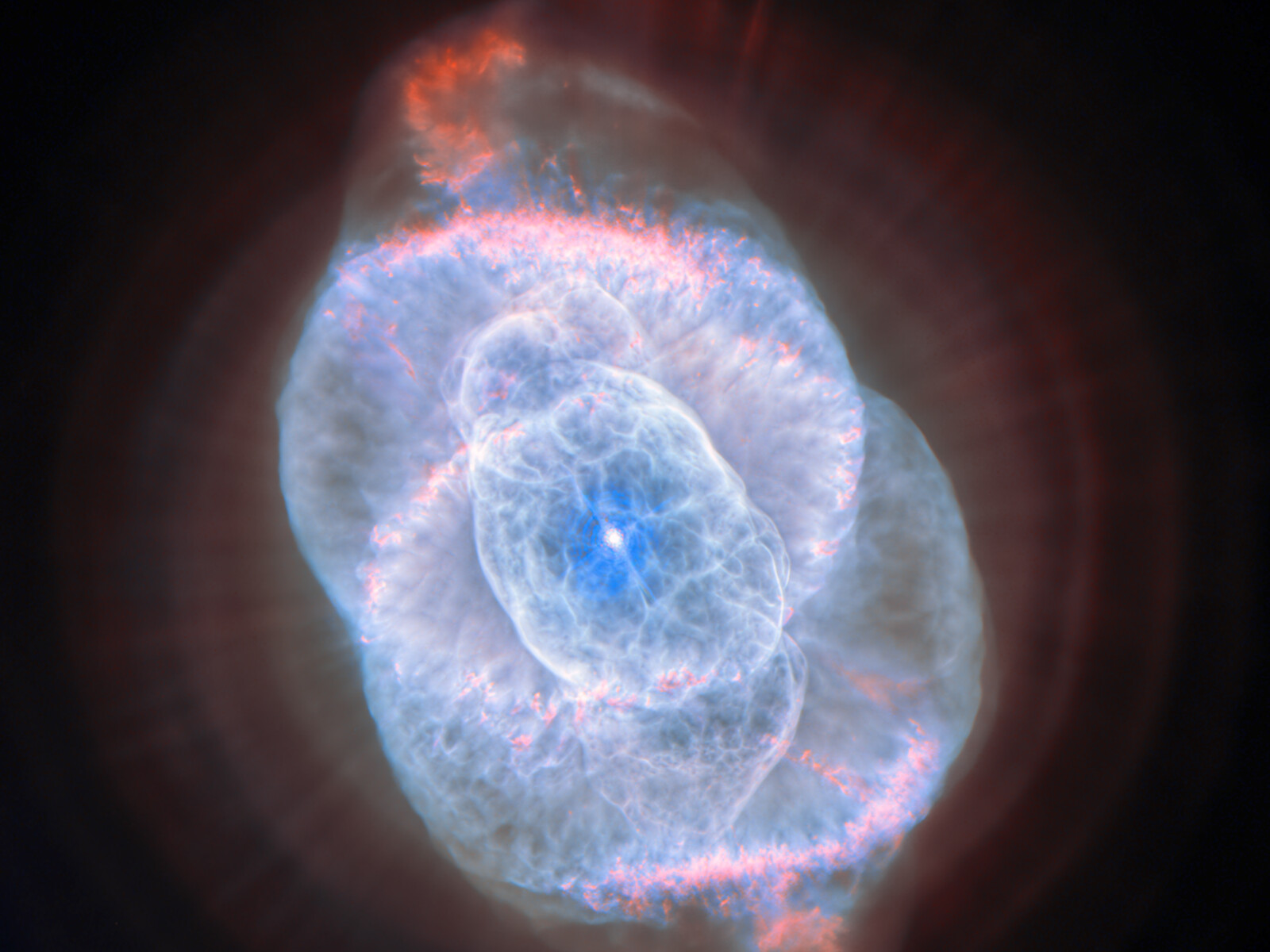
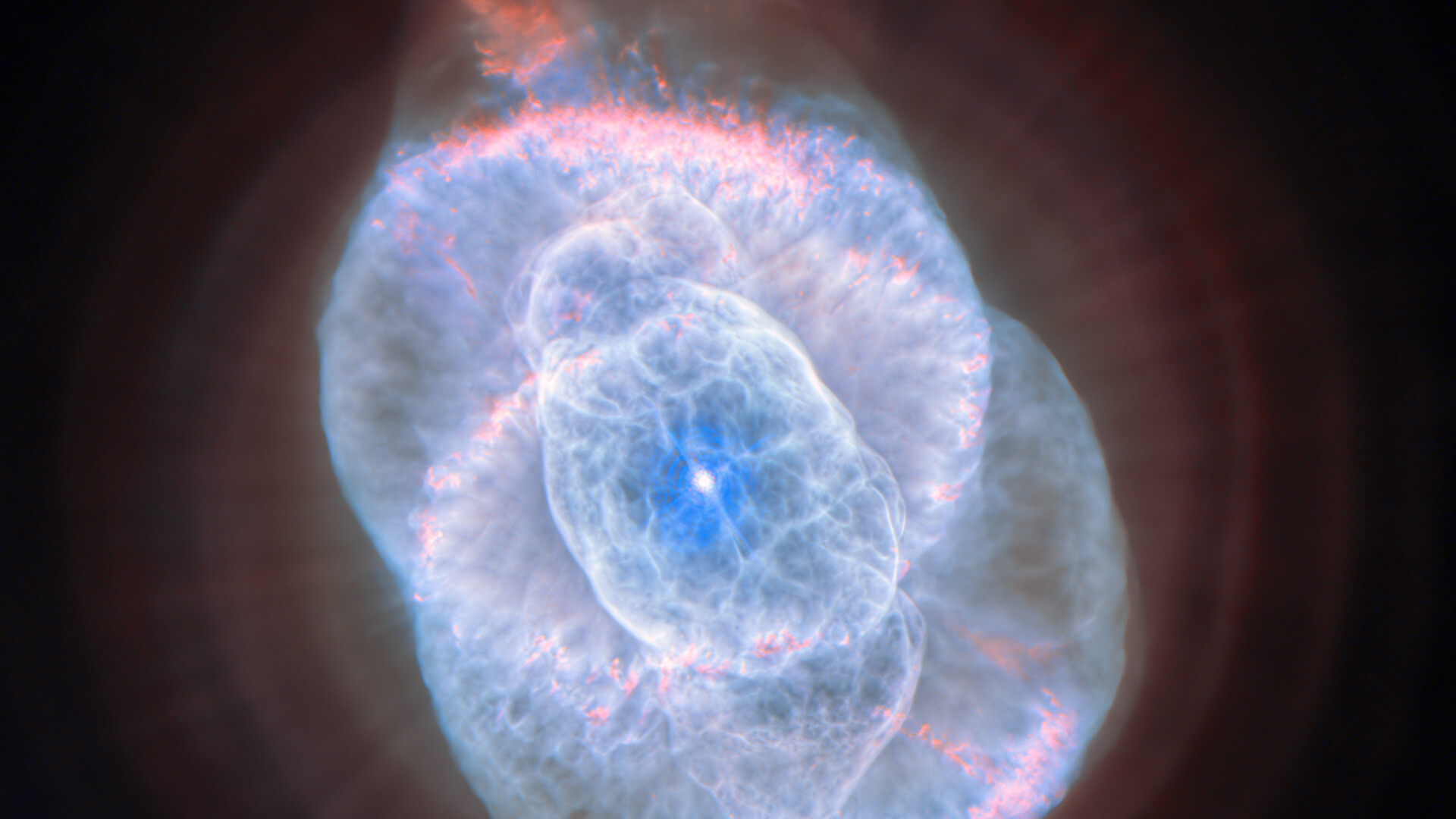
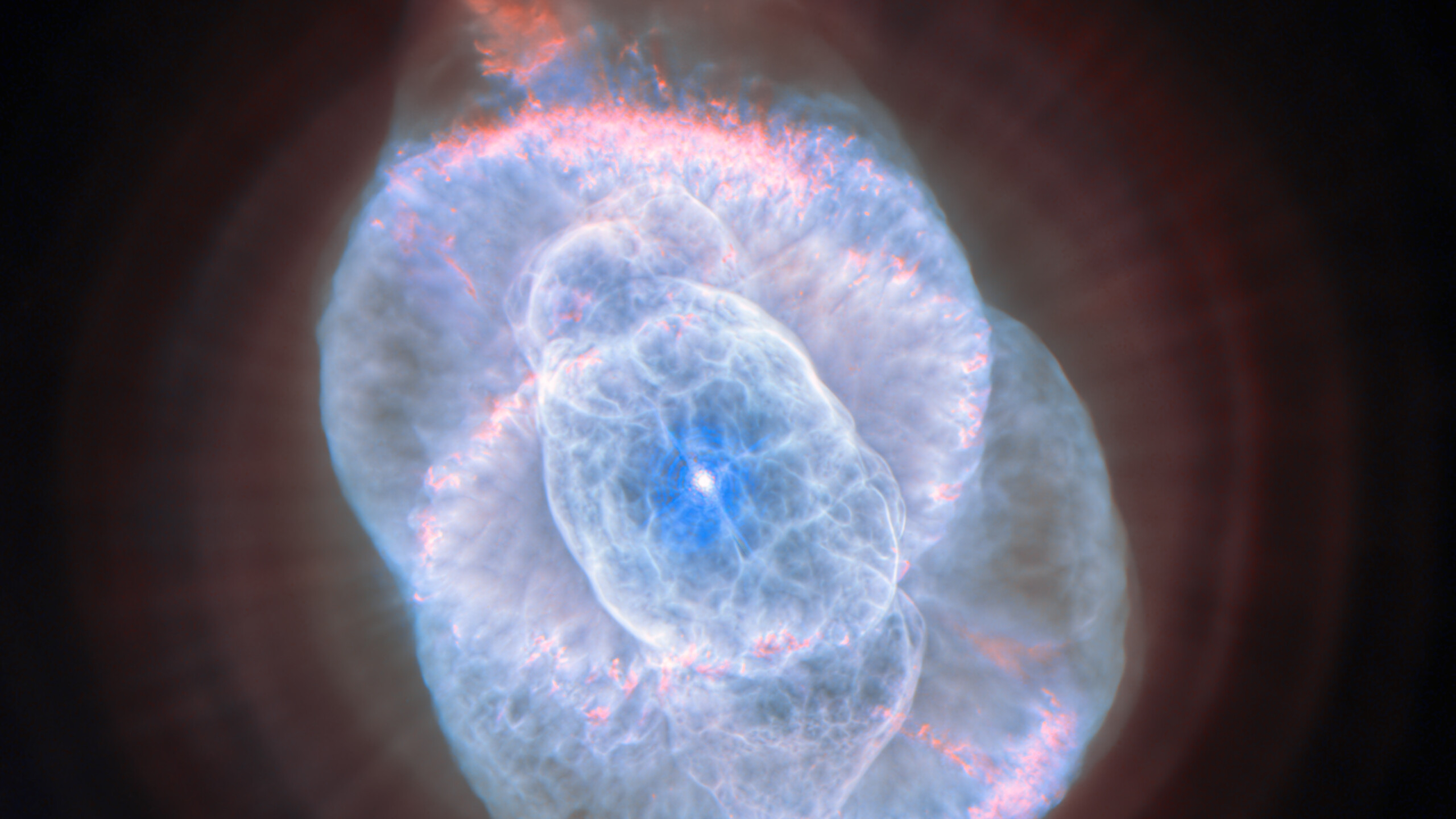
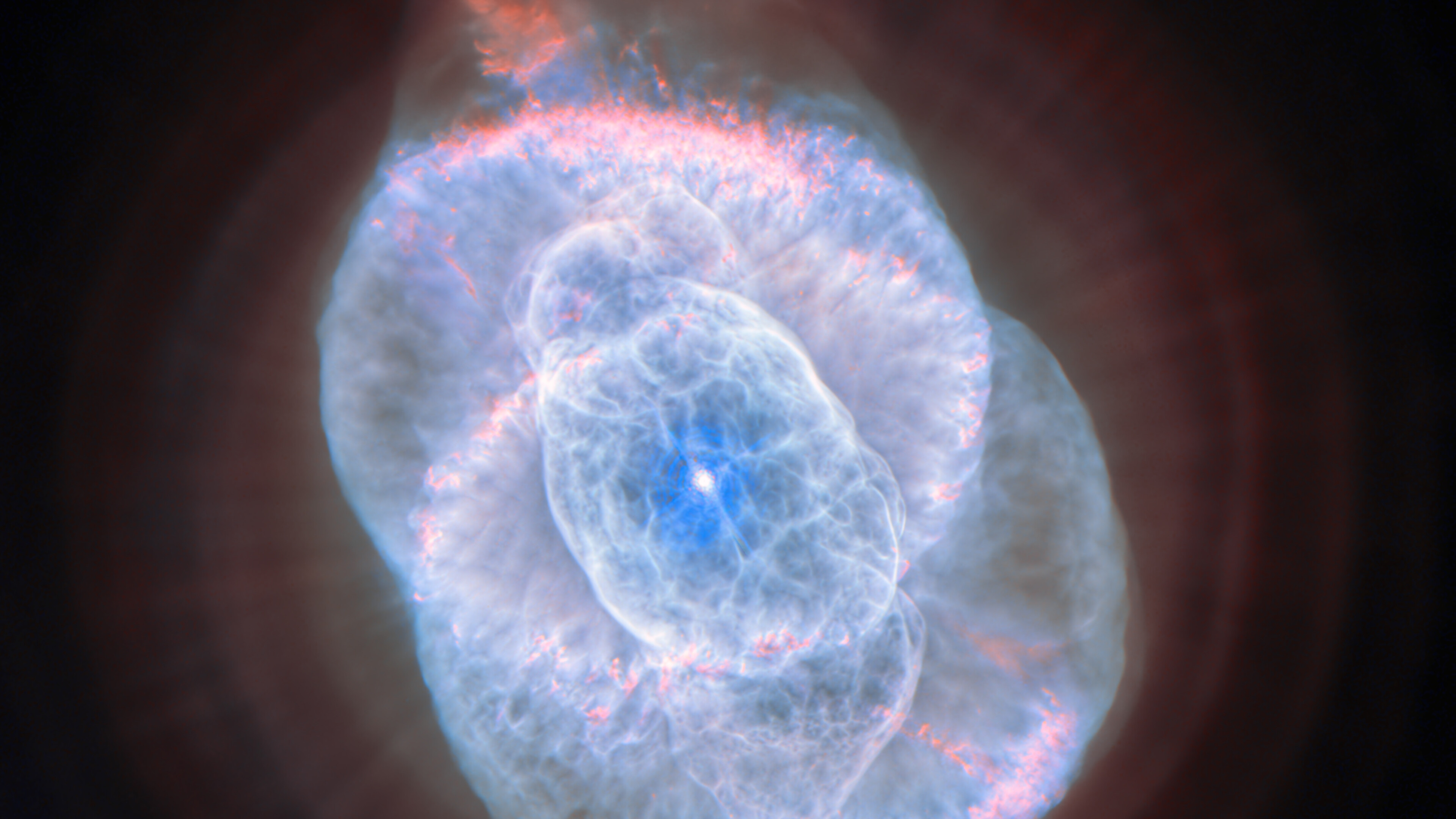
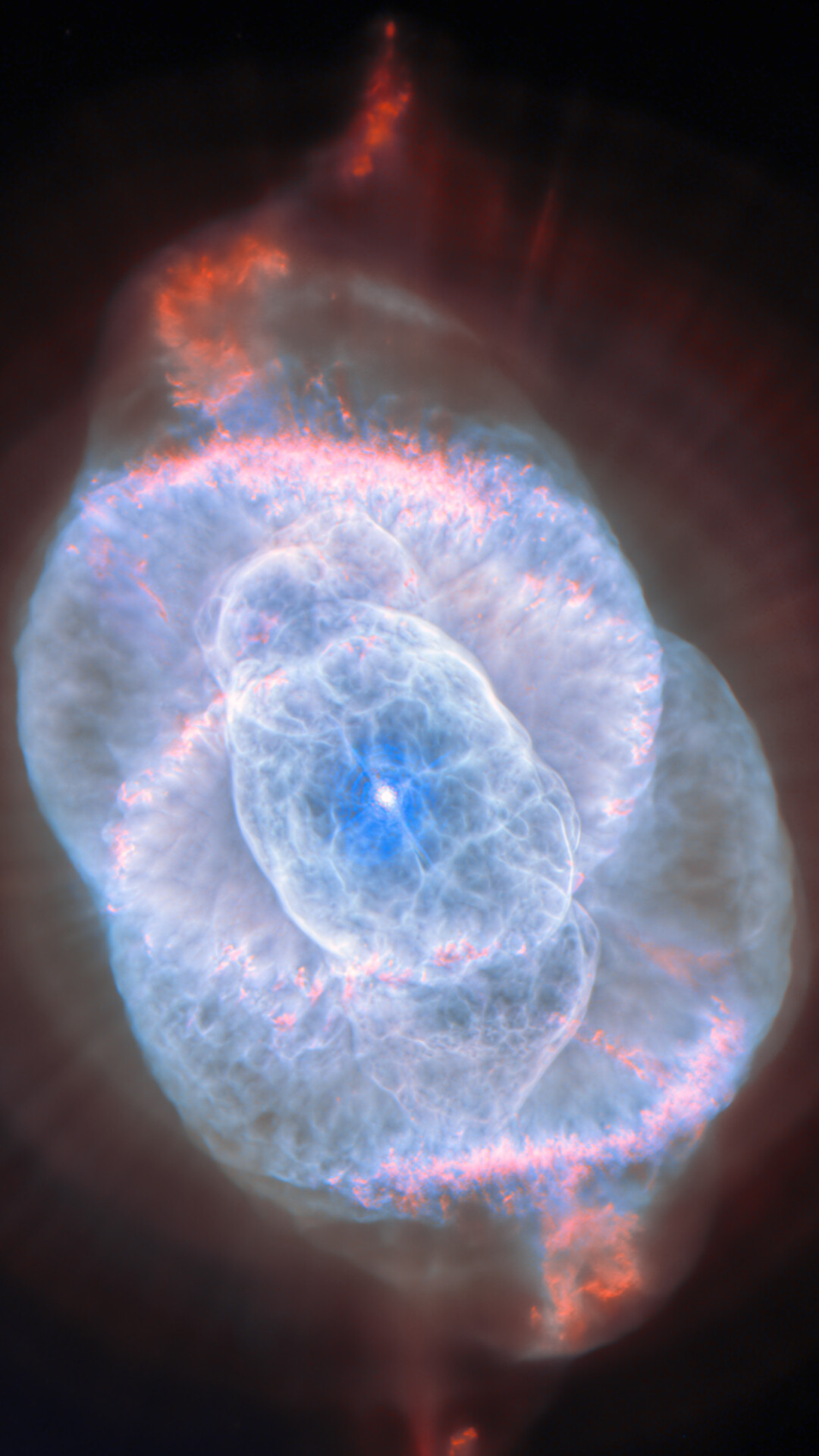
In this new image, Hubble captures the very core of the billowing gas with the High Resolution Channel sub-instrument on its Advanced Camera for Surveys (ACS). This instrument is optimised for capturing very sharp images of fine details in a small area, such as the complex features at the heart of the Cat’s Eye Nebula. The data reveal a tapestry of concentric shells, jets of high-speed gas and dense knots sculpted by shock interactions, features that appear almost surreal in their intricacy. These structures are believed to record episodic mass loss from the dying star at the nebula’s centre, creating a kind of cosmic “fossil record” of its final evolutionary stages.
Part of these data were also used in a previous image of the Cat’s Eye Nebula, released in 2004. Previously unused data from ACS is combined with state-of-the-art image processing to create this new image, the sharpest yet taken of this nebula.
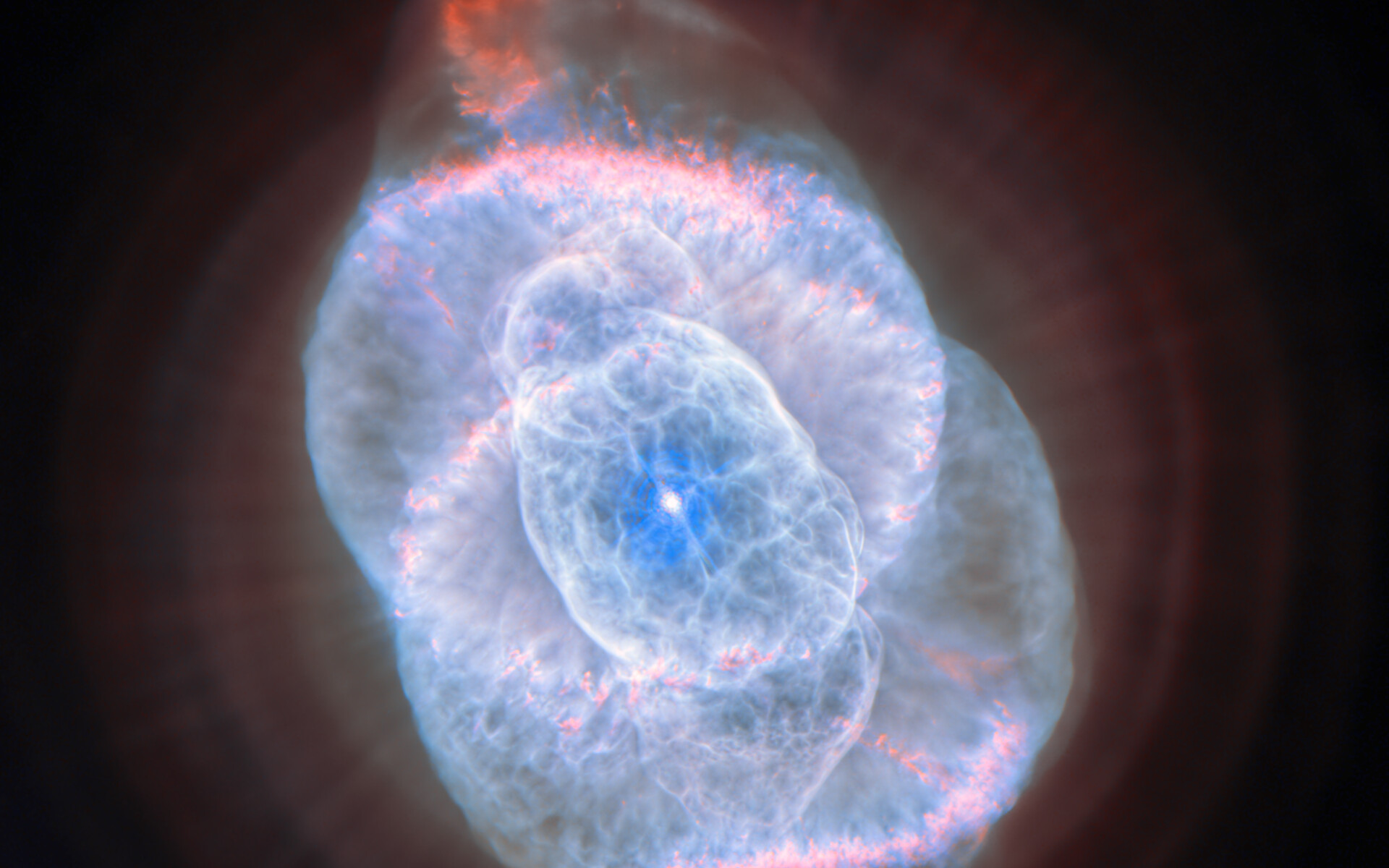
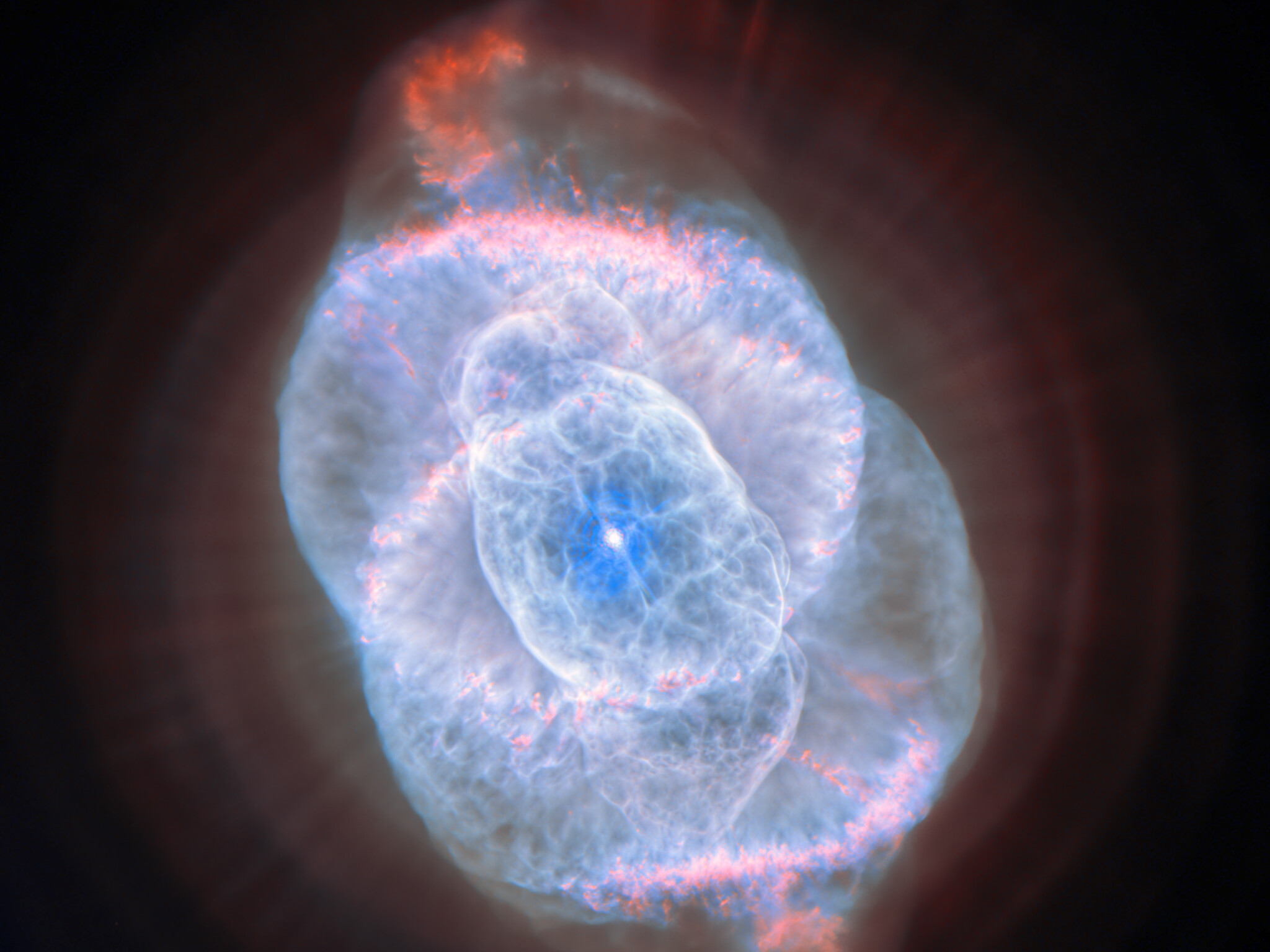
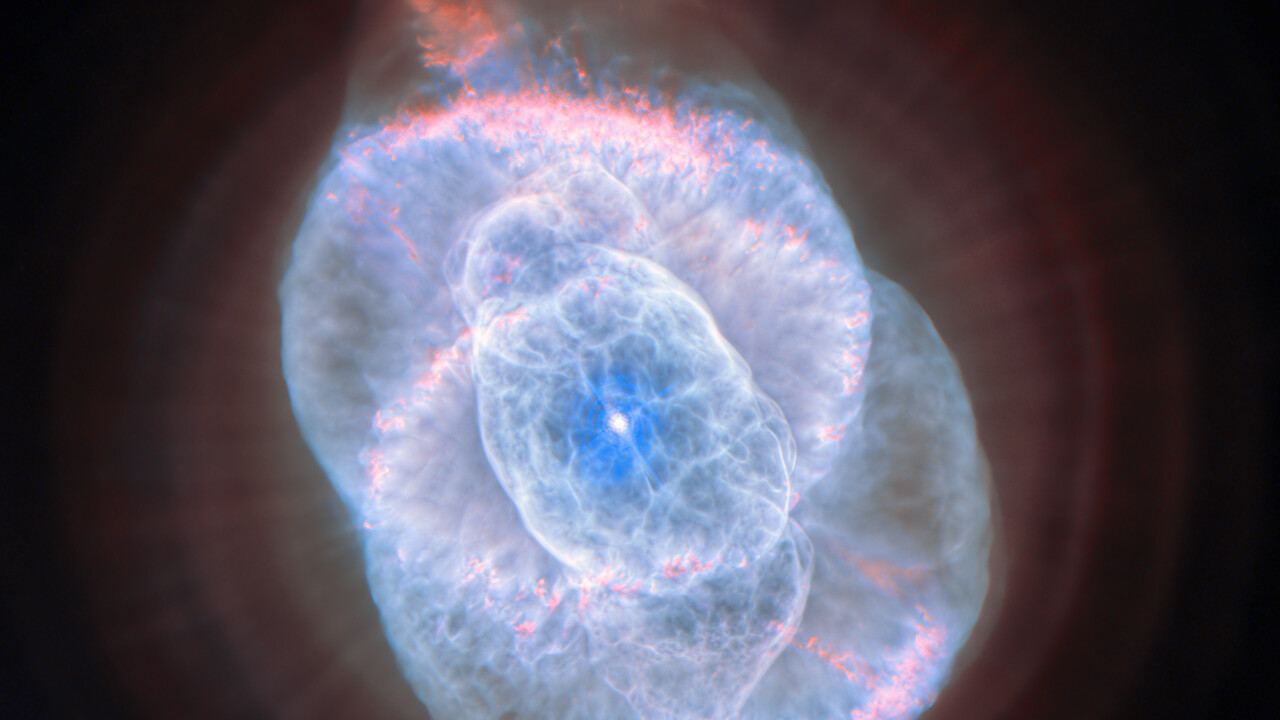
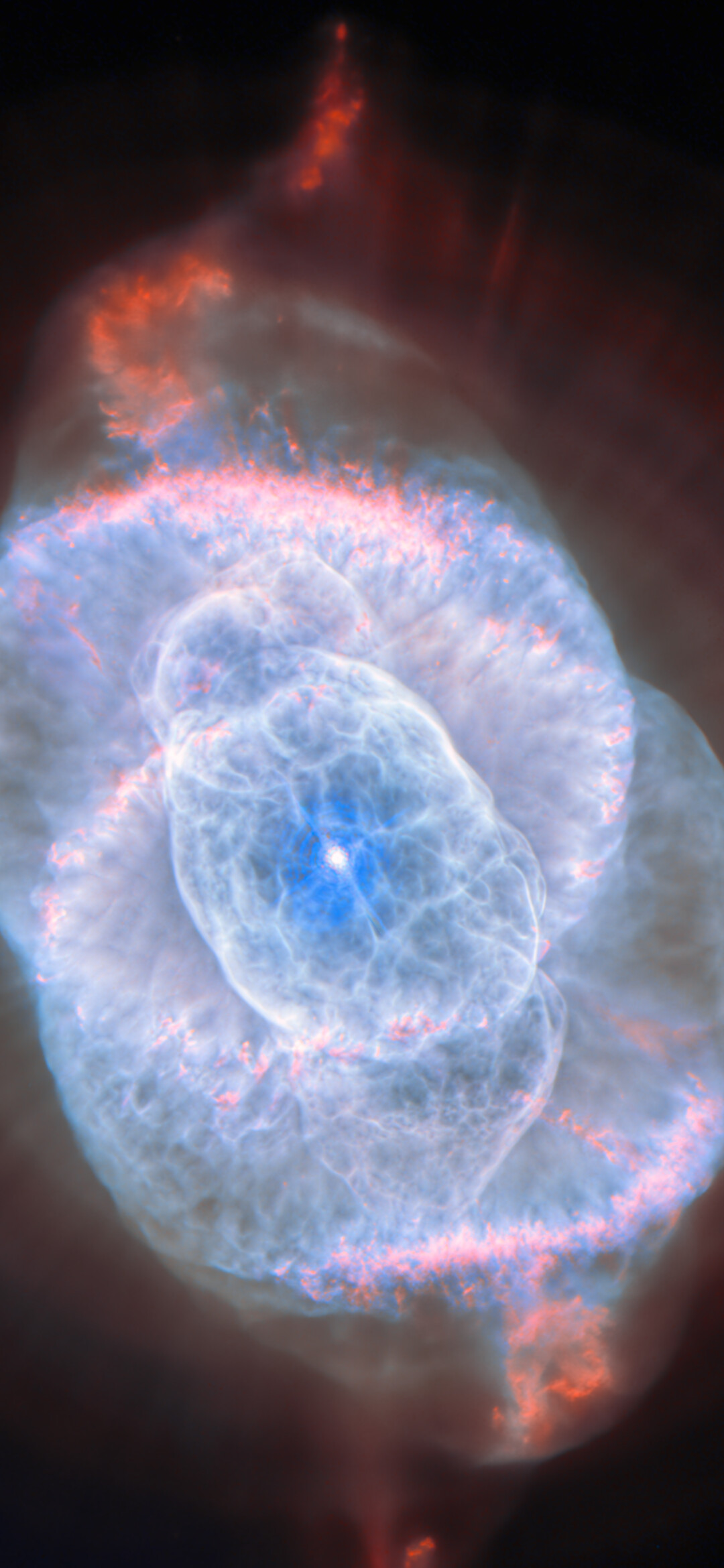
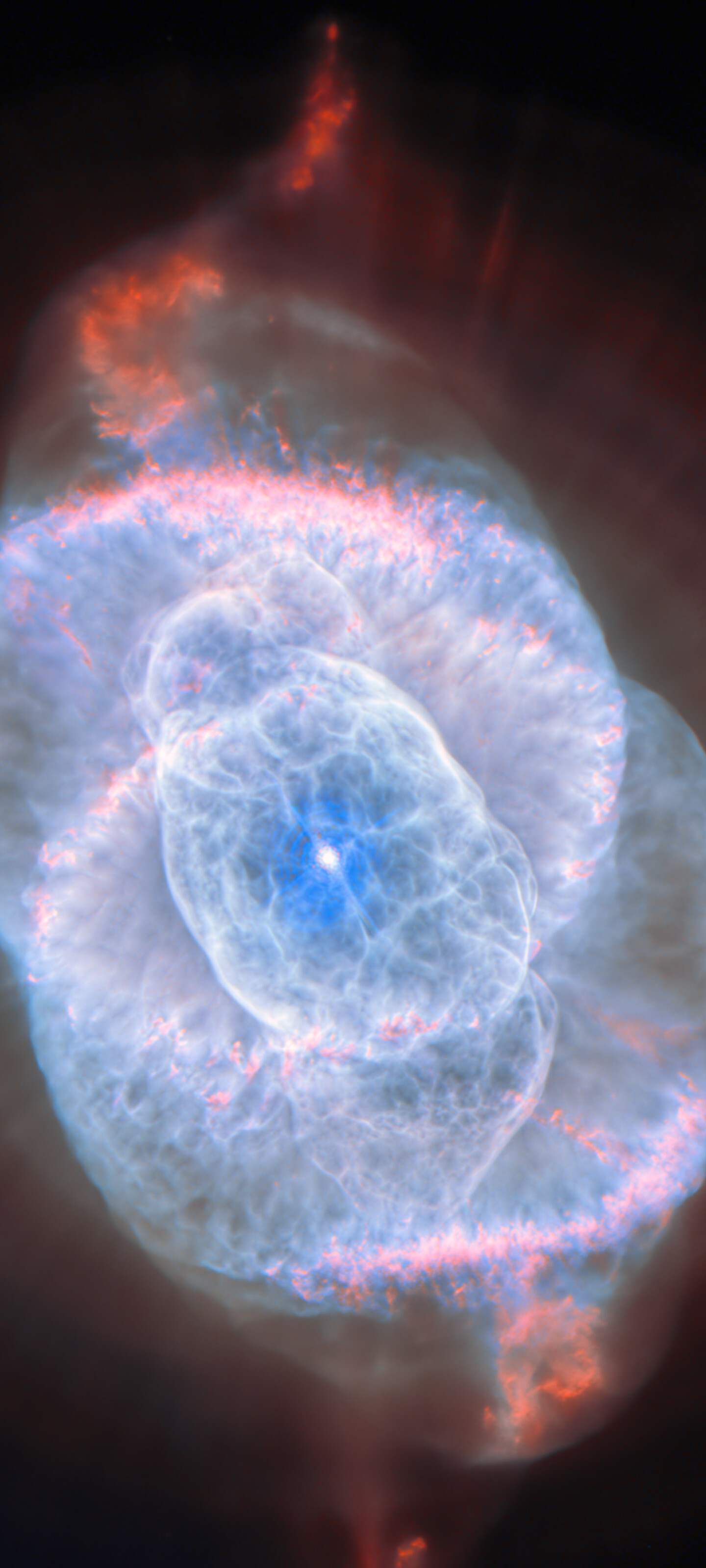
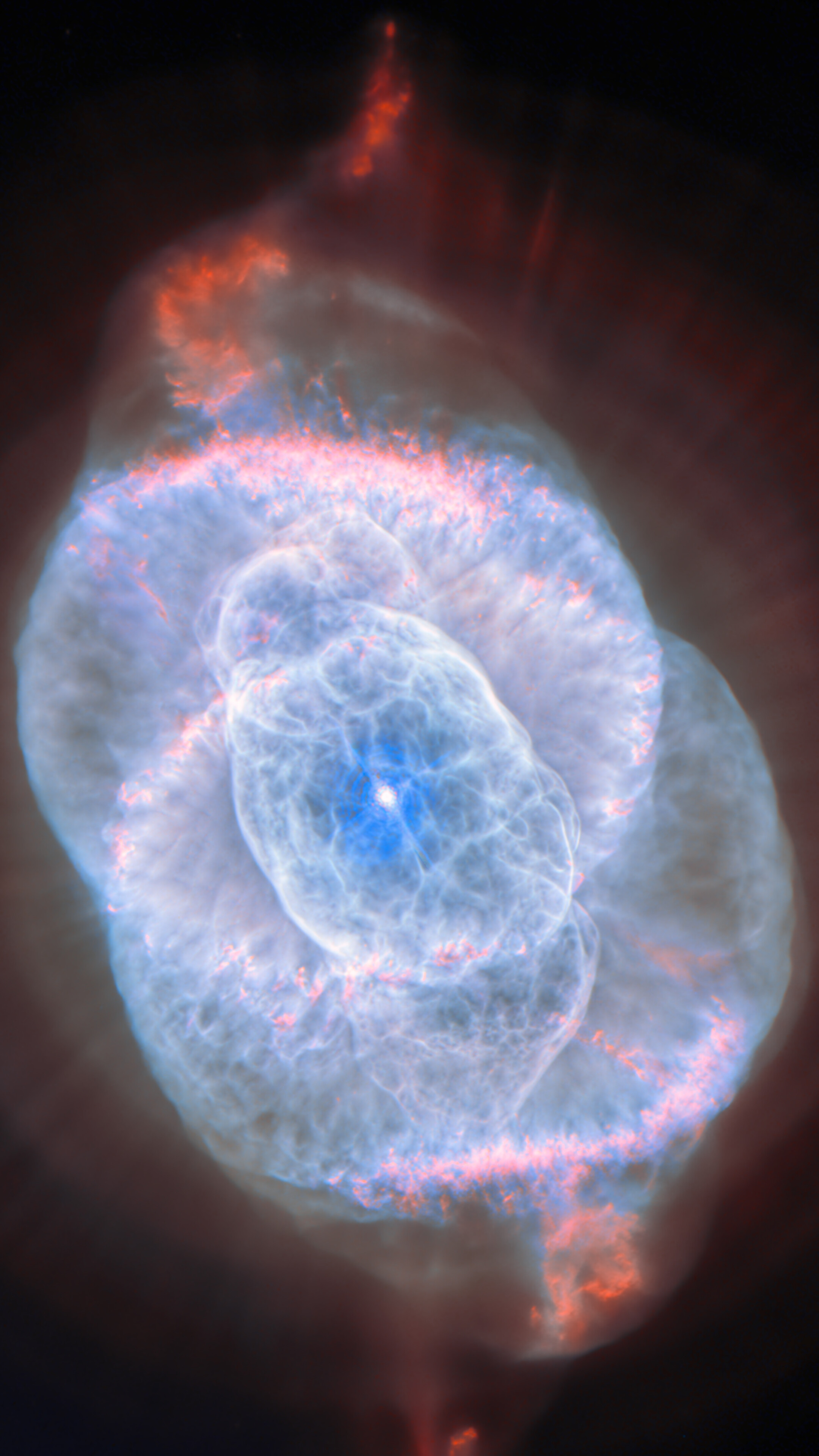
[Image Description: An image of the centre of a planetary nebula. A blue star sits at the centre within a series of overlapping, translucent bubbles of gas. The bubbles have a complex, filamentary structure. The two largest bubbles overlap halfway, creating an eye-like shape with the star at the centre. Jets of high-speed gas point out of the top and bottom of the nebula. Faint, concentric circles of gas also surround the star, out beyond the bubbles.]
Links
- Hubble+Euclid image of the Cat’s Eye Nebula
- Euclid wide field of the Cat’s Eye Nebula
- Pan video: Cat's Eye Nebula (Hubble image)
- Pan video: Cat's Eye Nebula (Hubble and Euclid image)
- Pullout video: Cat's Eye Nebula (Hubble and Euclid images)
- Zoom Video: Cat's Eye Nebula
- Space Sparks episode 25: Two observatories, one cosmic eye
- Image on ESA website
ESA/Hubble & NASA, Z. Tsvetanov
About the Image
| Id: | potm2602b |
|---|---|
| Type: | Observation |
| Release date: | 3 March 2026, 15:00 |
| Size: | 1546 x 1608 px |
About the Object
| Name: | NGC 6543 |
|---|---|
| Distance: | 4400 light years |
| Constellation: | Draco |
| Category: | Nebulae |


Classic Wallpapers

Desktop Wallpapers
Mobile Wallpapers

Coordinates
| Position (RA): | 17 58 33.44 |
|---|---|
| Position (Dec): | 66° 37' 59.02" |
| Field of view: | 0.64 x 0.67 arcminutes |
| Orientation: | North is 0.1° left of vertical |

Colours & filters
| Band | Wavelength | Telescope |
|---|---|---|
| Optical N III | 388 nm |
Hubble Space Telescope
ACS |
| Optical O III | 502 nm |
Hubble Space Telescope
ACS |
| Optical O III | 505 nm |
Hubble Space Telescope
ACS |
| Optical N II | 658 nm |
Hubble Space Telescope
ACS |