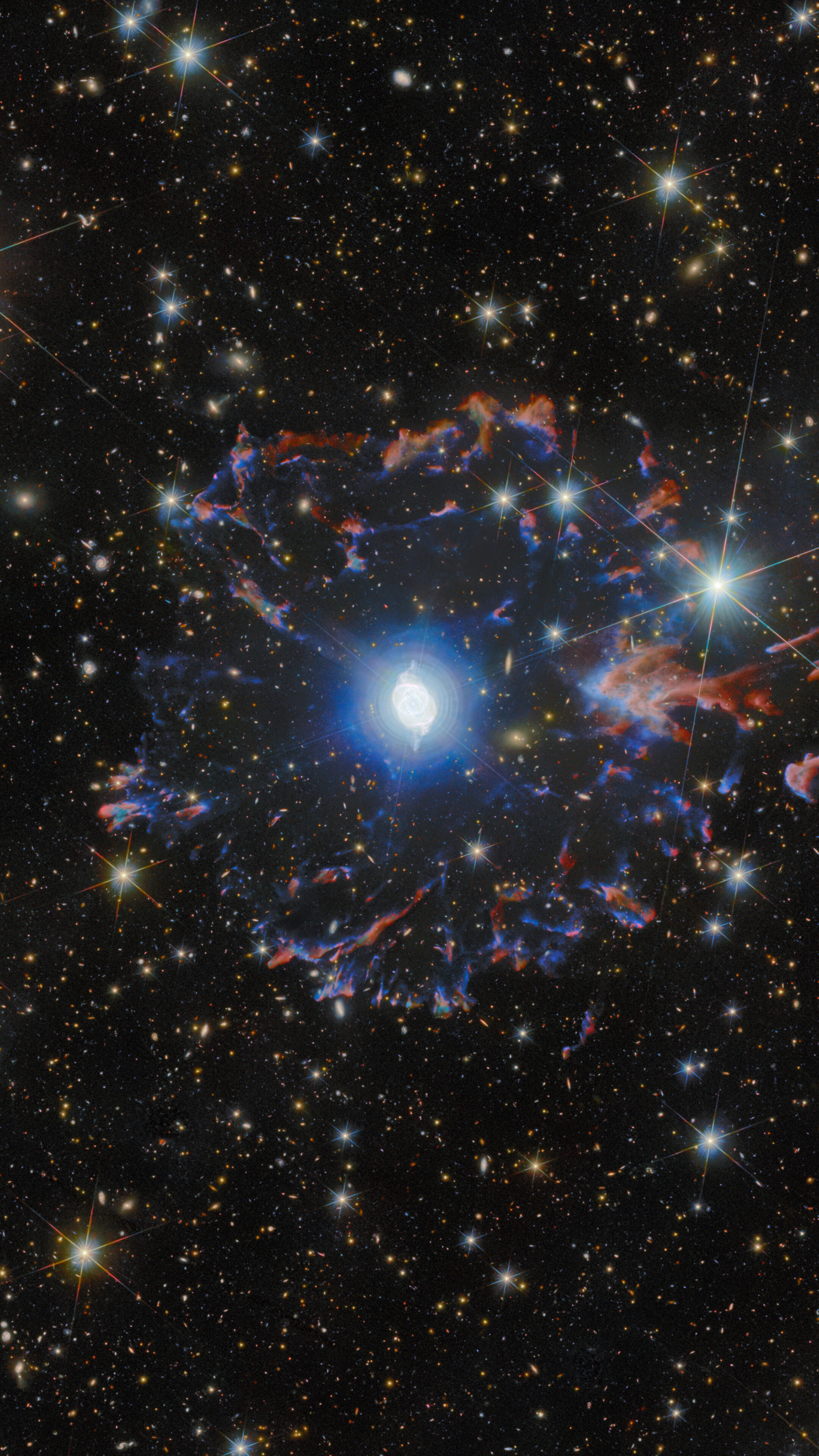
Euclid and Hubble's view of Cat's Eye Nebula
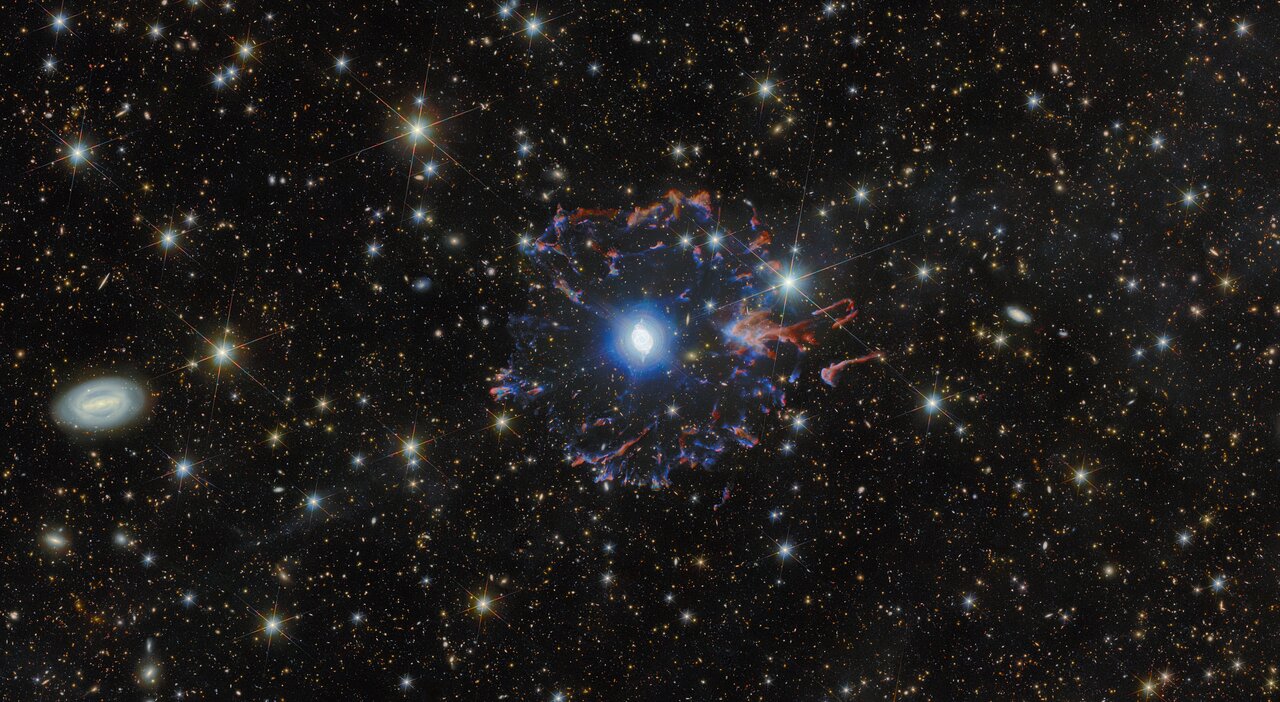
For this month’s ESA/Hubble Picture of the Month, we turn our gaze to one of the most visually intricate remnants of a dying star: the Cat’s Eye Nebula, also known as NGC 6543. This extraordinary planetary nebula lies roughly 4 400 light-years away in the constellation Draco, and has captivated astronomers for decades with its elaborate and multilayered structure.
Planetary nebulae, so-called because of their round shape when viewed through early telescopes, are in fact expanding gas thrown off by stars in their final stages of evolution. It was the Cat’s Eye Nebula itself where this fact was first discovered in 1864 — examining the spectrum of its light reveals the emission from individual molecules that’s characteristic of a gas, distinguishing planetary nebulae from stars and galaxies.
The NASA/ESA Hubble Space Telescope also revolutionised our understanding of planetary nebulae; its detailed images showed that the simple, circular appearance of a planetary nebula seen from the ground belies a very complex morphology. This was particularly true of the Cat’s Eye Nebula, where Hubble’s images in 1995 revealed never-before-seen structures that broadened our understanding of how planetary nebulae come to be.
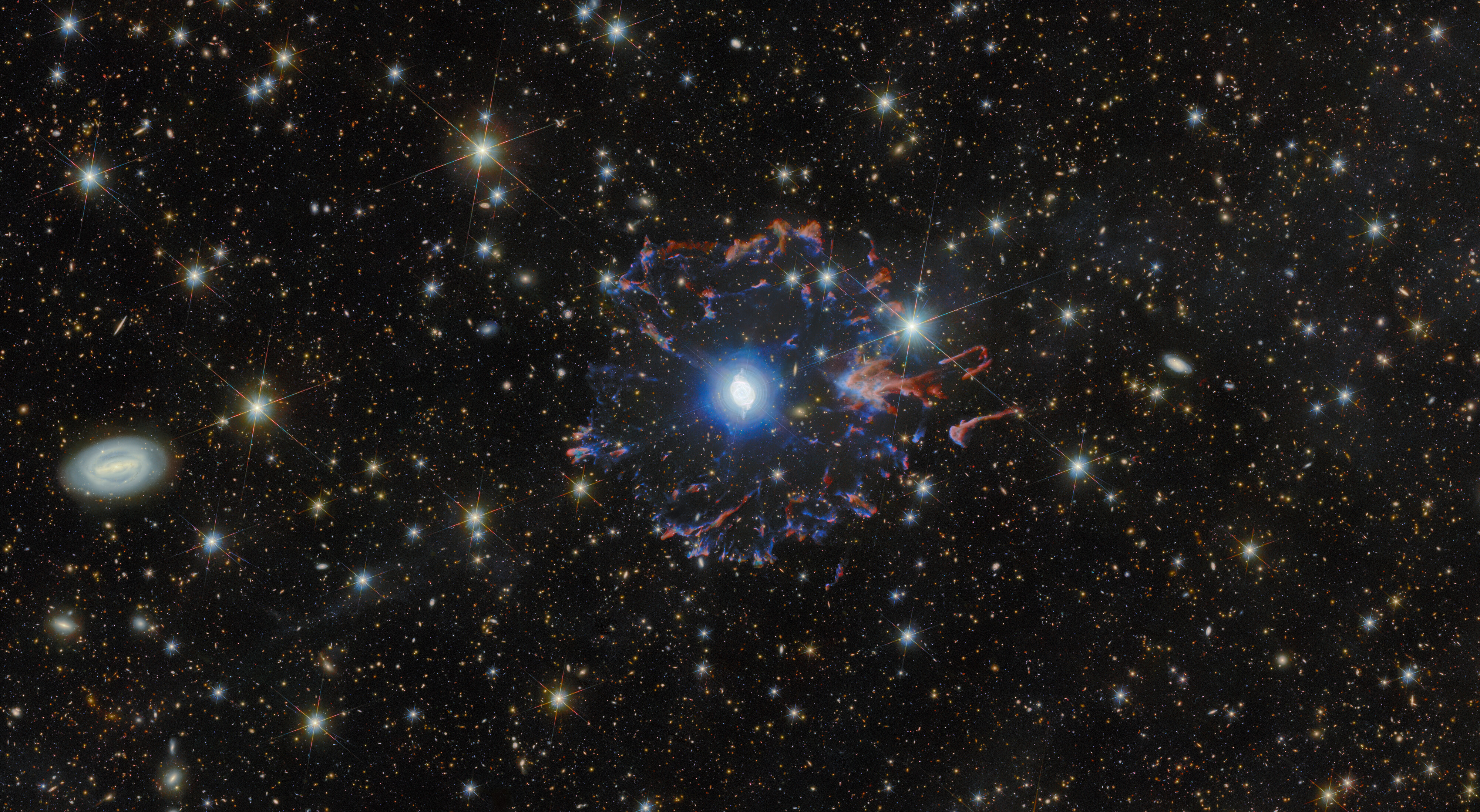
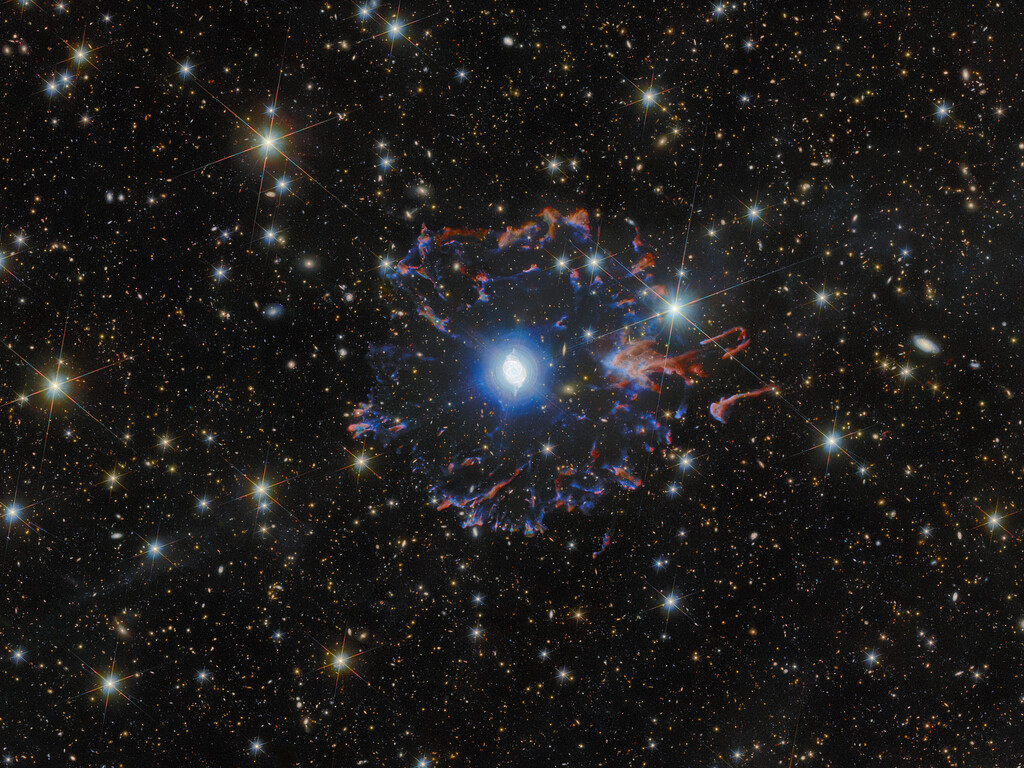
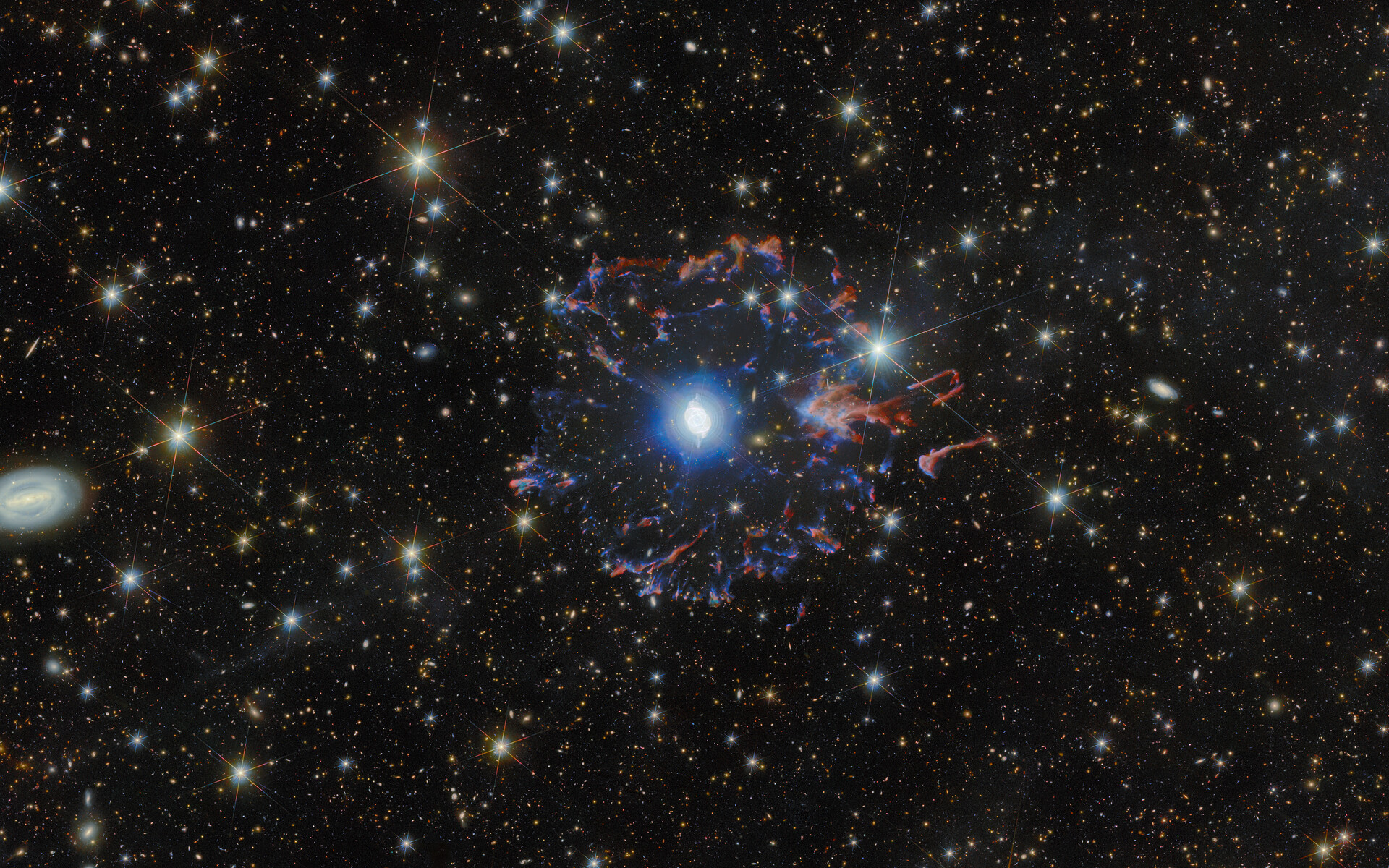
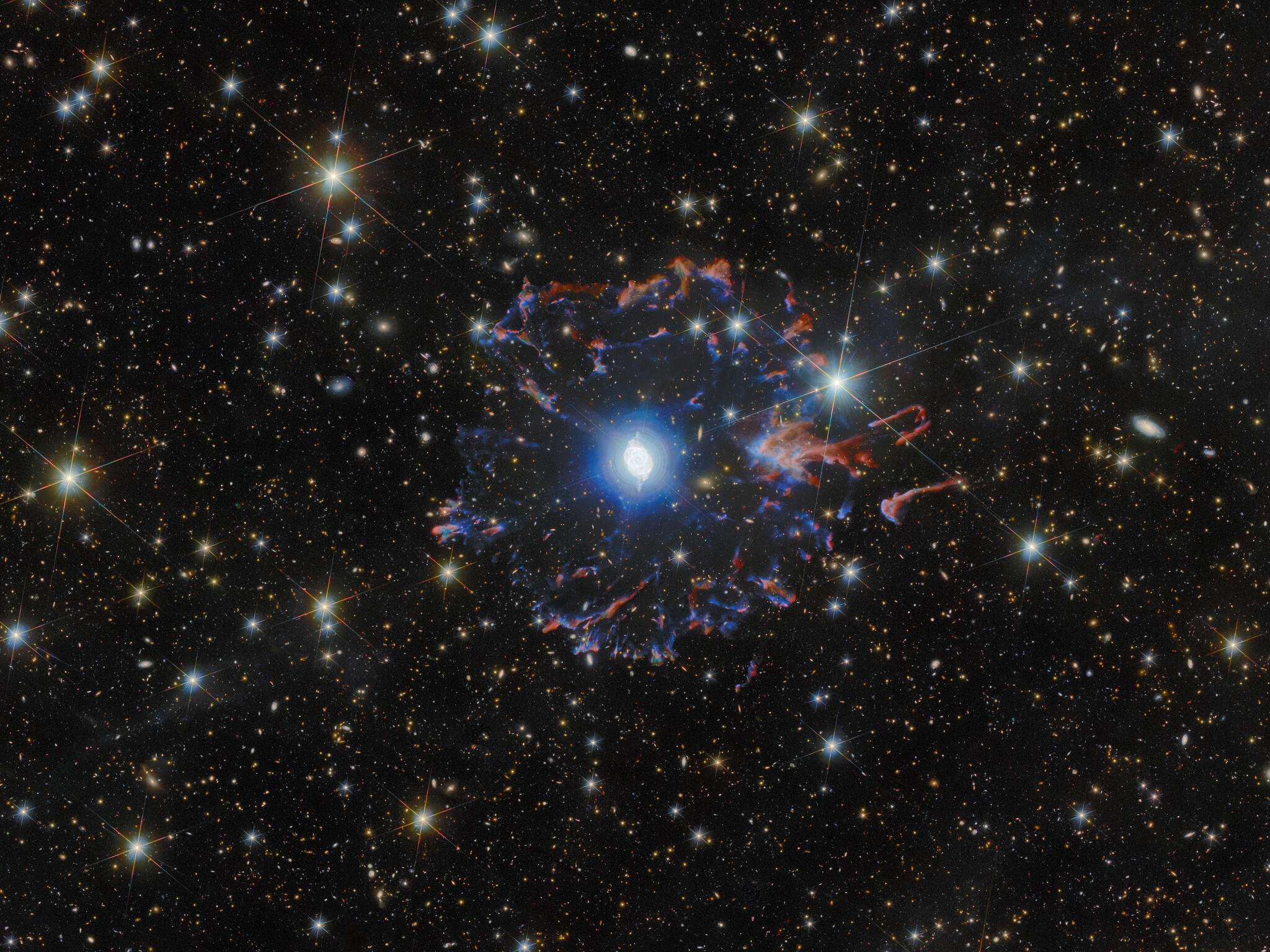
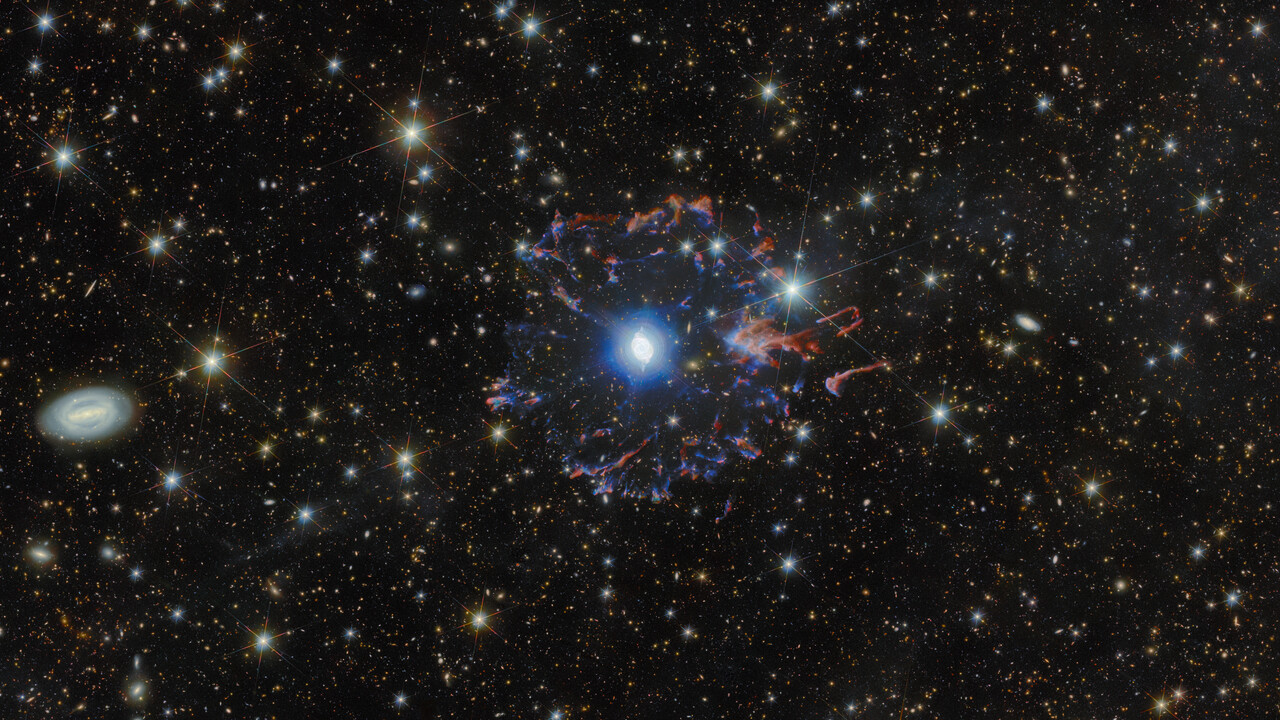
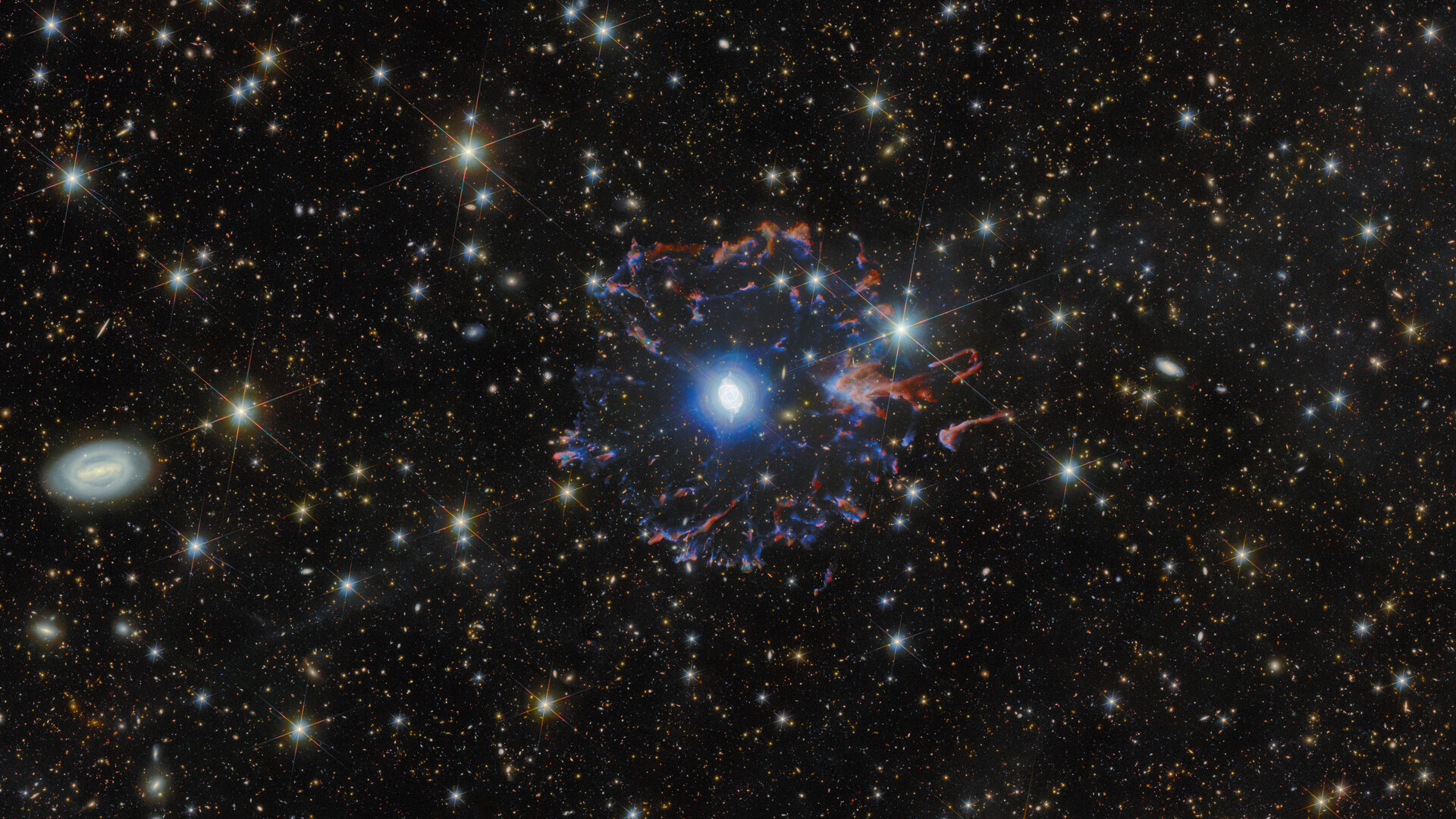
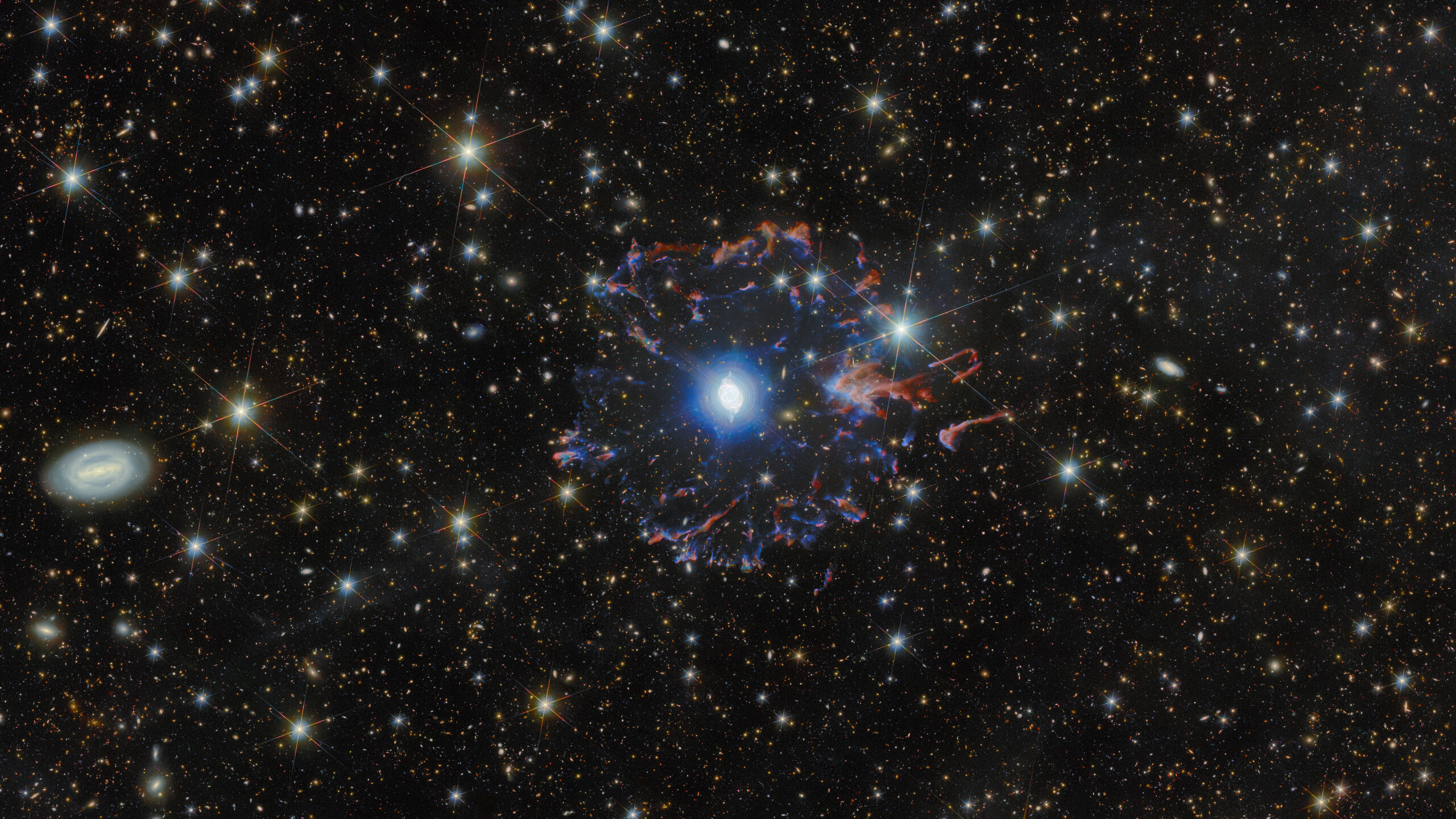
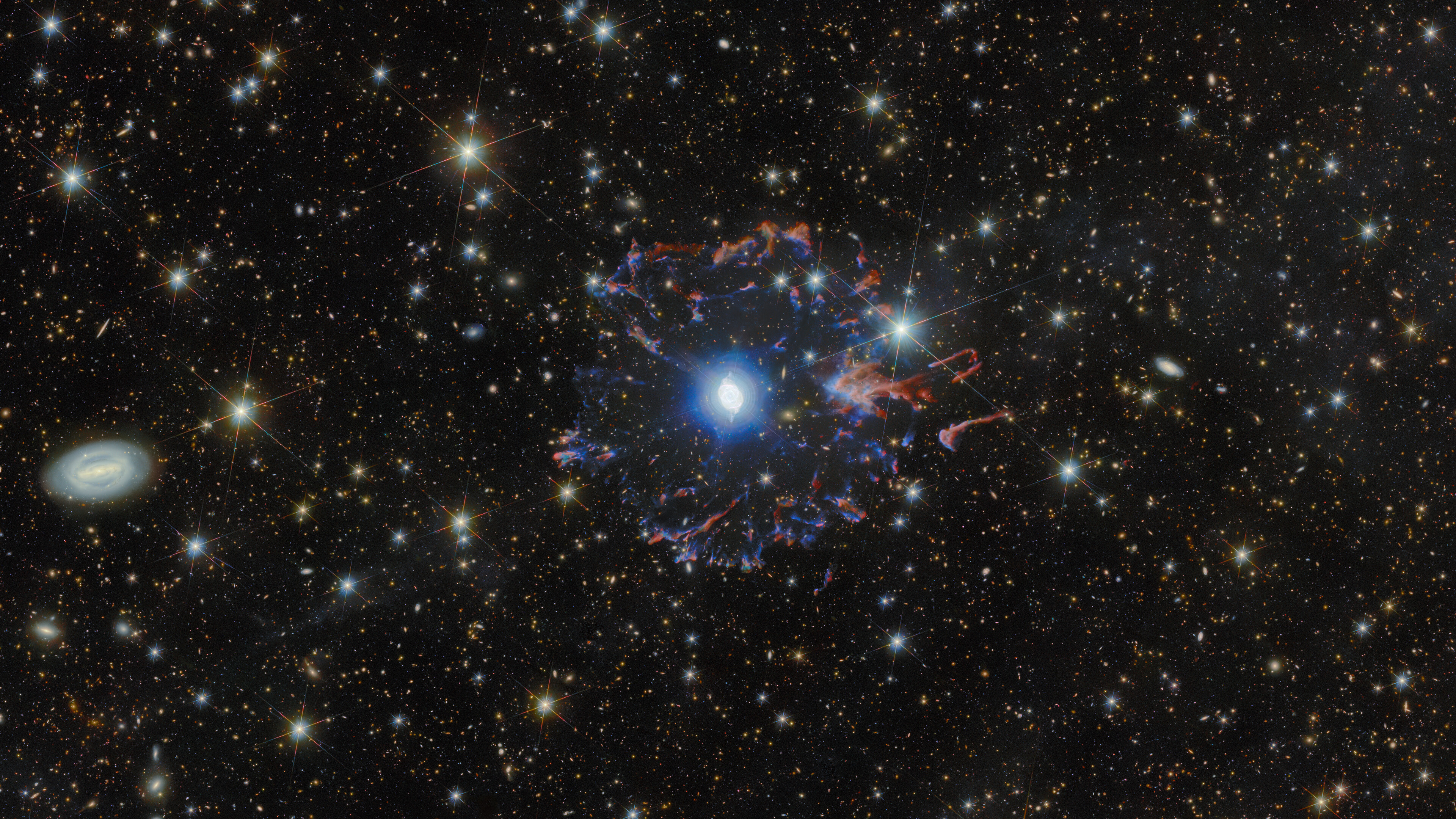
This time, Hubble is joined by ESA’s Euclid space telescope to create a new image of NGC 6543. The nebula is showcased through the combined eyes of Hubble and Euclid, revealing the remarkable complexity of stellar death in this object. Though primarily designed to map the distant Universe, Euclid captures the Cat’s Eye Nebula as part of its deep imaging surveys, resulting in this broad view that situates the nebula against the deep space beyond.
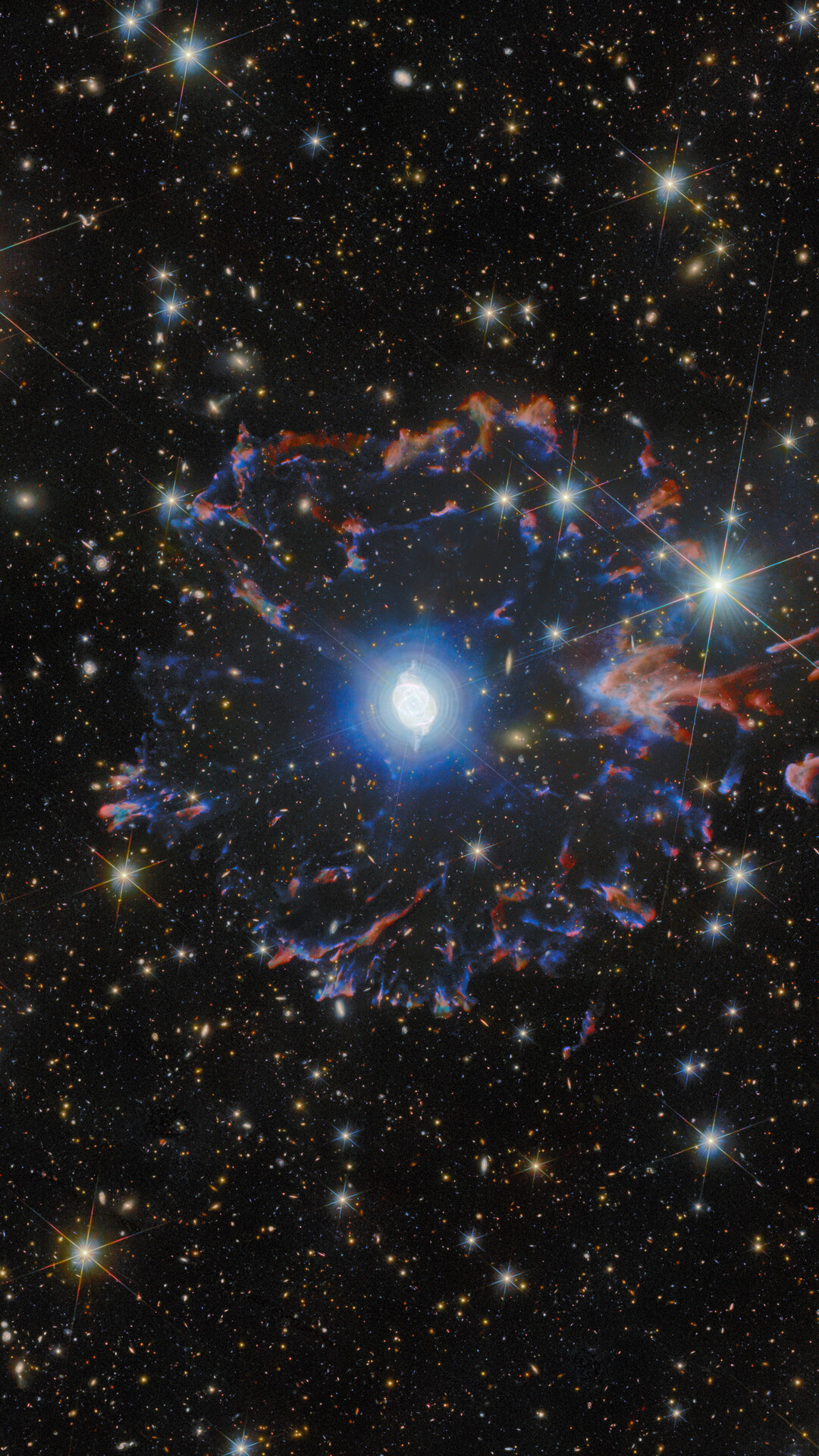
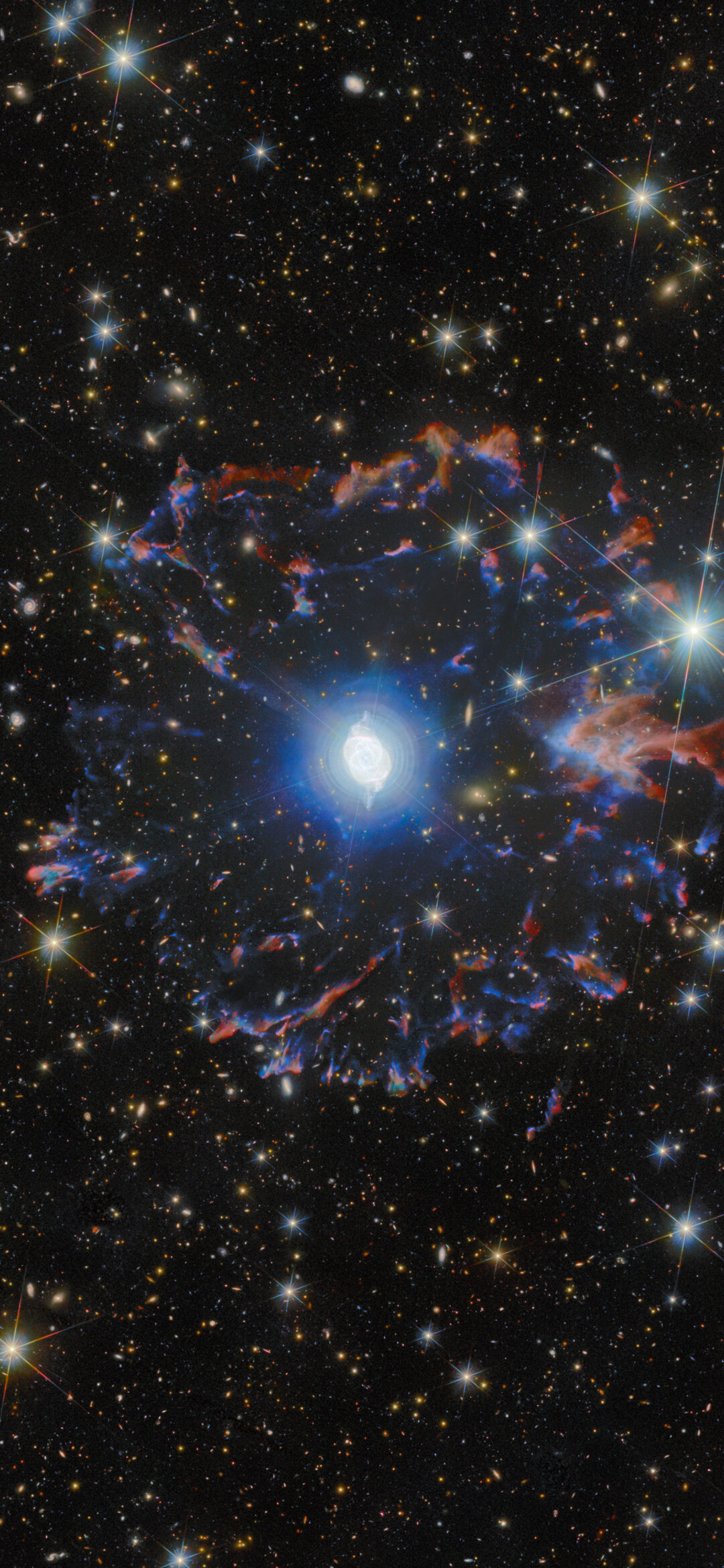
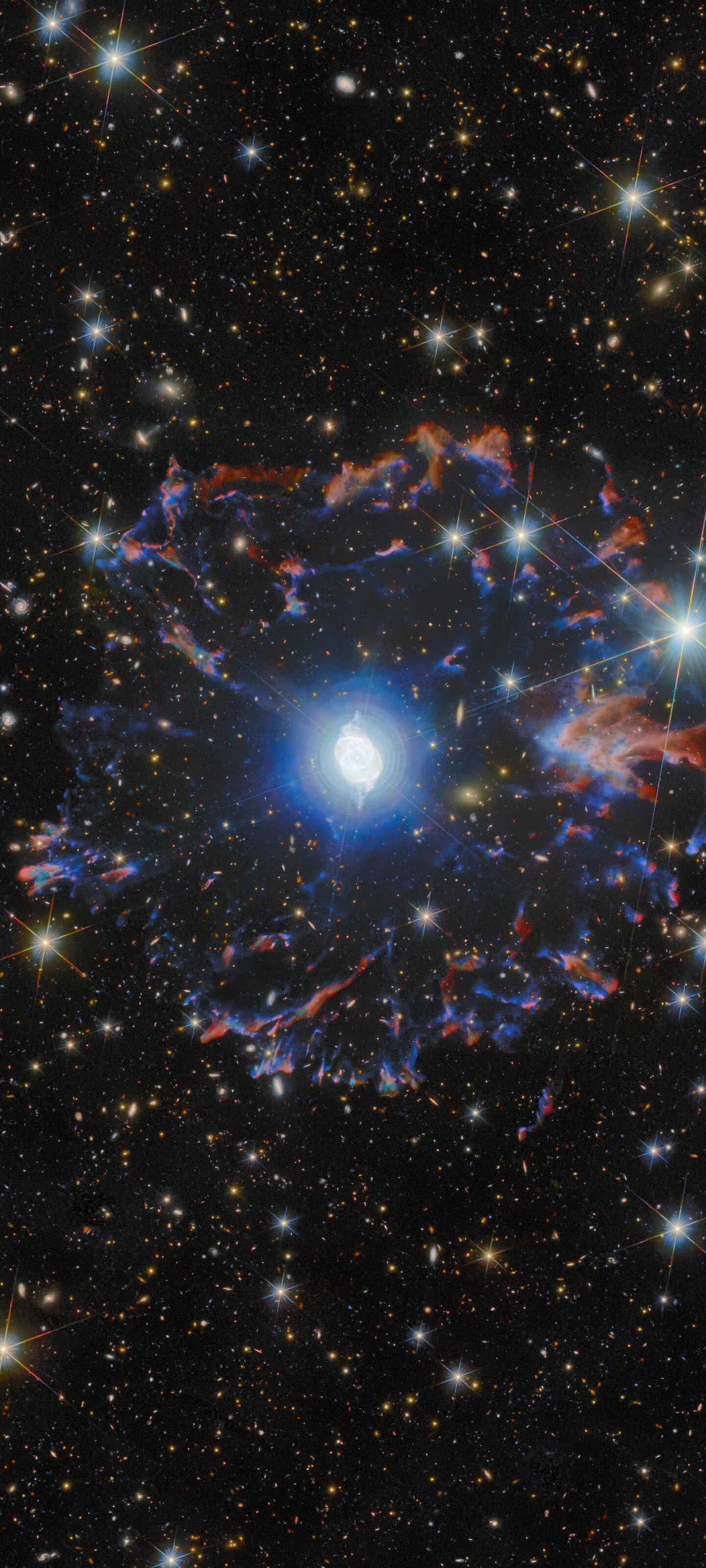
In Euclid’s wide, near-infrared and visible light view, the arcs and filaments of the nebula’s bright central region are situated within a halo of colourful fragments of gas zooming away from the star. This ring was ejected from the star at an earlier stage, before the main nebula at the centre formed. Hubble captures the very core of the billowing gas with high-resolution visible-light images, adding extra detail in the centre of this image. The whole nebula stands out against a backdrop teeming with distant galaxies, demonstrating how local astrophysical beauty and the farthest reaches of the cosmos can be seen together in modern astronomical surveys.
Together, these missions provide a rich and complementary view of NGC 6543 — revealing the delicate interplay between stellar end-of-life processes and the vast cosmic tapestry beyond.
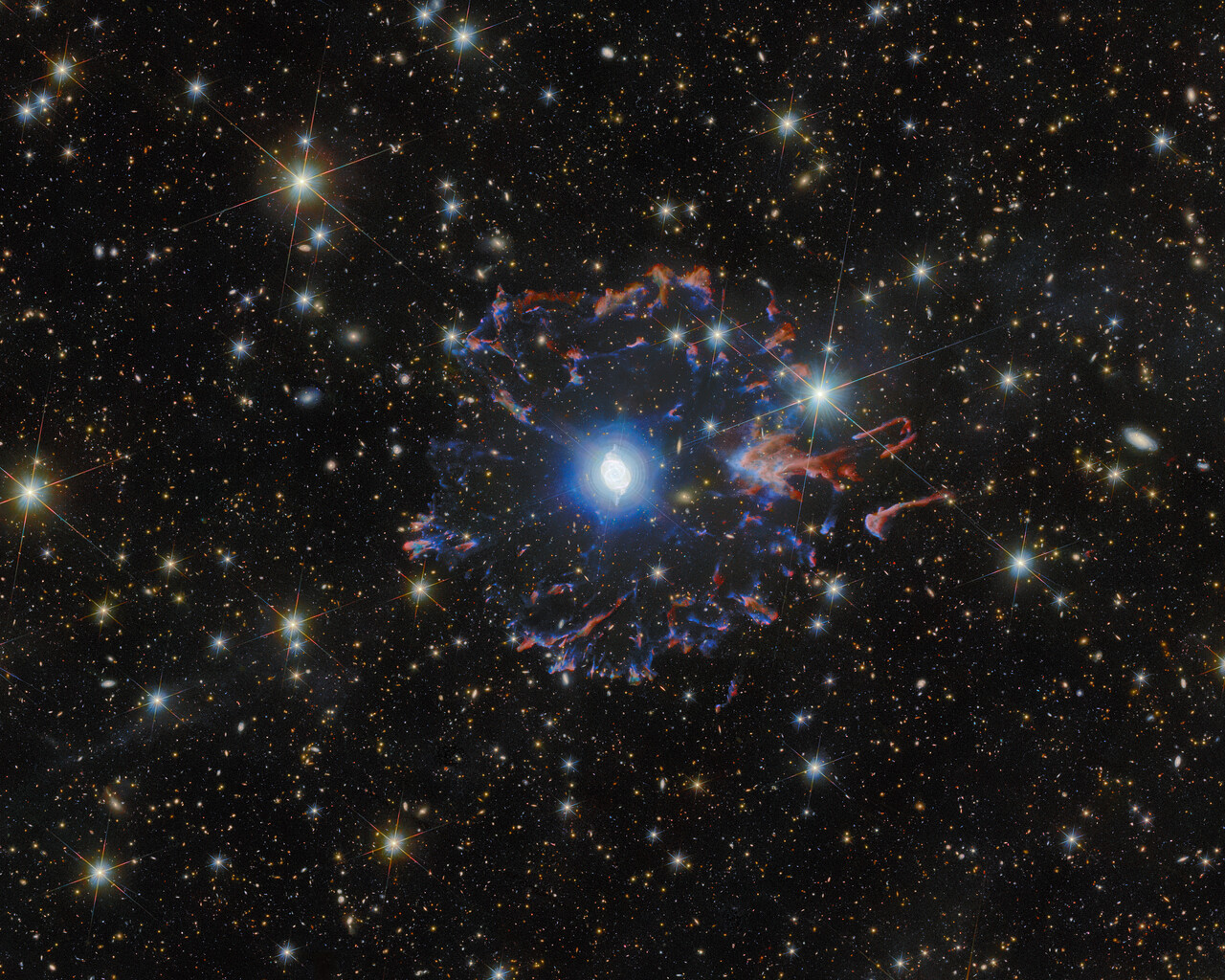
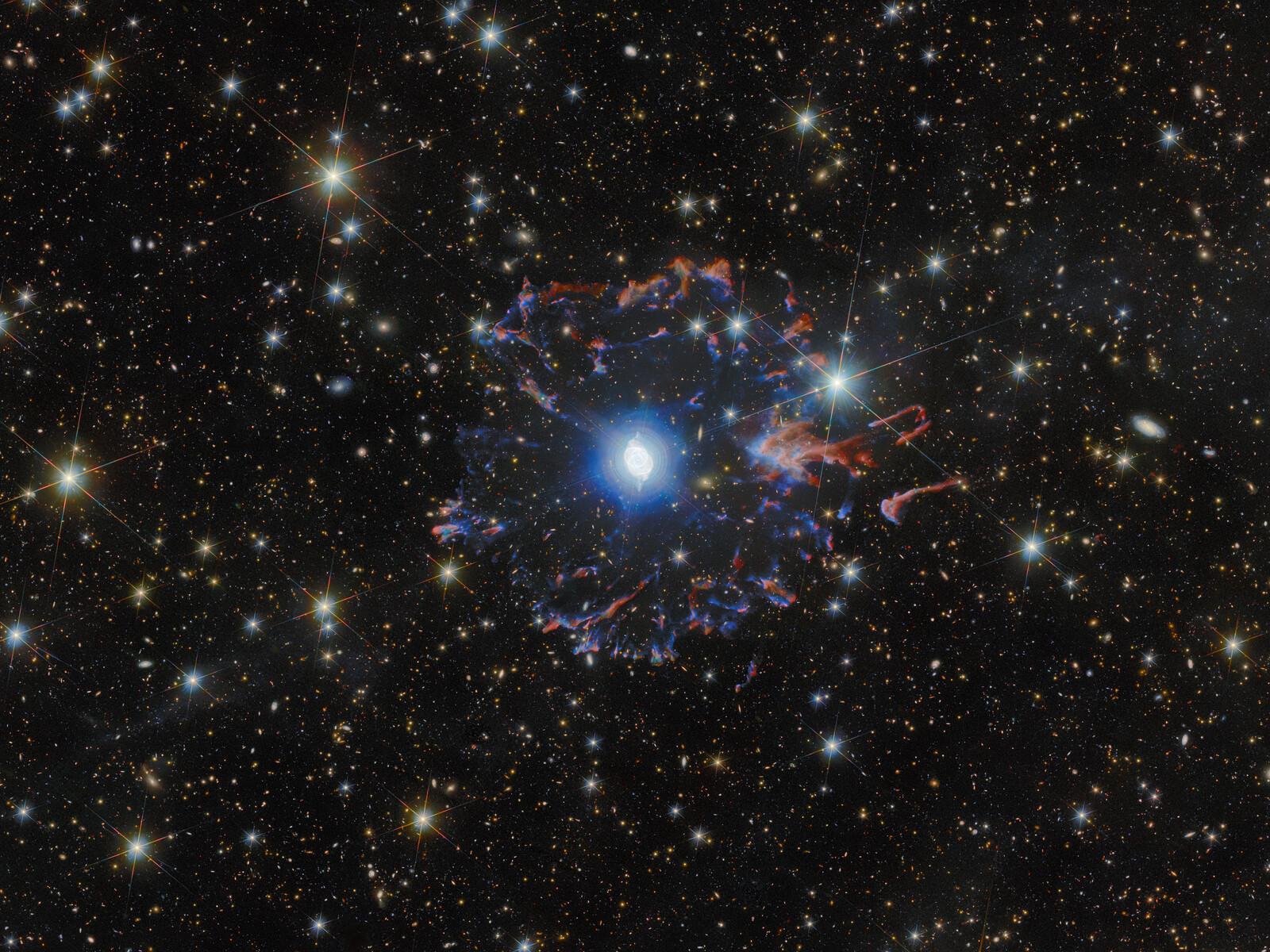
[Image Description: A planetary nebula in space. The star in the very centre is surrounded by white bubbles and loops of gas, all shining with a powerful blue light. Farther away a broken ring of red and blue gas clouds surrounds the nebula. A multitude of golden and white stars, wisps of gas and distant galaxies of various sizes surround the nebula on the black background.]
Links
- Hubble+Euclid image of the Cat’s Eye Nebula
- Hubble close view of the Cat’s Eye Nebula
- Pan video: Cat's Eye Nebula (Hubble image)
- Pan video: Cat's Eye Nebula (Hubble and Euclid image)
- Pullout video: Cat's Eye Nebula (Hubble and Euclid images)
- Zoom Video: Cat's Eye Nebula
- Space Sparks episode 25: Two observatories, one cosmic eye
- Image on ESA website
ESA/Hubble & NASA, ESA Euclid/Euclid Consortium/NASA/Q1-2025, J.-C. Cuillandre & E. Bertin (CEA Paris-Saclay), Z. Tsvetanov
About the Image
| Id: | potm2602c |
|---|---|
| Type: | Observation |
| Release date: | 3 March 2026, 15:00 |
| Size: | 13212 x 7250 px |
About the Object
| Name: | NGC 6543 |
|---|---|
| Distance: | 4400 light years |
| Constellation: | Draco |
| Category: | Nebulae |
Image Formats


Classic Wallpapers

Desktop Wallpapers
Mobile Wallpapers

Coordinates
| Position (RA): | 17 58 33.73 |
|---|---|
| Position (Dec): | 66° 37' 46.67" |
| Field of view: | 22.02 x 12.08 arcminutes |
| Orientation: | North is 0.4° left of vertical |