New view of NGC 4394 raises the bar
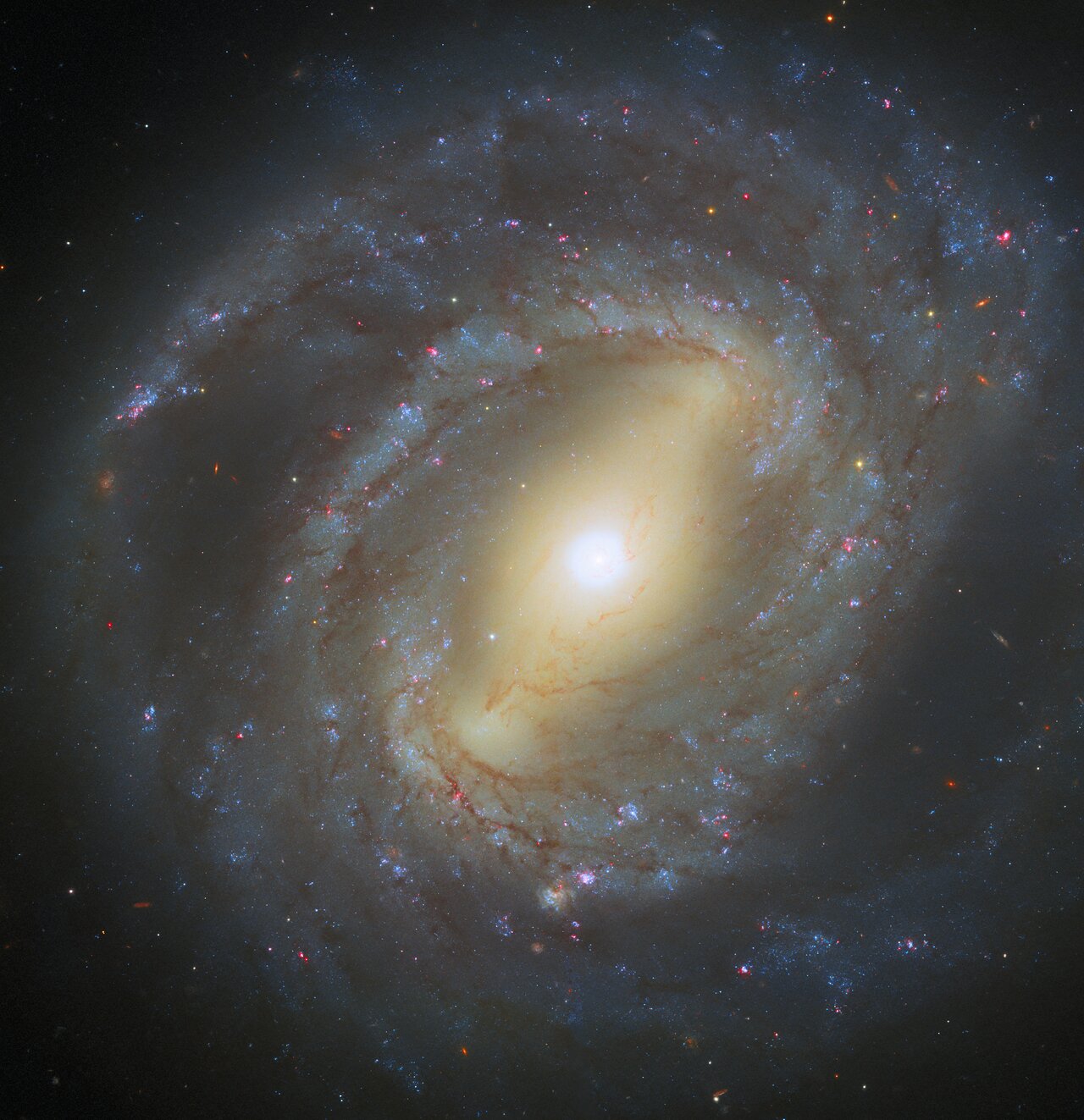
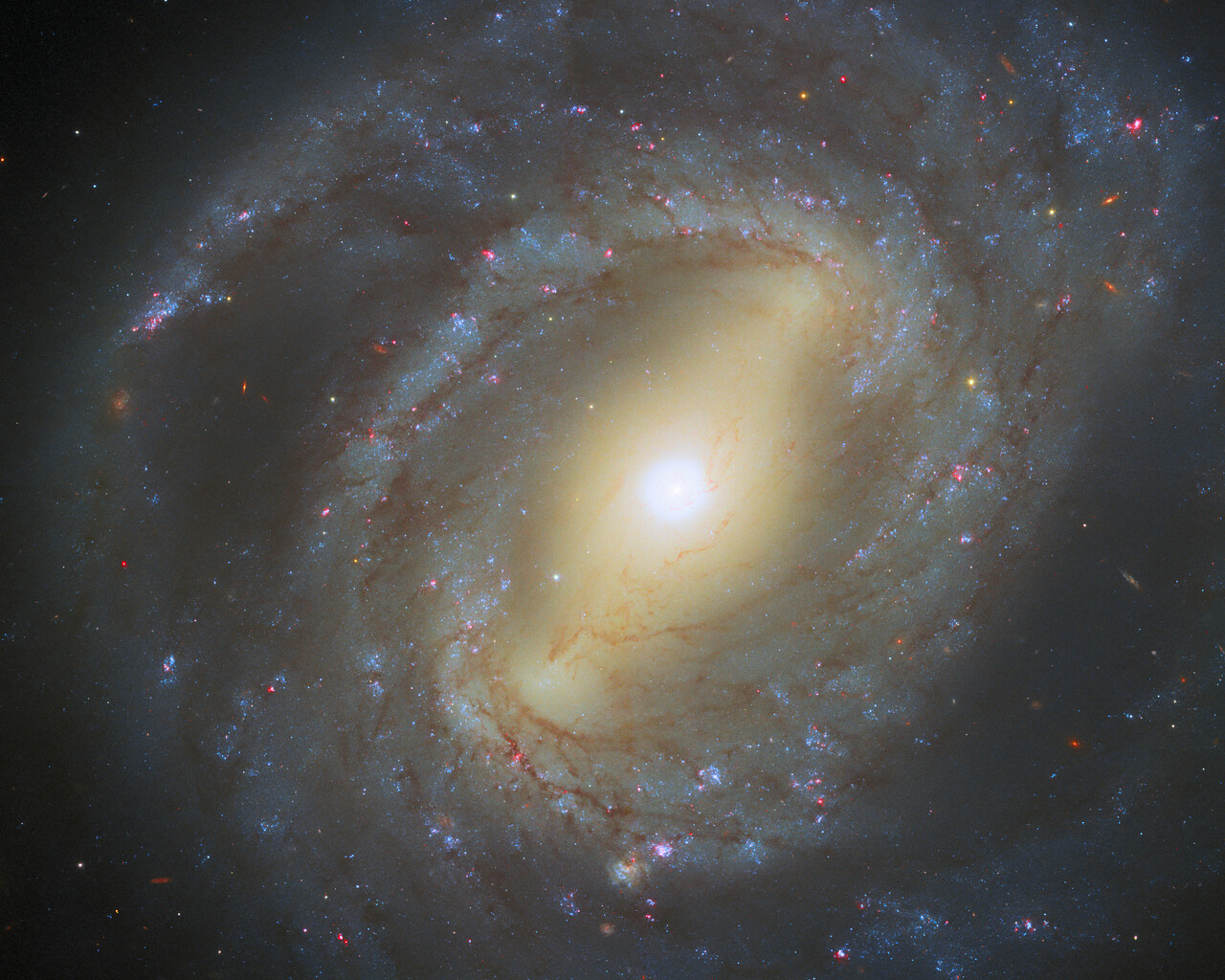
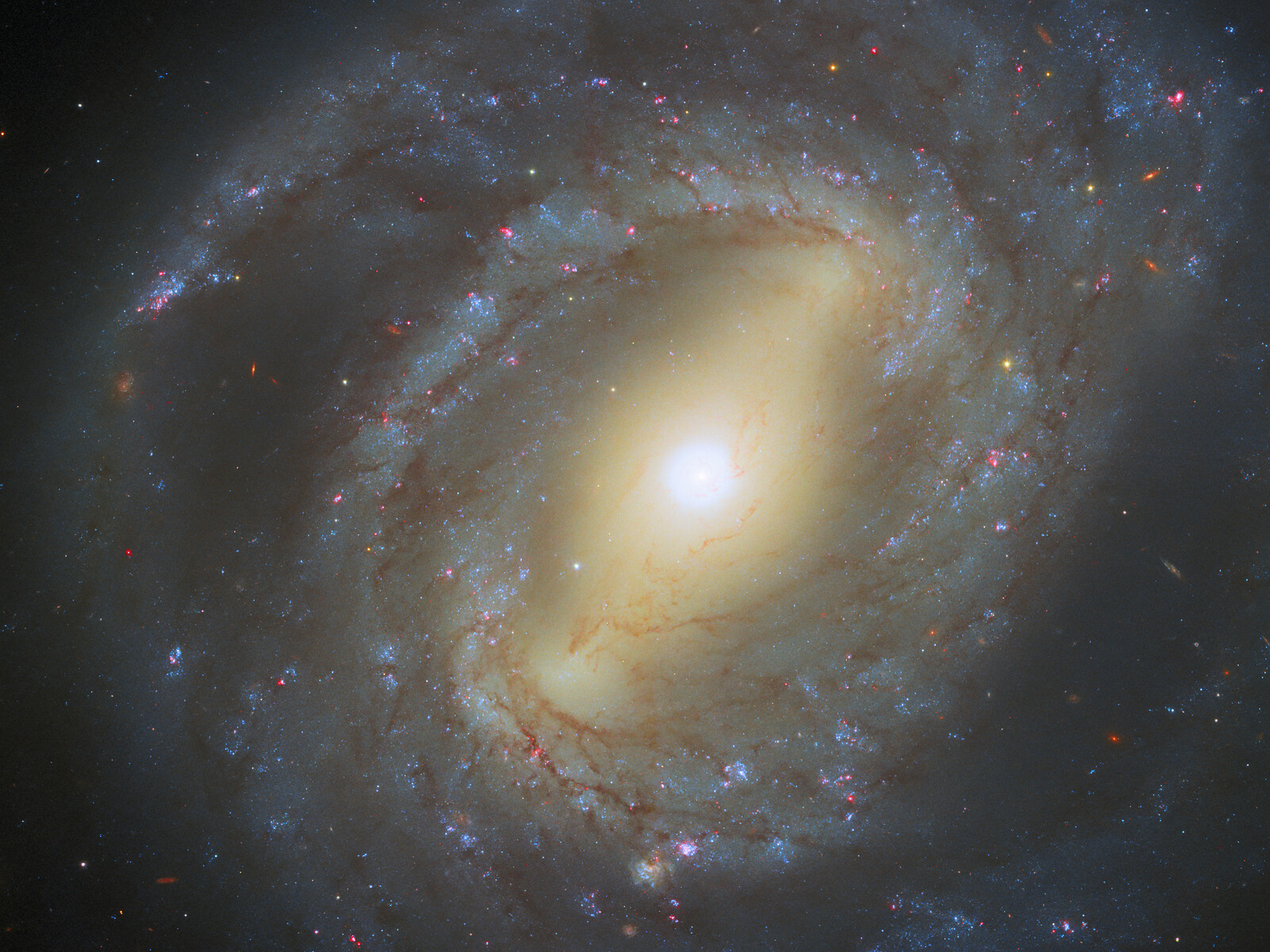
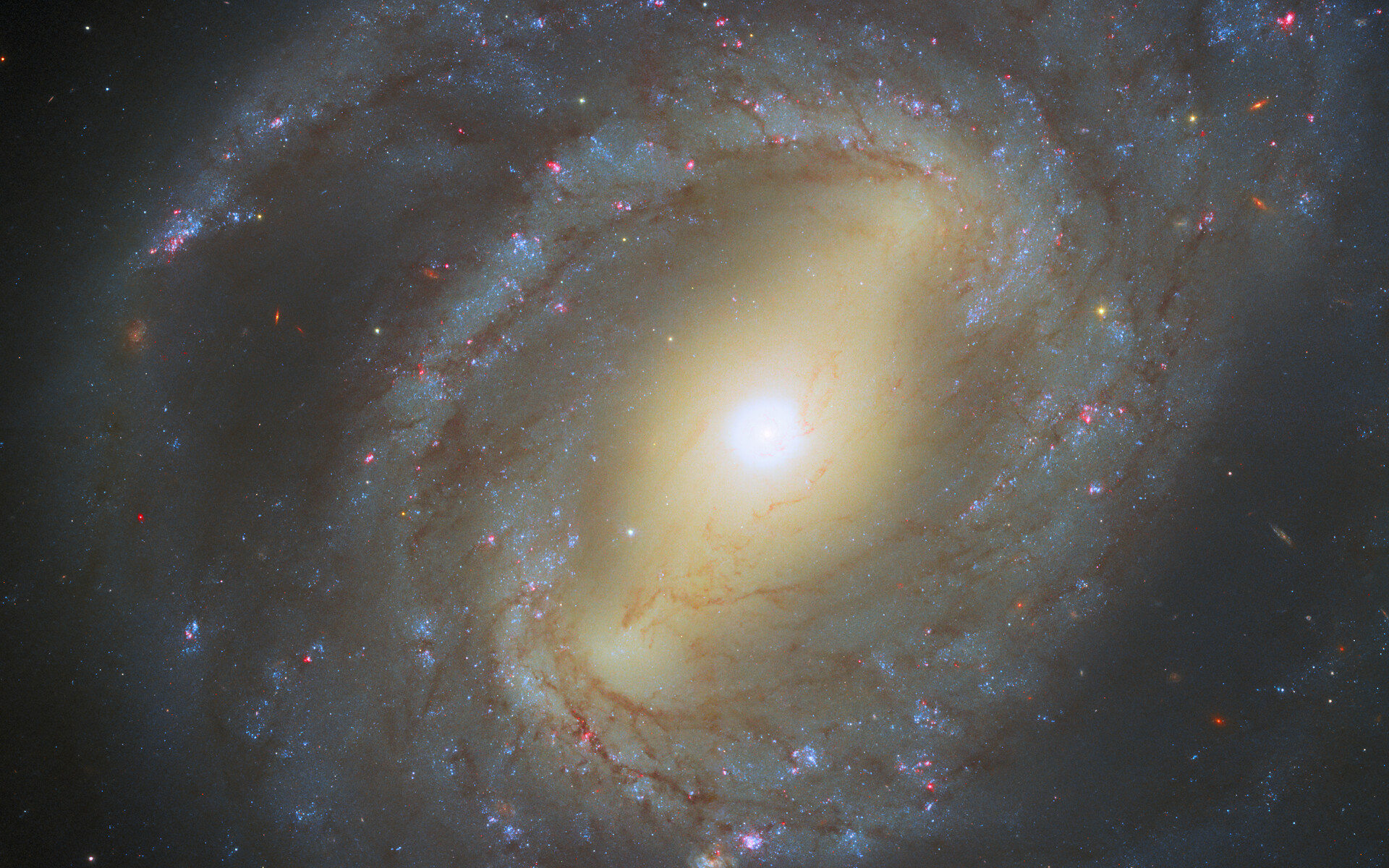
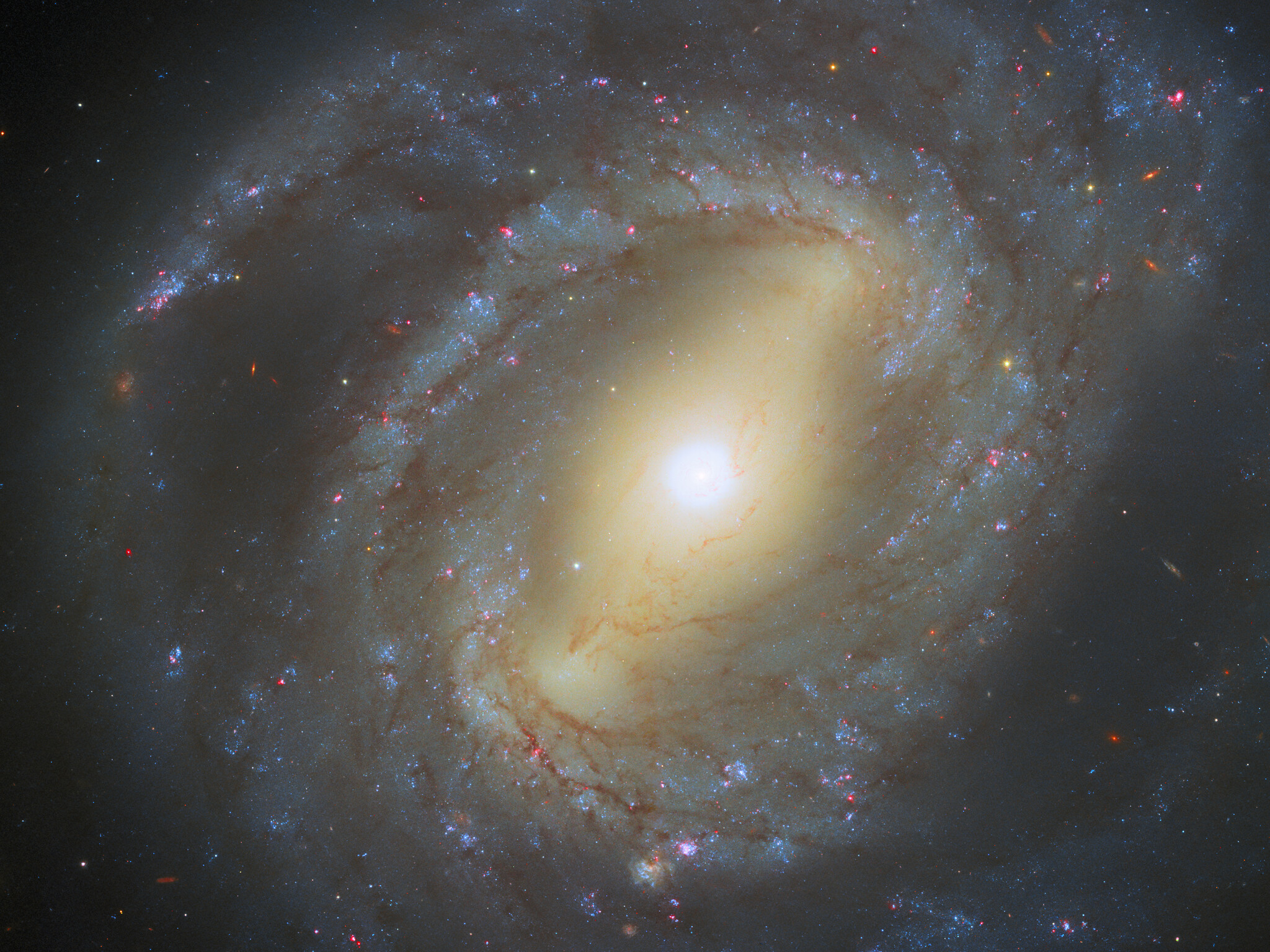
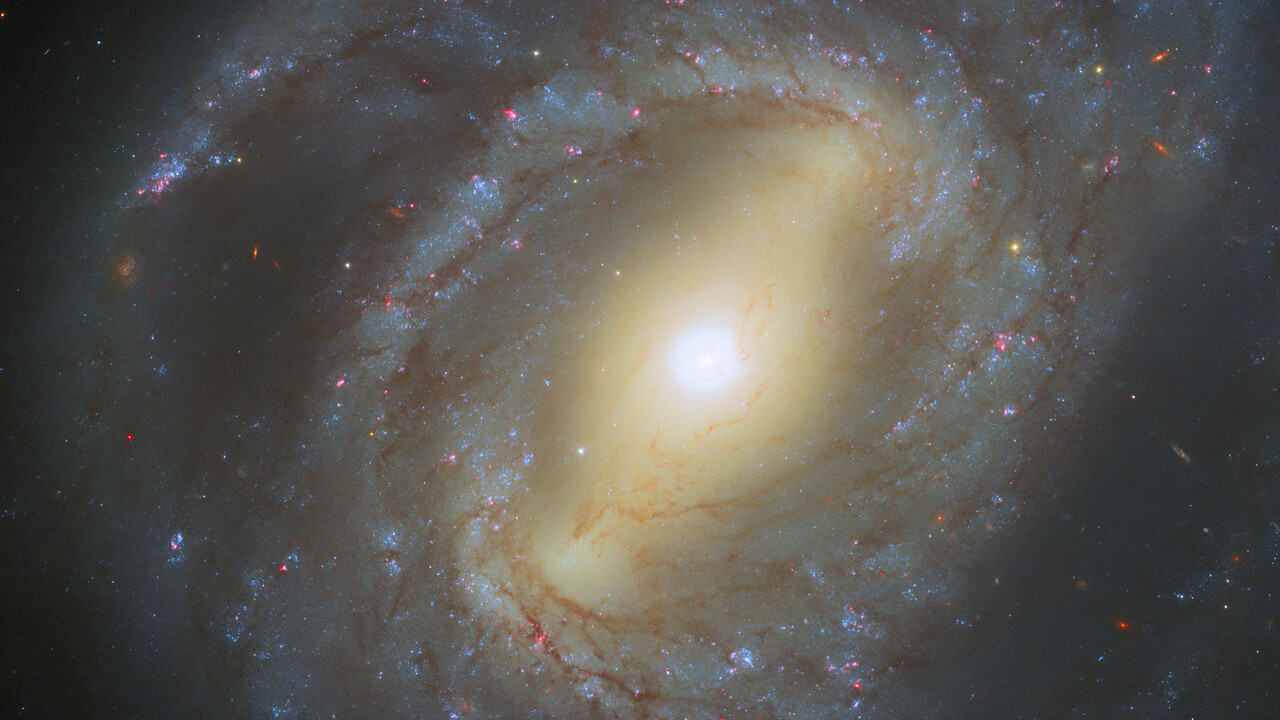
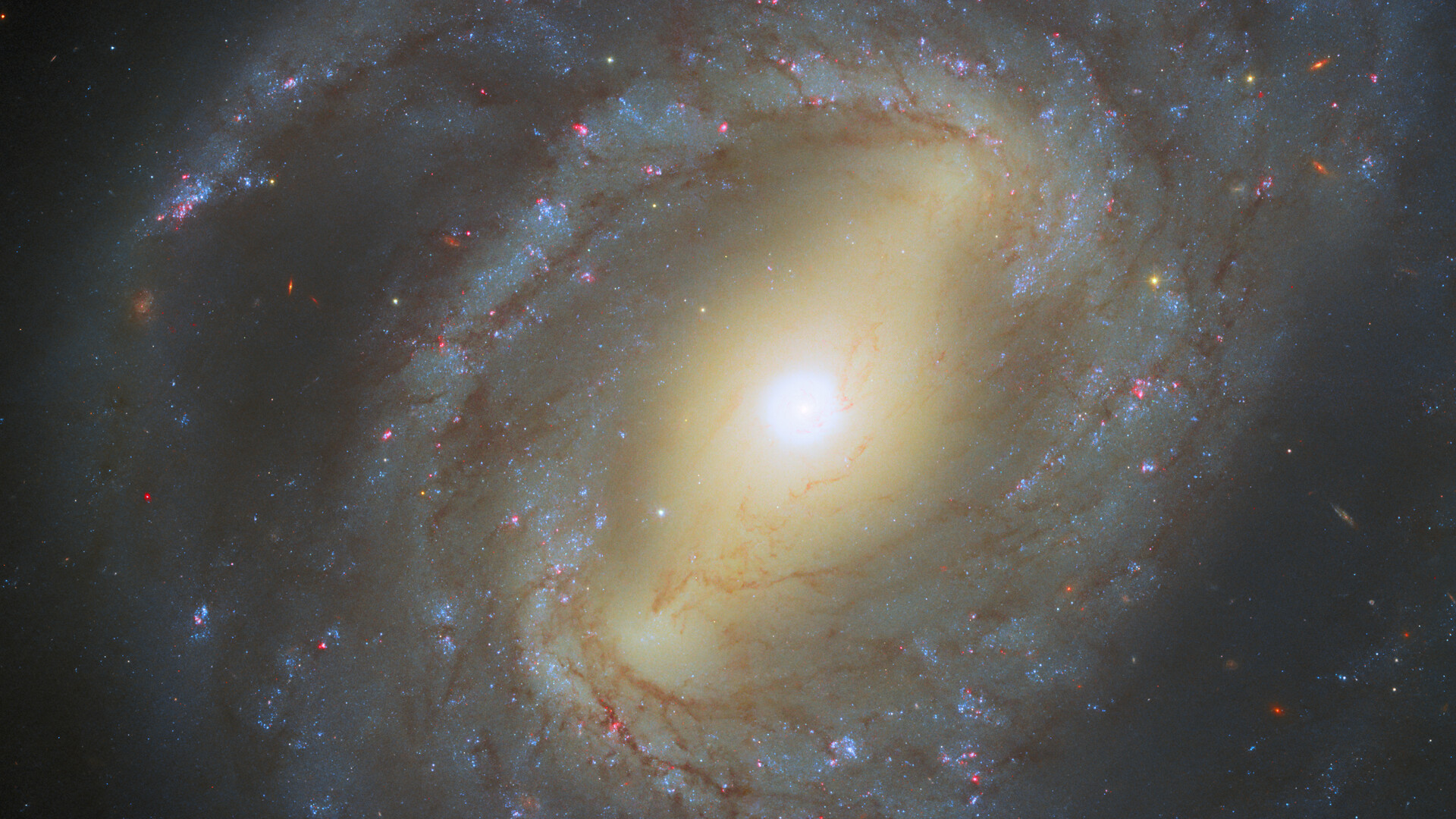
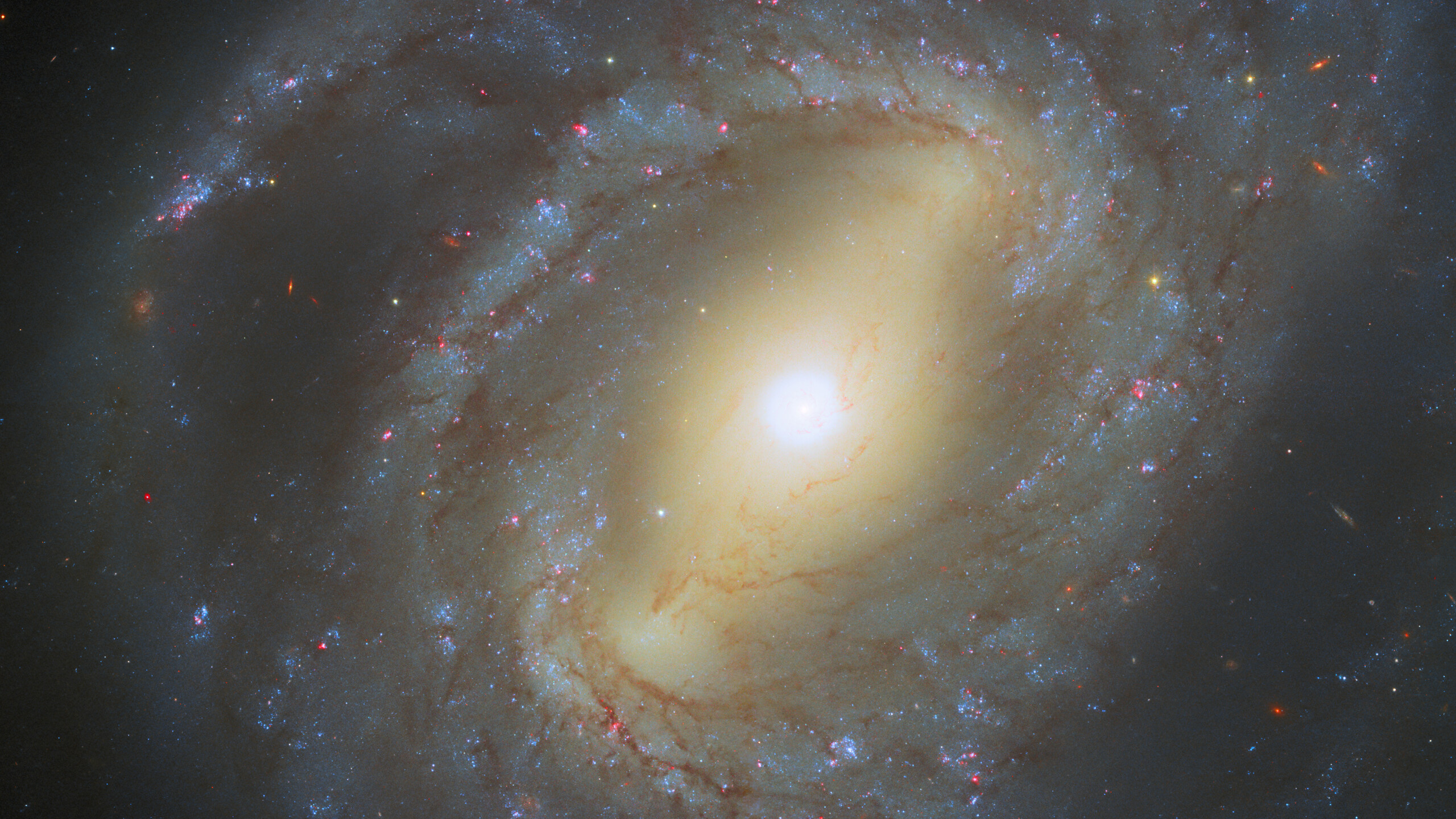
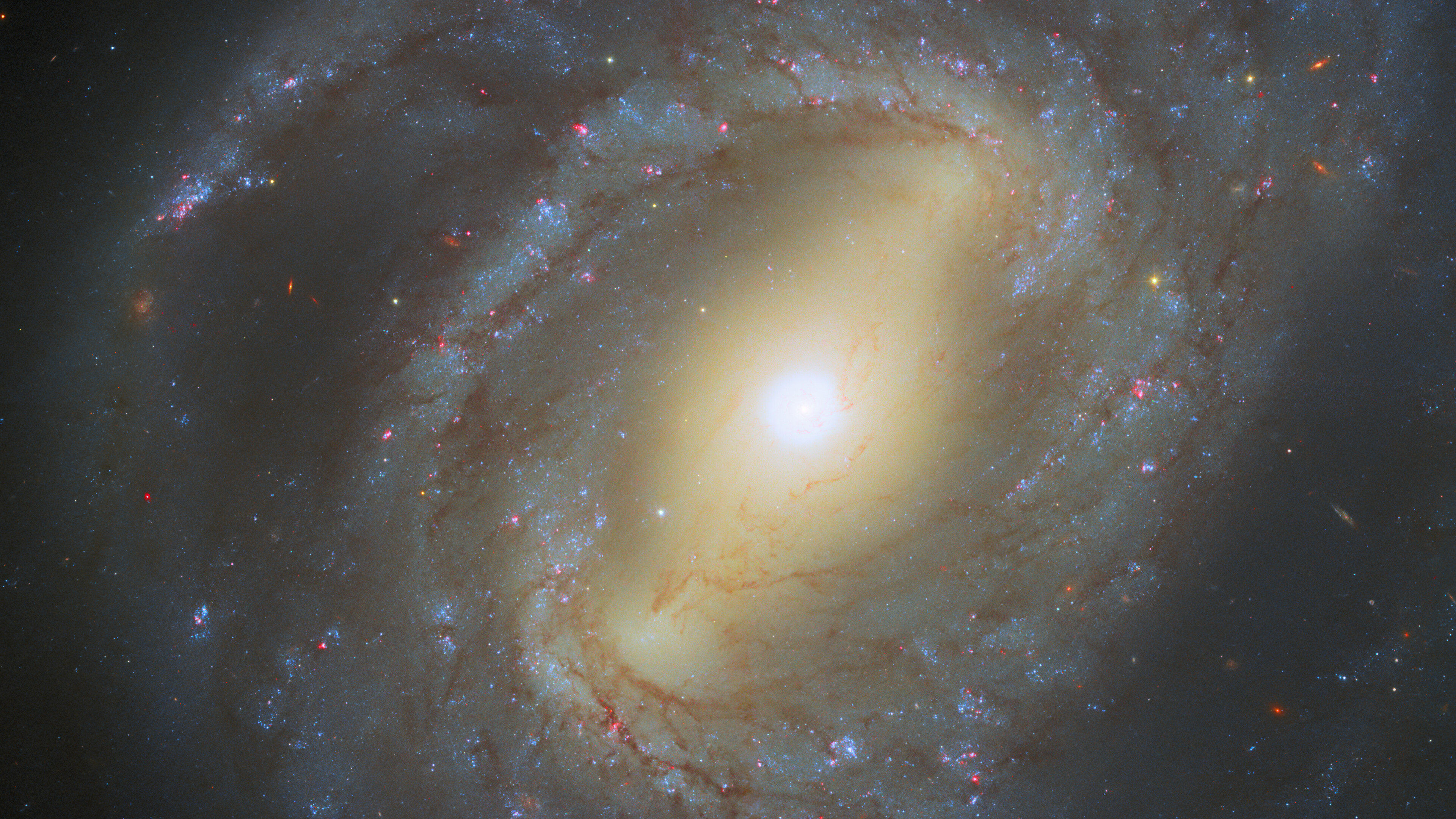
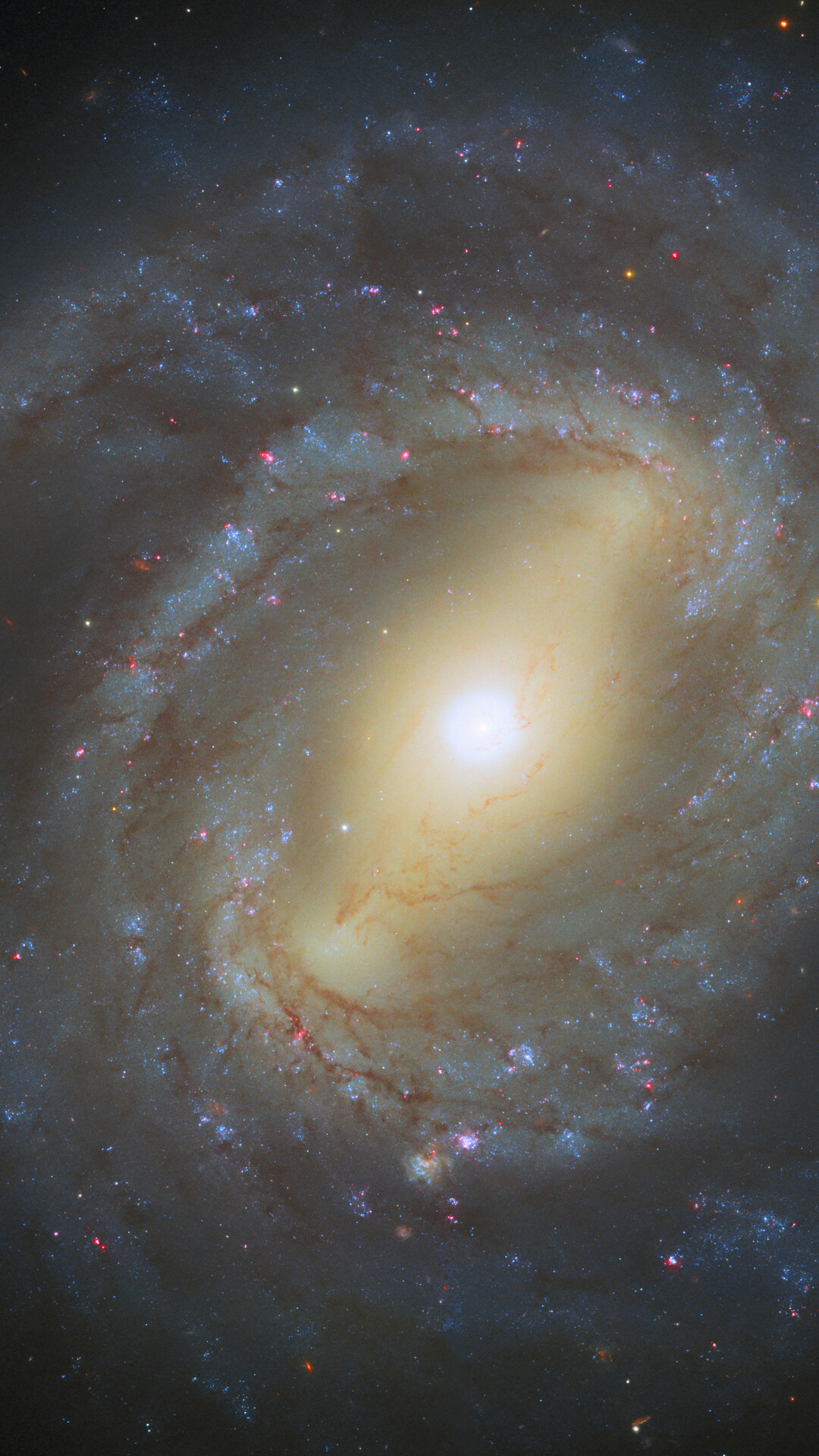
A brilliant galaxy featuring a galactic bar takes centre stage in today’s ESA/Hubble Picture of the Month. This galaxy is called NGC 4394, and it’s located in the constellation Coma Berenices (Berenice's Hair). At about 55 million light-years away, NGC 4394 is considered relatively nearby for a galaxy. It’s one of more than 1000 galaxies that make up the Virgo Cluster, which is the galaxy cluster closest to us.
With its graceful spiral arms and central bar of stars, NGC 4394 closely resembles what astronomers think our home galaxy, the Milky Way galaxy, would look like if we were able to view it from a similar face-on vantage point. In a Universe full of arcing spiral galaxies and organically shaped nebulae, straight streaks of stars like NGC 4394’s galactic bar stand out. Galactic bars are extremely common, with an estimated 65% of nearby spiral galaxies having one. (Hubble has imaged a wide variety of stunning barred spiral galaxies, like NGC 5728, NGC 685, and NGC 613.) But how do these striking features form?
Explanations for how galactic bars might form tend to centre on a galaxy’s disc of stars becoming unstable. This could happen because of gravitational nudges from passing galaxies, interactions between stars, or other forces. Once the disc becomes unstable, initially circular orbits of stars become elongated, leading to the barred shape seen in galaxies like NGC 4394. Observations show that galactic bars are more common among galaxies in the Universe today than they were several billion years ago. Though stellar bars are in fashion today, research suggests that this is only temporary; as bars become more massive, they can themselves become unstable.
In addition to their stellar bars and spiral arms, NGC 4394 and the Milky Way galaxy share another important similarity, in that they might both contain a LINER. LINER stands for low-ionisation nuclear emission-line region, which refers to an area near the centre of a galaxy where spectral features of certain ionised or neutral elements are found. It’s not yet known exactly how LINERs form, though either hungry supermassive black holes or intense star formation likely play a role.
Hubble has paid a visit to NGC 4394’s patch of sky more than once, and a previous image of NGC 4394 was released a decade ago. That image was collected as part of an observing programme (#10515; PI: Peng) focused on NGC 4394’s galactic neighbor, Messier 85. While one of Hubble’s instruments examined Messier 85 to study its unusual collection of star clusters, another captured a parallel area of the sky that contained NGC 4394.
Today’s image also incorporates observations from a recent programme (#18103; PI: Thilker) that is dedicated to understanding how star formation comes to an end in galaxies in dense cluster environments — and how this process differs from more isolated galaxies adrift in the field. NGC 4394 is one of 40 galaxies studied in this way, using Hubble’s sensitive instruments and broad wavelength range to determine the ages of individual star clusters.
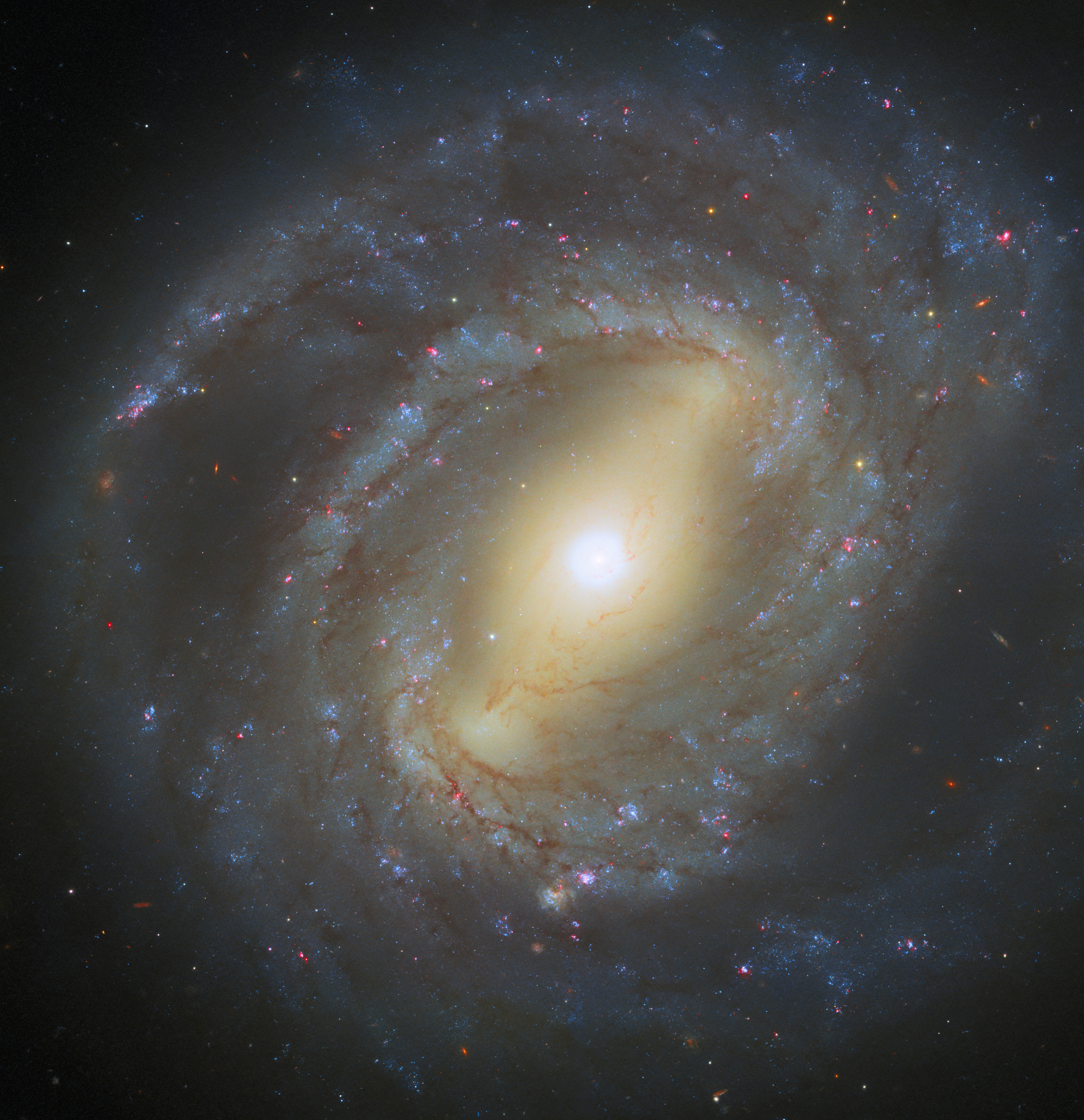
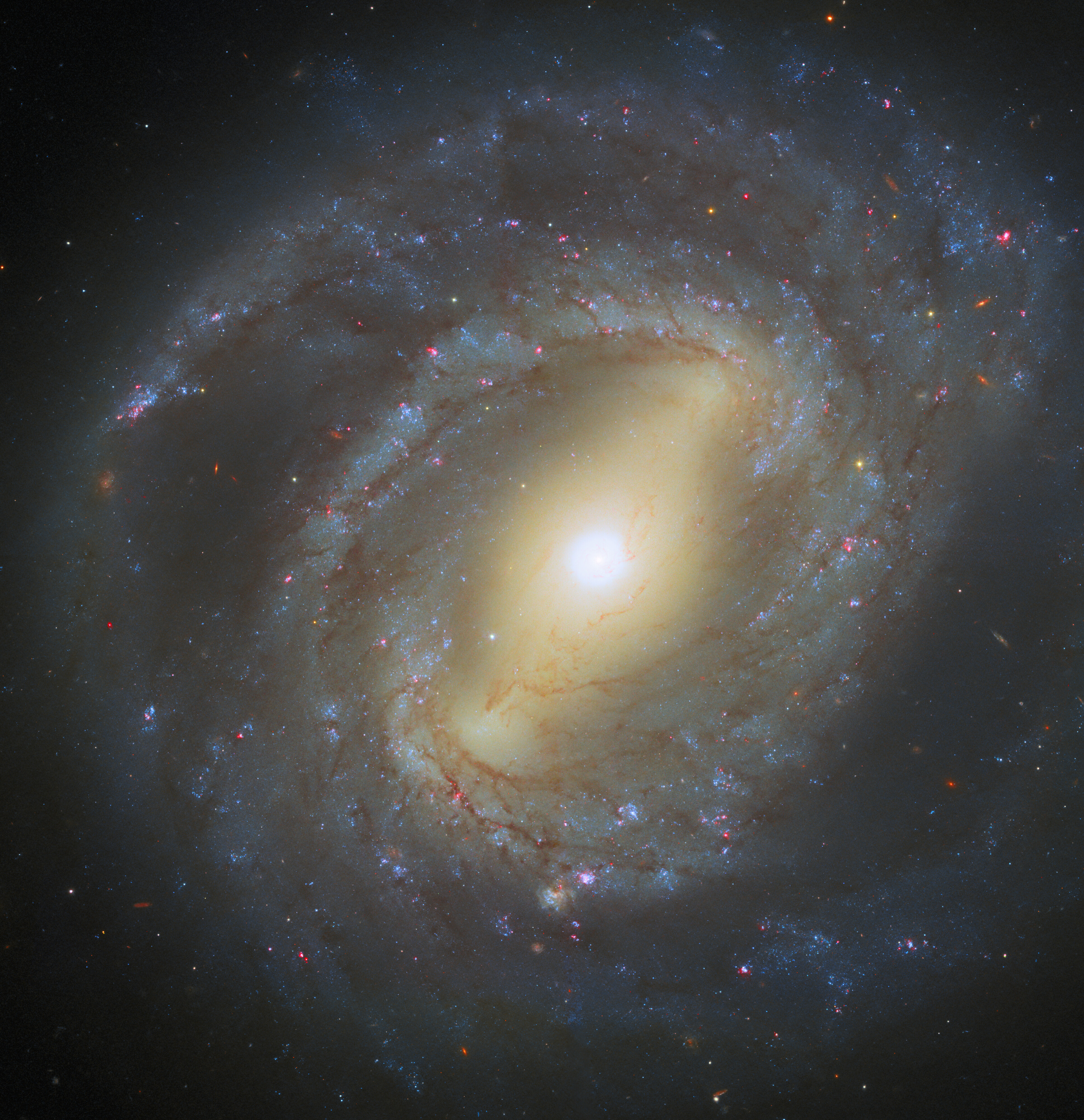
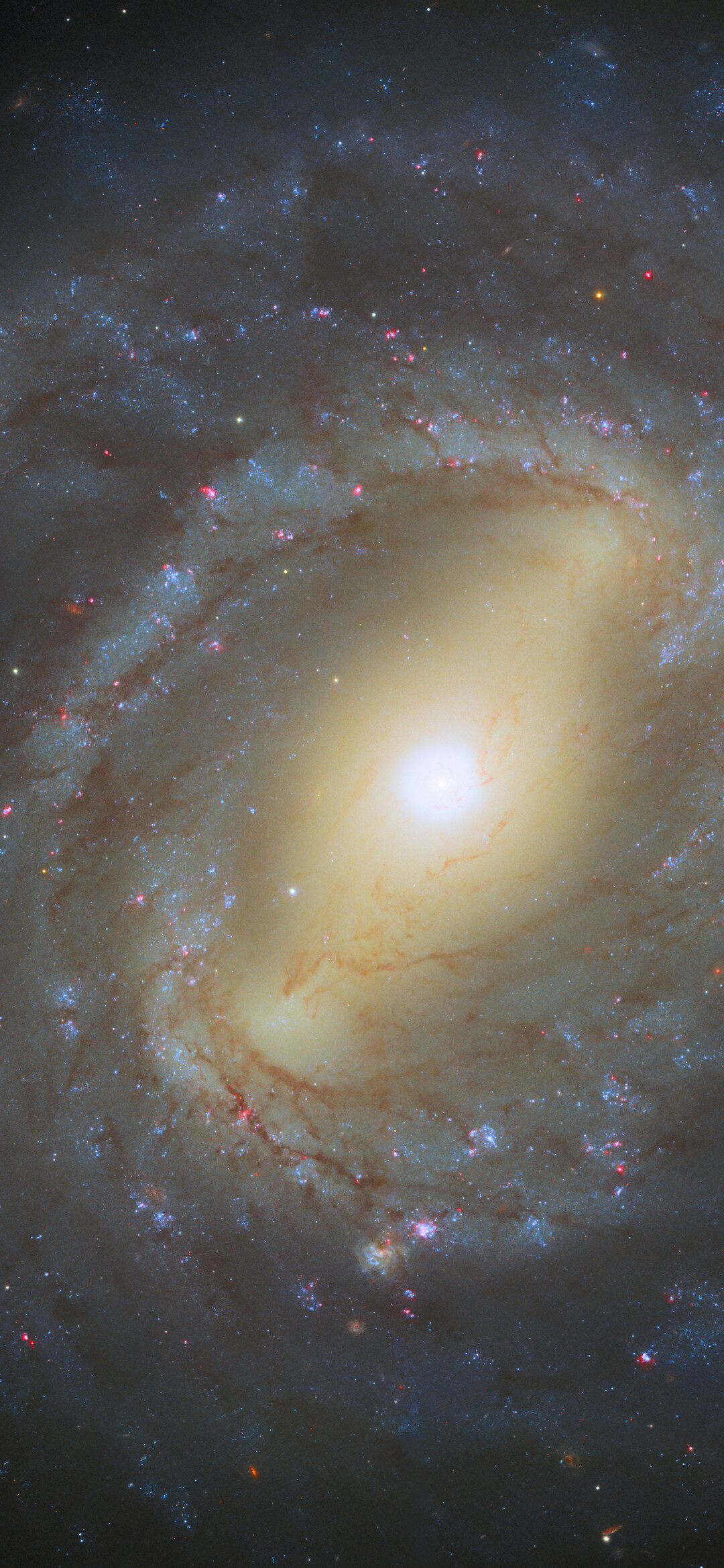
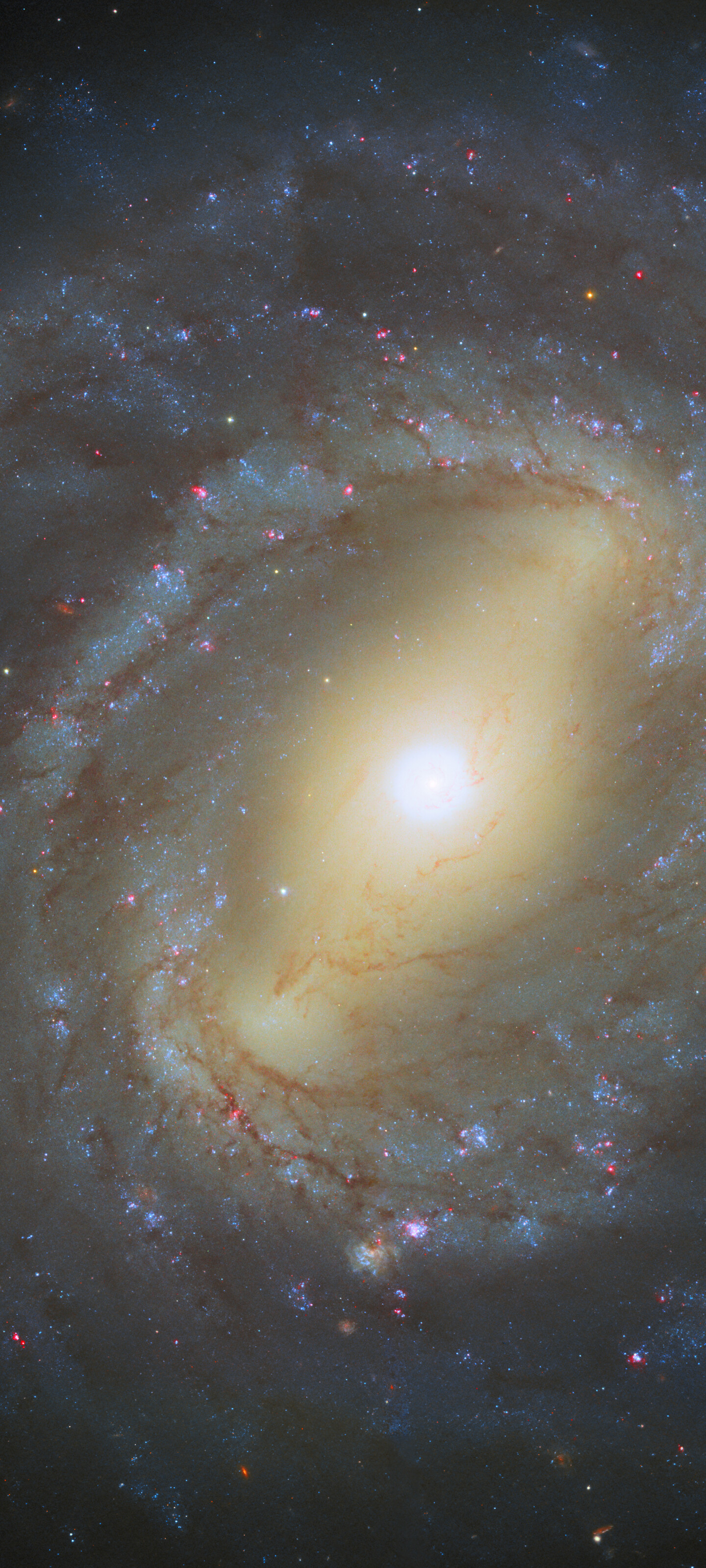
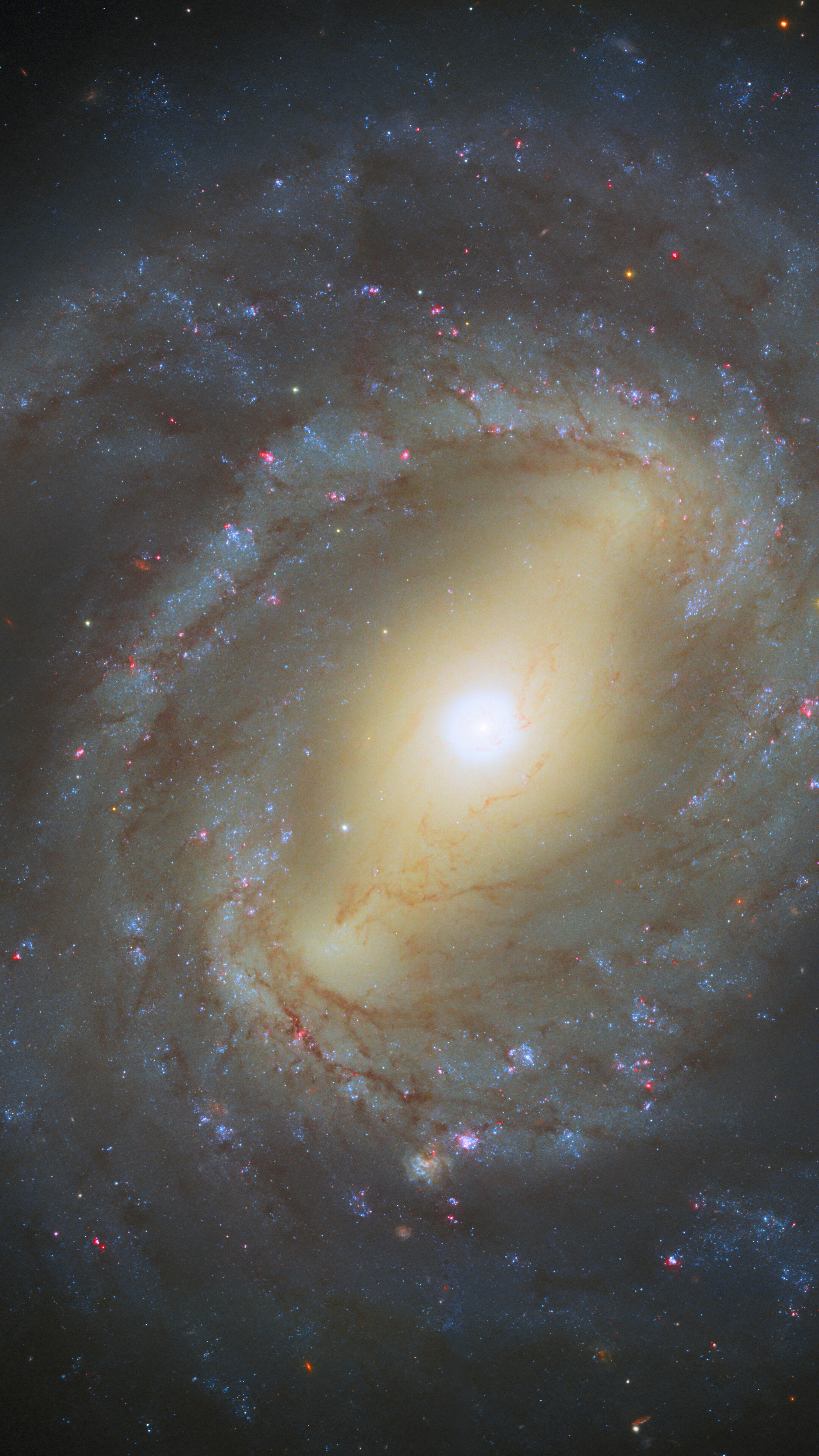
[Image Description: A barred spiral galaxy. It is seen close-up so that it fills the image. Its core is a compact, white, brightly-glowing circle; the glow of light around the core stretches out into a yellow bar of light that spans across the centre of the galaxy’s disc. Outside that, thin, dark dust filaments follow a broad circle that spins out into the galaxy’s two spiral arms, dotted with blue and pink spots that mark out old and young stars.]
Links
- Pan video
- Zoom video
ESA/Hubble & NASA, E. Peng, D. Thilker and the MAUVE-HST Team
About the Image
| Id: | potm2611a |
|---|---|
| Type: | Observation |
| Release date: | 24 November 2026, 10:00 |
| Size: | 4198 x 4338 px |
About the Object
| Name: | NGC 4394 |
|---|---|
| Distance: | 55 million light years |
| Constellation: | Coma Berenices |
| Category: | Galaxies |
Image Formats


Classic Wallpapers

Desktop Wallpapers
Mobile Wallpapers

Coordinates
| Position (RA): | 12 25 56.29 |
|---|---|
| Position (Dec): | 18° 12' 50.41" |
| Field of view: | 2.95 x 3.05 arcminutes |
| Orientation: | North is 2.5° left of vertical |

Colours & filters
| Band | Wavelength | Telescope |
|---|---|---|
| Optical U | 336 nm |
Hubble Space Telescope
WFC3 |
| Ultraviolet UV | 275 nm |
Hubble Space Telescope
WFC3 |
| Optical g | 475 nm |
Hubble Space Telescope
ACS |
| Optical B | 438 nm |
Hubble Space Telescope
WFC3 |
| Optical g | 475 nm |
Hubble Space Telescope
WFC3 |
| Optical V | 555 nm |
Hubble Space Telescope
WFC3 |
| Optical H-alpha + NII | 657 nm |
Hubble Space Telescope
WFC3 |
| Optical I | 814 nm |
Hubble Space Telescope
WFC3 |
| Optical I | 814 nm |
Hubble Space Telescope
ACS |