The Egg Nebula
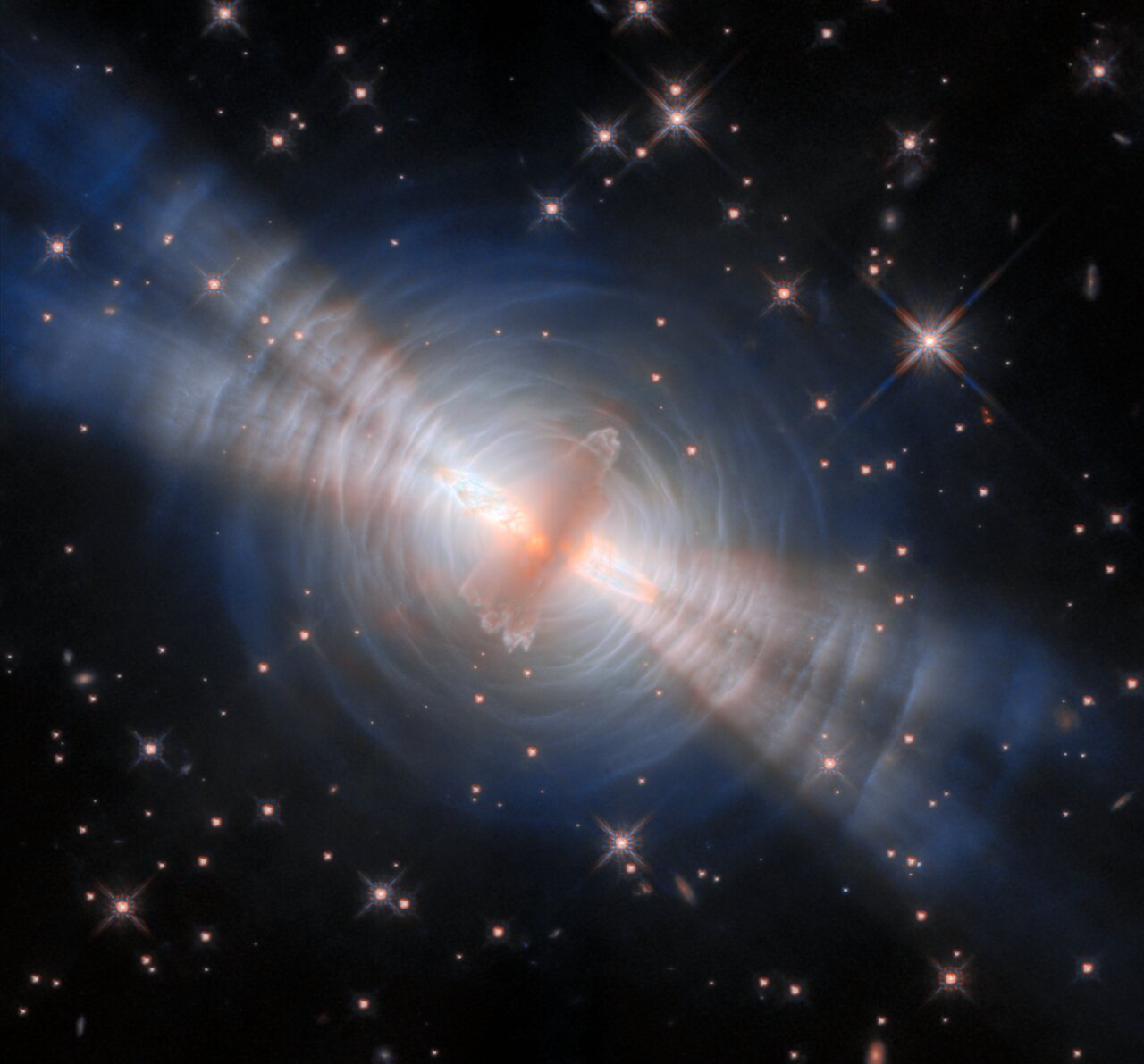
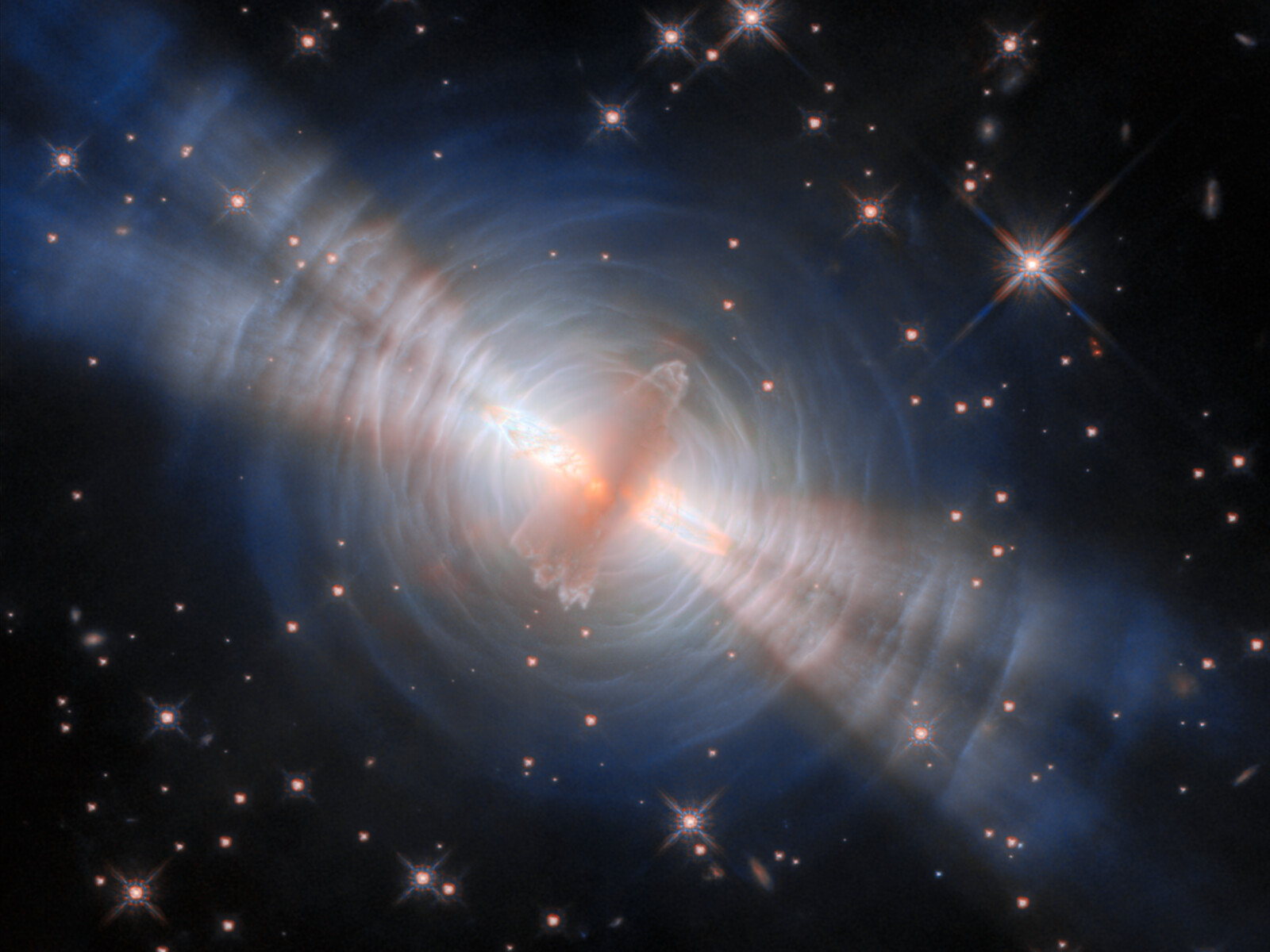
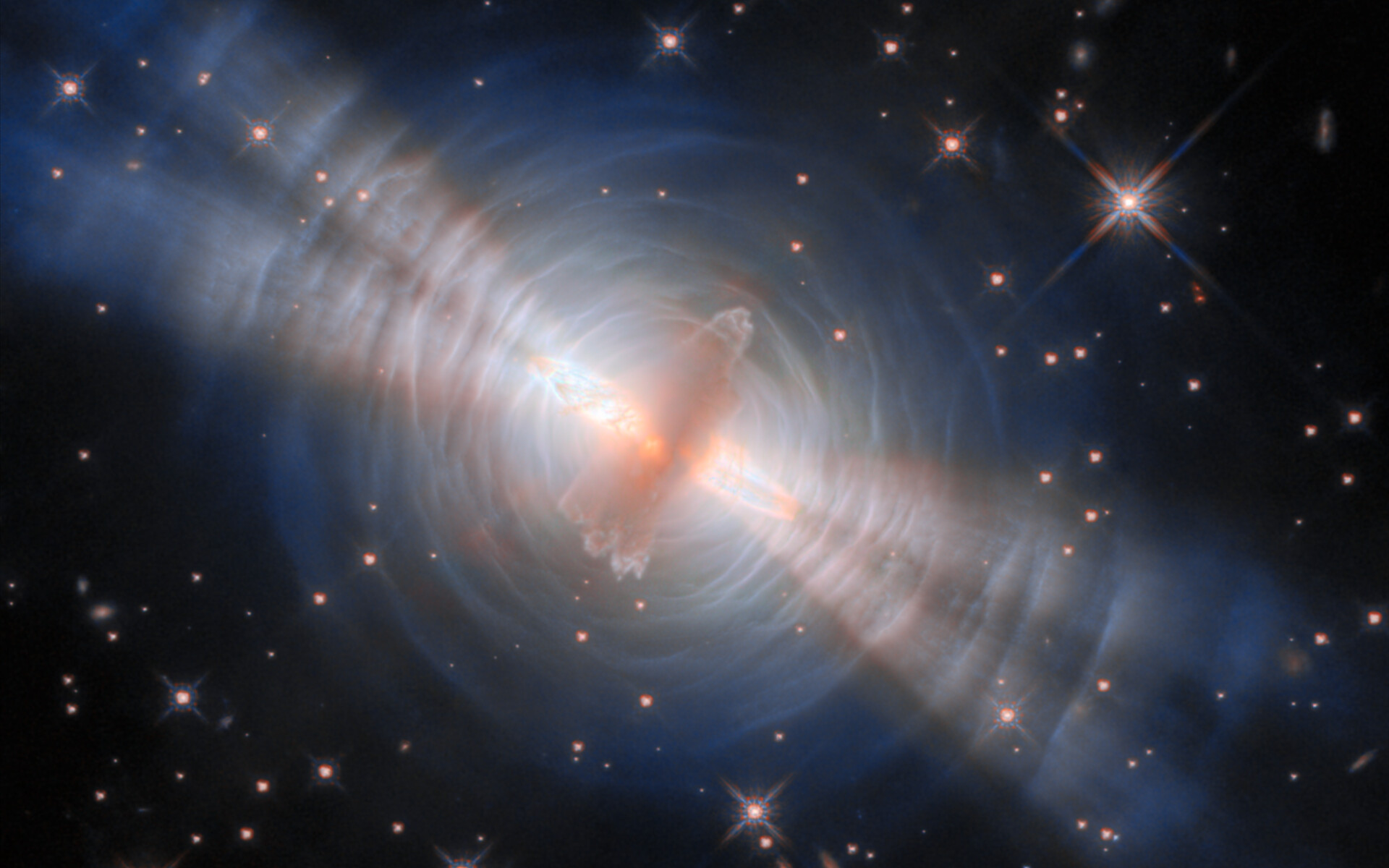
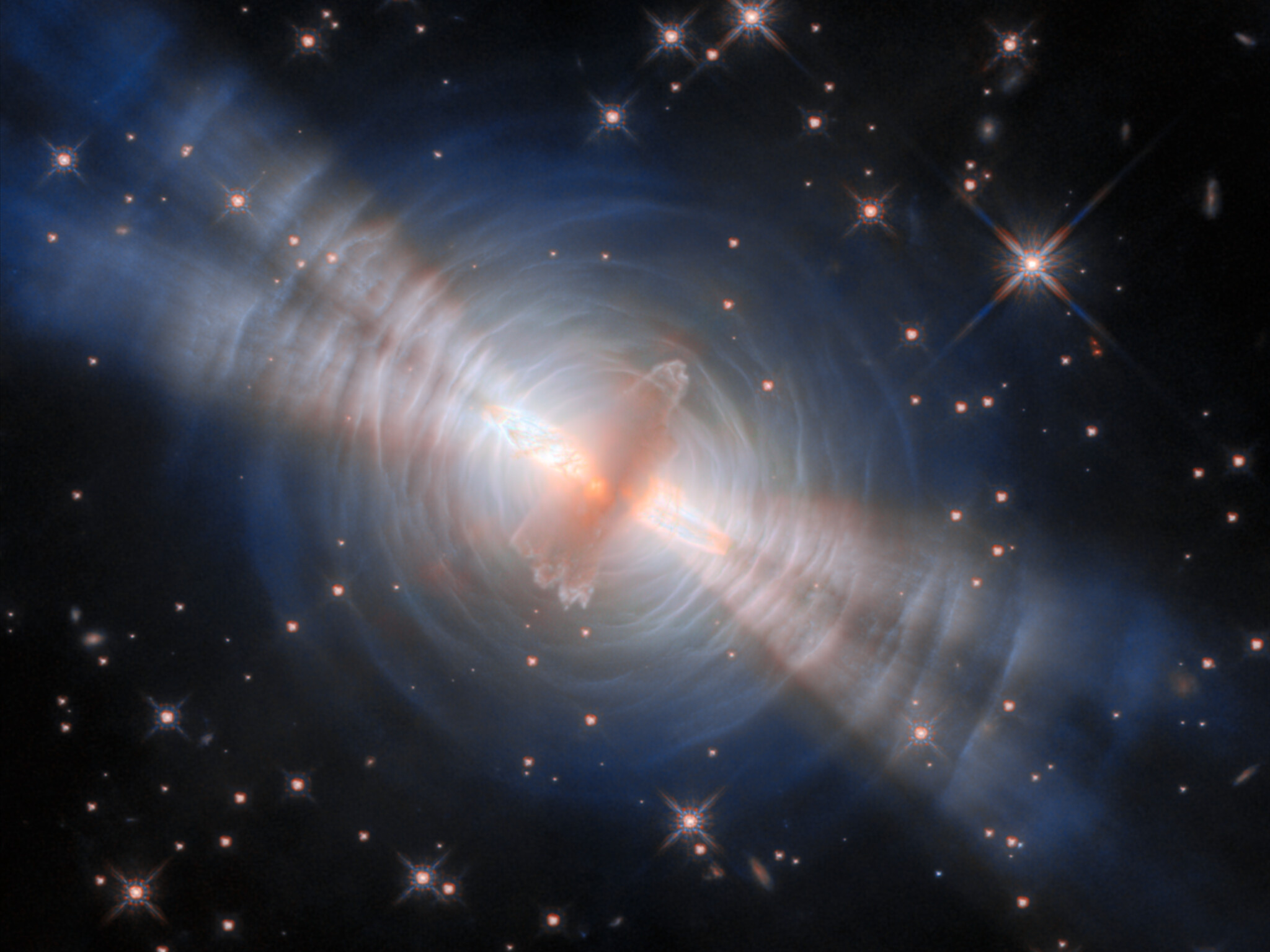
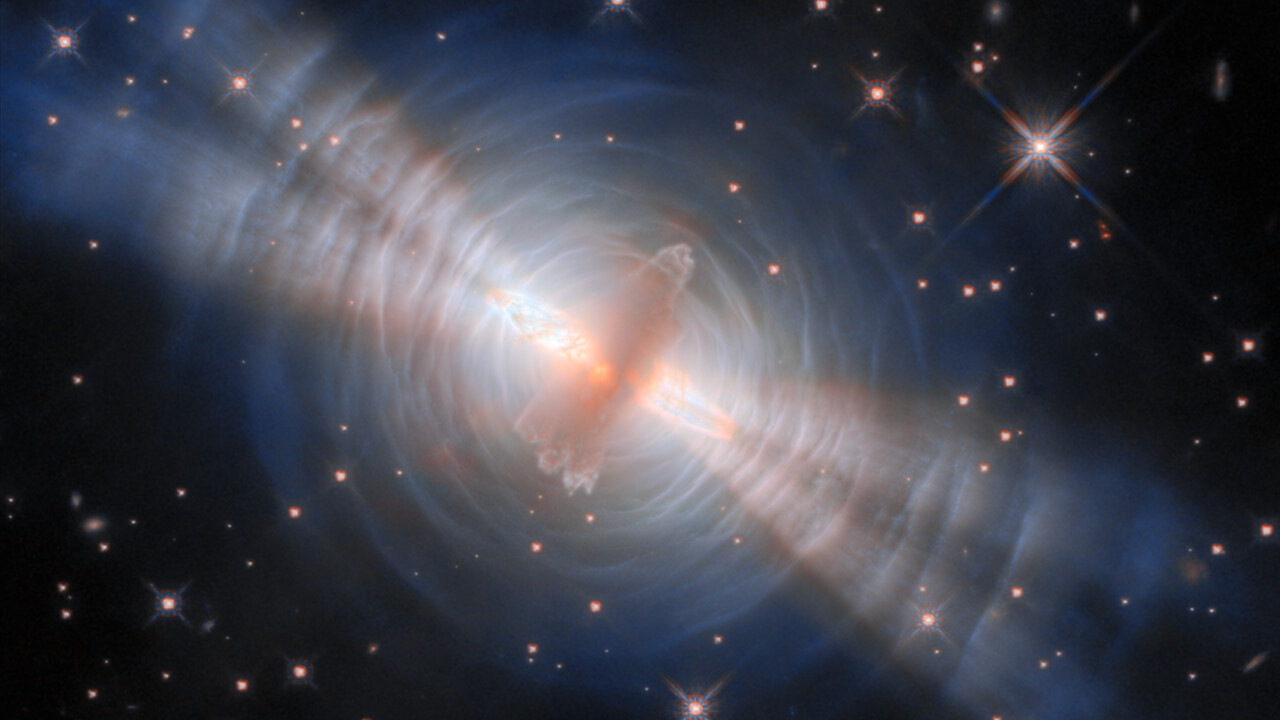
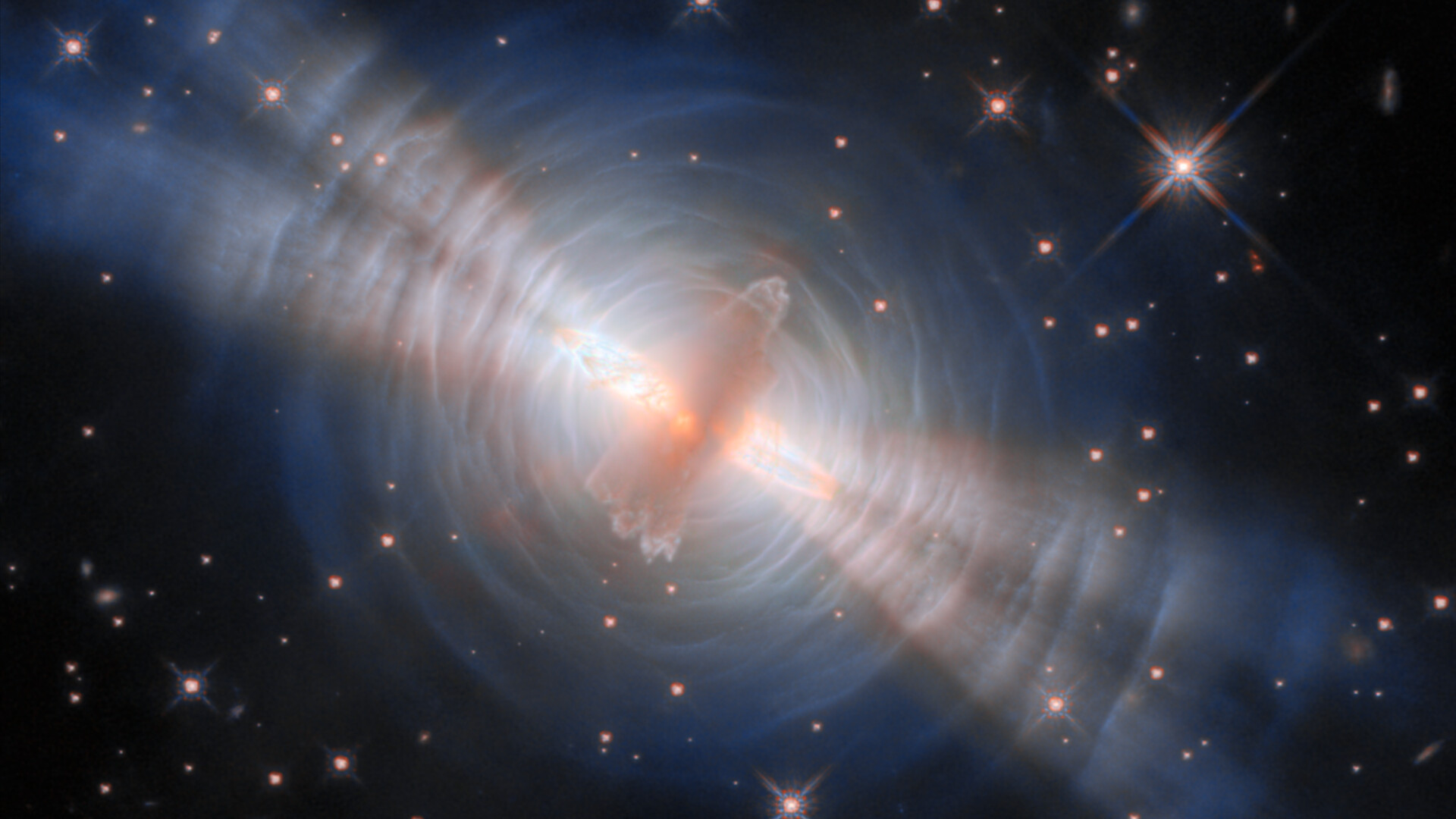
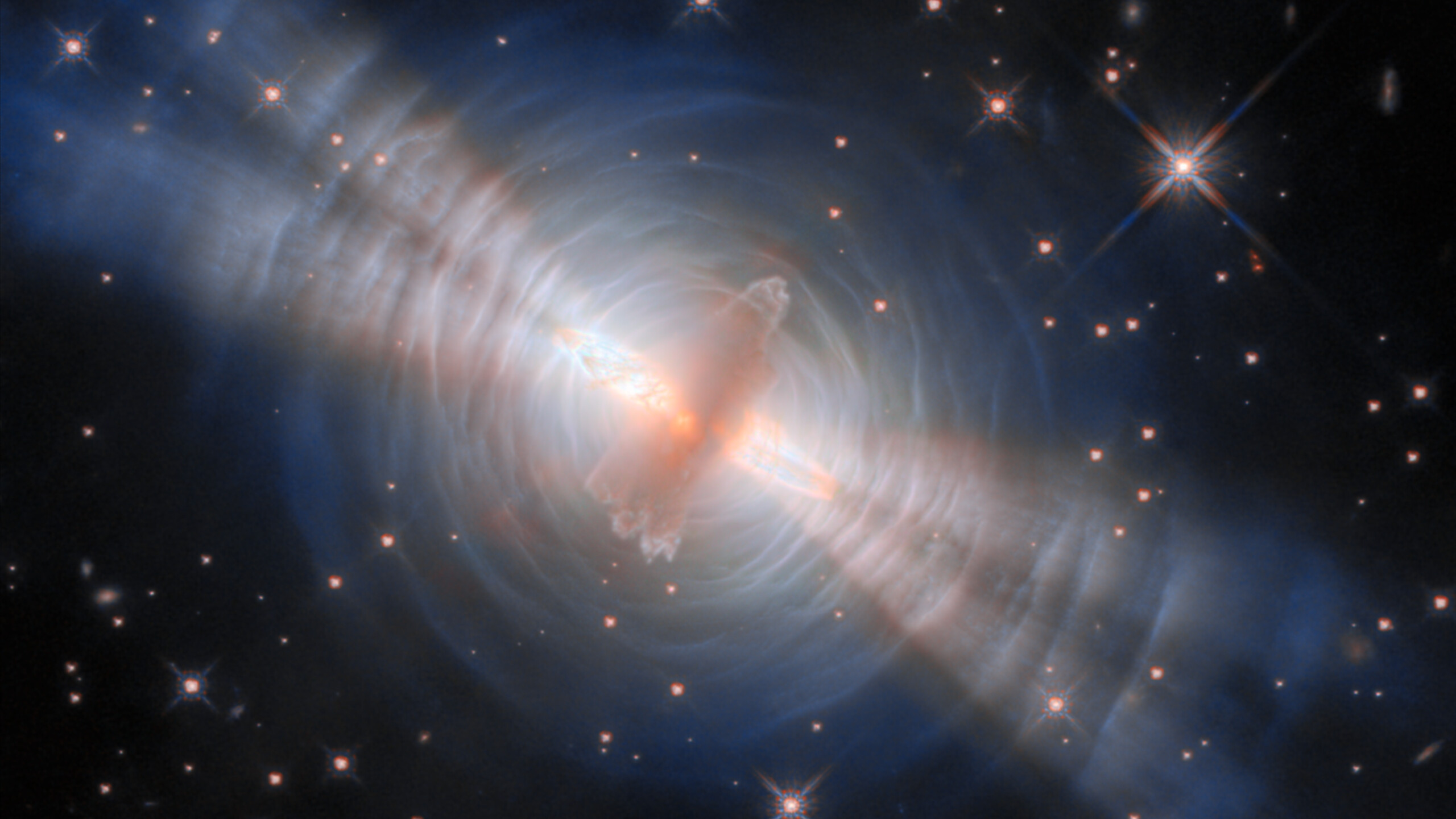
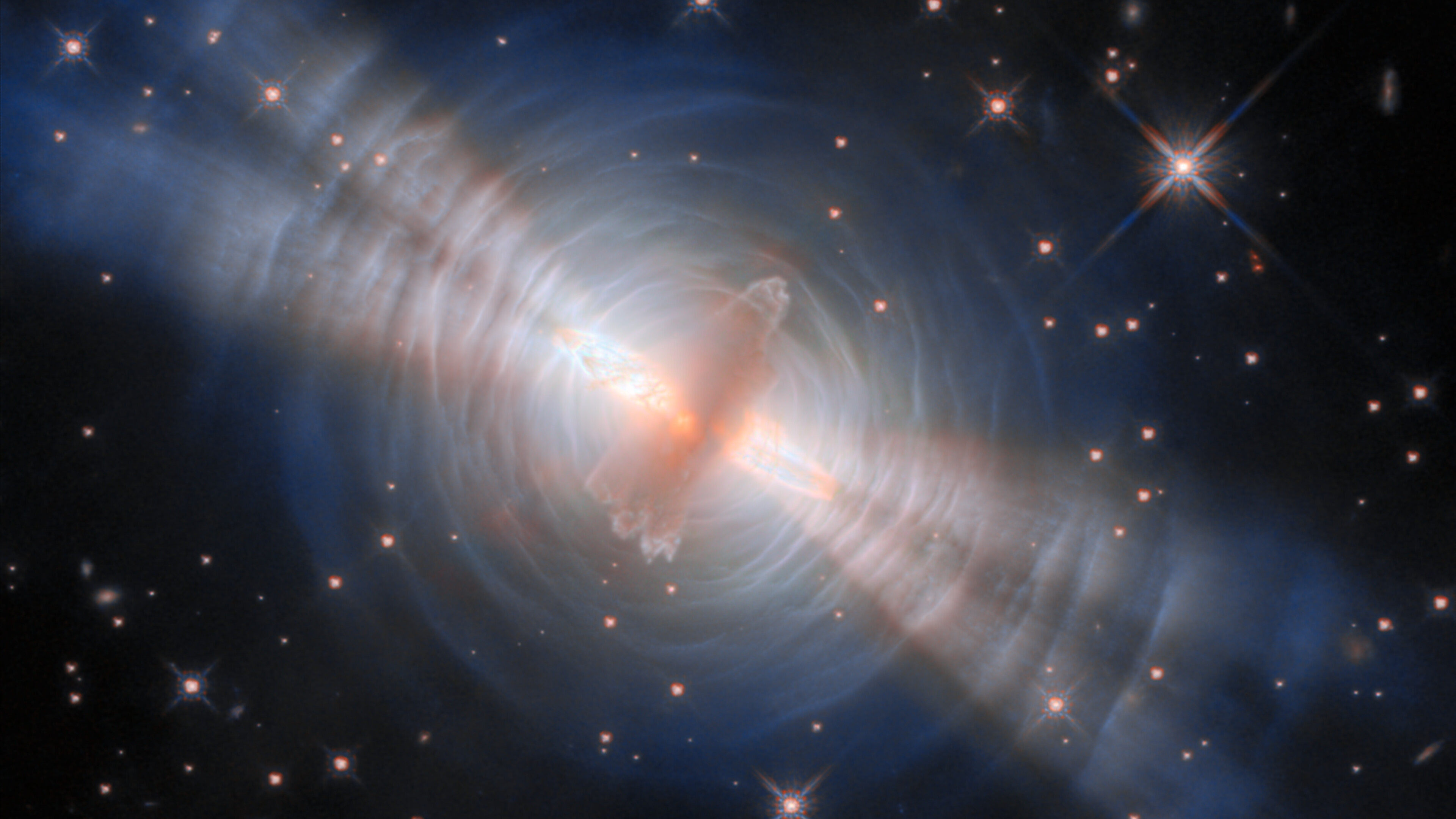
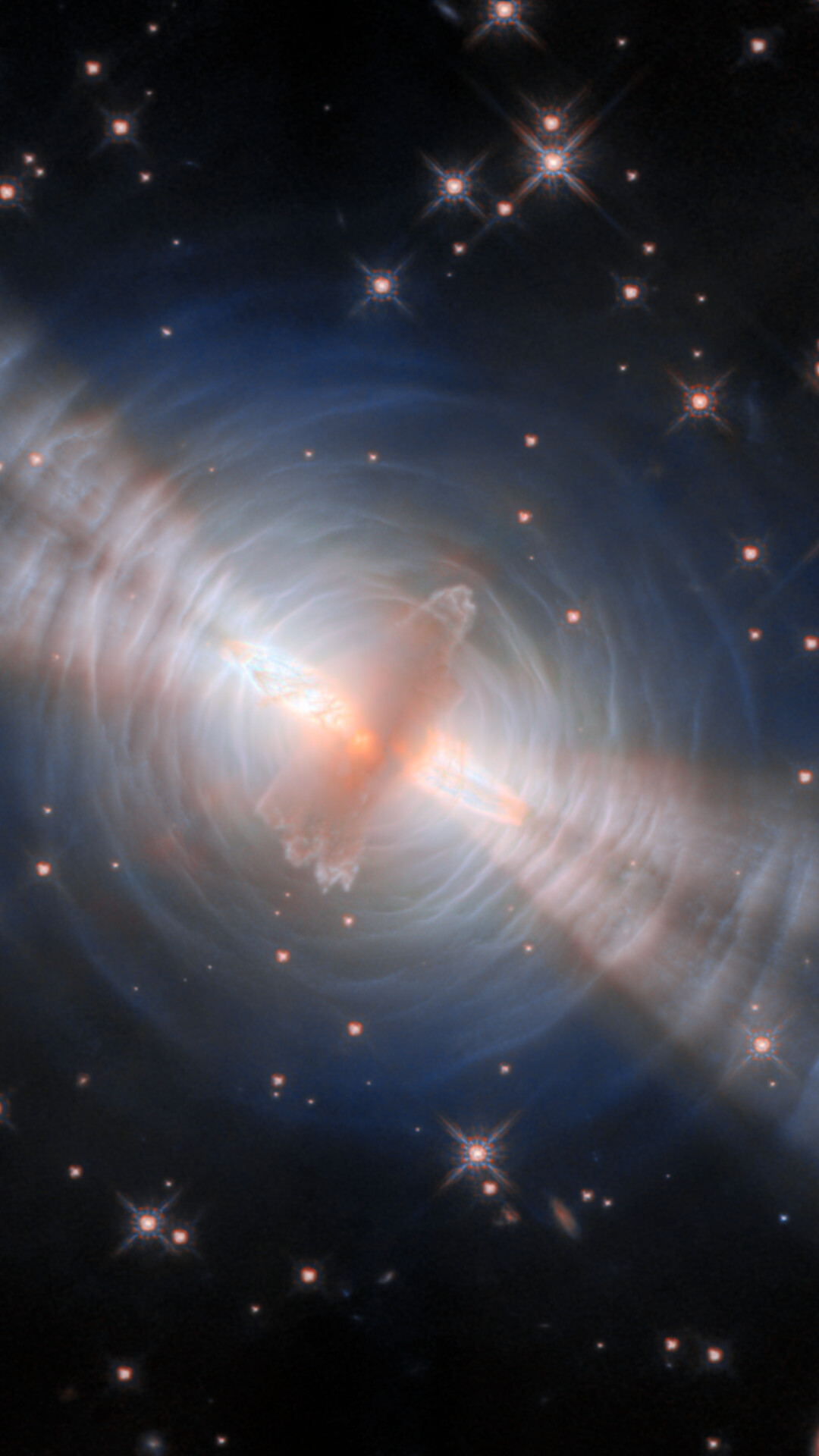
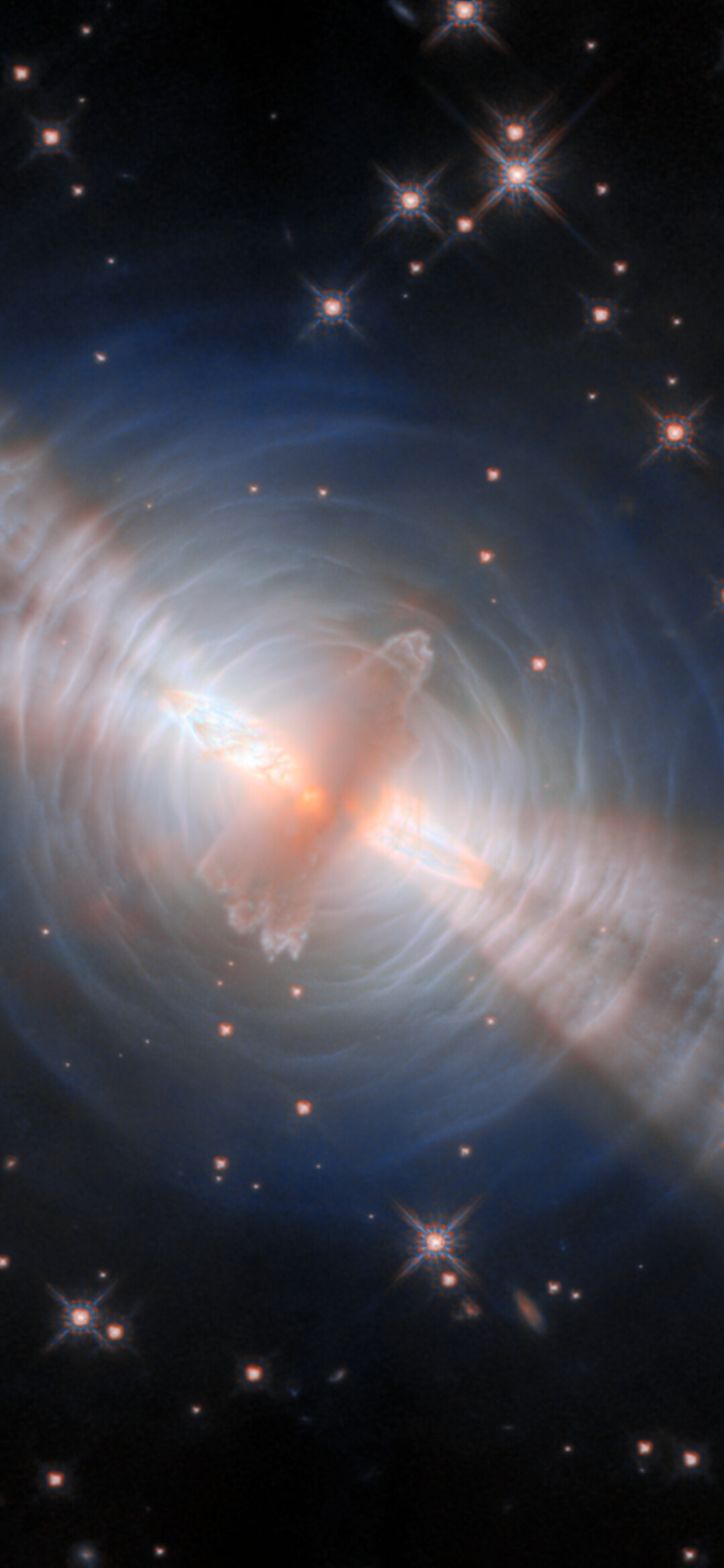
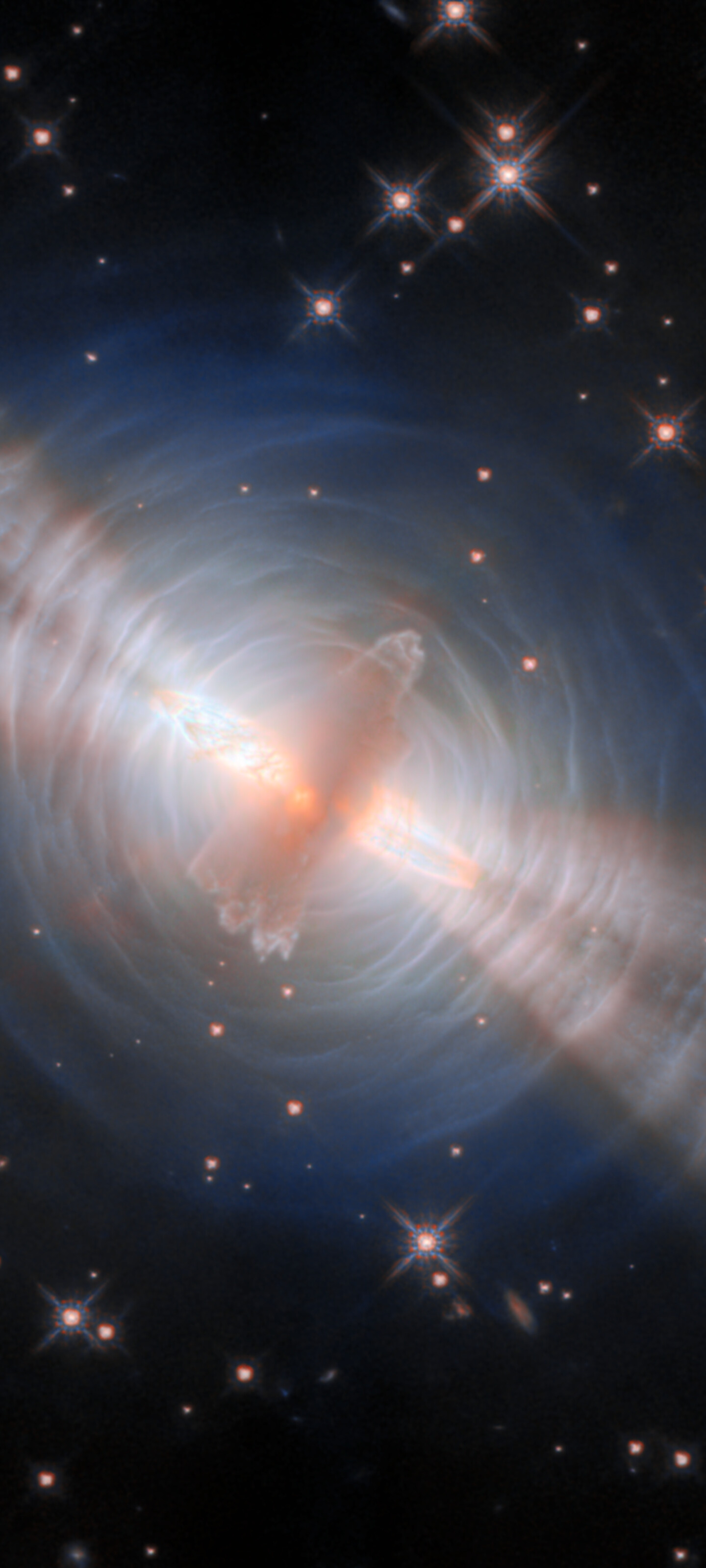
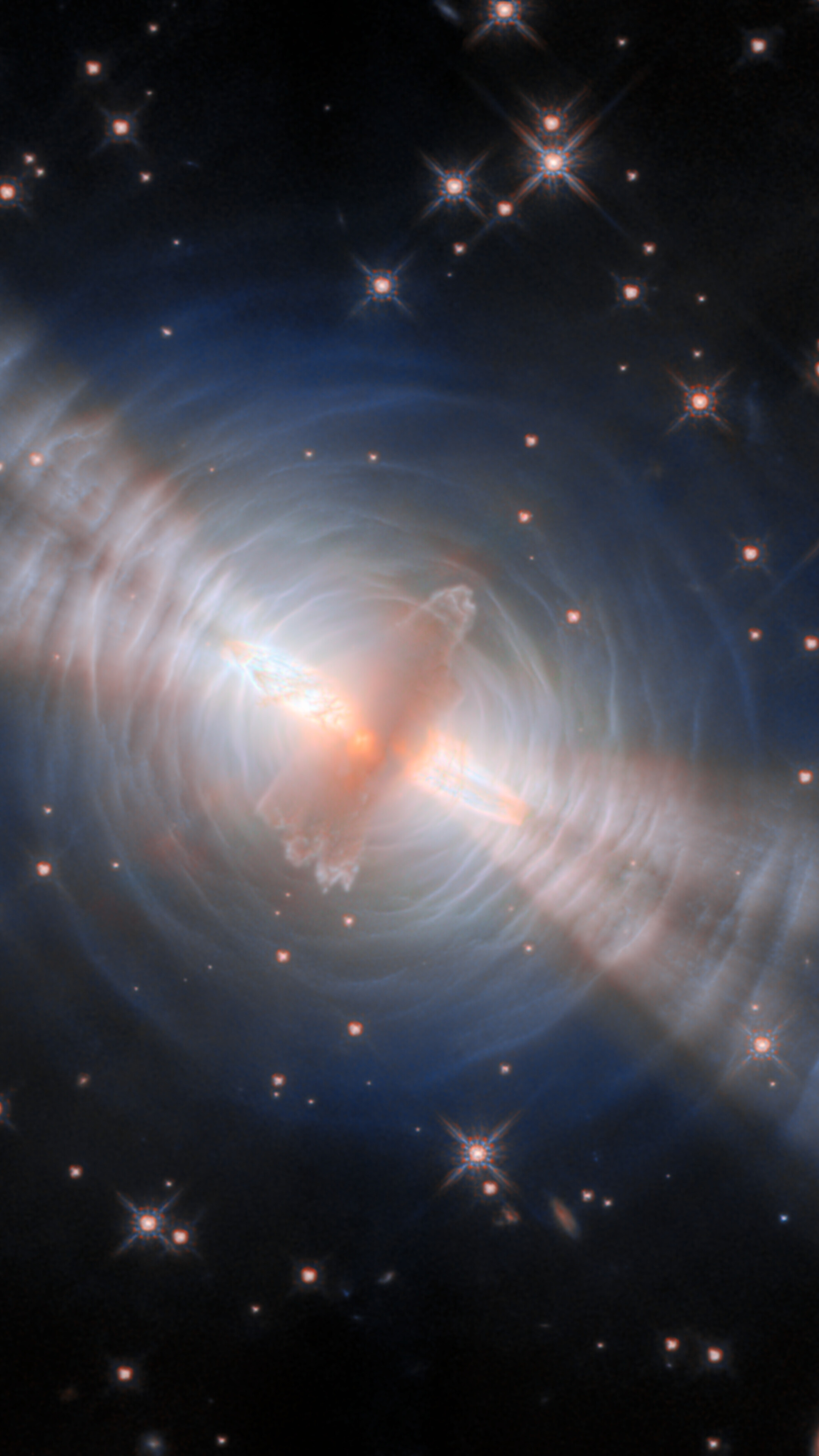
This newly processed image from the NASA/ESA Hubble Space Telescope is the clearest view yet of the Egg Nebula. It is a preplanetary nebula, a structure of gas and dust created as a Sun-like star approaches the end of its life. The Egg that we see now will eventually hatch, revealing a white dwarf at its centre and leaving its shell to become a spectacular planetary nebula.
Many preplanetary nebulae are relatively dim and hard to spot. They are made of layers of gas ejected by the star, but that star is not yet hot enough to ionise the gas and cause it to glow. The Egg Nebula is relatively unique, easily visible as a sparkling jewelled egg in space. Powerful beams of starlight blast out of the inner cloud, two a-side, giving a breathtaking illumination to this cosmic structure. Fast-moving outflows of hot molecular hydrogen also emerge from within the dust cloud, visible just at the base of the searchlight beams. These outflows glow with infrared light, which is shown in this image by orange highlights.
The central cloud of dust is surrounded by concentric rings, themselves made up from thin, faint arcs of gas. These were created by successive outbursts from the central star, which ejected a little more material from its outer surface every few hundred years. The beams of starlight are reflected by these layers of gas, creating an appearance like ripples on the surface of water. The way that gas molecules reflect and scatter light gives a bluish colour to the arcs. The reflected starlight reveals important details about the central star, which is impossible to view directly in its dusty shell.
[Image description: In the centre an opaque cloud of grey gas hides a star. Two strong beams of light from the star emerge from large holes in both sides of the cloud. The central cloud is surrounded by concentric, wispy shells of gas, illuminated by the star’s light. The shells reflect extra light where they’re hit by the twin beams. A crowd of smaller stars with cross-shaped spikes over them surround the nebula on a black background.]
Credit:ESA/Hubble & NASA, B. Balick (University of Washington)
About the Image
| Id: | heic2604a |
|---|---|
| Type: | Observation |
| Release date: | 10 February 2026, 16:00 |
| Related releases: | heic2604 |
| Size: | 1668 x 1552 px |
About the Object
| Name: | Egg Nebula |
|---|---|
| Constellation: | Cygnus |
| Category: | Nebulae |


Classic Wallpapers

Desktop Wallpapers
Mobile Wallpapers

Coordinates
| Position (RA): | 21 2 18.61 |
|---|---|
| Position (Dec): | 36° 41' 36.42" |
| Field of view: | 1.10 x 1.03 arcminutes |
| Orientation: | North is 45.0° left of vertical |

Colours & filters
| Band | Wavelength | Telescope |
|---|---|---|
| Optical V | 606 nm |
Hubble Space Telescope
WFC3 |
| Optical I | 814 nm |
Hubble Space Telescope
WFC3 |
| Optical S II | 673 nm |
Hubble Space Telescope
WFC3 |
| Infrared YJ | 1.1 μm |
Hubble Space Telescope
WFC3 |
| Infrared YJ | 1.1 μm |
Hubble Space Telescope
WFC3 |
| Infrared H | 1.6 μm |
Hubble Space Telescope
WFC3 |
| Infrared H | 1.6 μm |
Hubble Space Telescope
WFC3 |