Galactic gas makes a getaway
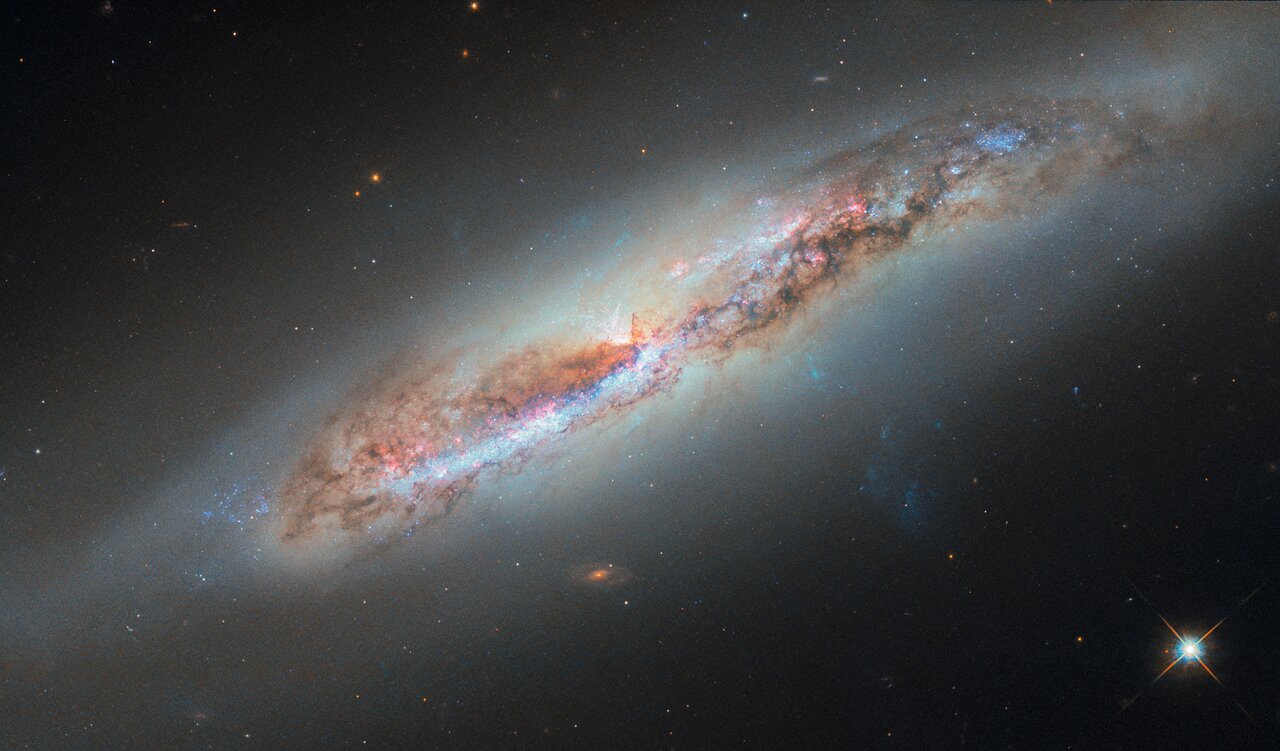
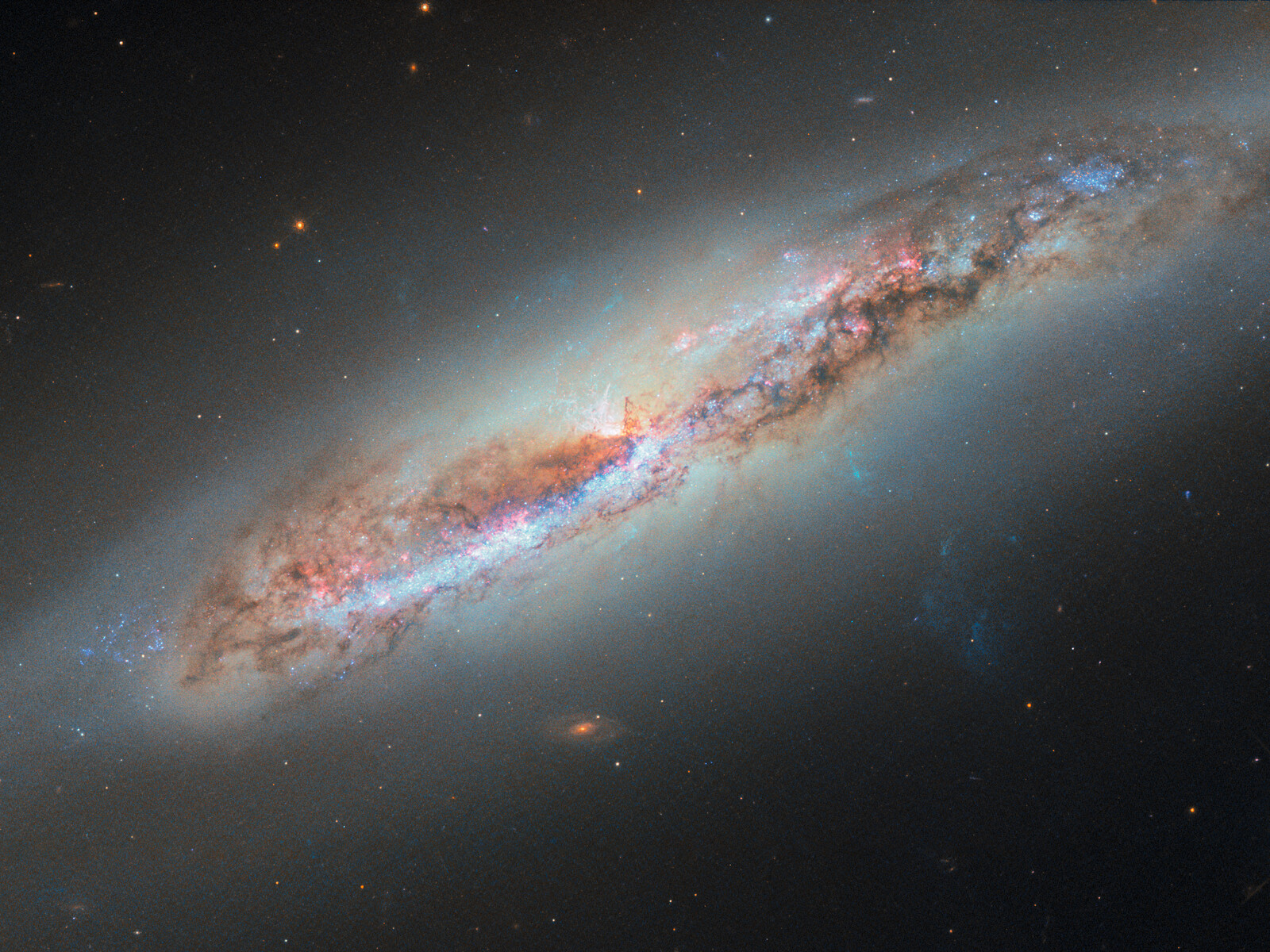
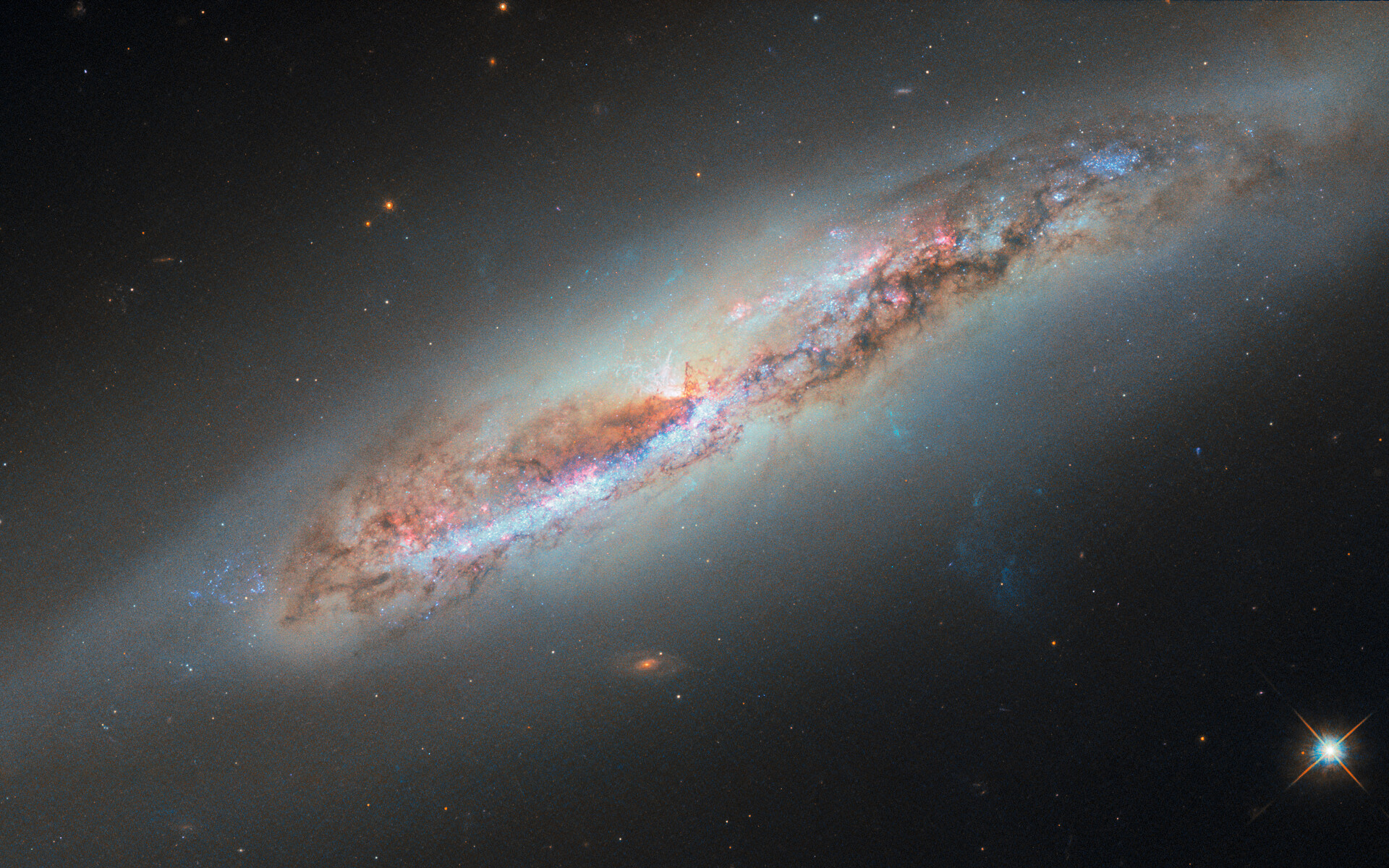
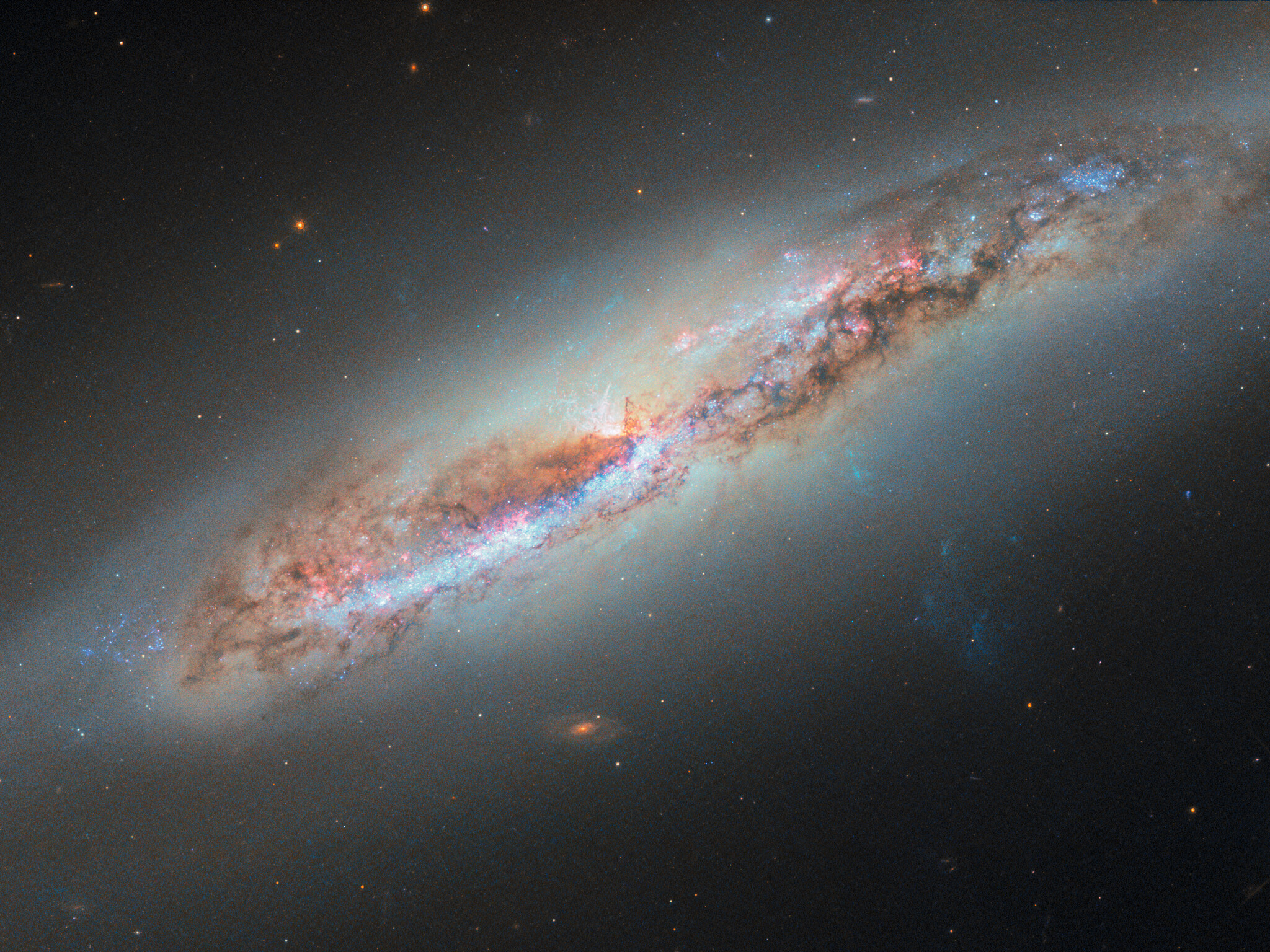
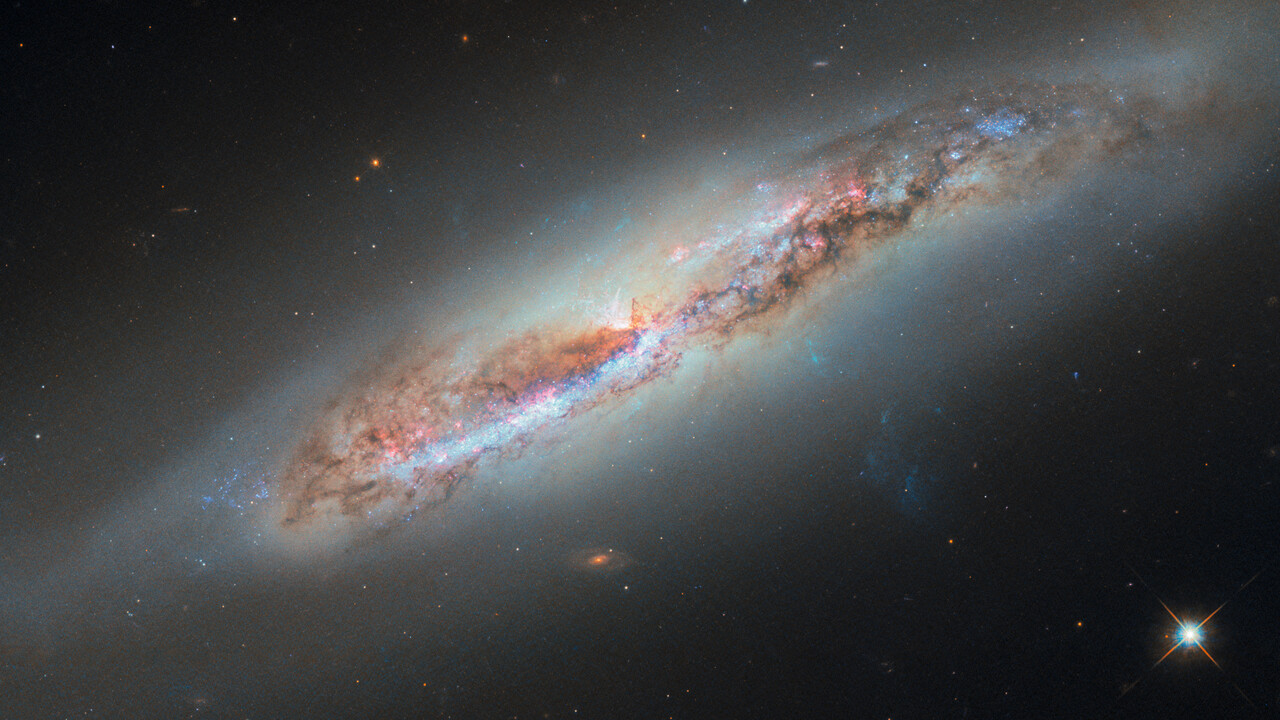
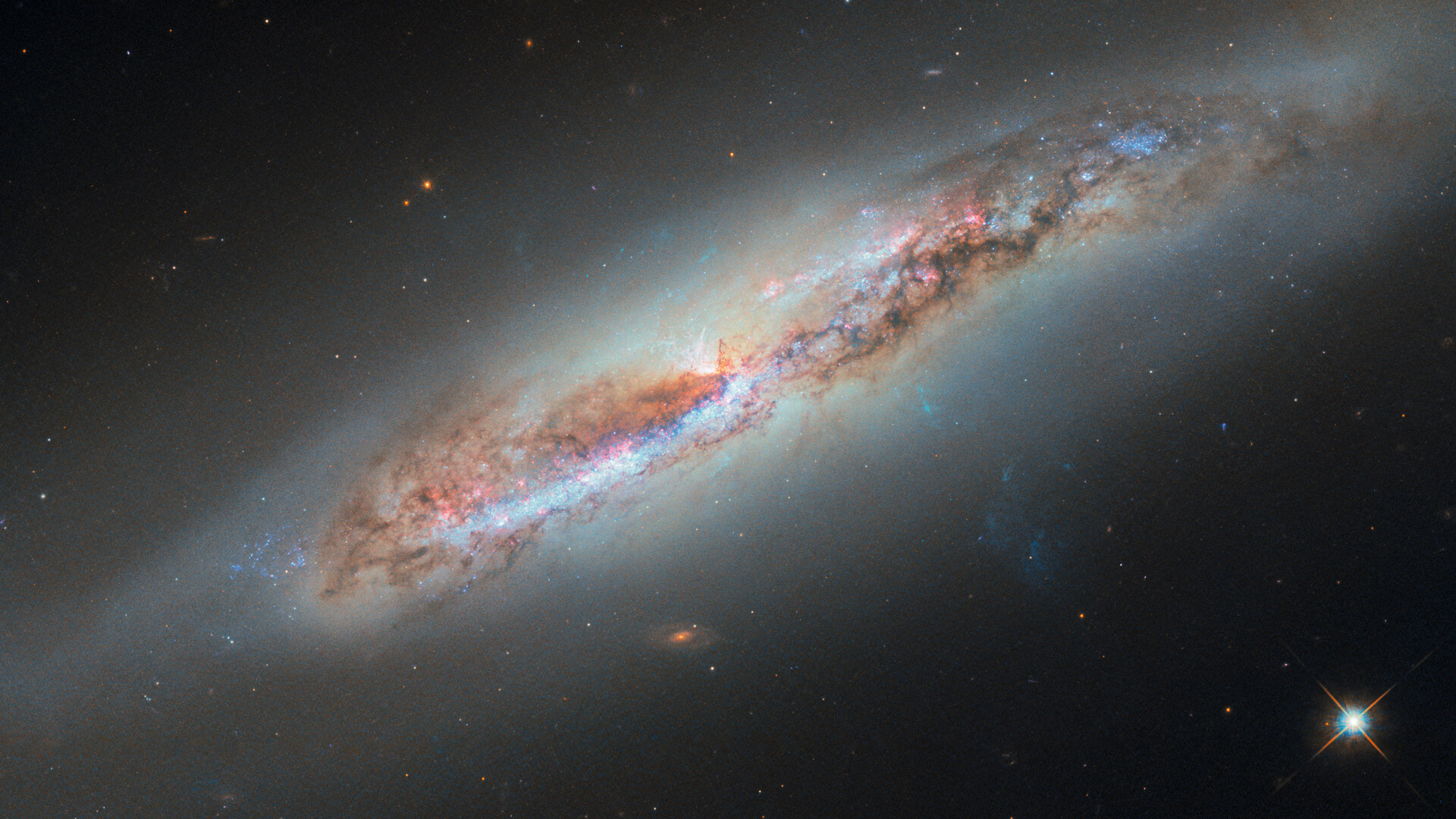
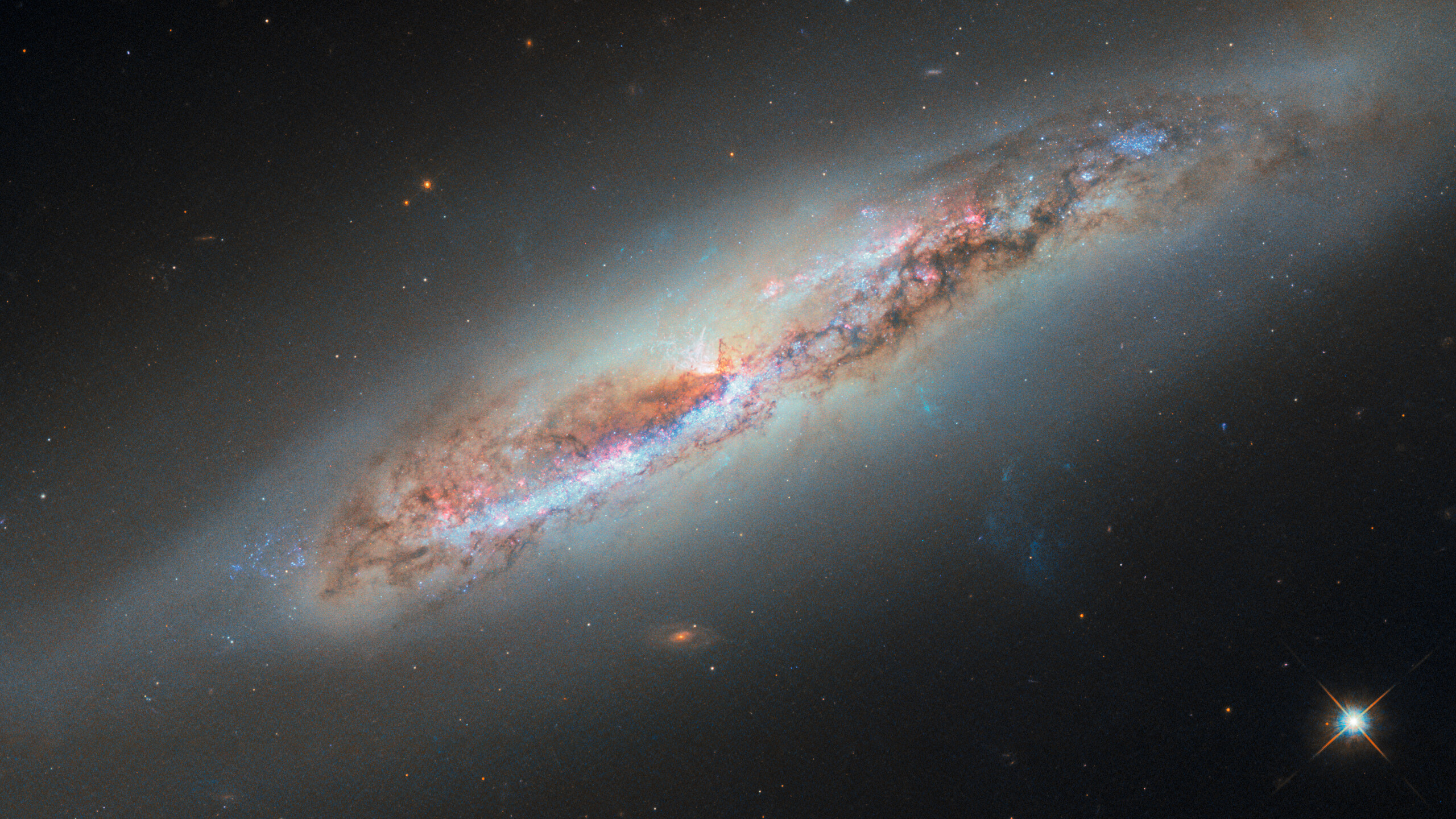
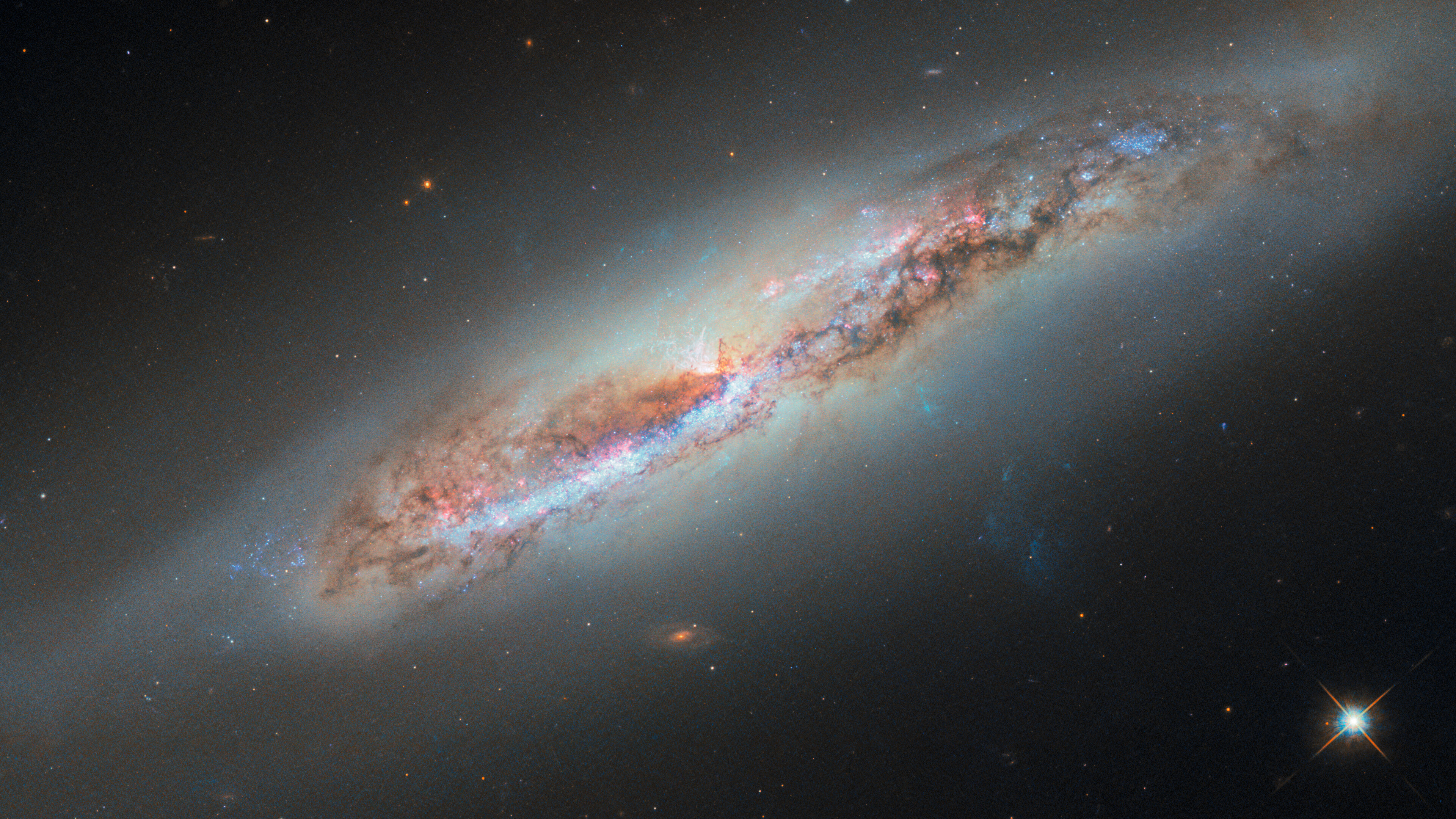
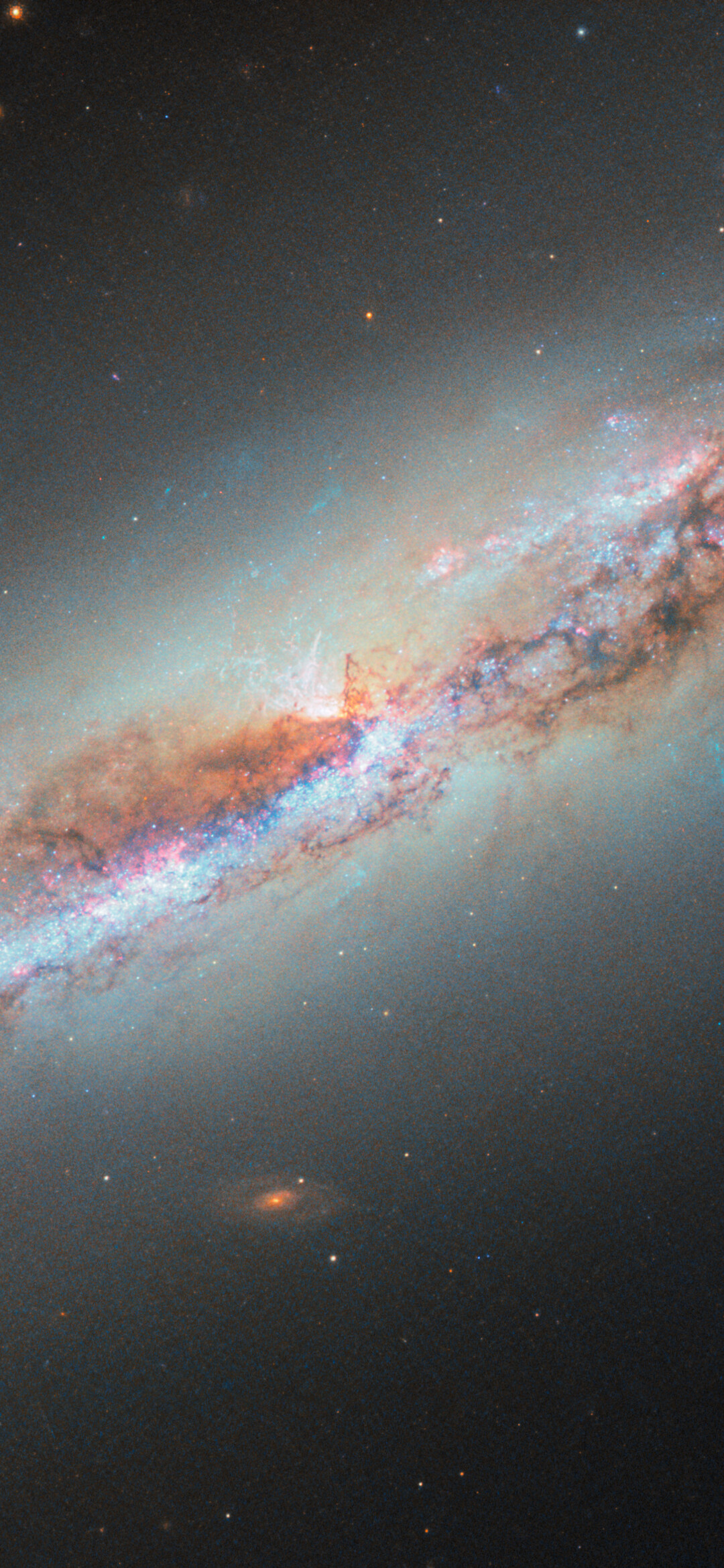
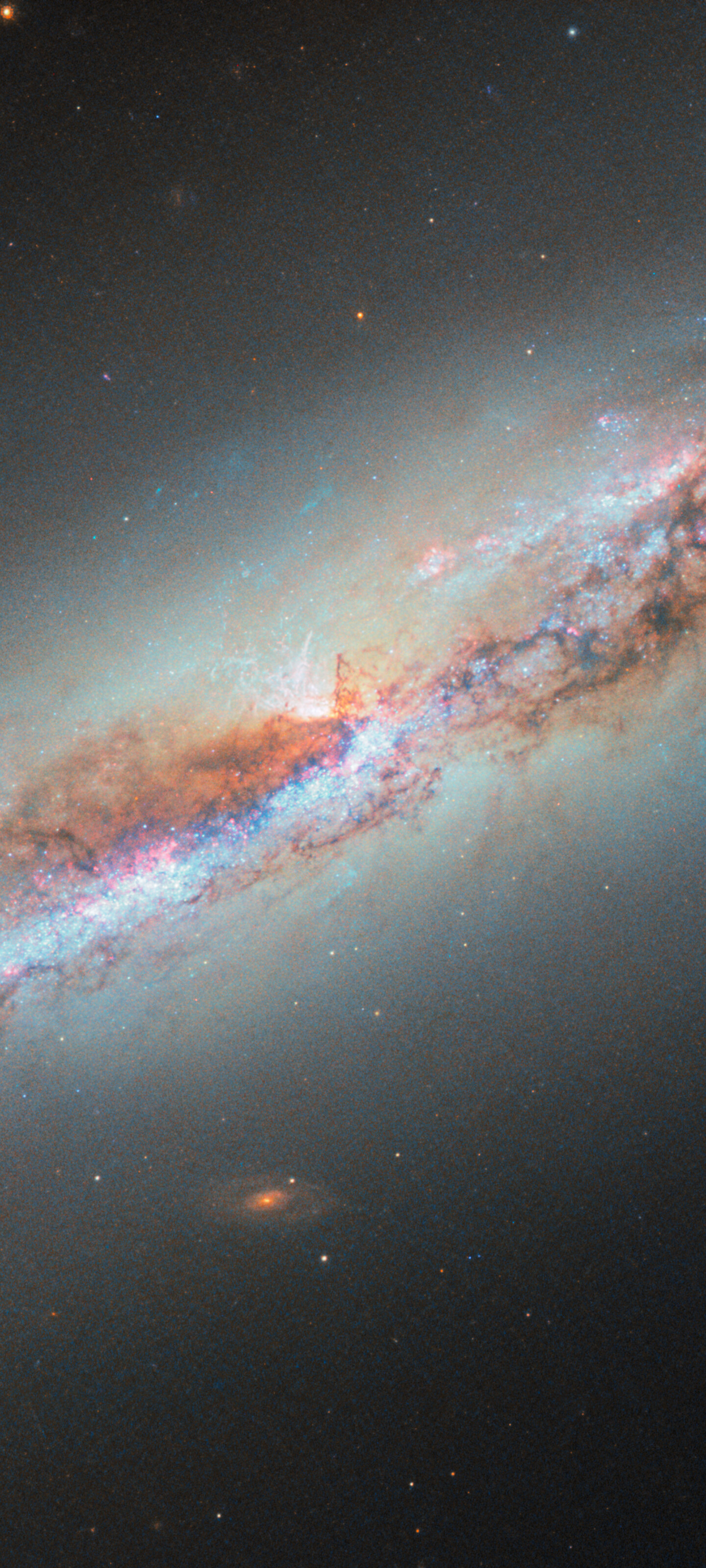
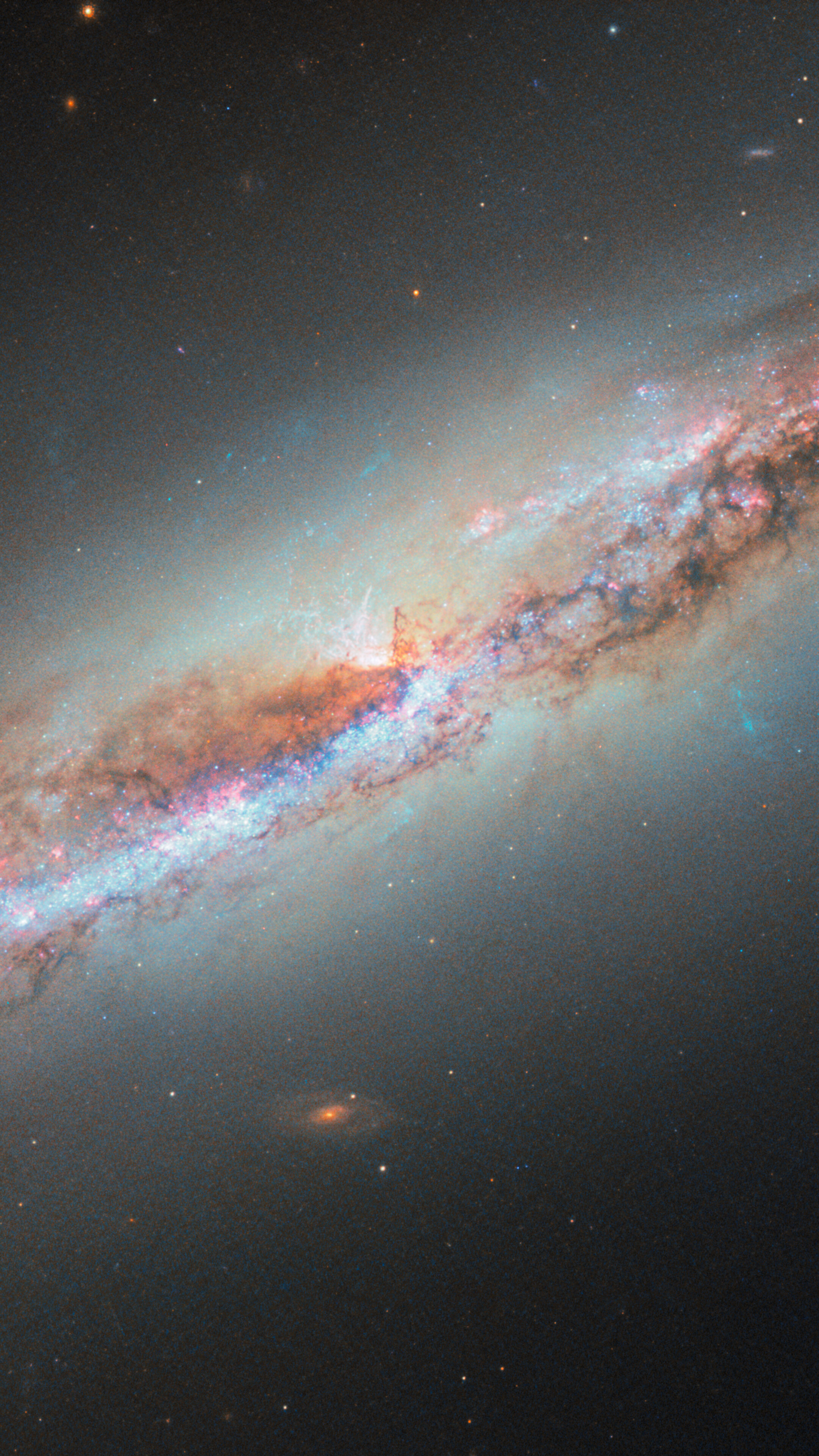
A sideways spiral galaxy shines in today’s ESA/Hubble Picture of the Week. Located about 60 million light-years away in the constellation Virgo (The Maiden), NGC 4388 is a resident of the Virgo galaxy cluster. The Virgo cluster contains more than a thousand galaxies and is the nearest large galaxy cluster to the Milky Way.
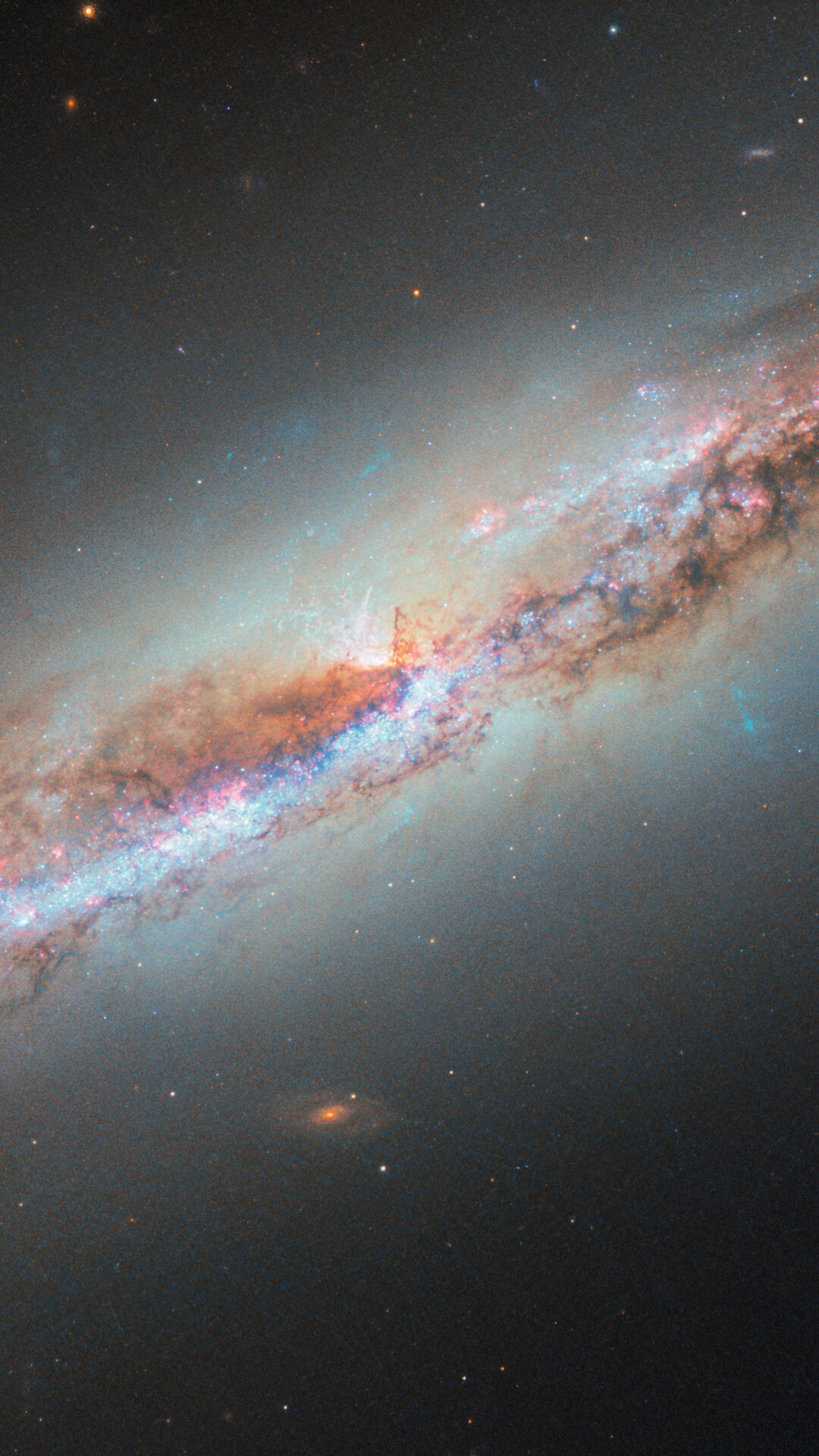
NGC 4388 is tilted at an extreme angle relative to our point of view, giving us a nearly edge-on vantage point. This perspective reveals a curious feature that wasn’t visible in a previous Hubble image of this galaxy released in 2016: a plume of gas from the galaxy’s nucleus, here seen billowing out from the galaxy’s disc towards the lower-right corner of the image. But where did this outflow come from, and why does it glow?
The answer likely lies in vast stretches that separate the galaxies of the Virgo cluster. Though the space between the galaxies appears to be empty, this space is actually occupied by hot wisps of gas called the intracluster medium. As NGC 4388 journeys within the cluster, it plunges through the intracluster medium. The pressure from the hot intracluster gas whisks away the gas from within NGC 4388’s disc, causing it to trail behind as NGC 4388 moves.
The source of the energy that ionises this gas cloud and causes it to glow is more uncertain. Researchers suspect that some of the energy comes from the centre of the galaxy, where a supermassive black hole has spun the gas around it into a superheated disc. The blazing radiation from this disc might ionise the gas closest to the galaxy, while shock waves might be responsible for ionising the filaments of gas farther out.
This image incorporates new data including several additional wavelengths of light to bring the ionised gas cloud into view. The data used to create this image come from several observing programmes that aim to illuminate galaxies with active black holes at their centres.
[Image Description: A spiral galaxy seen nearly edge-on. Its disk is filled with red and blue lights from star-forming nebulae and clusters of hot stars, respectively, as well as thick dark clouds of dust that block the strong white light from its centre. A faint, glowing halo of gas surrounds the disc, fading into the black background. A bluish plume of gas also extends from the galaxy’s core to the lower-right of the image.]
Links
Credit:ESA/Hubble & NASA, S. Veilleux, J. Wang, J. Greene
About the Image
| Id: | potw2550a |
|---|---|
| Type: | Observation |
| Release date: | 15 December 2025, 06:00 |
| Size: | 3966 x 2328 px |
About the Object
| Name: | NGC 4388 |
|---|---|
| Distance: | 60 million light years |
| Constellation: | Virgo |
| Category: | Galaxies |


Classic Wallpapers

Desktop Wallpapers
Mobile Wallpapers

Coordinates
| Position (RA): | 12 25 46.72 |
|---|---|
| Position (Dec): | 12° 39' 47.90" |
| Field of view: | 2.62 x 1.54 arcminutes |
| Orientation: | North is 153.8° right of vertical |


Colours & filters
| Band | Wavelength | Telescope |
|---|---|---|
| Ultraviolet UV | 225 nm |
Hubble Space Telescope
WFC3 |
| Optical U | 336 nm |
Hubble Space Telescope
WFC3 |
| Optical B | 438 nm |
Hubble Space Telescope
WFC3 |
| Optical O III | 508 nm |
Hubble Space Telescope
WFC3 |
| Optical I | 814 nm |
Hubble Space Telescope
WFC3 |
| Optical B | 438 nm |
Hubble Space Telescope
WFC3 |
| Optical I | 814 nm |
Hubble Space Telescope
WFC3 |
| Optical H-alpha + N II | 665 nm |
Hubble Space Telescope
WFC3 |