Massive stars make their mark
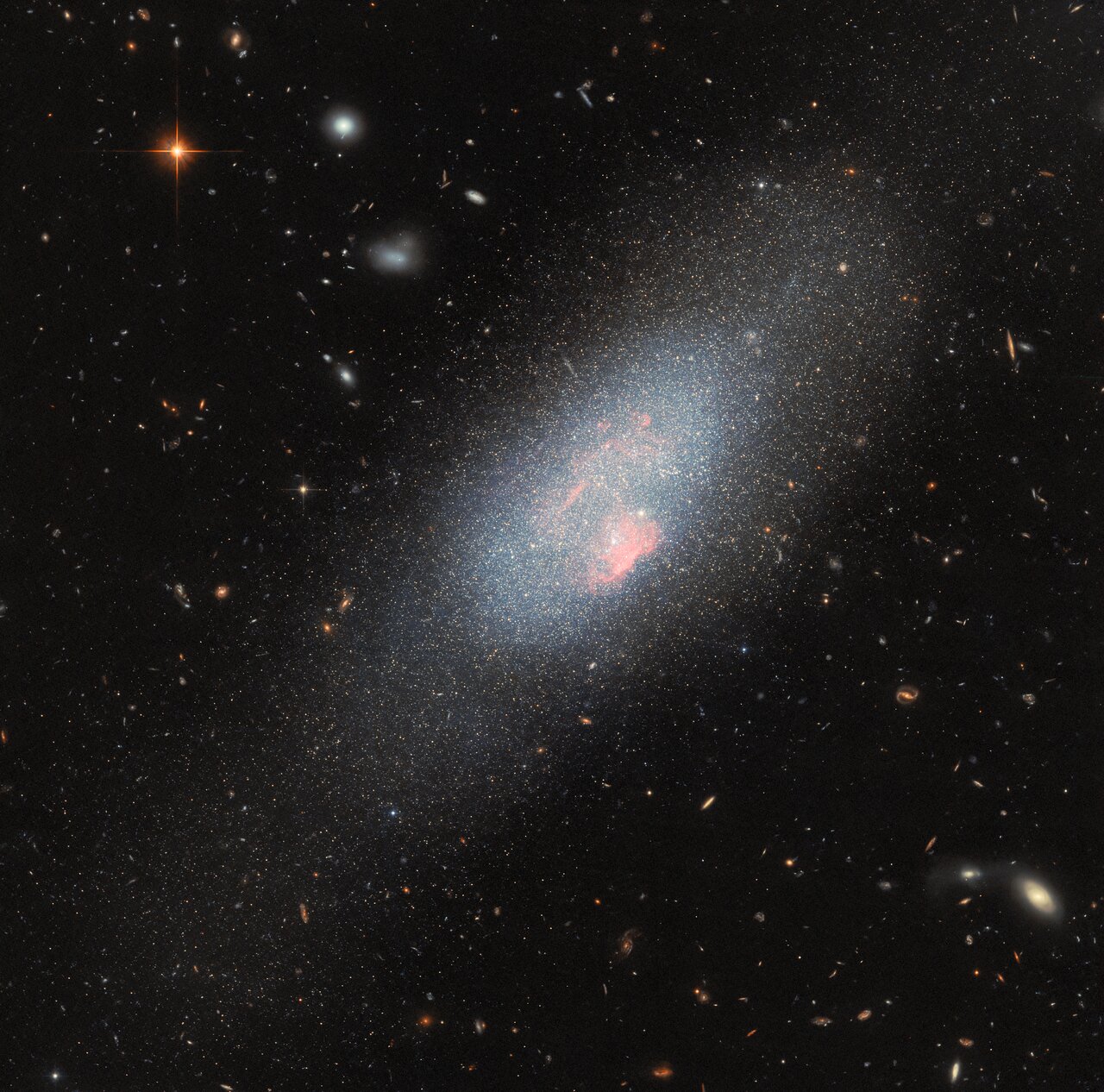
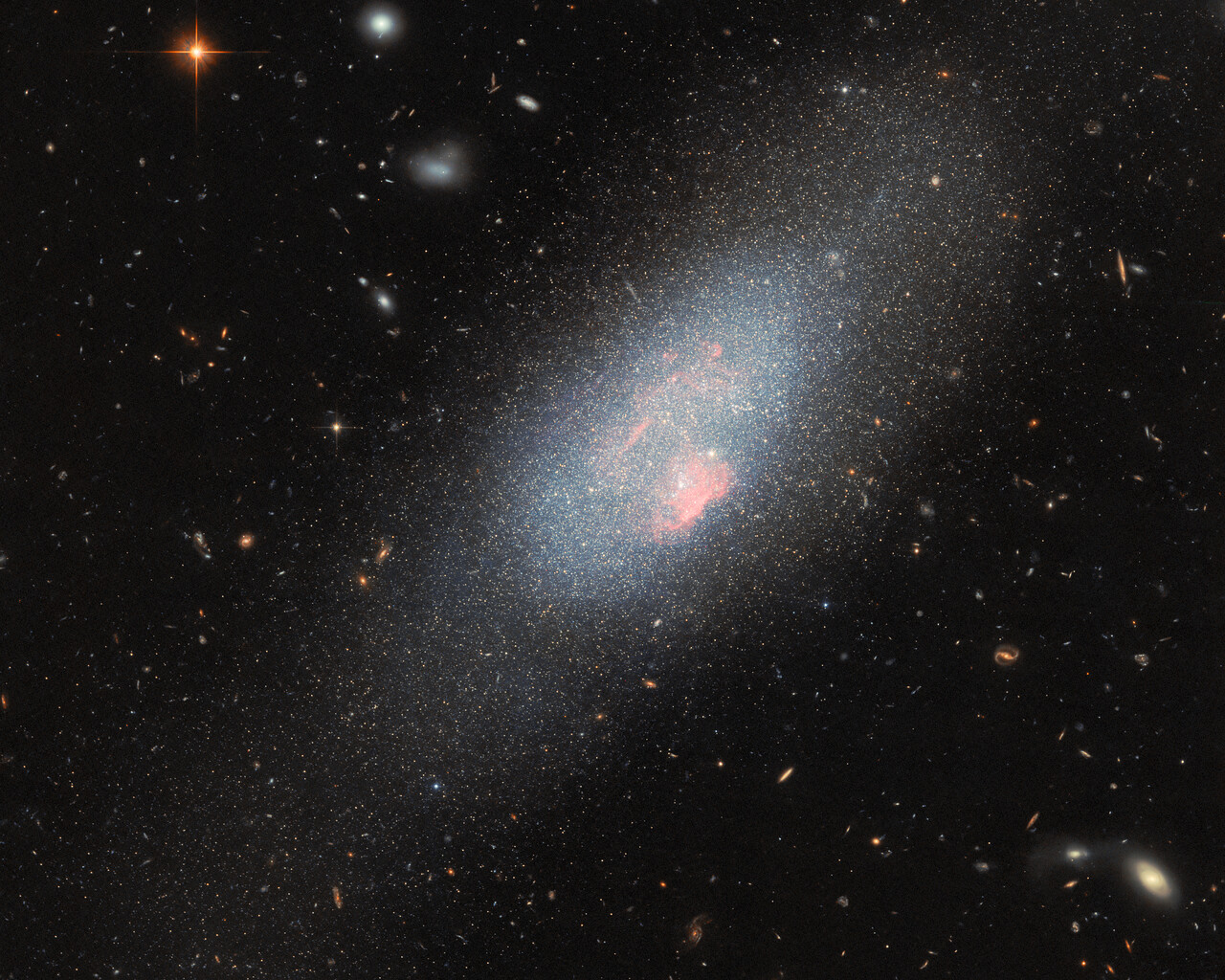
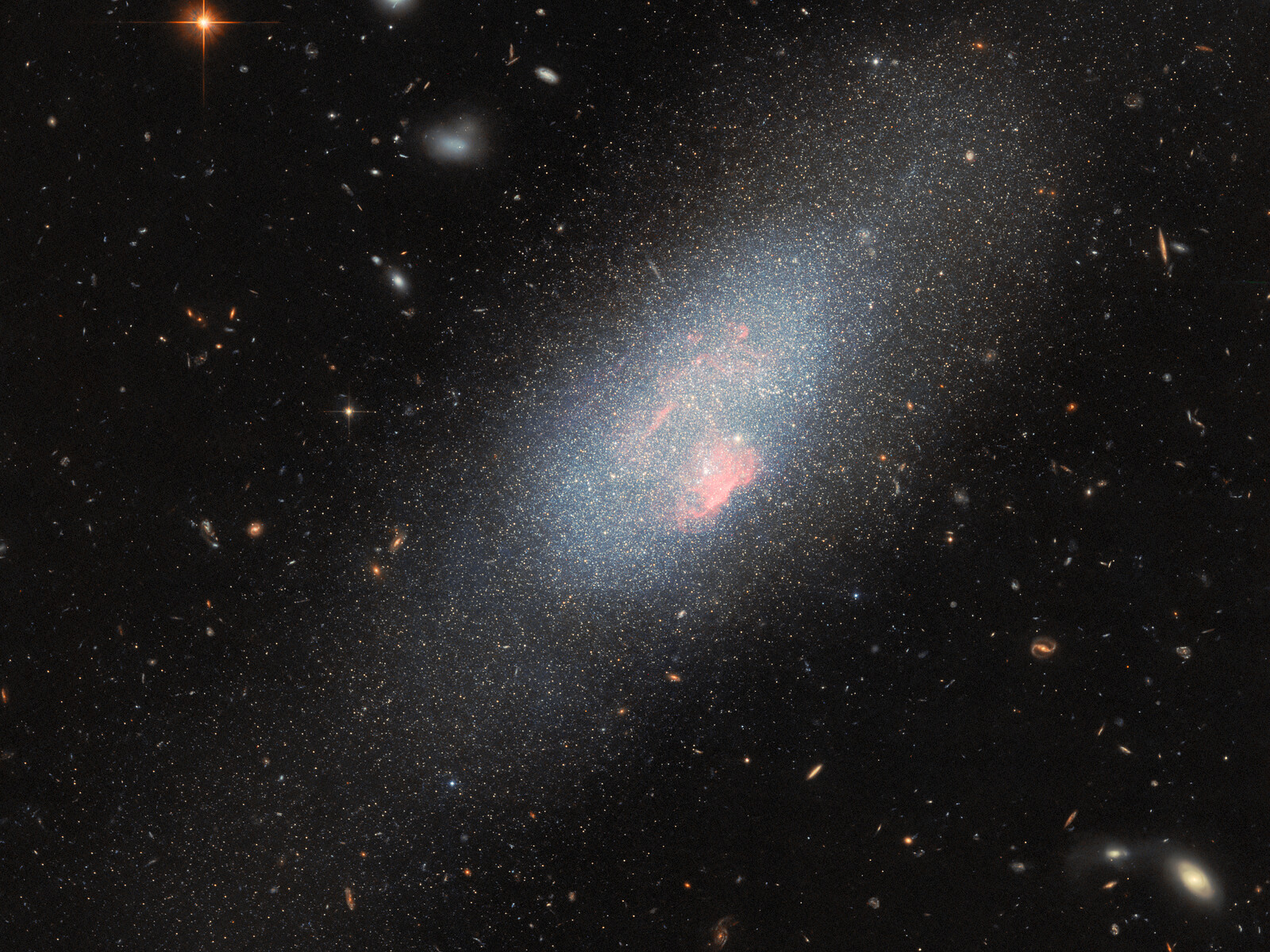
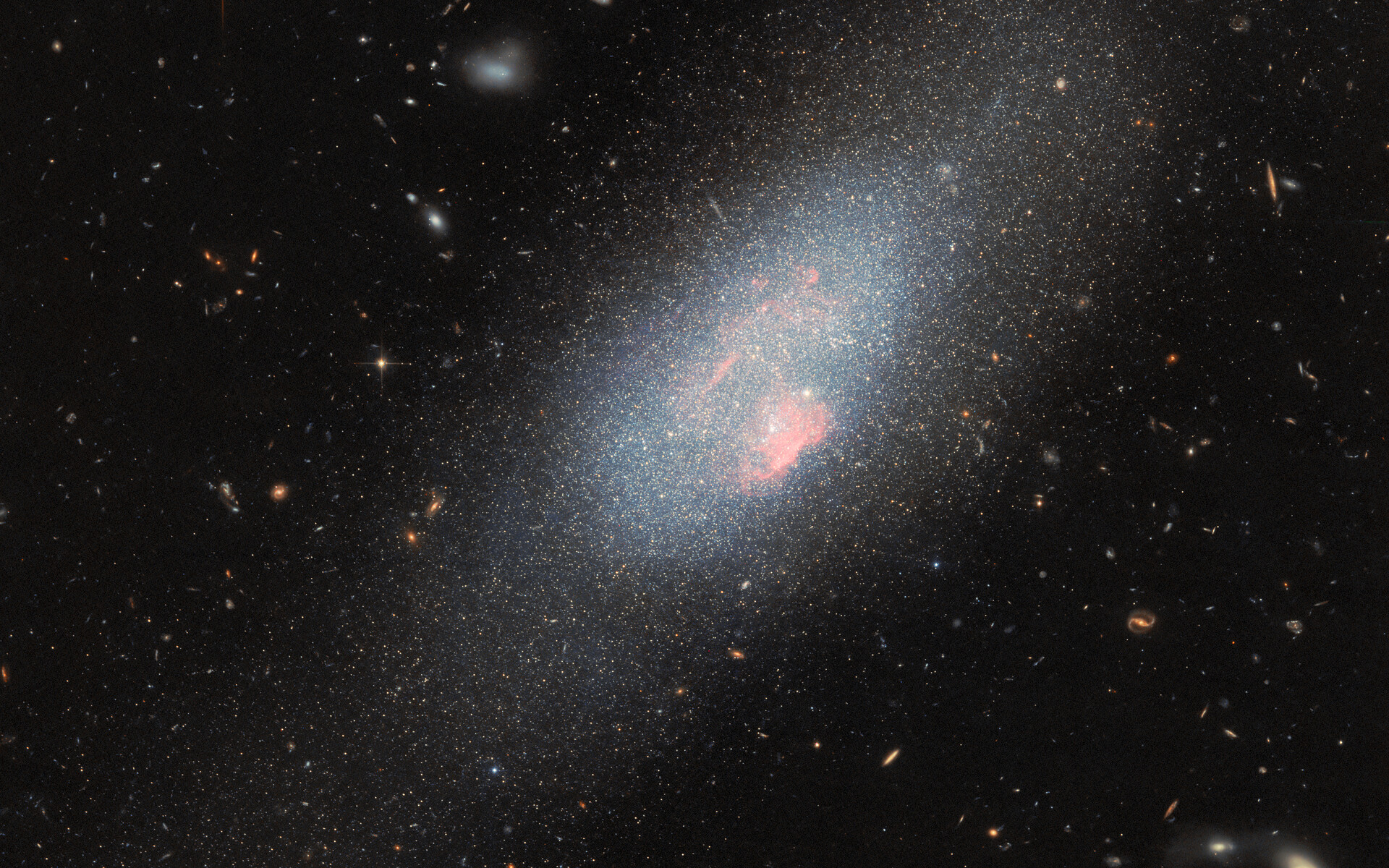
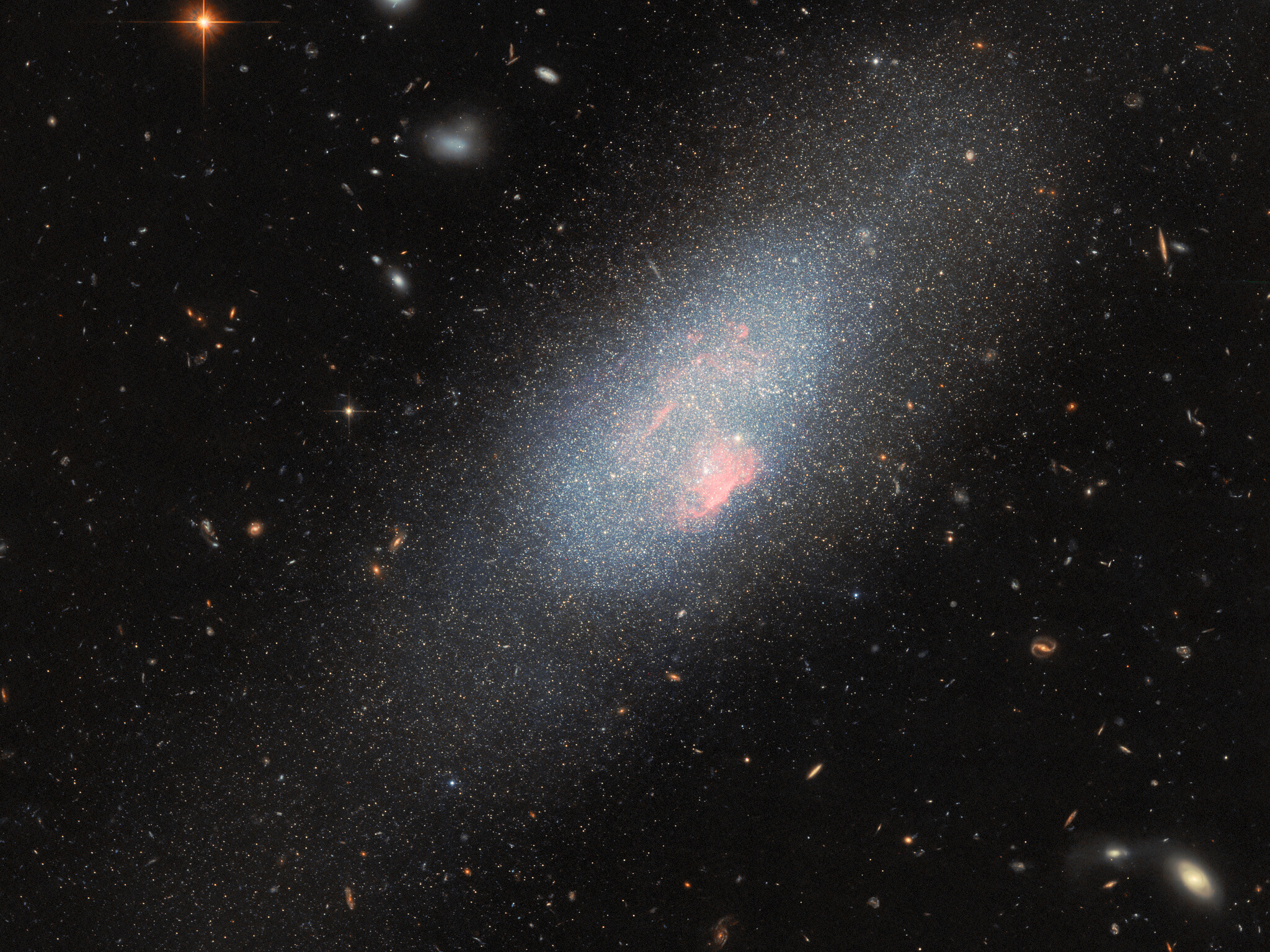
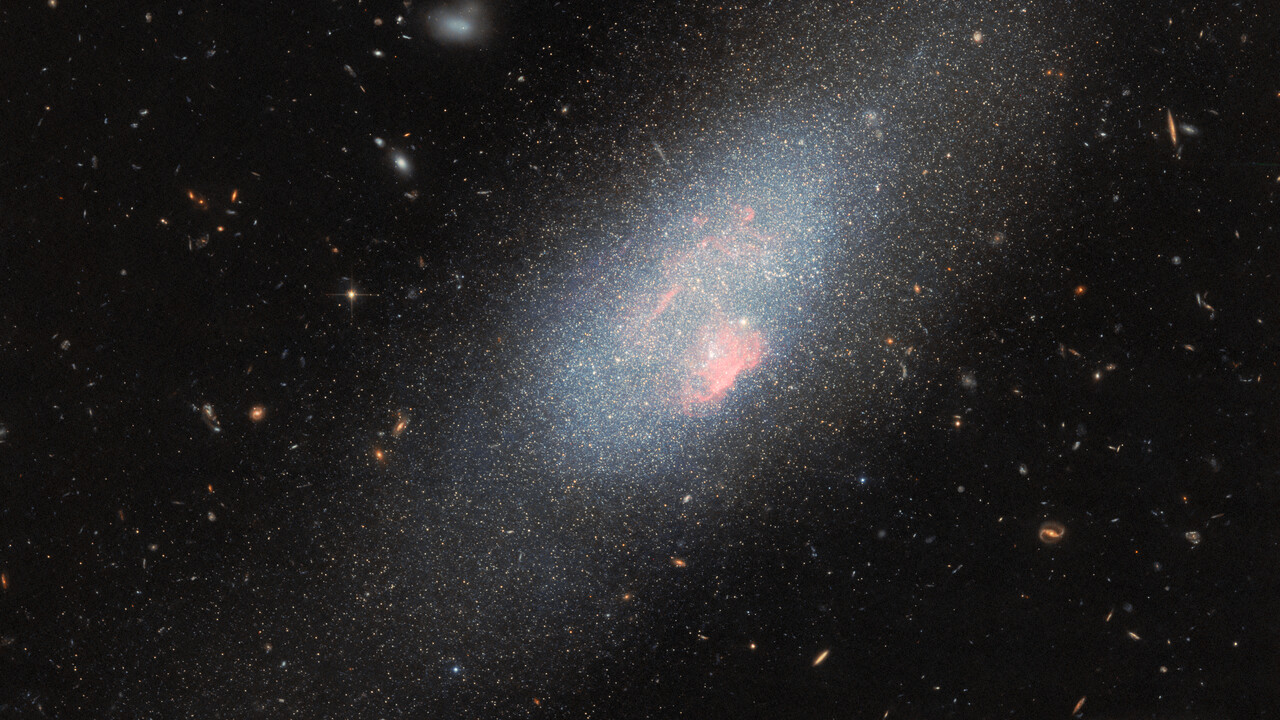
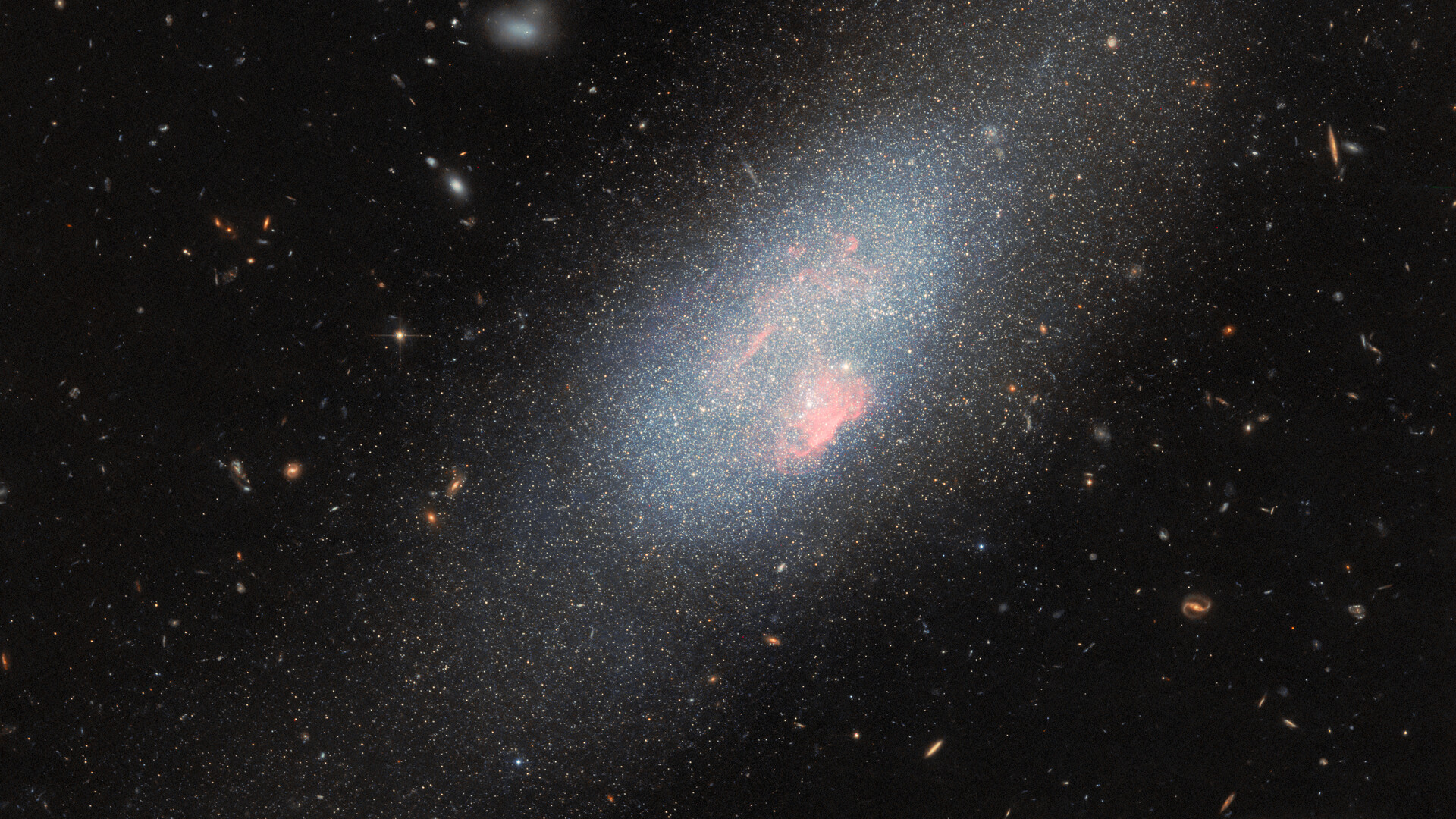
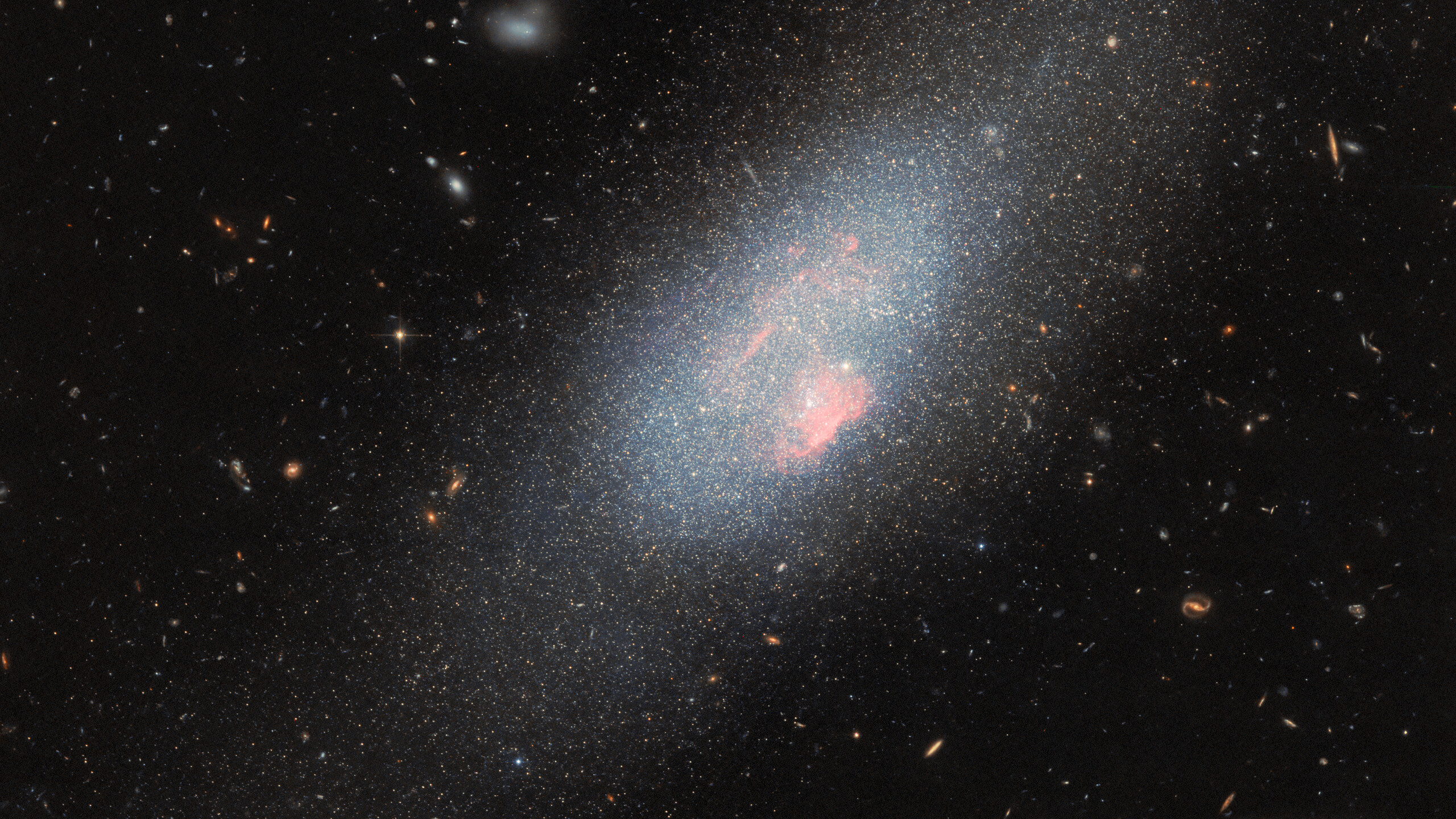
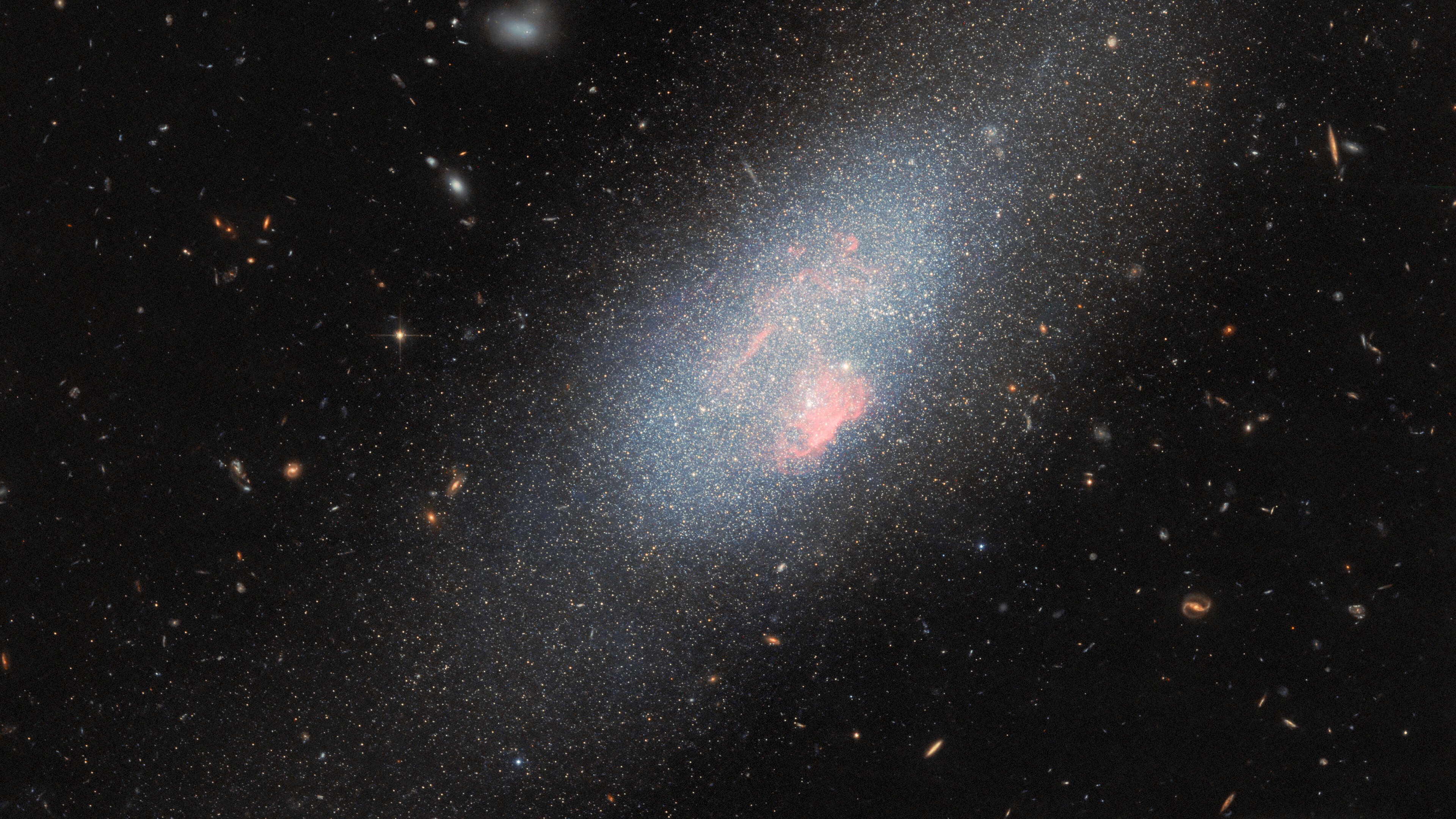
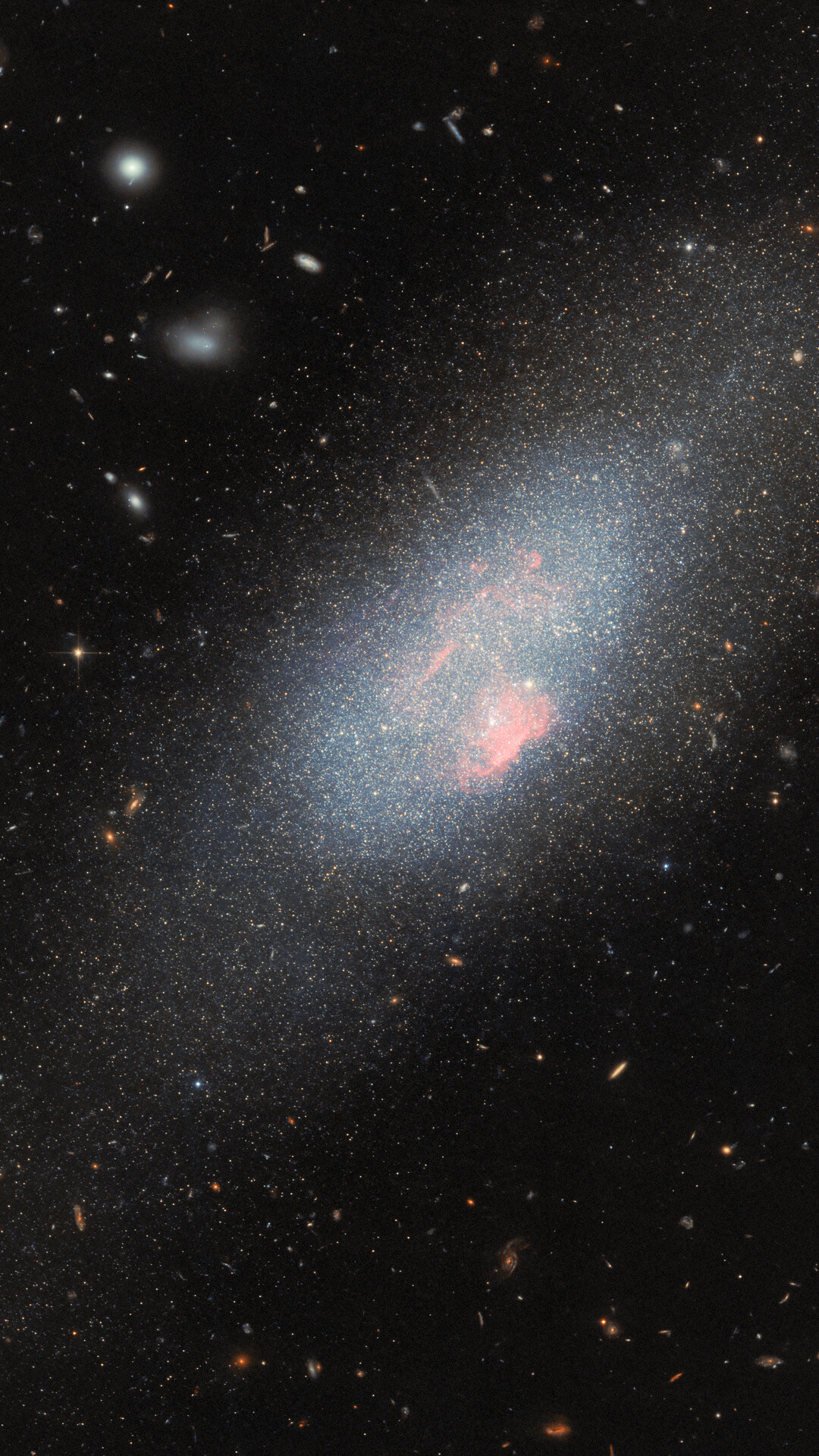
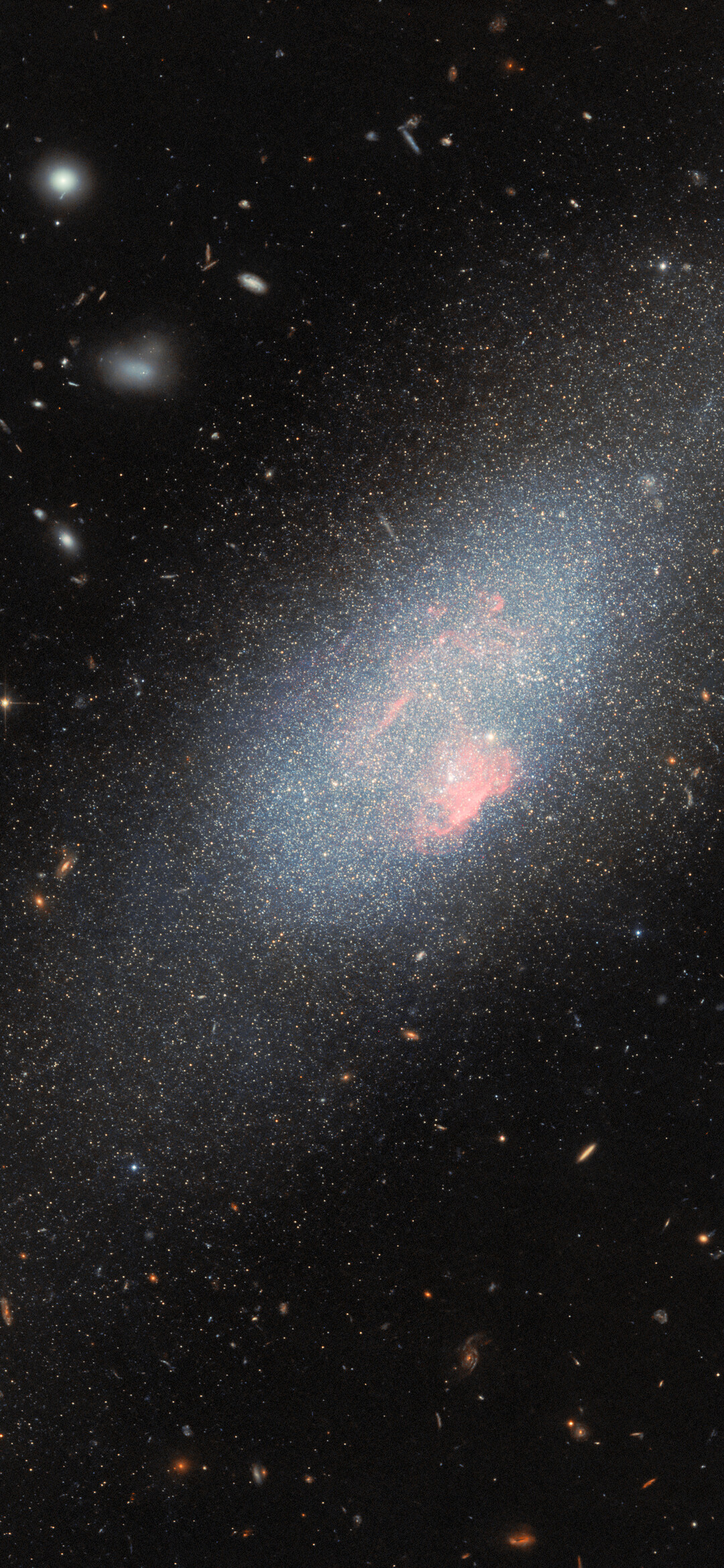
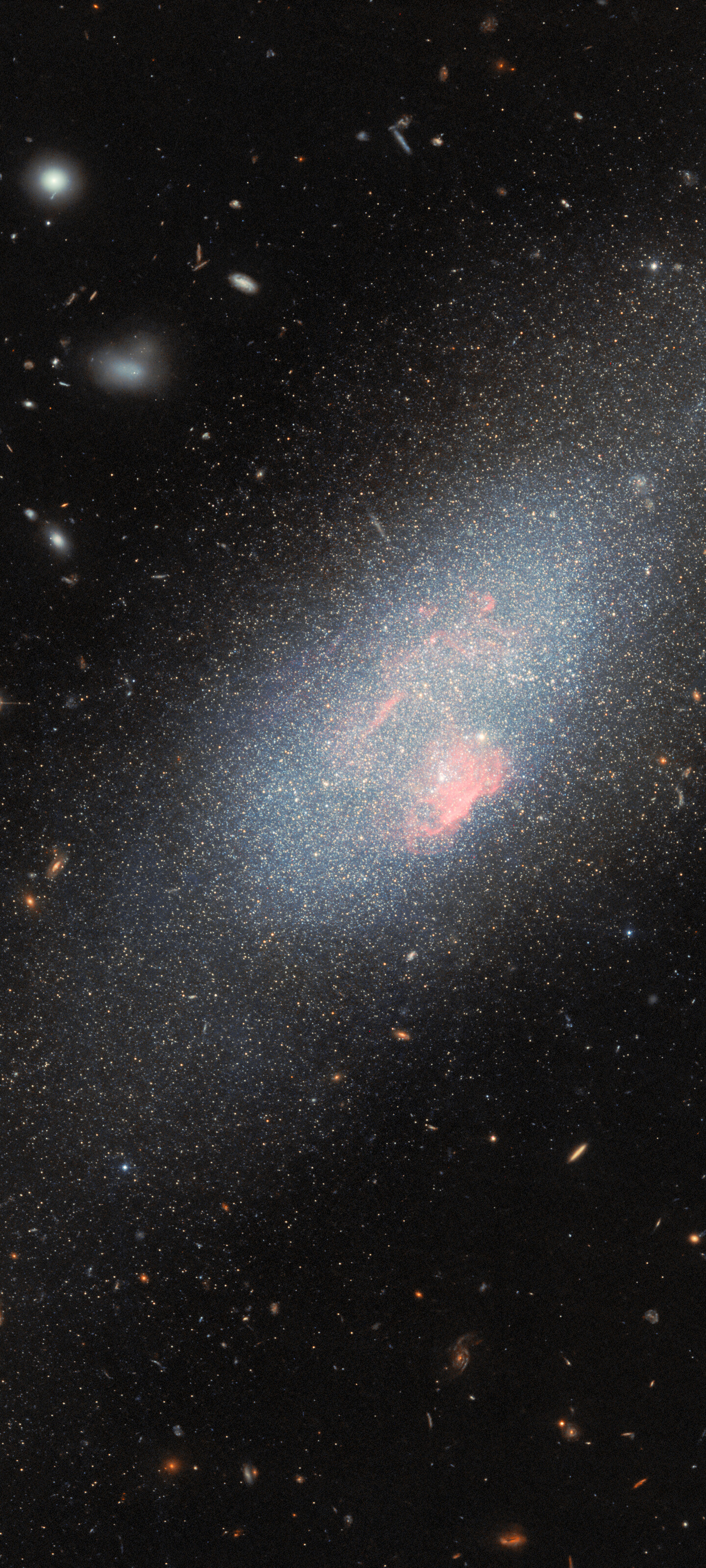
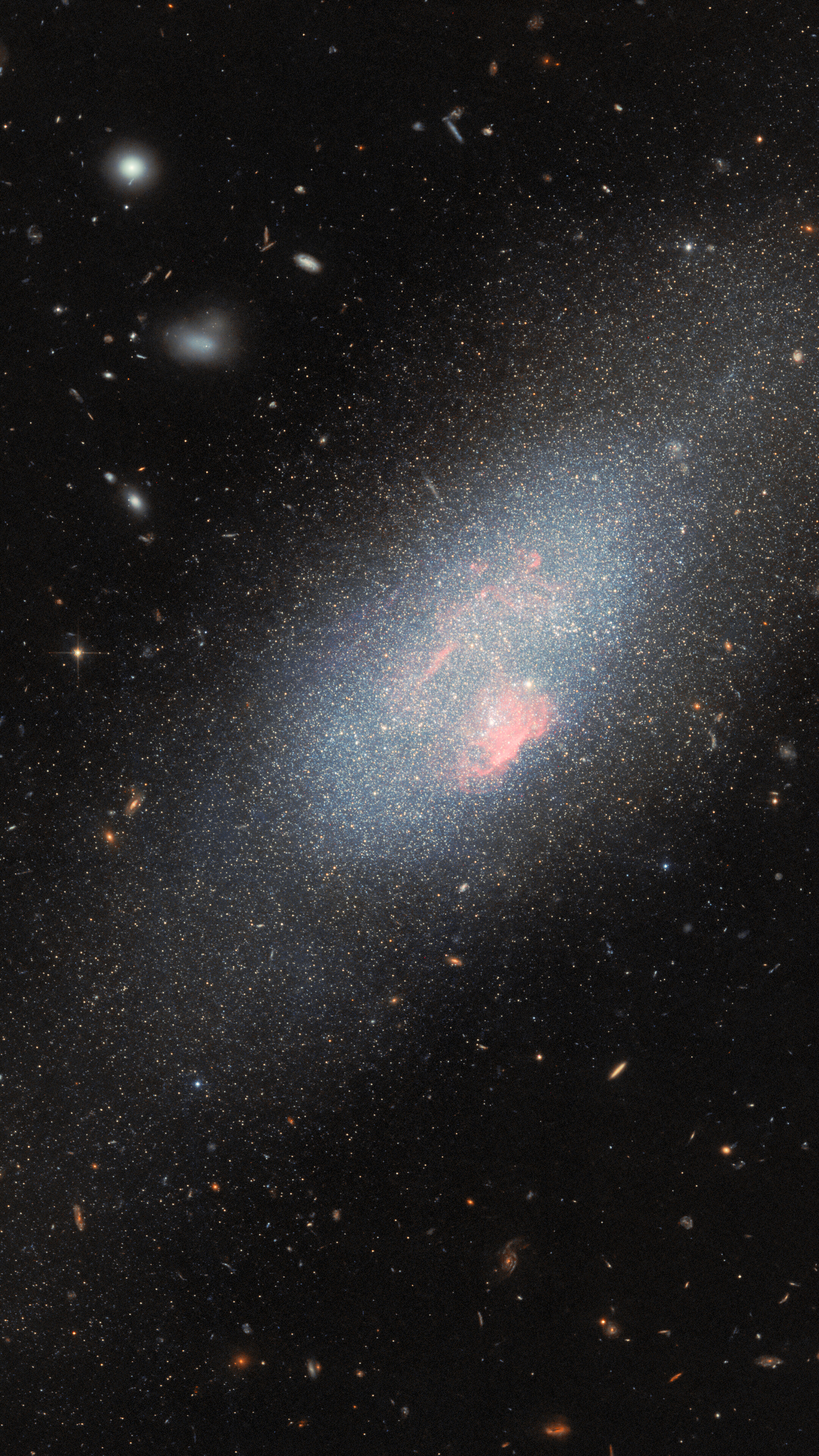
This glittering blue galaxy and subject of today’s ESA/Hubble Picture of the Week is a blue compact dwarf galaxy called Markarian 178 (Mrk 178). This galaxy, which is substantially smaller than our own Milky Way, lies 13 million light-years away in the constellation Ursa Major (The Great Bear).
Mrk 178 is one of more than 1500 Markarian galaxies. These galaxies get their name from the Armenian astrophysicist Benjamin Markarian, who compiled a list of galaxies that were surprisingly bright in ultraviolet light.
While the bulk of the galaxy is blue owing to an abundance of young, hot stars with little dust shrouding them, Mrk 178 gets a red hue from a collection of massive stars, which are especially concentrated in the brightest, reddish region near the galaxy’s edge. This azure cloud is home to a large number of rare objects called Wolf–Rayet stars. Wolf–Rayet stars are massive stars that are casting off their atmospheres through powerful winds. Because Mrk 178 contains so many Wolf–Rayet stars, the bright emission lines from these stars’ hot stellar winds are etched upon the galaxy’s spectrum. Particularly ionised hydrogen and oxygen appear as a red colour to Mrk 178 in this photo, observed using some of Hubble’s specialised light filters.
Massive stars enter the Wolf–Rayet phase just before they collapse into black holes or neutron stars. Because Wolf–Rayet stars last for only a few million years, researchers know that something must have triggered a recent burst of star formation in Mrk 178. At first glance, it’s not clear what could be the cause — Mrk 178 doesn’t seem to have any close galactic neighbours that could have stirred up its gas to form new stars. Astronomers believe that it was triggered by the interaction with a smaller satellite, as revealed by the presence of low surface brightness tidal features detected around Mrk178 in deep imaging acquired with the Large Binocular Telescope. Future high resolution Hubble data will be crucial to study the detailed star formation history of Mrk 178.
[Image Description: A pale blue dwarf galaxy seen on the black backdrop of space with some faraway galaxies. The galaxy itself resembles a fuzzy cloud of tightly-packed stars, with a broad halo of stars dispersed around it. Several small, glowing patches of gas are spread across the galaxy’s core, where very hot stars are concentrated.]
Links
Credit:ESA/Hubble & NASA, F. Annibali, S. Hong
About the Image
| Id: | potw2549a |
|---|---|
| Type: | Observation |
| Release date: | 8 December 2025, 06:00 |
| Size: | 4895 x 4842 px |
About the Object
| Name: | Markarian 178 |
|---|---|
| Distance: | 13 million light years |
| Constellation: | Ursa Major |
| Category: | Galaxies |
Image Formats


Classic Wallpapers

Desktop Wallpapers
Mobile Wallpapers

Coordinates
| Position (RA): | 11 33 30.07 |
|---|---|
| Position (Dec): | 49° 14' 13.76" |
| Field of view: | 3.27 x 3.23 arcminutes |
| Orientation: | North is 8.2° left of vertical |


Colours & filters
| Band | Wavelength | Telescope |
|---|---|---|
| Optical V | 606 nm |
Hubble Space Telescope
ACS |
| Optical Hß | 487 nm |
Hubble Space Telescope
WFC3 |
| Optical I | 814 nm |
Hubble Space Telescope
WFC3 |
| Optical V | 606 nm |
Hubble Space Telescope
ACS |
| Optical I | 814 nm |
Hubble Space Telescope
ACS |
| Optical strömgren y | 547 nm |
Hubble Space Telescope
WFC3 |
| Optical I | 814 nm |
Hubble Space Telescope
ACS |
| Optical O III | 502 nm |
Hubble Space Telescope
WFC3 |
| Optical H-alpha + NII | 657 nm |
Hubble Space Telescope
WFC3 |
| Optical S II | 673 nm |
Hubble Space Telescope
WFC3 |
| Optical I | 814 nm |
Hubble Space Telescope
WFC3 |